
9 BEST Spam Call Blocker App for Android & iPhone (2026)
 Editorial Team
Disclosure: Guru99 is reader-supported. We may earn a commission when you buy through links on this page. Learn more
Best Spam Call Blocker App for Android & iPhone choices should identify suspicious callers, stop repeat offenders, and protect legitimate calls from accidental filtering. My top picks are RingCentral, YouMail, TrueCaller.

Spam call blocker apps promise relief, yet weak databases still miss spoofed numbers, aggressive settings silence genuine callers, confusing permissions expose more data than expected, and inconsistent filtering varies by phone or carrier. Hidden paywalls and noisy interfaces can waste time when an urgent delivery, clinic, or customer call never rings. Several buying guides overlook regional coverage and operating-system limits. A careful comparison makes those trade-offs visible, protects important conversations, and gives you a calmer path toward dependable call screening.
I spent 52 hours researching 15+ tools, checking official features, platform requirements, current plans, and recurring user feedback. After a structured evaluation, I shortlisted 9 Best Spam Call Blocker App for Android & iPhone options with firsthand interface review, features, pros and cons, and backed-by official pricing details. Continue reading to match protection levels with your phone, carrier, and privacy preferences. Read more…

Zoom Phone is an enterprise-grade VoIP solution offering seamless call management, SMS, and video integration across Android and iPhone. With advanced spam call blocking, caller ID, and AI-driven call routing, it helps users stay protected from robocalls.
Best Robocall Blockers App for Android & iPhone (Review)
| Name | Device Support | Caller ID | SMS Filtering | Free Trial/ Refund | Link |
|---|---|---|---|---|---|
👍 Zoom Phone |
Windows, Mac, and Linux | Yes | Yes | Lifetime Free Basic Plan | Learn More |
 👍 RingCentral |
iOS, Android, and Windows | Yes | Yes | 30 Days Free Trial | Learn More |
 👍 Ultatel |
iOS, Android | Yes | No | 30-Day Refund Policy | Learn More |
 Numero eSIM |
iOS and Android | No | No | No | Learn More |
 YouMail |
iOS and Android | Yes | Yes | 14-Day Money Back Guarantee | Learn More |

1) RingCentral
RingCentral is a business communications platform rather than a dedicated consumer blocker. It combines cloud calling, messaging, meetings, call screening, and blocked-number controls. Teams can reject specific numbers, area codes, anonymous callers, or pay-phone calls while keeping company lines separate from personal numbers.
The supplied dashboard screenshot shows a mature administration environment suited to shared business workflows. RingCentral makes sense for agencies and support teams already replacing a phone system. Individuals wanting only community spam identification will find its broader feature set and per-user pricing excessive.
Device Support: iOS, Android, and Windows
Caller ID: Yes
SMS Filtering: Yes
Pricing: Starts at $20 per Month
Free Trial: 14 Days Free Trial
Features:
- Call screening: Unknown callers can be asked to state their name before connection. Teams can apply screening always, only to missing caller ID, or selectively.
- Blocked numbers: Administrators can block specific numbers, entire area codes, anonymous calls, and pay-phone calls while choosing the announcement rejected callers hear.
- Business numbers: Local and toll-free business numbers separate work calls from personal lines. Existing eligible numbers can also be transferred into the service.
- Call routing: Auto attendants, queues, schedules, and forwarding rules direct legitimate calls to the right person without exposing private mobile numbers unnecessarily.
- Mobile access: RingCentral apps support iOS, Android, Windows, and macOS, letting staff manage calls, messages, voicemail, and settings securely across common devices.
- Call analytics: Advanced plans add reporting and historical or real-time insights. Managers can review call patterns, queues, device health, and service activity.
- Integrations: Advanced plans connect CRM and productivity services, reducing manual call logging and keeping customer communications beside existing business records automatically.
Pros
Cons
Pricing:
RingEX prices each user monthly, with lower rates for annual billing and a 14-day new-subscriber trial.
| Plan | Pricing |
|---|---|
| Core | $20/user/month annually |
| Advanced | $25/user/month annually |
| Ultra | $35/user/month annually |
14-day free trial
2) YouMail
YouMail replaces a carrier voicemail box while filtering known spam, robocalls, and selected number ranges. Its free personal plan covers basic blocking and visual voicemail. Paid tiers add call screening, stronger protection, data-broker removal, more storage, and a private second number.
The dashboard screenshot shows voicemail, caller activity, and account controls in one workspace. YouMail fits people who want blocking and voicemail management together, especially across mobile and desktop. Maximum protection and advanced screening require payment, and carrier setup must be completed correctly before calls route through the service.
Device Support: Android and iOS
Caller ID: Yes
SMS Filtering: Yes
Pricing: Plans start at $7.99 per month.
Free Trial: 14 Day Money Back Guarantee
Features:
- Spam blocking: All personal plans block known spammers and specified numbers. Paid tiers add stronger rules for strangers, private calls, ranges, and international numbers.
- Call screening: Plus and Essentials plans can screen unknown callers before connection, reducing interruptions while giving legitimate callers a chance to identify themselves.
- Visual voicemail: Messages appear in mobile and desktop inboxes with searchable folders. Storage limits rise from 50 messages on Free to thousands on paid plans.
- Transcription: YouMail converts supported voicemail into text for quicker review. Monthly transcription allowances vary by plan and may not cover every saved message.
- Private number: Essentials includes a second number for businesses or strangers, helping users avoid giving their primary mobile number to every requester.
- Privacy Scan: Paid plans can check where personal information appears online and support removal from selected spam lists and data-broker websites directly.
- Custom greetings: Users can assign personalized greetings to contacts or caller groups, creating different responses for family, customers, unknown callers, or blocked numbers.
Pros
Cons
Pricing:
YouMail keeps basic blocking free, while annual billing lowers monthly costs for screening, privacy, and second-number features.
| Plan | Pricing |
|---|---|
| Free | $0 |
| Plus | $5.99/month billed annually |
| Essentials | $11.99/month billed annually |
Free plan
3) TrueCaller
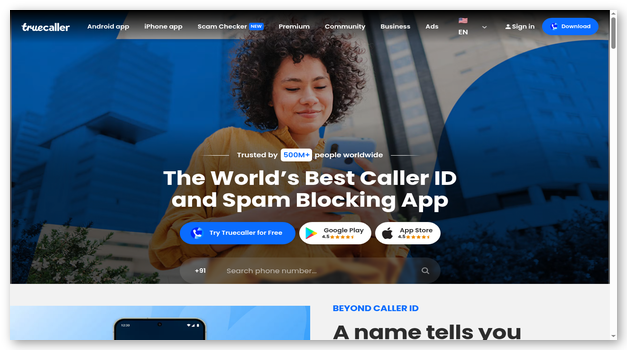
TrueCaller uses community reports, business data, and automated detection to label unknown callers and messages. Its free app provides caller identification and basic spam protection on Android and iPhone. Premium adds stronger automatic blocking, removes advertising, and unlocks several identity and assistant features.
The dashboard screenshot emphasizes recent calls, searches, and spam labels. TrueCaller fits users who frequently need to identify unfamiliar numbers before answering. Results depend on community accuracy, while some advanced functions vary by operating system, device, subscription, or country. Privacy-sensitive users should review permissions before synchronizing contacts.
Features:
- Caller ID: Incoming numbers can be matched against TrueCaller records before answering. Names and spam labels depend on available business, community, and regional data.
- Spam blocking: Premium can automatically decline recognized spammers and apply advanced protection. Basic users can still identify and manually block unwanted numbers.
- Number search: Reverse lookup lets users search unfamiliar numbers and review available names, business details, locations, or community spam reports before responding.
- Message filtering: Supported devices can organize or flag suspicious messages and unknown senders, helping users separate personal, transactional, promotional, and possible fraud content.
- Call Assistant: Where available, the assistant can screen unknown calls and present the caller's response, reducing the need to answer every unfamiliar number.
- Family plan: One Family subscription can extend Premium features to four additional members on Android or iOS, subject to regional and platform availability.
- Fraud tools: Premium advertises fraud protection features, including AI Call Scanner and eligible fraud insurance, although availability and conditions differ by market.
Pros
Cons
Pricing:
TrueCaller provides free basic protection, while annual Premium, Family, and Gold tiers add stronger controls and identity features.
| Plan | Pricing |
|---|---|
| Premium | $74.99/year |
| Family | $99.99/year |
| Gold | $249/year |
Free basic app
4) Numero eSIM
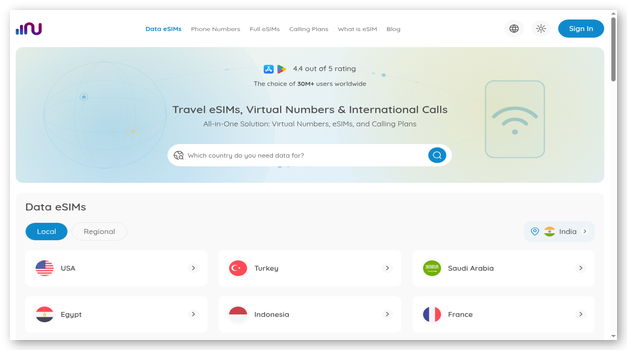
Numero eSIM approaches spam prevention by giving users additional virtual numbers instead of exposing a primary SIM number. The app sells numbers in more than 80 countries and supports calls or messages over Wi-Fi and mobile data. Users can reserve separate lines for forms, marketplaces, or work.
The screenshot shows balances, services, and number management. Numero eSIM fits travelers wanting compartmentalized identities, not reputation-based blocking. If a secondary number attracts calls, it can be retired without changing the main line. Pricing and SMS support vary by country and number type.
Features:
- Virtual numbers: Users can purchase secondary phone numbers from more than 80 countries and manage several lines inside one iOS or Android application.
- Number separation: A dedicated line can be used for sign-ups, selling, travel, or work, keeping the primary SIM number away from broader distribution.
- Call forwarding: Conditional forwarding can redirect calls when a line is busy, offline, or unanswered, helping users decide where secondary-number traffic should arrive.
- Voicemail: Unanswered calls can move to voicemail, allowing users to hear the caller's purpose before deciding whether any return call is necessary.
- Caller controls: Outgoing calls can show a selected virtual number where supported, helping users avoid revealing their main mobile number to unfamiliar recipients.
- Multiple terms: Virtual numbers are sold with monthly, quarterly, or annual durations. Price and included calling or messaging capabilities depend on the selected country.
- Travel services: The same app also offers data eSIMs, full eSIM packages, and international calling plans, which can consolidate communication needs during travel.
Pros
Cons
Pricing:
Numero eSIM prices services by country and product, with virtual numbers commonly sold monthly, quarterly, or annually.
| Plan | Pricing |
|---|---|
| Virtual number | $3.99 to $38/month |
| Data eSIM | From €3.50 |
| Full eSIM | From €16 |
Plans from $3.99/month
5) RoboKiller
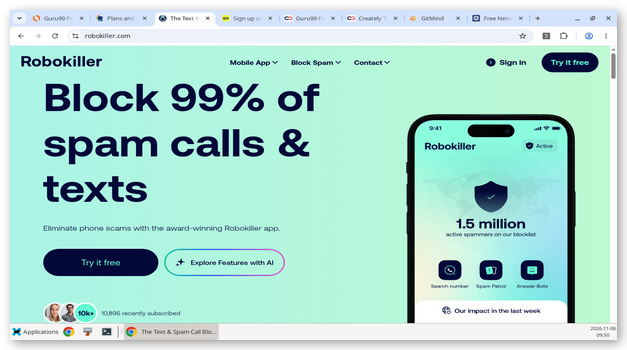
RoboKiller is a focused call and text filtering service for Android and iPhone. It compares incoming traffic with a large reputation database, applies predictive signals, and can answer suspected spam with recorded Answer Bots. Users can adjust protection and report numbers that escape detection.
The screenshot highlights blocked calls, texts, and recent activity. RoboKiller fits users wanting aggressive filtering and scammer-wasting tools. The service requires a subscription after trial, and new spoofed numbers can still pass through. Users expecting medical or delivery calls should review allow-list settings carefully.
Features:
- Predictive blocking: RoboKiller evaluates incoming numbers against reputation and behavioral signals before ringing, aiming to stop known spam and likely scams automatically.
- Answer Bots: Optional prerecorded bots answer selected spam calls and occupy the caller, while genuine contacts can be protected through allow lists and settings.
- Text filtering: The mobile apps can identify and filter suspicious SMS messages, reducing exposure to common phishing links, promotions, and repeated sender campaigns.
- Caller lookup: Users can search unfamiliar numbers and review available reputation information before returning a missed call or adding it to a block list.
- Protection levels: Blocking sensitivity can be adjusted for different risk tolerances. Stronger settings may reduce spam but require careful allow-list management for legitimate callers.
- Activity reports: The app records blocked calls and messages so users can review what was stopped, correct mistakes, and report new nuisance numbers.
- Cross-platform: RoboKiller supports current Android and iPhone devices, although exact screening, messaging, and assistant behavior follows each operating system's permissions.
Pros
Cons
Pricing:
RoboKiller includes a seven-day trial, followed by recurring plans whose checkout price can vary by offer and platform.
| Plan | Pricing |
|---|---|
| Seven-day trial | $0 during trial |
| Annual Protection | $39.99/year regular price |
| Weekly Protection | $4.99/month regular price |
7-day free trial
6) Nomorobo
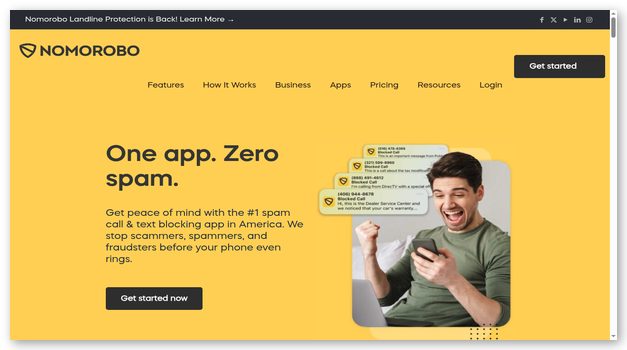
Nomorobo blocks or labels known spam calls and filters suspicious texts without uploading a user's address book. Current mobile plans range from basic identification to Max screening and a four-device Family tier. Some home VoIP lines can also receive separate Nomorobo protection.
The screenshot presents recent calls and protection status clearly. Nomorobo fits privacy-conscious users who prefer no advertising. Max features work only with supported carriers, and new numbers may escape classification. Current plans use a seven-day trial, replacing older 14-day references in the live article.
Features:
- Spam database: Nomorobo checks incoming activity against millions of known robocallers and message senders, then blocks or labels matches according to selected settings.
- Privacy controls: The company states that it does not upload the address book or inspect complete incoming and outgoing call logs for mobile protection.
- Text protection: Current mobile plans identify phishing and spam texts, adding useful coverage beyond voice calls without requiring another separate message-filtering subscription.
- Call screening: Max can screen callers, provide live voicemail transcription, and keep spam out of voicemail on supported major United States carriers.
- Allow lists: Personalized allow and block lists help protect expected callers while rejecting repeated nuisance numbers that are not yet broadly classified.
- Family coverage: The Family tier extends Max-style protection to four devices, giving households one subscription and shared access to stronger screening features.
- Home lines: Nomorobo also supports many VoIP landlines through a separate setup path, which is useful for households receiving spam outside mobile devices.
Pros
Cons
Pricing:
Nomorobo offers Basic, Max, and Family protection after a seven-day trial, with substantial savings on annual billing.
| Plan | Pricing |
|---|---|
| Basic | $2.99/month or $19.99/year |
| Max | $59.99/year |
| Family | $79.99/year |
7-day free trial
7) Call Control
Call Control combines a community reputation list with personal rules for calls and messages. Premium adds CommunityIQ protection, enhanced caller identification, lookup credits, priority support, and an advertising-free interface. Users can also block unknown numbers, toll-free prefixes, number patterns, or nearby spoofed numbers.
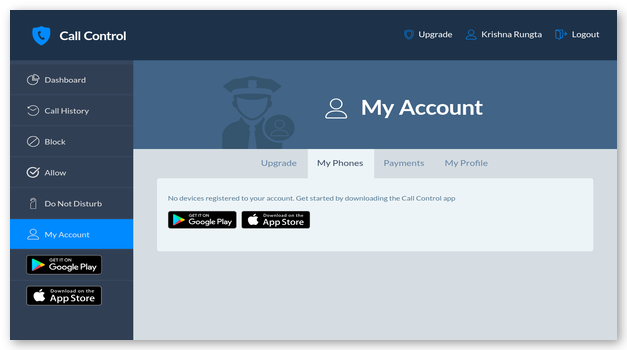
The screenshot shows recent blocking activity and access to lookup tools. Call Control suits users who prefer detailed rules over one automatic switch. The free version remains after the seven-day Premium trial, but several protections require payment. Fresh scam numbers may still appear until community reports accumulate.
Features:
- CommunityIQ: Premium checks incoming calls against reports from Call Control users and complaint data, automatically blocking many known scammers and telemarketers.
- Personal lists: Unlimited Premium allow and block lists let users protect important callers while rejecting persistent numbers outside the broader community database.
- Wildcard rules: Pattern and prefix blocking can stop toll-free ranges, similar neighborhood numbers, or repeated number families rather than handling each call separately.
- Caller lookup: Reverse lookup credits provide available identity details for unfamiliar numbers, helping users assess missed calls before responding or creating another rule.
- Quiet hours: Scheduled quiet periods prevent interruptions during meetings or sleep while allow-list rules keep selected important contacts immediately reachable when needed.
- Text blocking: Supported devices can filter unwanted SMS messages and apply personal sender rules, extending protection well beyond incoming unwanted voice calls.
- Cloud backup: Premium can back up contacts and settings, making restoration easier after changing phones or reinstalling the application on a supported device.
Pros
Cons
Pricing:
Call Control has a free version, a seven-day Premium trial, and annual access sold directly for current new-user offers.
| Plan | Pricing |
|---|---|
| Free | $0 |
| Premium trial | 7 days |
| Premium annual | $29.99/year |
Free version
8) Robo Shield
Robo Shield is a focused spam and scam call blocker available in the United States and Canada. Users can block categories such as telemarketing, political, survey, charity, prison, nuisance, and account-service calls. Incoming matches can be sent directly to voicemail.
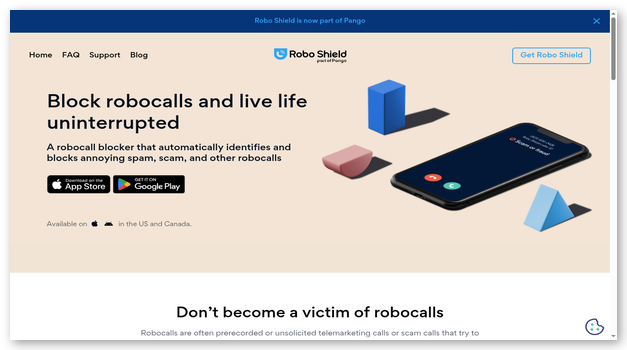
The screenshot shows category controls and recent identification. Robo Shield fits Hotspot Shield Premium subscribers because the blocker is included without another charge. Stand-alone pricing is not clearly published, and geographic reach is narrower than global directories. It also offers fewer voicemail and collaboration tools than broader alternatives.
Features:
- Category blocking: Users can choose which scam and spam categories to block, including telemarketing, political, survey, charity, nuisance, prison, and account-service calls.
- Caller ID: Known suspicious calls can be identified before answering, helping users distinguish likely spam from unfamiliar personal or business phone numbers.
- Automatic blocking: Selected categories can be sent directly to voicemail, reducing ringing without requiring users to reject every matching incoming call manually.
- Number lookup: The lookup feature provides available information about unfamiliar numbers, supporting safer personal decisions before returning a suspicious missed phone call.
- FTC reporting: Users can report suspicious calls to the United States Federal Trade Commission, contributing additional complaint information outside the mobile application.
- Frequent updates: The provider states that its spam number database updates every six minutes, helping distribute newly reported caller reputation information quickly.
- Bundle access: Robo Shield Premium is included with a Hotspot Shield Premium membership, making it more attractive to existing subscribers than stand-alone buyers.
Pros
Cons
Pricing:
Robo Shield app is free to use on Android & Apple; paid plan starts at $2.99
Free app; paid plan from $2.99
9) CallApp
CallApp combines caller identification, spam blocking, reverse lookup, contact enrichment, and a customizable dialer. Its database can identify unfamiliar personal or business numbers, while personal lists and spam reports help stop repeat callers. The app is now available for Android and iPhone.
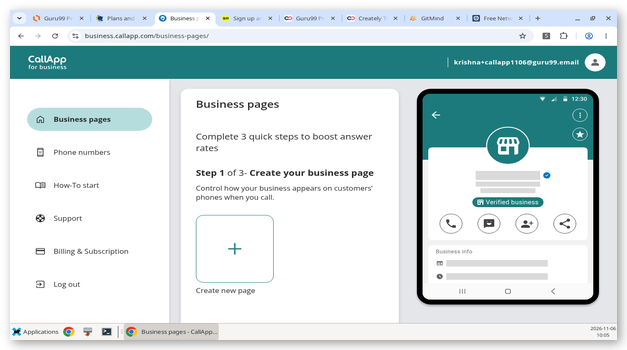
The screenshot shows caller history, identification details, and quick actions. CallApp suits users wanting a personalized phone interface alongside blocking. Some Android functions, including default-dialer behavior and recording, do not translate to iPhone. Live Caller ID on iOS requires Premium, and exact prices appear during in-app purchase.
Features:
- Live Caller ID: CallApp identifies available names and spam status for incoming numbers. On iPhone, Live Caller ID requires supported software and Premium access.
- Spam blocking: Users can reject known spam, robocalls, unwanted numbers, and personal blacklist entries, with exact behavior depending on current operating-system permissions.
- Reverse lookup: Manual number search helps identify missed calls and unfamiliar senders before users call back, save a contact, or create a block rule.
- Message identity: The service can identify unknown senders across SMS and selected messaging contexts, helping users recognize possible businesses, contacts, or spam.
- Call reminders: AI-assisted reminders and follow-up suggestions help users revisit missed or unanswered calls without relying entirely on memory or manual notes.
- Dialer themes: Android users can personalize call screens, keypads, ringtones, and the default dialer, adding more visual customization beyond basic spam protection.
- Contact details: Contact enrichment can add available photos and social information, although users should review privacy implications before granting broad address-book permissions.
Pros
Cons
Pricing:
CallApp offers a free app and monthly, yearly, or one-time Premium purchases, with exact prices displayed through Google Play.
Free app
Feature Comparison Table of Top Spam Call Blocker Apps
| Attribute | RingCentral | YouMail | TrueCaller | Numero eSIM | RoboKiller |
| Android and iPhone | ✅ | ✅ | ✅ | ✅ | ✅ |
| Automatic spam blocking | ✅ | ✅ | ✅ | ❌ | ✅ |
| Caller identification | ✅ | ✅ | ✅ | ❌ | ✅ |
| Text filtering | ❌ | ✅ | ✅ | ❌ | ✅ |
| Free access available | ✅ | ✅ | ✅ | ❌ | ✅ |
| AI call screening | ✅ | ✅ | ✅ | ❌ | ✅ |
What is a spam call blocker app and how does it work?
A spam call blocker app compares incoming numbers with reputation lists, user reports, device contacts, and behavioral signals. Depending on permissions, it may label the caller, silence the ring, reject the call, or send it to voicemail. Some services also screen unknown callers by asking their name and reason. No app sees the caller's true intent, so new spoofed numbers can escape classification. Effective protection combines current databases, sensible allow lists, carrier filtering, and a review process for blocked activity. This reduces interruptions without treating every unfamiliar call as hostile.
Can spam call blocker apps stop spoofed phone numbers?
Spam blockers can reduce spoofed calls, but they cannot stop every forged number. Reputation systems catch numbers already associated with abuse, while neighborhood-spoofing rules detect callers that imitate a local prefix. Carrier authentication also helps label some calls, yet a scammer can rotate to a clean or newly created identity. Blocking every unknown number offers stronger silence but risks missing clinics, schools, couriers, and new customers. A balanced setup screens suspicious calls, protects contacts, and sends uncertain callers to voicemail rather than rejecting all unfamiliar traffic outright.
Do call blockers work differently on Android and iPhone?
Android and iPhone expose different call-management permissions, so the same product can behave differently. Android apps may replace the dialer, inspect more call context, or apply broader rule sets on supported devices. iPhone relies on Apple's caller-identification, blocking, screening, and extension frameworks. Current iOS releases give approved services stronger live identification, but individual features still require specific settings and plans. Before paying, check whether automatic blocking, SMS filtering, recording, and assistant features work on your exact phone, operating-system version, carrier, and country.
What permissions should a caller ID app request?
A caller ID app may need call identification, phone, notification, contact, or message permissions to deliver advertised features. The request should match a clear function. Contact access can protect known callers, while SMS access supports message filtering. Broader access increases privacy consequences if account or provider safeguards fail. Review the app-store privacy label, provider policy, deletion process, and whether contacts are uploaded. Deny optional permissions until a feature needs them, then confirm that identification and blocking still behave as expected after each change.
How do spam blocking apps protect user privacy?
Privacy practices vary more than interface design suggests. A cautious provider limits collected call data, explains whether contacts leave the device, encrypts account information, and offers deletion controls. Some community directories need reports to improve detection, while others avoid uploading address books entirely. Users should compare the privacy policy with actual permission prompts and account settings. A blocker should not require unrelated location, advertising, or contact access for basic protection. If the data model is unclear, start with phone and carrier controls before installing another service.
Should you enable carrier filtering with a blocking app?
Carrier filtering and a third-party app can complement each other because they inspect calls at different stages. The carrier may label or stop traffic before it reaches the phone, while the app applies personal rules, community reports, or screening. However, overlapping blockers can create confusing results, duplicate notifications, or missed calls. Enable one layer at a time, place essential contacts on allow lists, and test with an unfamiliar number. Review blocked activity for several days before increasing protection or adding another service to the same line.
How can AI improve spam call detection?
AI can combine number reputation, calling frequency, audio patterns, message content, and user reports to flag suspicious activity faster. Screening assistants may answer unfamiliar callers, collect a reason, and present a transcript before the phone rings. These tools are useful against changing campaigns, but predictions can still misclassify genuine callers. Users should treat AI labels as risk signals, not proof of fraud. The strongest setup preserves voicemail, supports easy corrections, and learns from carefully reviewed reports instead of permanently rejecting every uncertain call.
Can AI call screening block legitimate callers by mistake?
Yes. An unfamiliar clinic, delivery driver, recruiter, school, or customer may resemble low-reputation traffic. Screening also fails when a caller hangs up rather than speaking to an automated assistant. Reduce false positives by allowing contacts, protecting recent outbound numbers, keeping voicemail active, and checking the blocked log. Less aggressive settings are safer for people expecting urgent calls. If mistakes continue, disable overlapping apps or carrier filters and reintroduce protection one layer at a time until the source becomes completely clear.
How much should a spam call blocker app cost?
Free phone and carrier controls may be enough for occasional nuisance calls. Dedicated apps commonly offer a basic tier, a short trial, or annual plans that cost less per month. Higher prices can add live screening, text filtering, private numbers, voicemail transcription, family coverage, or business administration. Compare the exact platform features before paying because Android and iPhone access can differ. Annual billing saves money only when the service catches enough unwanted traffic without hiding legitimate calls or duplicating protection already included by the carrier.
What problems cause spam call blockers to miss or misroute calls?
Missed spam and misplaced legitimate calls usually come from configuration, reputation gaps, or overlapping services. A controlled test can isolate the failing layer.
- Missing permissions: The blocker lacks caller-identification or phone access after installation or an operating-system update. The user should recheck application permissions and enable every required caller-identification switch.
- Conflicting filters: Two blocking apps or a carrier service apply overlapping rules to the same incoming call. The user should disable extra filters, test one service, then restore only necessary layers.
- Weak reputation: A newly spoofed number has no reports, so the database cannot classify it yet. The user should report the call and enable broader screening instead of trusting labels alone.
- Missing allow list: A clinic, courier, or customer calls from an unfamiliar number and receives aggressive treatment. The user should protect contacts, recent outbound numbers, and expected callers before increasing sensitivity.
- Carrier routing: Voicemail forwarding or call diversion was not completed correctly during initial setup. The user should repeat the provider's carrier instructions and place test calls from another number.
- Stale software: The app or phone software is outdated and no longer matches current call-extension behavior. The user should update both, restart the phone, and verify protection settings again.
How Did We Choose the Best Spam Call Blocker App for Android & iPhone?
Guru99 spent 52 hours evaluating 15+ tools, checking official documentation, current plans, interface evidence, and recurring user feedback to build practical, beginner-friendly recommendations for safer calls.
- Platform coverage: We confirm current Android and iPhone support, then note where automatic blocking, message filtering, live identification, or assistant features differ between operating systems.
- Detection controls: Our team reviews reputation databases, personal rules, category filters, screening options, allow lists, and correction tools instead of relying on one claimed block rate.
- Privacy handling: The researchers compare permission requests, address-book treatment, account deletion, advertising, and published privacy practices because call metadata can reveal sensitive relationships.
- False positives: The team considers how each service preserves clinics, couriers, schools, customers, and other unfamiliar legitimate callers through voicemail, screening, review logs, or protected lists.
- Pricing clarity: Our testers verify free access, trial length, recurring rates, platform-specific purchases, and renewal conditions on official pages, avoiding obsolete prices carried across older listings.
- Workflow quality: Our experts inspect dashboards, recent-call views, number search, message handling, reporting, and configuration paths for beginners who need useful protection without constant maintenance.
- User feedback: The experts synthesize repeated themes from reputable review platforms, focusing on consistent setup, billing, support, missed-call, and database-coverage patterns rather than isolated complaints.
- Ongoing checks: We revisit plan pages, platform availability, renamed products such as Quo (formerly OpenPhone), and operating-system changes before publication because call features change frequently. This final check prevents outdated trials, unsupported platform claims, obsolete product names, and unclear renewal terms from reaching readers making current purchasing decisions.
Are spam call blocker apps safe and legal to use?
Legitimate call-blocking apps are generally legal for users who control their own phones, but privacy and recording rules still matter. Blocking or screening incoming calls is different from recording conversations. Recording consent laws vary by location, so disable automatic recording unless the applicable rules and notices are understood. Download only from official stores, confirm the developer, and review permissions before activation. A trustworthy app should explain data collection, offer account controls, and avoid asking for unrelated access that basic caller identification does not require.
What trends will shape spam call blocking next?
Call blocking is moving toward network authentication, real-time reputation, on-device models, and assistants that ask unknown callers for context. New mobile operating-system features also reduce the gap between built-in screening and paid apps. Scammers will respond with rotating numbers, synthetic voices, and more convincing social engineering, so labels alone will remain insufficient. Future services should combine authentication, content signals, user reports, and clear explanations while preserving legitimate calls. Better privacy controls and regional transparency will matter as much as larger caller databases.
Verdict
I compared nine services and found three distinct leaders for business controls, voicemail-led personal protection, and broad community caller identification.
- RingCentral: I preferred its configurable screening and routing for shared business numbers, where call management mattered beyond simple mobile blocking.
- YouMail: Its visual voicemail, free tier, and layered screening gave me the clearest personal protection path without replacing every phone function.
- TrueCaller: I valued its broad number lookup and community labels when identifying unfamiliar callers mattered more than advanced business routing.
