
Who Called Me? How to Identify Unknown UK Callers
 Editorial Team
Reveal the Caller Behind Any UK Number!
Enter Phone Number, User Name or Email to Find Unknown UK Callers!
“This tool has been amazing for finding people online. Highly recommend it!”
50,000+
Profiles Found
5,000+
Satisfied Users
4.8/5
Average Rating
Phone number lookup tools are essential for anyone who receives mysterious calls from unknown UK numbers and wants clarity fast. Using the wrong methods or unreliable services can waste your time, expose personal data, and even put you at risk of scams. False tools often return inaccurate results or compromise your privacy, which can lead to wrong conclusions and frustration. Reliable and trusted lookup methods, however, help you quickly identify callers, avoid fraud, and make smarter communication decisions with confidence and ease.
After spending over 150 hours testing 13 methods and 12 tools, I have handpicked the most credible solutions for identifying who called you. This guide offers a comprehensive, unbiased, and well-researched set of methods backed by verified results. You will find insightful, professional advice that helps you choose safe and effective tools with a transparent breakdown of features and challenges. This is your ultimate go-to source for trusted lookup guidance. Read more…

Spokeo scans billions of public records and 120+ social networks to match an unknown UK number to a real name, location, and linked online profiles. Its reverse phone lookup often reveals whether a caller is a legitimate business or a repeat spammer, and reports refresh as new data appears. It is my top pick for quickly identifying who called you from an unfamiliar UK number.
Methods to find who called me from this number in the United Kingdom
Here are the methods that I have tried and tested to check who called from a particular number in the UK:
Method 1: Using reverse number search
There are specialized third-party apps that you can use to perform a reverse phone search and find accounts linked to the associated number.
1) Spokeo
When I first started investigating unknown UK numbers, Spokeo’s reverse phone lookup quickly became my go-to choice because its global dataset often returns rich caller details. Instead of generic results, this tool frequently reveals not just the caller’s name and location, but also associated public records and linked online profiles—making it ideal for verifying suspicious calls or tracking down long-lost contacts. For example, when a client received repeated business spam from a UK number, Spokeo helped uncover whether it belonged to a legitimate company or a repeated telemarketer.
Below are the steps to use Spokeo:
Step 1) Visit the Spokeo website and click on “Phone” for reverse phone lookup.

Step 2) Next, in the blank space provided, enter the phone number and click on “Search Now”.

Step 3) Spokeo will go through different databases and provide the best-matched information. You can click on “Unlock Profile” to review the results for potential profiles and accounts.

Challenges and Mitigation:
Detailed data often requires a paid plan; start with basic search and crop number formats (local vs international code) to improve accuracy.
7-Days Trial for $0.95
2) Intelius
I keep coming back to Intelius whenever I want a fuller picture behind a mystery UK caller, because it pulls from billions of public records to match a phone number with a real identity. What I like most is how it ties the number to names, past addresses, and possible relatives, so I am not just guessing who is on the other end. For instance, when a friend kept getting calls from an unfamiliar number, Intelius helped confirm it traced back to a telemarketing outfit rather than someone she knew.
Steps to use Intelius:
Here are the steps to perform the phone number check:
Step 1) Visit the official website of Intelius and select the “Phone Lookup” option.
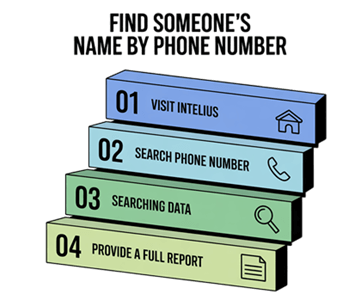
Step 2) Type the full phone number into the search bar, double-checking the digits so you do not miss a match.
Step 3) Click “Search” and let Intelius scan its databases to compile the available records.
Step 4) Once the scan finishes, Intelius shows you a preview of the report, and you can open an account to unlock the full caller details.
Challenges and Mitigation:
Some listings may lag behind recent changes, so I always cross-check the Intelius results against a second lookup tool before I trust them
5 Days Trial at $0.95
Method 2: Using Google to find the number
Googling a UK phone number is one of the fastest and most reliable ways to identify unknown callers. It works by uncovering public traces such as business listings, scam reports, and user complaints. While it won’t identify private individuals, it’s excellent for spotting spam, spoofed numbers, and repeated scam activity with minimal effort.
Here are the steps to manage this method:
Step 1) Search the number in multiple formats (UK local, no spaces, and +44 format).
Step 2) Repeat the search with keywords like scam, spam, or who called.
Step 3) Review results beyond the first page, focusing on forums and complaint sites.
Step 4) Cross-check any business name found against the company’s official website.
Challenges and Mitigation:
New, spoofed, or private numbers may return no results, which can create false confidence. Mitigate this by combining Google searches with crowd-sourced lookup sites or a cautious callback using a hidden number.
Method 3: Use Your Mobile Carrier’s Spam-Filtering Tools
UK mobile carriers actively monitor calling patterns across their networks and automatically flag suspected spam or scam numbers. This method is stable because it relies on network-level intelligence, not guesswork. It won’t always reveal who called, but it’s highly effective at warning you when a number is likely unsafe. Some of the major UK carriers include EE, O2, Vodafone, and Three.
Here are the steps to use this method:
Step 1) Check your call log for labels like “Suspected spam” or “Scam call.”
Step 2) Enable spam filtering in your carrier’s official app or account settings.
Step 3) Review blocked or filtered calls for additional context.
Step 4) If needed, report the number directly to your carrier for analysis.
Challenges and Mitigation:
Spam detection may miss brand-new or low-volume scam numbers and won’t identify legitimate callers. Mitigate this by pairing carrier alerts with Google searches or crowd-sourced lookup sites before deciding to return or block the call.
Method 4: Using Truecaller (Caller ID app)
Truecaller is a widely used caller-ID application that identifies unknown numbers using a global, crowd-sourced database. In the UK, it’s particularly effective for spotting businesses, telemarketers, and known scam numbers. While it can’t guarantee accuracy for every call, it provides fast, practical context before you decide to answer or return a call.
Here are the steps to use Truecaller:
Step 1) Download and install Truecaller from the official website.
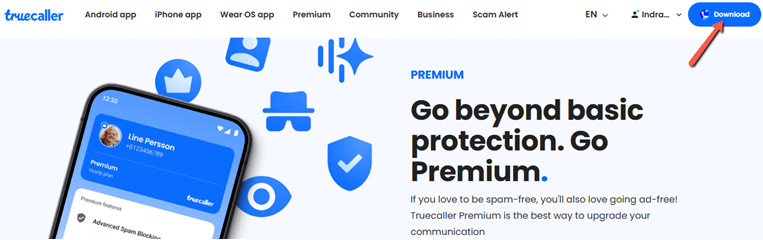
Step 2) Enable caller ID and spam protection within the app settings.
Step 3) Check the caller name, category, and spam warnings when a call comes in.
Step 4) Review community comments or reports linked to the number.
Challenges and Mitigation:
Truecaller relies on user-submitted data, which can be outdated or incomplete, and it requires sharing contact information. Mitigate this by treating results as indicators, not proof, and confirming suspicious numbers through Google or your mobile carrier.
Link: https://www.truecaller.com/
Method 5: Check for UK Premium-Rate or Spoofed Numbers
Some unknown calls come from UK premium-rate numbers or spoofed numbers designed to look local and trustworthy. This method focuses on analyzing number patterns and call behavior rather than identifying a caller by name. It’s a stable way to quickly spot high-risk calls that are more likely to cost money or involve fraud.
Here are the steps to follow:
Step 1) Check the number prefix (for example, 09, 087, or 084) for premium-rate services.
Step 2) Look for suspicious behavior such as very short rings or repeated missed calls.
Step 3) Search the prefix or full number with keywords like premium rate or spoofed.
Step 4) Verify rules and warnings published by Ofcom.
Challenges and Mitigation:
Spoofed numbers can mimic normal UK mobiles, and not all risky numbers use premium prefixes. Reduce exposure by avoiding call-backs to unknown numbers and combining prefix checks with carrier spam alerts or online search results.
Method 6: Check Social Media
Some UK callers leave digital footprints on social media, especially small businesses, freelancers, or individuals who use their numbers publicly. Searching social platforms won’t identify scammers reliably, but it can help confirm legitimate callers. This method works best as a secondary check when other lookup methods return limited or unclear results.
Have a look at the steps:
Step 1) Search for the full number and variations on Facebook and LinkedIn.
Step 2) Check profile bios, business pages, and public posts for number matches.
Step 3) Review profile credibility (activity history, connections, business details).
Step 4) Cross-check any name or business found with an external search.
Challenges and Mitigation:
Many users keep numbers private, and outdated profiles can cause misidentification. Mitigate this by using social results only as confirmation, not proof, and verifying any matches through official websites or other independent methods before responding.
Is It Safe to Call Back an Unknown UK Phone Number?
Calling back an unknown number in the UK can be risky, especially if the call came from an unfamiliar or suspicious source. Some numbers are linked to premium-rate scams, where returning the call triggers high charges. Others may be spoofed, meaning they look like a normal UK number but aren’t genuine. A safer approach is to identify the caller first using reverse lookup tools, Google searches, or your mobile carrier’s spam alerts. If the number belongs to a legitimate business, you’ll usually find a public trace online. When in doubt, don’t call back directly—let verified information guide your decision.
Are Reverse Phone Lookup Tools Legal to Use in the UK?
Yes, using reverse phone lookup tools in the UK is legal, as long as the data comes from publicly available sources. Reputable platforms pull information from public records, business listings, and user-contributed data, not private databases. However, legality doesn’t equal accuracy. Some tools may return outdated or incomplete results, so it’s important to treat findings as informational, not definitive proof. To stay safe, avoid services that ask for unnecessary permissions or personal data. Stick to well-reviewed lookup tools, and always cross-check results before taking action based on them.
Why Do Scammers Use UK Phone Number Spoofing?
Scammers spoof UK phone numbers to appear local and trustworthy, increasing the chances that you’ll answer the call. Seeing a familiar UK prefix makes the call feel legitimate, even when it originates from abroad. This tactic is commonly used in tax scams, bank fraud, and one-ring callback scams. Spoofed numbers often can’t be called back successfully or connect to unrelated individuals. The best defense is not relying on the number alone—combine carrier spam warnings, online searches, and reverse lookups to confirm whether a call is genuine before responding.
What Information Can You Realistically Find From a UK Phone Number?
A UK phone number can reveal different levels of information, depending on how publicly it’s used. For businesses, you may find company names, addresses, and websites. For individuals, results are often limited to approximate location or network provider. Reverse lookup tools may also show linked social profiles or user reports, but full personal details are rare and not guaranteed. If a number has been used in scams, you’ll often see complaints or warnings online. The key is understanding that phone lookups provide context, not certainty—use multiple sources for clarity.
How Can You Reduce Spam and Scam Calls in the UK?
Reducing spam calls starts with prevention, not reaction. Enable spam filtering through your mobile carrier and keep it updated. Register your number with the Telephone Preference Service (TPS) to reduce legitimate marketing calls. Avoid answering or engaging with unknown callers, as interaction can mark your number as active. Use caller-ID apps cautiously and report confirmed spam numbers to help improve detection. Most importantly, never share personal or financial details during unsolicited calls. A layered approach—carrier tools, lookups, and awareness—is the most effective defense.
Should You Trust Free Phone Number Lookup Tools?
Free phone lookup tools are useful for quick checks, but they have limitations. They often provide basic data, such as spam reports or business associations, without deeper verification. Accuracy can vary, and some free tools rely heavily on user-submitted information, which may be outdated. They’re best used as a first step, not a final answer. If a call feels serious or suspicious, follow up with reputable paid tools, Google searches, or carrier insights. Think of free lookups as signals, not conclusions.
FAQs:
Spokeo scans billions of public records and 120+ social networks to match an unknown UK number to a real name, location, and linked online profiles. Its reverse phone lookup often reveals whether a caller is a legitimate business or a repeat spammer, and reports refresh as new data appears. It is my top pick for quickly identifying who called you from an unfamiliar UK number.
Conclusion
From my experience, the most reliable methods are reverse lookup tools like Intelius and Spokeo, Google searches, and carrier spam filters—they balance accuracy, speed, and safety. I always cross-check results and stay mindful of privacy. Use these tools ethically, avoid unnecessary data sharing, and let verification—not curiosity—guide your next move.
