
7 BEST Monitors for Programming and Coding (Tested 2026)
 Editorial Team
Disclosure: We are reader-supported and may earn a commission when you buy through links on our site. Learn more

The HP VH240a is our top monitor for programming because its supplied stand adjusts for height, tilt, and portrait use. Its 23.8-inch Full HD screen is modest next to the QHD and ultrawide models, but the stand makes it easier to place the display at a comfortable height. We compared seven monitors by text clarity, screen space, panel behavior, ergonomics, refresh rate, and connections.
This guide was updated in September 2026. The Samsung S34J552WQNXZA gives you one wide, flat workspace. The curved Samsung Odyssey G55C is the stronger fit when smoother scrolling and darker blacks matter more. Read more…
Best Monitors for Coding and Programming: Quick Picks

7 Monitors Compared

Coding Layouts Reviewed

Official Specs Rechecked

US Availability Checked
Best Monitors for Programming Compared
| Monitor | Screen Size | Resolution | Refresh Rate | Inputs | Price |
|---|---|---|---|---|---|
 HP VH240a |
23.8 inch | 1920 x 1080 | 60Hz | 1x HDMI, 1x VGA | SEE PRICE |
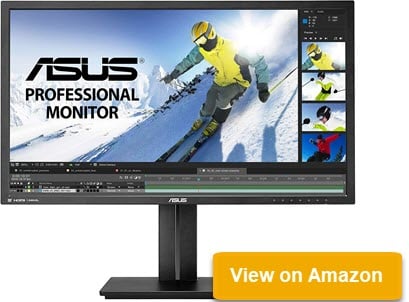 ASUS VA27EHE |
27 inch | 1920 x 1080 | 75Hz | 1x HDMI 1.4, 1x VGA | SEE PRICE |
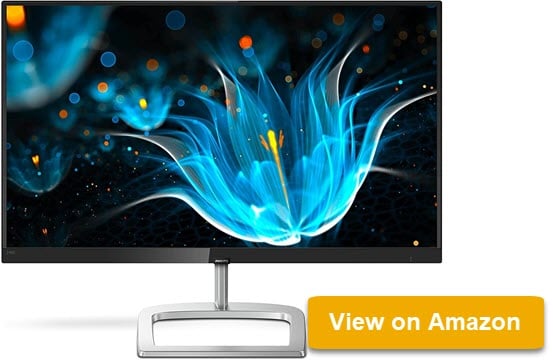 Philips 221V8LB |
21.5 inch | 1920 x 1080 | Up to 120Hz | 1x HDMI, 1x VGA | SEE PRICE |
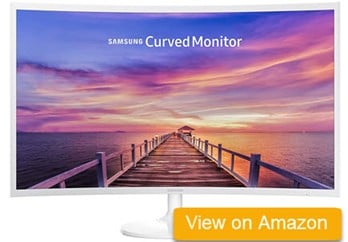 SAMSUNG 32″ Odyssey G55C |
32 inch | 2560 x 1440 | 165Hz | 1x HDMI 2.0, 1x DisplayPort 1.2 | SEE PRICE |
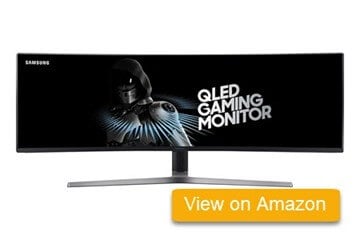 Samsung S34J552WQNXZA |
34.1 inch | 3440 x 1440 | 75Hz | 2x HDMI, 1x DisplayPort 1.2 | SEE PRICE |
1) HP VH240a
Top pick: best included stand for height and portrait adjustment
HP VH240a is our first choice if you want an adjustable stand. It has a 23.8-inch IPS screen with a 1920 x 1080 resolution and a 60Hz refresh rate. You can raise, tilt, or turn the screen into portrait mode. This can save you from buying a separate monitor arm.
Text looks a little sharper than it does on a 27-inch Full HD screen because the same number of pixels fit into a smaller area. Portrait mode is useful for reading long files, logs, and documentation. The screen may feel small if you want to keep your code editor, browser, and terminal open next to each other.
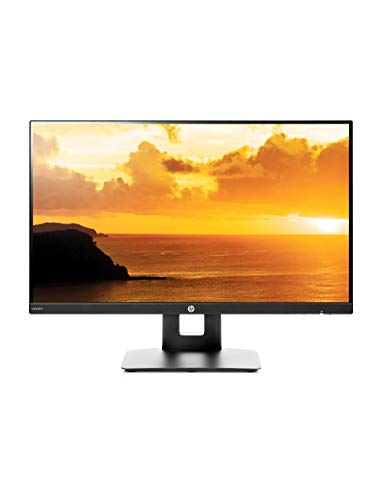
Size: 23.8 Inches
Display Type: IPS Full HD Monitor
Resolution: 1920 x 1080 Pixels
Refresh Rate: 60 Hz
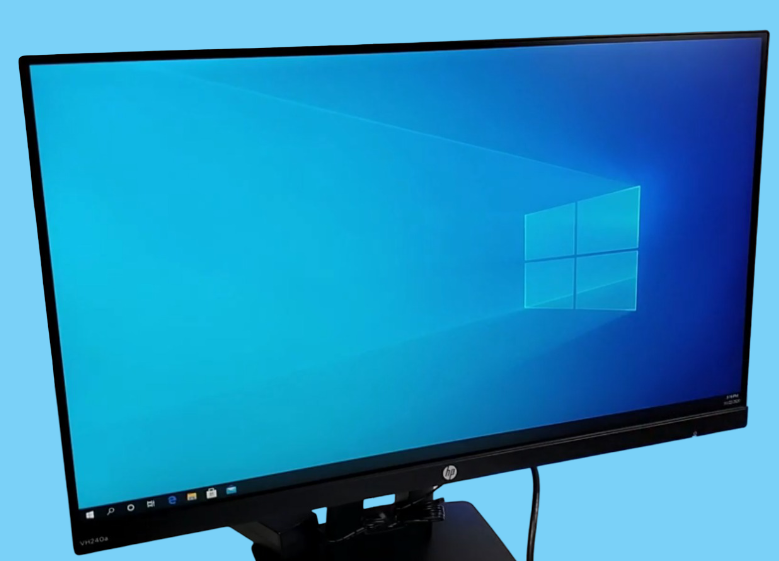
The original photo shows the monitor and its adjustable stand. It does not prove how bright or fast the screen is, or how accurate its colors are. HP says the monitor has an anti-glare IPS panel, HDMI, VGA, two speakers, and support for a VESA mount. The speakers are fine for alerts or spoken audio, but music sounds better through separate speakers.
This is an older monitor, and the ports show its age. It has no DisplayPort, USB-C, or USB hub. Its Full HD screen also gives you less working space than a QHD or ultrawide monitor. Scrolling does not look as smooth as it does on the faster screens in this list.
Pros
Cons
Who should buy it: Developers who want height adjustment and portrait mode without buying a monitor arm.
Skip it if: It costs almost as much as a newer QHD monitor.
2) ASUS VA27EHE
Best affordable 27-inch IPS monitor
ASUS VA27EHE is a larger choice if the HP feels too small. Its 27-inch IPS screen has the same 1920 x 1080 resolution as the HP. Text and menus look larger, but the monitor cannot fit more content on the screen. The image also stays clear when you view it from the side, which is useful when two people share the display.
ASUS lists a 75Hz refresh rate and Adaptive-Sync support. Scrolling can look a little smoother than it does on the 60Hz HP. The screen also has an anti-glare surface, a flicker-free mode, and settings that reduce blue light. These settings can make the display easier to adjust for your room.
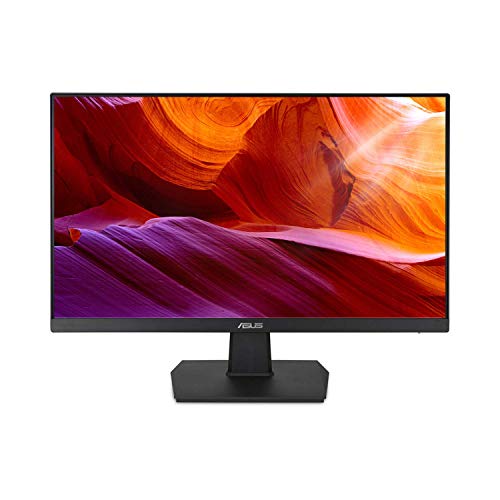
Size: 27 Inches
Display Type: Full HD IPS Monitor
Resolution: 1920 x 1080 Pixels
Refresh Rate: 75 Hz
The low pixel density is its biggest weakness. Text does not look as sharp as it does on a smaller Full HD screen or a 27-inch QHD monitor. Sitting farther from the screen may help, but changing the display scale cannot add detail.
The ASUS has one HDMI 1.4 port and one VGA port. It has no DisplayPort, USB-C, USB hub, or speakers. The stand only tilts. It cannot move up and down or turn into portrait mode, but the 100 x 100mm VESA mount lets you add a better stand or arm.
Pros
Cons
Who should buy it: Developers who want a large, low-cost IPS monitor.
Skip it if: You want very sharp text or a stand that adjusts for height.
3) Philips 221V8LB
Best compact monitor for dark editor themes
Philips 221V8LB is a good fit for a small desk or a dark editor theme. Its 21.5-inch VA screen has a 1920 x 1080 resolution. Text looks sharper than it does on the 27-inch ASUS because the pixels are closer together. The smaller screen works well for a terminal, documentation, or a second monitor, but it gives you less room for several windows.
Philips lists a 3000:1 contrast ratio. This means dark backgrounds should look deeper than they do on the IPS monitors in this list. The monitor can run at 100Hz through HDMI. It also has an optional 120Hz overclock setting. You must turn on that setting in the monitor menu, and Philips warns that it may cause display problems on some systems.

Size: 21.5 Inches
Display Type: Full HD Monitor
Resolution: 1920 x 1080 Pixels
Refresh Rate: 100 Hz
The Philips has one HDMI 1.4 port, one VGA port, and an audio output. It also supports a 100 x 100mm VESA mount. The stand only tilts, so you need a different stand or monitor arm if you want height adjustment.
The small screen is the main drawback. It cannot show several full-size windows as well as a QHD or ultrawide monitor. It also has no USB-C connection or USB hub. Check that the store page names the exact 221V8LB/27 model before you buy it.
Pros
Cons
Who should buy it: Developers who have a small desk or use dark editor themes.
Skip it if: You want to keep several large windows open on one screen.
4) Acer SB220Q
Best compact IPS second screen
The Acer SB220Q is a small IPS monitor that works well as a second screen. It has the same 21.5-inch size and Full HD resolution as the Philips. The Acer is easier to view from the side, while the Philips can show darker blacks. The Acer is the better choice if you place it to one side or share the screen with another person.
Acer lists a 75Hz refresh rate, 250-nit brightness, 178-degree viewing angles, 16.7 million colors, and a 4ms response time. These numbers come from Acer. Guru99 did not measure them. Scrolling at 75Hz can look smoother than it does on a 60Hz monitor, but the difference is much smaller than it is on the 165Hz Samsung.

Size: 21.5 Inches
Display Type: Full HD Widescreen Monitor
Resolution: 1920 x 1080 Pixels
Refresh Rate: 75 Hz
The Acer has one HDMI port and one VGA port. It has no DisplayPort, USB-C, USB hub, or speakers. The stand tilts from about -5 to 15 degrees, but it does not move up and down or rotate. The monitor also has no standard VESA mount, so you cannot use it with most monitor arms.
The store link has opened a monitor and webcam bundle before. Check what is included before you compare the price with a monitor sold on its own. The small case saves desk space, but the fixed stand and basic ports are not ideal for a modern laptop. Our wireless keyboard and mouse guide has more ideas for a small desk.
Pros
Cons
Who should buy it: Developers who want a small IPS monitor as a second screen.
Skip it if: You need a VESA mount, height adjustment, or portrait mode.
5) Samsung 32″ Odyssey G55C Monitor
Best for smooth scrolling and dark themes
The Samsung 32″ Odyssey G55C Monitor is a good choice if you want more screen space and also play games. Its 2560 x 1440 QHD resolution fits more content than Full HD. The 165Hz refresh rate also makes scrolling and pointer movement look very smooth. It does not make your code run faster.
The 32-inch VA screen has a strong 1000R curve. The curve works best when you sit in the center. It is less useful when another person views the screen from the side, and straight lines may look bent from some positions. Samsung lists a 2500:1 contrast ratio and 300-nit brightness. Guru99 did not measure these values.

Size: 32 Inches
Display Type: Full HD LED Monitor
Resolution: 2560 x 1440 Pixels
Refresh Rate: 165 Hz
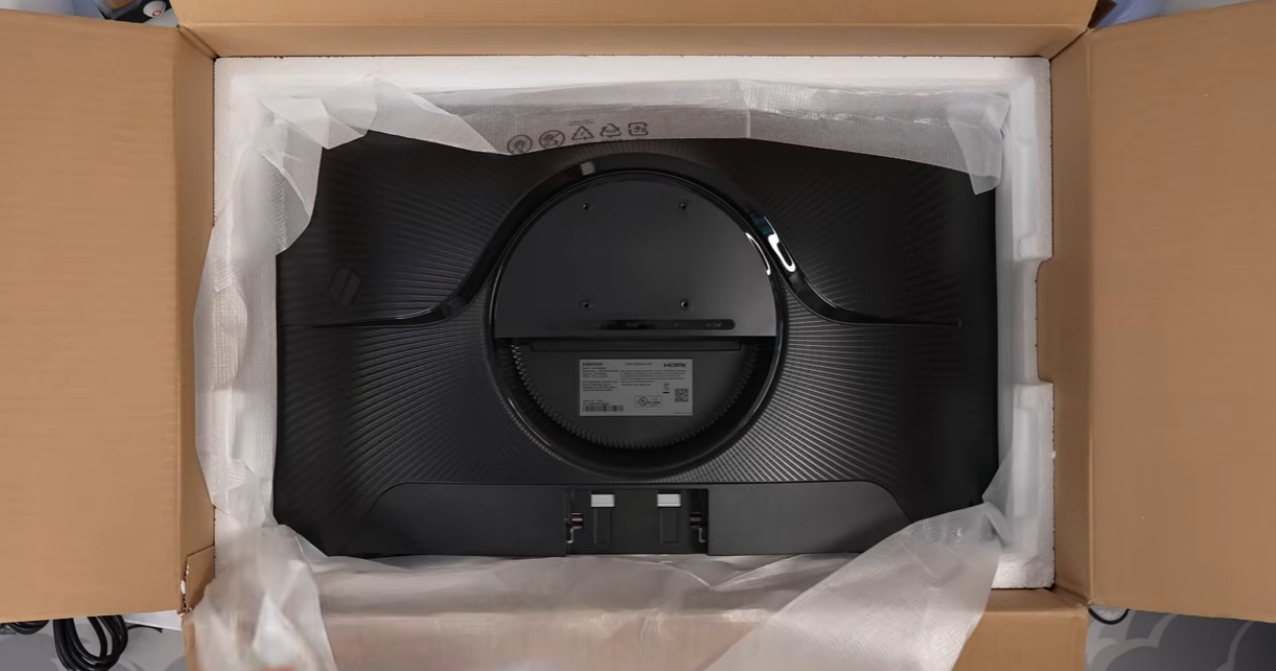
The original photo shows the monitor before it was put together. It does not prove how fast or bright the screen is. Samsung lists a 1ms MPRT response time, HDMI 2.0, DisplayPort 1.2, a headphone output, HDR10, and FreeSync. These ports work well with a desktop or gaming laptop, but the monitor has no USB-C charging or USB hub.
The stand is the main weakness. It only tilts. You need a riser or a 75 x 75mm VESA arm to change the screen height. The strong curve also makes the monitor harder to share than a flat screen.
Pros
Cons
Who should buy it: Programmers who also play games and like a strongly curved screen.
Skip it if: You share your screen with other people or need height adjustment.
6) Sceptre E248W-19203R
Best low-cost monitor with speakers
Sceptre E248W-19203R is a low-cost monitor for people who use more than one computer. Its 23.8-inch VA screen has a Full HD resolution and a refresh rate of up to 75Hz. Two HDMI ports and one VGA port let you keep a laptop, desktop, or older computer connected at the same time.
The monitor also has two 2W speakers. They are useful for alerts, spoken tutorials, and simple calls, but they are not good enough for music. Sceptre lists a 3000:1 contrast ratio and an 8ms gray-to-gray response time. Guru99 did not measure its contrast, brightness, colors, or response time.

Size: 24 Inches
Display Type: LED Monitor
Resolution: 1920 x 1080 Pixels
Refresh Rate: 75 Hz
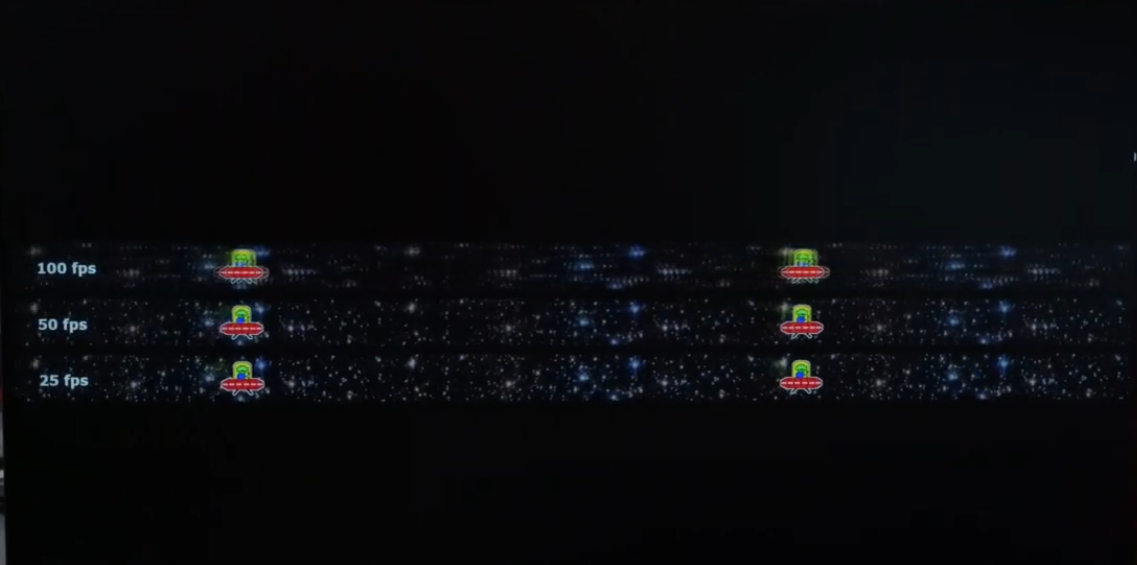
The original motion photo shows moving targets marked 100, 50, and 25 fps. The camera settings and test steps were not recorded, so the photo cannot prove the monitor’s response time or motion quality. It only shows that the test pattern was used on the review unit.
The stand tilts but does not move up and down or turn into portrait mode. The monitor has no DisplayPort, USB-C, or USB hub. You may need a riser or VESA arm to raise the screen. The two HDMI ports and speakers are useful for the price, but this monitor does not provide QHD space or laptop charging. Our keyboard and programming mouse guides cover the rest of the desk.
Pros
Cons
Who should buy it: Buyers who want a low-cost monitor with several inputs and basic speakers.
Skip it if: You need QHD resolution, USB-C, or laptop charging.
7) Samsung S34J552WQNXZA
Best ultrawide coding workspace
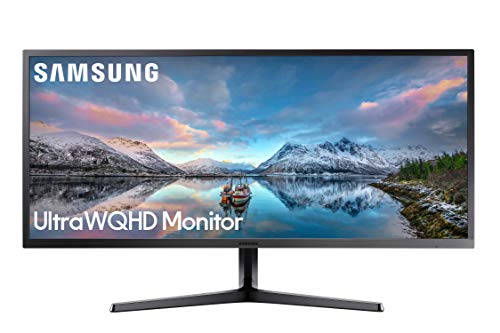
The Samsung S34J552WQNXZA is the only ultrawide monitor in this list. Its 3440 x 1440 resolution gives you enough room for an editor, browser, terminal, and chat window on one screen. There is no bezel in the middle, and the flat panel keeps straight lines looking straight when you sit in the center.
Samsung lists a 75Hz refresh rate and a 3000:1 contrast ratio. The monitor also has Picture-by-Picture and Picture-in-Picture modes. Picture-by-Picture can show two computers next to each other on the same screen. Dark themes should look deeper on its VA panel, but Guru99 did not measure the black level. Its 75Hz refresh rate cannot look as smooth as the Odyssey’s 165Hz screen.
Size: 34 Inches
Display Type: Ultrawide Monitor
Resolution: 3440 x 1440 Pixels
Refresh Rate: 75 Hz
The monitor has two HDMI ports, one DisplayPort 1.2 port, and a headphone output. It has no USB hub, Ethernet port, or USB-C charging. Laptop users still need a charger and may also need a separate USB hub. Samsung’s Easy Setting Box software can divide the screen into sections, but you can also use the window tools built into your operating system.
The monitor is about 32.6 inches wide, so it needs a large desk. Its stand only tilts, but the 100 x 100mm VESA mount lets you add an arm or another stand. This model gives you a wide workspace and several video inputs. It is a poor fit if you need height adjustment, laptop charging through one cable, or a small screen.
Pros
Cons
Who should buy it: Developers who want one wide screen for several open windows.
Skip it if: Your desk is small or you need USB-C laptop charging.
How We Tested and Selected These Programming Monitors

Editorial Team reviewed the seven retained monitors at native resolution with an editor, terminal, browser documentation, and light and dark themes. The checks covered text readability, screen space, scrolling, viewing from the side, stand movement, port access, and setup. The supplied record does not state the hands-on test dates. Official specifications and US product pages were rechecked in August 2026.
We ranked text readability and coding space first. Stand adjustment, panel behavior, connections, refresh rate, and who each monitor suits came next. We did not assign scores because the source evidence does not contain a weighted measurement set.
Limitations: The evidence pack does not include colorimeter logs, luminance readings, camera settings, or instrumented input-lag data. Brightness, contrast, response time, and peak refresh rate are therefore presented as manufacturer specifications. Product photographs document possession or setup; they do not prove measured display performance.
- Text clarity: Code was viewed at native resolution.
- Workspace: Editor, terminal, and documentation layouts were compared.
- Ergonomics: Height, tilt, pivot, and VESA support were checked.
- Panel behavior: Side-angle viewing and dark themes were reviewed without instrumented contrast data.
- Connections: Each listed input and missing USB-C support was checked.
What to Look for in a Programming Monitor
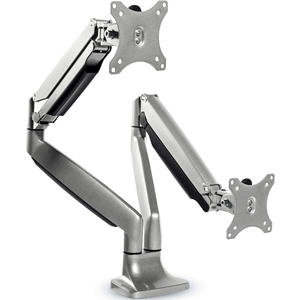
Match resolution to screen size. A 21.5-inch Full HD screen looks tighter than a 27-inch Full HD screen because both display the same 1920 x 1080 pixels. A 3440 x 1440 ultrawide adds detail and horizontal space. Pick a size and resolution that can hold your editor, terminal, tests, and documentation without making text too small to read.
Prioritize positioning. A screen that sits too low can be uncomfortable even when the panel looks good. If the supplied stand only tilts, check VESA compatibility and include a monitor stand, arm, or riser in the budget.
Check panel type and room conditions. VA panels usually display deeper blacks than conventional IPS panels, which can help dark editor themes. IPS panels generally hold their image better from the side. Bright rooms also require good glare handling and enough brightness, but we did not instrument-test those properties here.
Verify connections before buying. None of these seven monitors offers modern USB-C docking with laptop charging. Check whether your computer uses HDMI or DisplayPort and budget for an adapter if needed. A higher refresh rate makes scrolling look smoother, but text clarity, workspace, and screen position usually matter more for programming.
Should Programmers Use Two Monitors or One Ultrawide?
Two monitors let you rotate one screen, mix panel sizes, and keep documentation separate from the editor. They also add a center bezel and require more cables. This older developer discussion about second monitors illustrates the range of personal preferences, but it is not evidence that one layout improves every programmer’s productivity.
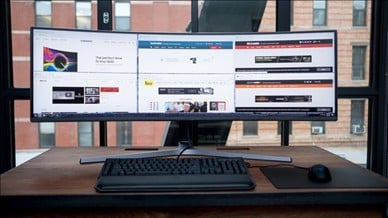
An ultrawide gives you one continuous desktop. The Samsung S34J552WQNXZA can hold an editor, browser, and terminal without a bezel between them, but it cannot match the portrait orientation offered by the HP VH240a. Window-management habits and available desk width decide which arrangement feels better. Our dual monitor setup guide explains positioning options.
Verdict
The HP VH240a is our top pick because its included stand adjusts for height, tilt, and portrait use. You do not need to buy an arm to place it well. Its Full HD resolution, 60Hz refresh rate, and older connections are the drawbacks. If you are building a second-screen workspace, our dual monitor setup guide covers practical positioning options.
- HP VH240a suits programmers who need an adjustable supplied stand. Skip it if QHD resolution or USB-C matters more.
- ASUS VA27EHE suits users wanting a physically larger IPS screen. Skip it if crisp close-range text or height adjustment is essential.
- Philips 221V8LB suits compact desks and dark themes. Skip it when several full-size windows must remain visible together.
