
10 Best FREE Image Hosting Sites (2026)
 Editorial Team
Disclosure: Guru99 is reader-supported. We may earn a commission when you buy through links on this page. Learn more

Free image hosting can feel generous until compressed uploads blur a portfolio, public links stop working, storage fills unexpectedly, or a confusing dashboard hides privacy settings. Slow transfers, limited recovery, weak album controls, and unclear inactivity rules can also waste hours or expose personal pictures. The factors that matter most are often buried inside plan tables and help pages. A clearer comparison helps you preserve image quality, share confidently, and choose a service that remains manageable as your library grows.
I spent 68+ hours researching 18 image hosting and cloud storage platforms, checking current free allowances, sharing controls, format support, recovery rules, and official status information. I also compared documented capabilities with recurring user feedback. After reviewing those findings, I shortlisted 10 Best Free Image Hosting Sites, with practical features, pros and cons, and current plan details to help you choose confidently. Read more…

Icedrive is a top-notch image hosting platform that makes storing and sharing photos effortless. It is best to store files on a platform that ensures complete privacy. It helps you keep control by preventing third-party access.
Best Free Image Hosting Sites: Top Picks!
| Name | Supported Platforms | Free Storage | Link |
|---|---|---|---|
👍 Icedrive |
iOS, Android, Windows, Mac and Linux | 10 GB | Learn More |
 Zoho Workdrive |
Windows, Mac, Web, Android, iOS | 5 GB | Learn More |
 Adobe Lightroom |
Windows, Mac, Android, IOS, Linux and Ubuntu | 7 Days Free Trial | Learn More |
 Smugmug |
iOS, Android and Windows | 14 Days Free Trial | Learn More |
 pCloud |
Windows, Mac, Linux, iOS and Android | 10 GB | Learn More |
1) Icedrive
Icedrive combines web, mobile, and desktop cloud storage with public sharing links and a virtual drive for Windows. Its free plan provides up to 10 GB, making it suitable for photo collections, temporary delivery folders, and several devices without a subscription.
The free tier includes encryption at rest, TLS transfers, and authenticator-based two-factor security. However, client-side encrypted storage, file version history, link passwords, and link expiration controls require paid access. Icedrive publishes no numeric consumer uptime SLA, and its discontinued WebDAV support makes the official apps the practical transfer route.
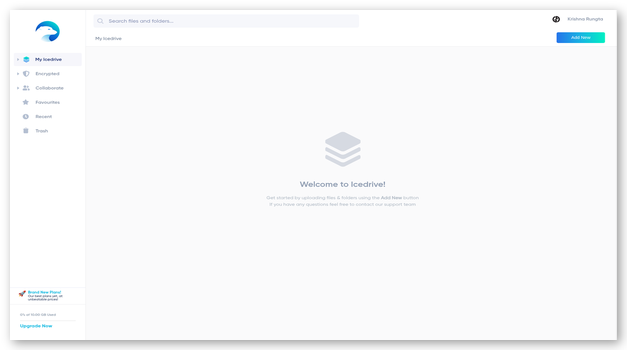
Features:
- Free Capacity: Store up to 10 GB without a paid subscription. The allowance suits selected albums, compressed exports, and working files better than complete RAW archives.
- Public Links: Create shareable links for files and folders through the web interface. Free links lack paid password and expiration controls, so avoid sensitive client material.
- Virtual Drive: Mount cloud files as a Windows virtual drive without downloading everything locally. This saves disk space, although reliable access still depends on connectivity.
- Mobile Backup: Upload and browse photos through Android and iOS applications. Camera backup can centralize new images, but users should verify transfers before deleting originals.
- Security Controls: Free accounts receive encrypted transport, server-side storage protection, and authenticator-based two-factor security. Zero-knowledge encrypted folders remain a separate paid-plan capability.
- Recovery Limits: The current free plan does not include file version history. Keep a separate backup because overwrites or deletions may offer fewer recovery options.
- Service Terms: Icedrive does not publish a numeric availability SLA for free consumer accounts. The provider has also retired WebDAV, directing transfers through supported applications.
Pros
Cons
How to Get It Free?
- Open the Icedrive sign-up page and create a personal account.
- Verify the email address, enable two-factor security, and install only the required official apps.
- Upload selected photos within the 10 GB allowance, then test every public link before sharing.
Permanent free plan with 10 GB
2) Zoho WorkDrive
Zoho WorkDrive organizes photos and documents inside folders, team folders, and shared workspaces. The free plan provides 5 GB and basic sharing, while a 15-day business trial opens controls without a credit card. The service fits teams handling approvals, images, or client assets.
Paid tiers add extensive previews, version management, stronger external-link controls, and administration. Zoho documents ISO 27001, SOC 2 Type II, GDPR, and HIPAA-related safeguards. It does not advertise a numeric free-tier uptime SLA, so teams needing contractual availability should confirm terms before relying on it for time-sensitive delivery.
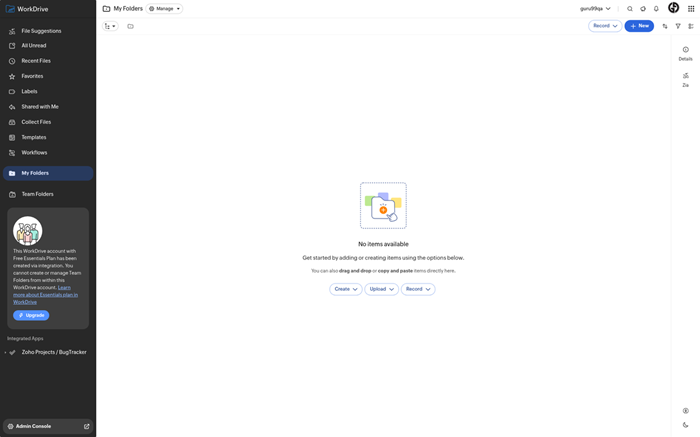
Features:
- Team Folders: Separate shared assets from personal files through organized workspaces. Roles and permissions help teams keep approved images visible without exposing every internal folder.
- Free Storage: The free plan provides 5 GB for individual access and lightweight sharing. Larger creative libraries will need careful selection, compression, or a paid team plan.
- Business Trial: Test paid WorkDrive capabilities for 15 days without a credit card. Trial accounts include expanded storage and collaboration features for evaluation.
- External Sharing: Send files and folders outside the organization through links. Advanced passwords, expiration dates, and administrative restrictions depend on the selected paid plan.
- File Previews: WorkDrive previews common image and document formats inside the browser. Wider format coverage and richer collaboration controls are emphasized on paid business tiers.
- Version Handling: Paid plans preserve file versions and make earlier work easier to recover. Confirm current retention allowances before treating the platform as an archival backup.
- Security Program: Zoho documents encryption and recognized compliance programs, including ISO 27001 and SOC 2 Type II. A numeric consumer availability SLA is not published.
Pros
Cons
How to Get It Free?
- Open Zoho WorkDrive and register an account with a verified email address.
- Select the free 5 GB plan, or start the 15-day business trial without a card.
- Create folders, assign permissions, upload sample images, and test external access before moving a library.
Free plan with 5 GB
3) Adobe Lightroom
Adobe offers free photo sharing through Lightroom mobile, where users receive 5 GB of shared Adobe cloud storage and can publish public albums. This works well for curated galleries, creative reviews, and lightweight portfolios connected to Adobe’s editing environment.
Free Lightroom album sharing is public, while private invitations require a subscription. Creative Cloud desktop applications generally provide seven-day trials with payment details and then renew unless canceled. Adobe maintains a public service-status page, but its consumer plans do not present a numeric uptime SLA. Native Linux desktop apps remain unavailable.
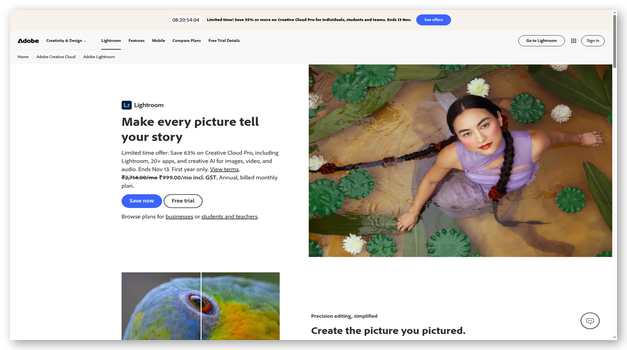
Features:
- Free Gallery: Lightroom mobile users can publish public albums from 5 GB of shared Adobe cloud storage. This route does not require a premium Lightroom subscription.
- Public Sharing: Generate a browser gallery that viewers can open through a link. Private invited sharing is reserved for subscribed Lightroom customers.
- Creative Editing: Adobe’s ecosystem connects photo organization with Lightroom and other creative applications. Advanced desktop tools require subscriptions after their short evaluation periods end.
- Library Sharing: Creative Cloud Libraries can distribute reusable images and design assets with view or edit permissions. Library limits and app access vary by account.
- Version History: Supported cloud documents preserve previous versions for recovery and comparison. Lightroom photo history and cloud-document behavior differ, so confirm the exact workflow.
- Service Status: Adobe publishes live status and incident history for cloud services. Consumer accounts receive transparency, but no numeric availability commitment is presented.
- Platform Support: Web and mobile access cover common sharing tasks, while Creative Cloud desktop applications support Windows and macOS. Adobe provides no native Linux desktop suite.
Pros
Cons
How to Get It Free?
- Install Lightroom mobile or open the supported Adobe account workflow and sign in.
- Import selected photos while staying within the shared 5 GB cloud allowance.
- Create a public album, enable sharing, and review the gallery link in a private browser window.
7-day free trial
4) Smugmug
SmugMug is a portfolio and gallery service for photographers who value presentation, client access, and full-resolution delivery. It stores unlimited JPEG photos on paid plans without reducing resolution. Gallery layouts, privacy options, mobile uploads, and direct image links support display and delivery workflows.
There is no permanent free plan. A 14-day trial requires no credit card and ends unless the user chooses a subscription. SmugMug provides a public status page, yet no numeric consumer SLA or service-credit promise appears in its plan materials. RAW storage remains a separate paid add-on.
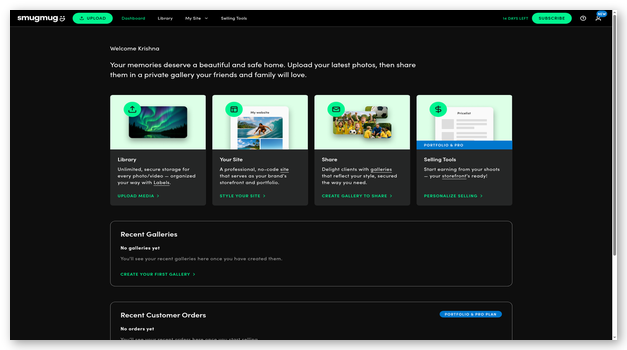
Features:
- Unlimited Photos: Paid plans accept unlimited JPEG photo storage and preserve uploaded resolution. The policy suits large finished-image libraries, but RAW files require a separate add-on.
- Gallery Design: Choose layouts, themes, and organizational settings for portfolios or client collections. Customization depth increases on higher plans and may take time to learn.
- Privacy Options: Protect galleries with access settings and passwords, then control downloading where supported. Always test guest access before delivering sensitive client images.
- Direct Links: Generate direct image URLs at multiple display sizes, plus HTML and forum codes. This offers more embedding flexibility than ordinary cloud-drive shares.
- Upload Tools: Transfer images through browser, desktop, and mobile workflows. Individual image limits and accepted formats should be checked before migrating unusual archival files.
- Status Page: SmugMug publishes current service health and incident history. The consumer plan pages do not include a numeric availability SLA with credits.
- Trial Access: The 14-day trial requires no card and does not renew automatically. Continued hosting after evaluation requires choosing a paid subscription.
Pros
Cons
How to Get It Free?
- Open the SmugMug sign-up page and start its 14-day trial.
- Create sample galleries, upload representative JPEG files, and configure privacy or download settings.
- Test guest links and direct embeds, then subscribe or export everything before the trial ends.
14-day free trial
5) pCloud
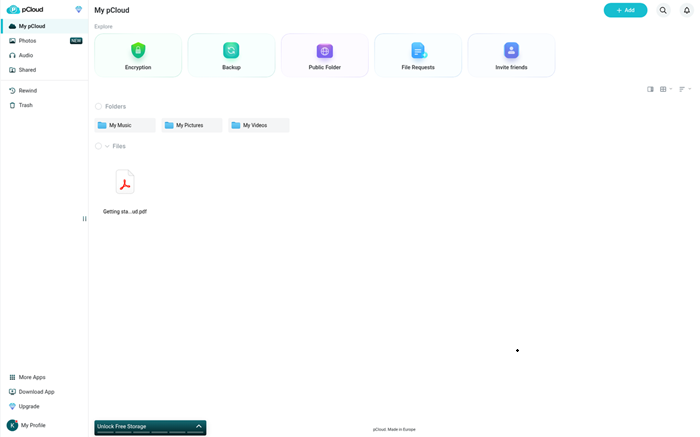
pCloud provides cross-platform storage, photo uploads, shared folders, and public links. A free account starts with 2 GB and can unlock 10 GB through account tasks and referrals. Free link traffic is capped, making it better for personal sharing than high-volume delivery.
Free accounts include 15 days of file versions and trash recovery. Link passwords and expiration dates require payment, while client-side pCloud Encryption is sold separately. The provider advertises 99.98% uptime, but it does not publish a contractual free-plan SLA or service-credit schedule.
Features:
- Expandable Storage: Begin with 2 GB and unlock up to 10 GB through account tasks and referrals. The full allowance is not granted immediately.
- Shared Links: Create links for files and folders without requiring recipients to register. Free accounts receive monthly shared-link traffic limits that constrain popular public downloads.
- Photo Uploads: Mobile applications can upload camera images automatically. Users should confirm completion and preserve a second copy before clearing any local device library.
- Version Recovery: Free users receive 15 days of file revisions, trash, and account rewind coverage. Paid plans extend the standard recovery window.
- Link Controls: Password protection and expiration dates are premium features. Public free links should contain only material intended for anyone possessing the URL.
- Security Option: Transport and server-side protections cover ordinary accounts. Client-side zero-knowledge pCloud Encryption remains a separate paid product rather than a free default.
- Uptime Claim: pCloud advertises 99.98 percent uptime, but it publishes no contractual free-tier SLA or service-credit process.
Pros
Cons
How to Get It Free?
- Open the pCloud sign-up page and create a verified free account.
- Complete the listed account tasks and referral requirements to unlock storage beyond 2 GB.
- Upload sample photos, enable mobile backup carefully, and monitor shared-link traffic and 15-day recovery limits.
Up to 10 GB free storage
6) TeraBox
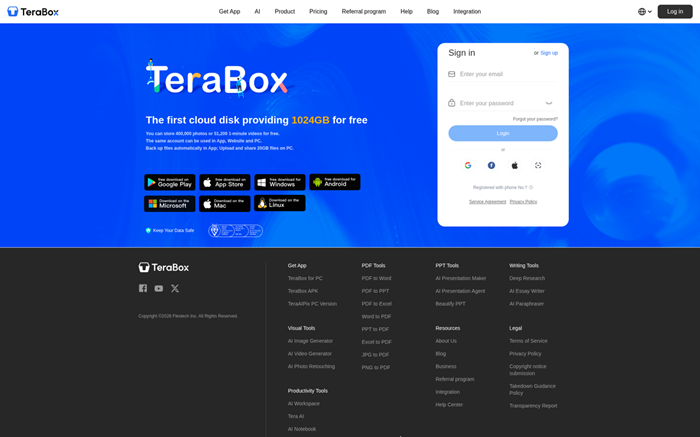
TeraBox advertises 1,024 GB of free cloud storage, beyond typical consumer allowances. Its apps support uploads, album browsing, automatic backup, and share links with access codes. The capacity can accommodate large collections when local storage is tight.
The trade-offs require attention. TeraBox terms allow free capacity and service limits to change, particularly for inactive accounts, while recurring user feedback mentions advertising and slow free downloads. No numeric uptime SLA or clear file-version history applies to free accounts. Valuable originals should remain backed up elsewhere rather than entrusted to one account.
Features:
- Large Allowance: TeraBox advertises 1,024 GB for free accounts. Its terms permit capacity and feature adjustments, so confirm the actual allocation after registration.
- Photo Backup: Mobile applications can back up camera images and organize them for browsing. Completion checks remain essential before deleting any device originals.
- Share Links: Generate links for selected files and apply access codes or expiration choices where available. Recipients may encounter advertising or slower free download speeds.
- Image Formats: The service accepts common photo and general file types. Check the per-file upload limit shown in the account before moving large videos.
- Security Basics: TeraBox documents encrypted transfer and storage safeguards, two-factor authentication, and optional AI organization. These controls do not replace an independent backup.
- Retention Risk: Current terms allow free storage capacity to shrink for inactive users after notice. Regular sign-ins and exports reduce dependence on changing account conditions.
- Service Limits: TeraBox publishes no numeric consumer uptime SLA or free-plan version history. The platform should serve as an additional copy, not the sole archive.
Pros
Cons
How to Get It Free?
- Open the TeraBox sign-up page and create a verified account.
- Check the storage allowance, upload limits, and security controls displayed for that account.
- Enable two-factor authentication, upload test copies, and retain every valuable original in another independent location.
Up to 1,024 GB free storage
7) Google Photos website
Google Photos combines backup, visual search, albums, editing, and sharing through a Google Account. The free 15 GB allowance is shared with Gmail and Drive, so space may be smaller. Original-quality uploads consume full size, while Storage Saver may resize media.
The service is excellent for libraries but unsuitable as a website image CDN. It offers album and partner sharing, not stable direct-image hosting or file version history. Accounts inactive for two years, or over quota for two years, may face content deletion after warnings under Google’s current storage policy.
Features:
- Shared Quota: Each Google Account receives 15 GB shared across Photos, Drive, and Gmail. Existing mail and documents can leave much less room for pictures.
- Backup Quality: Original quality retains uploaded resolution and consumes actual storage. Storage Saver can resize photos above 16 megapixels and videos above 1080p.
- AI Search: Search can group and locate pictures by people, places, objects, or text. Accuracy varies, and sensitive face grouping remains optional.
- Album Sharing: Share albums and individual photos through links or Google contacts. Anyone with an unrestricted link may forward it, so review audience settings.
- File Limits: Google accepts supported photos up to 200 MB or 200 megapixels and videos up to 10 GB. Unusual RAW formats need compatibility checks.
- Retention Policy: Two years of inactivity or sustained over-quota status can trigger deletion after notice. Regular account activity and exports protect important collections.
- Hosting Boundary: Google Photos provides albums, not stable hotlinks, custom ports, or CDN delivery. It also offers no per-photo version history for overwritten originals.
Pros
Cons
How to Get It Free?
- Open Google Photos and sign in with the intended Google Account.
- Review remaining shared storage, then choose Original quality or Storage Saver before enabling backup.
- Upload a small sample, verify album permissions, and keep regular exports of irreplaceable images.
Visit Google Photos website >>
Up to 15 GB shared free storage
8) Internxt
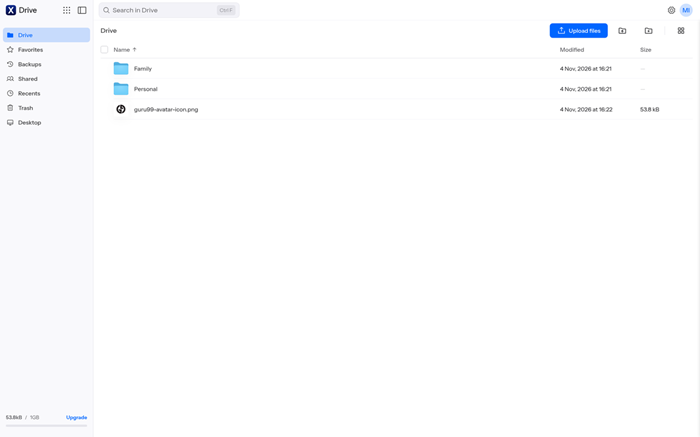
Internxt emphasizes privacy through client-side, zero-knowledge encryption across web, desktop, and mobile apps. Its free plan supplies 1 GB and allows files up to 100 MB, fitting selected images or documents rather than large archives. Sharing links extend secure delivery beyond the account.
The allowance and transfer ceiling are important constraints for photographers. WebDAV and command-line integrations belong to paid access, while dependable free file-version history is not available. Recurring user feedback praises the privacy model but also reports sync, transfer, and support problems. No numeric uptime SLA is published.
Features:
- Private Storage: Internxt applies client-side zero-knowledge encryption so the provider cannot read stored content. Losing credentials can also limit recovery, requiring careful account protection.
- Free Capacity: The free plan provides 1 GB. It fits a small protected collection, not a complete photo library.
- Upload Limit: Free accounts accept files up to 100 MB each. High-resolution exports and RAW files can exceed that threshold and require another service.
- Secure Sharing: Create encrypted links for selected files and folders. Check recipient access and expiration behavior before sending sensitive photographs outside the account.
- Cross Platform: Official applications cover web, Windows, macOS, Linux, Android, and iOS. Sync behavior should be tested with copies before a full migration.
- Version Status: Reliable file version history is not a current free-plan capability. Maintain independent backups for accidental overwrites, ransomware, and deletion recovery.
- Integration Limits: WebDAV and command-line integrations sit on higher plans. Internxt publishes no numeric availability SLA for its free consumer storage accounts.
Pros
Cons
How to Get It Free?
- Open the Internxt sign-up page and register a free account.
- Secure the credentials, install an official application, and confirm the displayed 1 GB allowance.
- Upload files below 100 MB, test a secure link, and retain another copy for recovery.
Permanent free plan with 1 GB
9) Dropbox
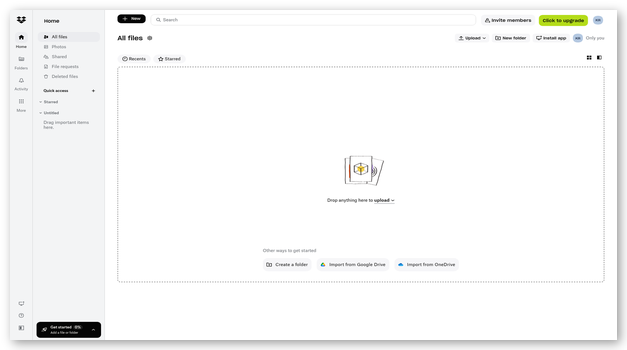
Dropbox Basic offers 2 GB of free storage, synchronization, camera uploads, previews, and links recipients can open without accounts. Its familiar interface supports selected picture delivery, project collection, or a compact folder synchronized across three devices.
Free accounts include 30 days of deleted-file recovery and version history, plus transfers up to 2 GB. Link passwords, expiration dates, and download controls require higher plans. Dropbox publishes no numeric Basic-plan uptime SLA. Accounts that remain over quota can face restrictions and eventual deletion after repeated advance notices under current policy.
Features:
- Basic Storage: Dropbox Basic provides 2 GB of free storage. The allowance fits selected exports and delivery folders better than full-resolution personal archives.
- Device Limit: A Basic account can link up to three devices. Browser access remains available, but additional synchronized computers require unlinking or upgrading.
- Shared Links: Recipients can preview many supported file types without creating accounts. Free links lack password protection, expiration dates, and download-disabling controls.
- Version Recovery: Basic preserves deleted files and earlier versions for 30 days. This helps with mistakes but cannot replace a second independent backup.
- File Transfer: Dropbox Transfer sends packages up to 2 GB on free accounts. It suits short delivery jobs without exposing the surrounding folder structure.
- Camera Uploads: Mobile applications can upload new photos automatically. Available free quota may disappear quickly when videos and original-resolution images are included.
- Quota Policy: Persistently over-quota accounts can face limitations and later deletion after repeated email notices. Dropbox provides no numeric Basic-plan availability SLA.
Pros
Cons
How to Get It Free?
- Open the Dropbox sign-up page and choose the free Basic account.
- Verify the email address, enable two-step verification, and connect no more than three devices.
- Upload a sample folder, test recipient access, and monitor both quota and 30-day recovery dates.
Free Basic plan with 2 GB
10) Sync
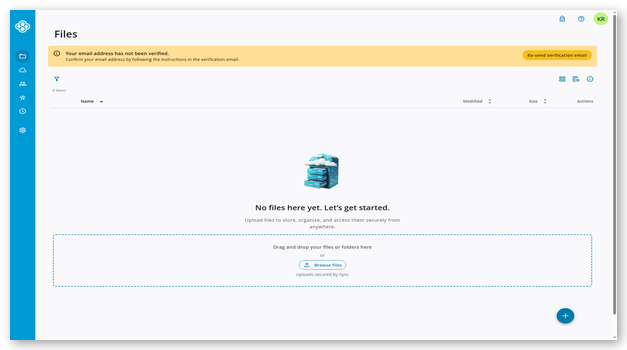
Sync supplies 5 GB of free end-to-end encrypted storage through web, desktop, and mobile apps. It supports camera uploads, file version history, Vault storage, and protected links. The privacy model suits images, contracts, and small client sets that should remain unreadable to the provider.
Free accounts can maintain three sharing links, with download limits. Password protection is available, while expiration dates, upload-enabled folders, and richer controls require payment. Shared links can stream media, although the account interface is not a full gallery platform. Sync publishes no numeric free-tier uptime SLA.
Features:
- Encrypted Storage: End-to-end encryption and zero-knowledge design protect stored content from provider access. Account recovery settings should be configured before uploading irreplaceable images.
- Free Capacity: The free plan includes 5 GB across desktop, mobile, and web access. It suits selected albums and documents rather than complete RAW archives.
- Protected Links: Free users can password-protect shared links and maintain up to three active links. Daily download limits apply to each shared item.
- Version History: Free storage includes file version history and deleted-file recovery. Verify the current retention window inside the account before relying on older revisions.
- Camera Uploads: Mobile apps can collect photos automatically. Users should confirm full-resolution transfer and preserve local originals until every upload is verified.
- Media Preview: The browser previews common images and documents, while shared links can stream supported media. It lacks the visual presentation of a dedicated gallery.
- Service Boundary: Sync offers no custom ports or public CDN controls and publishes no numeric free-tier SLA. Its purpose is private storage and controlled sharing.
Pros
Cons
How to Get It Free?
- Open the Sync sign-up page and create a free account.
- Set recovery options, enable two-factor authentication, and install the required official applications.
- Upload a sample collection, test a password-protected link, and confirm current version-retention limits.
Permanent free plan with 5 GB
Comparison Between Top Image Hosting Sites
| Tool | Permanent Free Plan | Original Quality Storage | Protected Sharing | Version Recovery | Public Status Page | Cross Platform Apps |
|---|---|---|---|---|---|---|
| Icedrive | ✅ | ✅ | ❌ | ❌ | ❌ | ✅ |
| Zoho WorkDrive | ✅ | ✅ | ✅ | ✅ | ✅ | ✅ |
| Adobe Lightroom | ✅ | ✅ | ❌ | ✅ | ✅ | ✅ |
| Smugmug | ❌ | ✅ | ✅ | ✅ | ✅ | ✅ |
| pCloud | ✅ | ✅ | ❌ | ✅ | ✅ | ✅ |
What is a Free Image Hosting Site?
A free image hosting site stores pictures online and provides ways to view or share them. Some services build visual galleries, while others behave like cloud drives. Free plans usually limit storage, traffic, recovery, file size, or link controls. They may also compress large uploads or remove inactive content. Good services explain those rules before registration. They also preserve privacy choices and offer practical export options. Image hosting can support personal albums, portfolio samples, client proofs, or occasional sharing. It should never become the only copy of irreplaceable photographs.
How Do Image Hosting Sites Differ From Cloud Storage?
Image hosting emphasizes galleries, browser viewing, direct links, and presentation. Cloud storage focuses on synchronized files, folders, permissions, and recovery. A gallery service may offer attractive layouts and website embeds. A cloud drive may provide stronger version history and team collaboration. Neither category automatically works as a content delivery network. Direct links can expire, change, or reject hotlinking without warning. Choose according to the reader’s actual destination and traffic pattern. Photographers often benefit from combining a gallery for delivery with independent cloud or local backups for preservation.
What Features Should You Check Before Choosing Free Image Hosting?
Compare the limits that affect everyday access and recovery.
- Storage: Check the free allowance, shared quotas, file ceilings, and unlock requirements before moving a library.
- Image Quality: Confirm whether originals remain unchanged or receive automatic resizing or compression.
- Sharing: Review public links, passwords, expiration dates, embeds, traffic limits, and account requirements.
- Recovery: Compare version history, trash retention, inactivity policies, exports, and deletion notices.
- Privacy: Look for two-factor security, encryption, audience controls, recovery, and clear ownership terms.
How Does Compression Affect Image Quality and Storage?
Compression reduces file size, but its effect depends on the method. Lossless compression preserves image information while shrinking files modestly. Lossy compression removes data and can introduce softness, banding, or artifacts. Some platforms also resize photos above a resolution threshold. That saves storage and speeds sharing, yet it weakens archival value. Upload a detailed sample, download it again, and compare dimensions and file size. Keep original RAW or master files elsewhere. A convenient online copy should never silently replace the highest-quality source available.
Can Free Image Hosting Support Direct Links and Website Embeds?
Some image hosting sites provide direct image URLs, HTML snippets, or multiple display sizes. Ordinary cloud drives usually share a landing page instead. Even valid direct links may carry traffic caps, referrer restrictions, or changing addresses. A service intended for personal sharing is not automatically a website CDN. Test the link inside a private browser and on the target website. Monitor loading speed and monthly bandwidth afterward. For business pages, product catalogs, or heavy traffic, dedicated media hosting with documented delivery terms offers fewer surprises.
Are Free Image Hosting Sites Safe for Personal Photos?
Free hosting can be safe for selected pictures when settings match their sensitivity. Public links may be forwarded, indexed, or opened by unintended viewers. Passwords and expiration dates are often paid features. Encryption protects transfers, but only zero-knowledge designs restrict provider access to stored content. Enable two-factor security and review account recovery immediately. Avoid uploading identity documents or intimate images without strong controls. Keep another encrypted copy under your control. Also read ownership, training, deletion, and inactivity terms before trusting any service long term.
How Can AI Improve Photo Organization and Search?
AI photo tools can recognize objects, text, locations, faces, and visual similarities. They reduce manual tagging and help users find forgotten pictures quickly. Automated edits can improve lighting, remove distractions, or create grouped memories. These benefits carry privacy questions because analysis may involve sensitive faces and places. Review whether face grouping is optional and how training data is handled. AI suggestions also make mistakes, especially with identities and context. Treat automated labels as navigation aids rather than permanent truth, and preserve original metadata during exports.
What Happens When Free Storage Fills or an Account Becomes Inactive?
When a free account reaches its quota, uploads and synchronization may stop. Some platforms also restrict sharing until space becomes available. Long-term over-quota status can eventually lead to deletion after repeated notices. Inactive-account rules vary and may reduce storage or remove content. Keep the registered email address current and read every warning message carefully. Export important albums before approaching any stated deadline. A simple 3-2-1 backup plan remains safer: maintain three copies, on two storage types, with one copy kept elsewhere.
How Do We Select the Best Free Image Hosting Sites?

Guru99 reviews current plans, official policies, and recurring user feedback to separate usable free image hosting from outdated allowances, unclear limits, and unsupported promotional claims for readers and teams today.
- Storage Limits: We verify starting allowances, unlock conditions, shared quotas, file-size ceilings, and inactivity rules across official plan pages and help documents. These checks expose plans that advertise more capacity than users receive immediately.
- Image Integrity: We review compression, resizing, supported formats, previews, metadata behavior, and downloaded quality with representative image types. We favor services that explain changes before they affect archival pictures.
- Sharing Controls: We compare public links, passwords, expiration dates, direct-image URLs, embed support, traffic limits, and recipient access in signed-out browsers. Clear permissions matter more than decorative gallery claims.
- Privacy Standards: We examine encryption, two-factor security, account recovery, ownership terms, and zero-knowledge claims within current policies. We distinguish ordinary transport security from private client-side encryption.
- Recovery Options: We check version history, trash retention, export tools, over-quota rules, and deletion warnings across free accounts. These safeguards determine whether simple mistakes become permanent losses.
- Availability Evidence: We look for public status pages, incident history, formal uptime commitments, and consumer-plan exclusions from contractual terms. Marketing percentages are not treated as enforceable service-level agreements. They help readers judge whether downtime promises carry meaningful contractual remedies.
- Practical Feedback: We compare recurring review patterns involving uploads, synchronization, advertising, support, interface clarity, and download speed across several review platforms. Isolated complaints never override stronger documented evidence.
How Can You Troubleshoot Common Free Image Hosting Problems?
Most image hosting failures come from quotas, permissions, compression settings, or unstable links. Work through each issue without deleting local originals.
Issue: Uploads repeatedly stop before large photos finish transferring to the selected account.
Solution: The user should check remaining quota and file-size limits, then retry one supported image through the official web application.
Issue: Shared links open for the owner but fail for all outside recipients.
Solution: The owner should test an incognito window, remove account-only restrictions, and create a new link with intentional audience settings.
Issue: Downloaded images look noticeably softer or smaller than the uploaded original files.
Solution: The user should inspect upload-quality settings, compare pixel dimensions, and select original-quality storage before moving any master files.
Issue: Website images suddenly disappear after cloud-drive links worked during earlier initial testing.
Solution: The publisher should replace unsupported share links with documented direct URLs or a proper image CDN built for embedded traffic.
Issue: Mobile backup appears complete, but several recent photographs still remain missing online.
Solution: The account holder should verify permissions, battery restrictions, network rules, and upload queues before deleting anything from the device.
Issue: Deleted images cannot be found after the documented recovery period finally expires.
Solution: The user should check trash and version history immediately, then restore from an independent backup when platform retention has ended.
How Should Photographers Move a Library Between Hosting Services?
A controlled migration protects originals, metadata, permissions, and client access.
- Inventory: Record folder counts, storage totals, file formats, shared galleries, and current links before exporting anything.
- Export: Download original files with metadata where possible, then compare checksums, dimensions, and representative RAW images.
- Pilot: Upload one mixed folder and test quality, privacy, search, mobile access, downloads, and recovery.
- Redirect: Update website embeds and client links only after the new copies work for signed-out recipients.
- Retire: Keep the former service active during a transition period and preserve an offline backup afterward.
What Trends Will Shape Image Hosting Services Next?
Image hosting will increasingly combine AI search, automated editing, privacy controls, and content provenance. Services may label generated media and preserve capture credentials from supported cameras. Passkeys and stronger account recovery should reduce password risks. Storage plans will keep separating personal sharing from high-traffic delivery. More providers may charge for advanced link controls, longer history, or original-quality media. Users should expect faster previews but also closer scrutiny of training permissions. Clear export paths and transparent deletion policies will remain more valuable than novelty features.
Verdict
After reviewing current plans, sharing controls, recovery rules, and privacy limits, I found these three services offered the clearest value for different image workflows.
- Icedrive: I preferred its clean virtual drive and straightforward 10 GB allowance for simple personal storage and occasional public sharing.
- Zoho WorkDrive: Its team folders and structured permissions stood out for organized creative assets, approvals, and small-business collaboration.
- Adobe Lightroom: I valued its free Lightroom public albums for polished presentation within an established creative editing environment.
FAQs
Icedrive is a top-notch image hosting platform that makes storing and sharing photos effortless. It is best to store files on a platform that ensures complete privacy. It helps you keep control by preventing third-party access.
