
What is Vulnerability Testing? VAPT Scanning Tools
 Editorial Team
⚡ Smart Summary
Vulnerability Assessment Testing is the process of scanning systems, applications, and networks to discover, classify, and prioritize security weaknesses before attackers exploit them, forming the foundation of every modern VAPT program.
What is Vulnerability Testing?
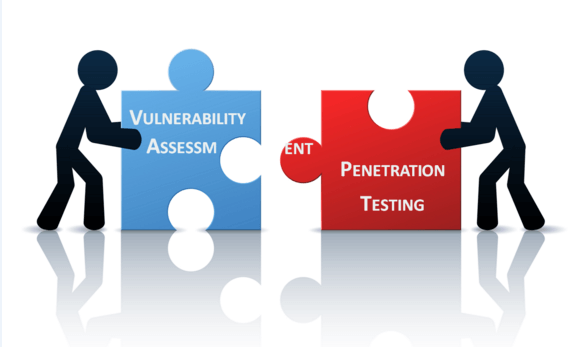
Vulnerability Testing, also called Vulnerability Assessment, evaluates security risks in software, networks, and infrastructure to reduce the probability of threats. The goal is to lower the chance that intruders gain unauthorized access. It is the discovery half of the combined practice known as Vulnerability Assessment and Penetration Testing (VAPT).
A vulnerability is any flaw, weakness, or misconfiguration in a system’s security procedures, design, implementation, or internal controls that can violate the security policy. Examples include unpatched software, weak passwords, and exposed services.
Why do Vulnerability Assessment
- It is essential to the security posture of every organization.
- It locates and reports weaknesses, letting teams resolve problems by ranking vulnerabilities before someone exploits them.
- The process scans operating systems, application software, and the network to identify issues such as insecure authentication, missing patches, and misconfigurations.
- Regular assessments support compliance frameworks such as PCI DSS, HIPAA, ISO 27001, SOC 2, and OWASP Top 10 (2021 edition; 2025 still in draft as of 2026).
Vulnerability Assessment Process
Here is the step by step Vulnerability Assessment Process used to identify and prioritize system vulnerabilities.

Step 1) Goals & Objectives: Define the goals of the vulnerability analysis, the assets to protect, and the business risk tolerance.
Step 2) Scope: Clearly define the scope before testing begins. The three possible scopes are:
- Black Box Testing: Testing from an external network with no prior knowledge of the internal network and systems.
- Grey Box Testing: Testing from either external or internal networks with partial knowledge of the internal network. It is a combination of Black Box Testing and White Box Testing.
- White Box Testing: Testing within the internal network with full knowledge of the network and system. It is also known as Internal Testing.
Step 3) Information Gathering: Gather IT environment data such as network topology, IP ranges, OS versions, and exposed services. Applies to all three scope types.
Step 4) Vulnerability Detection: Use scanners to match the environment against current CVE feeds and identify the vulnerabilities present.
Step 5) Analysis and Planning: Score findings with CVSS and devise a plan to remediate or, where appropriate, simulate penetration of affected systems.

ManageEngine Vulnerability Manager Plus is a powerful vulnerability assessment and management tool that provides end-to-end coverage for vulnerability scanning, detection, assessment, and remediation. It helps organizations proactively identify security weaknesses across their network, prioritize threats based on risk severity, and automate patch deployment to strengthen their security posture.
How to do Vulnerability Assessment
Following is the step by step process on How to do Vulnerability Assessment:
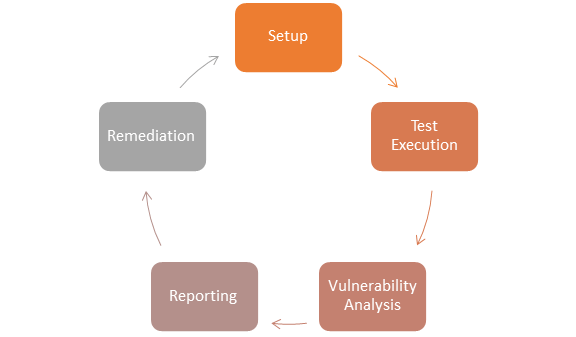
Step 1) Setup
- Begin documentation of scope, assets, and contacts.
- Secure written permissions from system owners.
- Update scanner signatures and plugins to the latest release.
- Configure tools with credentialed access where allowed for deeper checks.
Step 2) Test Execution
- Run the scanners against the in-scope hosts, applications, and network ranges.
- Capture and inspect data packets where needed. A packet is the unit of data routed between an origin and a destination; the TCP layer divides files into numbered chunks that the receiver reassembles.
Step 3) Vulnerability Analysis
- Define and classify the network or system resources in scope.
- Assign a priority to each resource (for example, High, Medium, or Low).
- Identify potential threats to each resource.
- Develop a strategy that tackles the most prioritized problems first.
- Define and implement controls that minimize the consequences of an attack.
Step 4) Reporting
- Produce a report listing each finding, its CVSS score, affected asset, and recommended fix.
- Separate technical detail for engineers from the executive summary.
Step 5) Remediation
- Fix each vulnerability through patching, configuration change, or compensating control.
- Re-scan after remediation to confirm closure.
Types of a vulnerability scanner
Host Based
- Identifies issues on a specific host or operating system instance.
- The scan is carried out using host-based scanners that diagnose configuration and patch-level vulnerabilities.
- Host-based tools usually deploy an agent or load a mediator process on the target system that traces events and reports back to the security analyst.
Network-Based
- Detects open ports and identifies unknown services running on those ports, then maps possible vulnerabilities associated with each service.
- This process is performed by network-based scanners that can run authenticated or unauthenticated sweeps across IP ranges.
Database-Based
- Identifies security exposures in database systems using tools and techniques that detect SQL injection paths, weak privileges, and misconfigurations. SQL injection occurs when malicious users inject SQL statements through application input fields to read or modify data they should not be able to access.
Tools for Vulnerability Scanning
1) Teramind
Teramind delivers a comprehensive suite for insider threat prevention and employee monitoring. It enhances security through behavior analytics and data loss prevention, ensuring compliance and optimizing business processes.

Features:
- Insider Threat Prevention: Detects user actions indicating insider threats.
- Business Process Optimization: Uses behavior analytics to refine processes.
- Workforce Productivity: Monitors productivity, security, and compliance behaviors.
- Compliance Management: Scalable for small businesses, enterprises, and government.
- Incident Forensics: Evidence for incident response and threat intelligence.
- Data Loss Prevention: Protects against loss of sensitive data.
- Employee Monitoring: Tracks employee performance and activities.
- Behavioral Analytics: Analyzes app behavior data for insights.
- Customizable Monitoring: Settings for specific use cases or predefined rules.
- Dashboard Insights: Actionable insights through a comprehensive dashboard.
Beyond Teramind, the most widely adopted scanners in 2026 include Tenable Nessus, OpenVAS / Greenbone, Qualys VMDR, Rapid7 InsightVM, Wireshark, Nikto, Nmap, and Metasploit. The legacy table below remains a useful historical reference of tool categories.
| Category | Tool | Description |
|---|---|---|
| Host Based | STAT | Scans multiple systems across the network. |
| TARA | Tiger Analytical Research Assistant. | |
| Cain & Abel | Recovers passwords by sniffing the network and cracking HTTP credentials. | |
| Metasploit | Open source platform for developing, testing, and validating exploit code. | |
| Network-Based | Cisco Secure Scanner | Diagnoses and repairs network security problems. |
| Wireshark | Open source network protocol analyzer for Linux, Windows, and macOS. | |
| Nmap | Free open source utility for network discovery and security auditing. | |
| Nessus | Agent-based and agentless auditing, reporting, and patch management integration. | |
| Database-Based | SQL diet | Dictionary attack tool for SQL Server. |
| Secure Auditor | Performs enumeration, scanning, auditing, penetration testing, and forensics on operating systems. | |
| DB-scan | Detects database Trojans through baseline scanning. |
Advantages of Vulnerability Assessment
- Open source tools such as OpenVAS, Nmap, and Nikto are free.
- Identifies almost every known vulnerability with a CVE entry.
- Automated scans cover large estates quickly.
- Easy to schedule for continuous monitoring.
Disadvantages of Vulnerability Assessment
- Tends to produce a high false positive rate that needs analyst triage.
- Can be detected by intrusion detection systems and firewalls when scans are noisy.
- May miss the very latest zero-day or logic vulnerabilities that have no signature.
Comparison of Vulnerability Assessment and Penetration Testing
| Vulnerability Assessment | Penetration Testing | |
|---|---|---|
| Working | Discover vulnerabilities | Identify and exploit vulnerabilities |
| Mechanism | Discovery and scanning | Simulation |
| Focus | Breadth over depth | Depth over breadth |
| Coverage of Completeness | High | Low |
| Cost | Low to moderate | High |
| Performed By | In-house staff or managed service | An ethical hacker or pen tester |
| Tester Knowledge | High | Low |
| How often to Run | Continuous, or after each new deployment | Typically once or twice a year |
| Result | Partial details about each vulnerability | Complete details and proof of exploit |
Vulnerability Testing Methods
Active Testing
- In active testing, a tester introduces new vulnerability assessment test data and analyzes the results.
- During the testing process, the tester builds a mental model of the system that grows as they interact with the software under test.
- The tester actively searches for new test cases and attack ideas, which is why it is called active testing.
Passive Testing
- Passive testing monitors the result of running software under test without introducing new test cases or data, often by observing logs and network traffic.
Network Testing
- Network testing measures and records the current state of network operation over a period of time.
- It predicts how the network behaves under load and surfaces problems created by new services.
- Key network characteristics to test include:
- Utilization levels
- Number of users
- Application utilization
Distributed Testing
- Distributed tests apply to distributed applications that serve multiple clients simultaneously. Testing such an application means exercising its client and server parts both separately and together.
- The parts involved interact during the run and must stay synchronized; synchronization is one of the most crucial points in distributed testing.
How AI is Changing Vulnerability Assessment
AI is reshaping vulnerability assessment in three practical ways. First, machine-learning engines correlate scanner findings with live exploit telemetry and CISA’s Known Exploited Vulnerabilities catalog, showing which CVEs are being weaponized. Second, large language models translate scan output into remediation steps and patch scripts. Third, tools such as Tenable ExposureAI, Qualys TruRisk, and Rapid7 Active Risk score findings by business impact rather than raw CVSS. AI does not replace human judgement or manual penetration testing, but it sharply reduces the noise that has long plagued vulnerability programs.
Conclusion
In software engineering, vulnerability testing depends on two complementary mechanisms: Vulnerability Assessment and Penetration Testing. A mature security program combines both for a complete picture of risk. To find the right tools, explore these penetration testing tools.
