
PT66 in SAP: How to Check Time Evaluation Results (RPTIME)
 Editorial Team
⚡ Smart Summary
PT66 in SAP displays the time evaluation results that the RPTIME00 program stores in cluster B2. This resource explains what cluster B2 contains, the key result tables, why checking results matters before payroll, and the process to view them.
SAP stores time evaluation results generated by executing RPTIME in cluster B2.
What is Cluster B2 in SAP Time Management?
When you run time evaluation with the RPTIME00 program, SAP does not store the results in ordinary transparent tables. Instead, it packs them into a special storage area called cluster B2. A cluster is a compressed set of internal tables that SAP reads and writes as a single record for each employee and period, which keeps large volumes of time data compact and fast to access.
Cluster B2 holds the complete outcome of time evaluation: the time balances an employee has accumulated, the time wage types formed for payroll, the updated absence and attendance quotas, and the day-by-day processing details. Because the data is clustered, you cannot open it directly with a normal table browser; you use transaction PT66, the Time Evaluation Results viewer, to unpack and read it.
Understanding that all results live in cluster B2 helps explain why PT66 is the standard tool for checking what happened during a time evaluation run.
Important Tables in Time Evaluation Results
Inside cluster B2, the results are organized into several internal tables. When you drill into a period in PT66, you choose which of these tables to display. The most commonly reviewed ones are:
- ZL (Time Wage Types): Holds the time wage types generated for payroll, such as overtime or bonus hours.
- SALDO (Balances): Stores cumulated time balances, including flexitime and overtime balances.
- ZES (Time Postings / Clock Times): Contains the processed daily clock-in and clock-out entries.
- C1 (Cost Distribution): Records cost assignments used to post time to the correct cost centers.
- FEHLER (Error Messages): Lists messages and warnings raised during the evaluation of the day.
- QT / Quota tables: Show the absence and attendance quota values updated by the run.
Reviewing the right table lets you confirm that wages, balances, and quotas were calculated correctly before the data flows into payroll.
Why Check Time Evaluation Results Before Payroll?
Checking the time evaluation results is a control step that protects the accuracy of payroll. Payroll reads the time wage types stored in cluster B2, so any error there flows straight into an employee’s pay. Verifying the results in PT66 lets you catch problems while they are still easy to fix.
Reviewing the results helps you to:
- Confirm that overtime, allowances, and other time wage types were formed correctly.
- Check that absence and attendance quotas were updated as expected.
- Spot error messages that indicate an employee was not fully evaluated.
- Reconcile time balances before period-end reporting.
Because payroll should only run for employees whose time evaluation completed without errors, this check prevents incorrect payments, reduces retroactive corrections, and gives HR confidence that the time-to-payroll handover is clean. A few minutes reviewing PT66 can save hours of rework later.
How to Check Time Evaluation Results
Step 1) Enter transaction.
To view the results, in the SAP command prompt, enter transaction PT66

Step 2) Enter number.
In the next SAP screen, Enter Personnel Number whose results you want to see

Step 3) Set period.
In the next SAP screen, double click on the period you want to see the results for.

Step 4) Click on table.
In the next SAP screen, double click on the Table whose results you want to see

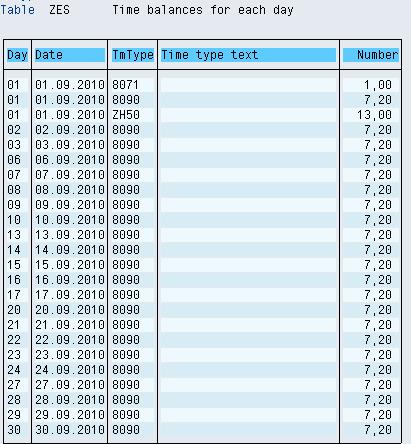
Step 5) Check result.
Results are shown in below table.
Also Check:- SAP Course for Beginners
