
Automatic Payment Program Run F110: SAP Tutorial
 Editorial Team
⚡ Smart Summary
The Automatic Payment Program, run with transaction F110 in SAP, selects due invoices and posts payments for vendors and customers. It automates invoice selection, payment document posting, and payment media output for national and international transactions.
Automatic Payment Program Run F110
Introduction
The Payment Process includes the Following Steps
- Invoices are Entered
- Pending Invoices are analyzed for due date
- Invoices due for payment are prepared for review
- Payments are approved or modified
- Invoices are paid
A consistently high volume of invoices have to be processed. Accounts Payable Invoices have to be paid on time to receive possible discounts. The Accounting department wishes to perform this processing of invoices automatically. The Automatic Payment Program is a tool that will help users manage payables. SAP gives users the options to automatically:
- Select Open(Pending) Invoices to be paid or collected
- Payment Documents to be posted
- Print Payment Media or generate EDI
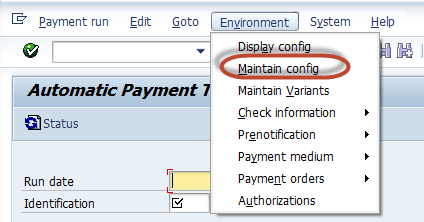
The Automatic Payment Program has been developed for both national and international payment transactions with vendors and customers, and handles both outgoing and incoming payments. Configuration We can configure the Payment Program by selecting the Payment Program (Tcode – F110) Application menu Environment -> Maintain Config



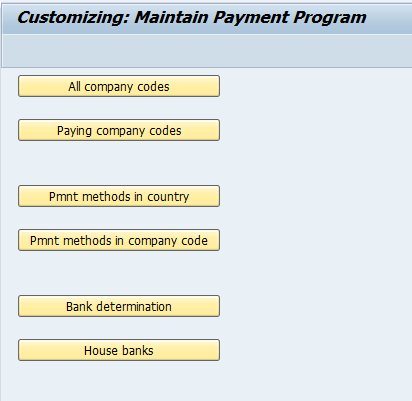
The Settings for Automatic Payment program are divided into following Categories :
- All Company Codes
- Paying Company Codes
- Payment Methods / Country
- Payment Methods / Company Codes
- Bank Selection
- House Banks
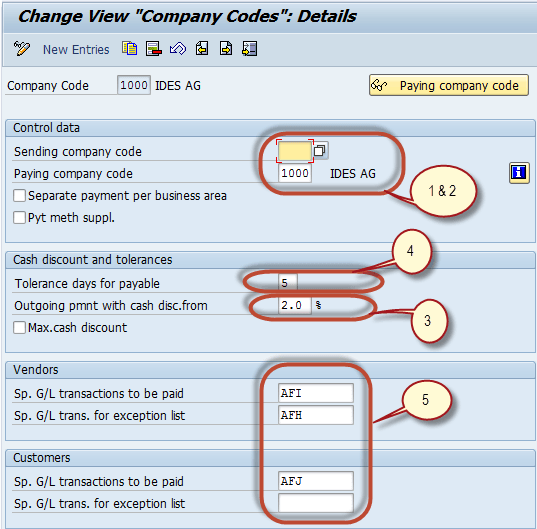
All Company Codes : In this section we perform the following settings
- Inter Company Payment Relationship
- The Company codes that process payments
- Cash Discounts
- Tolerance days for Payments
- The Customer and Vendor Transactions to be Processed

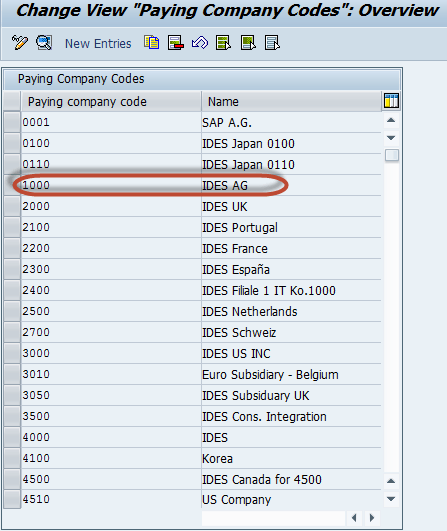
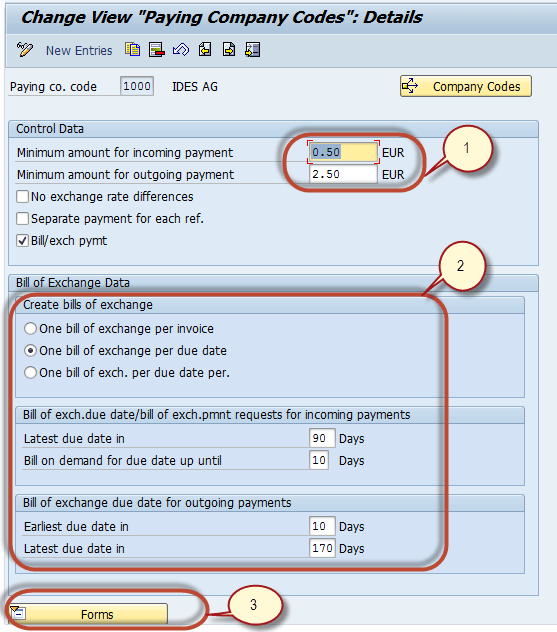
Paying Company codes : In this section we perform the following settings
- Minimum Amounts for Incoming and Outgoing Payments
- Bill of Exchange Parameters
- Forms for Payment Advice and EDI
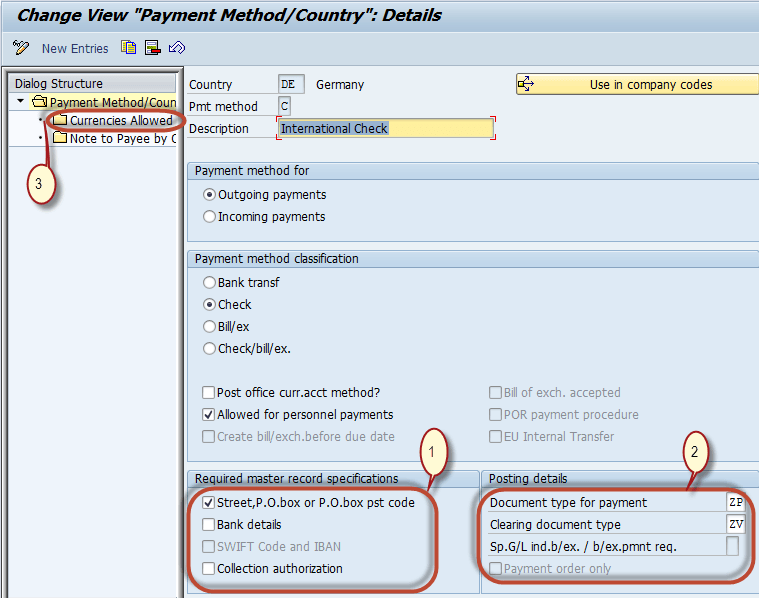
Payment Method / Country : In this section we perform the following settings
- Methods of Payments – Cheques, bank transfers etc.
- Settings for individual Payment Methods –
- Master record requirements
- Document Types for Posting
- Permitted currencies
- Print Programs

Payment Method / Company Code: In this section we perform the following settings
- Minimum and maximum payment amounts
- Whether payments abroad and foreign currencies are allowed
- Grouping Options
- Bank Optimization
- Forms for payment media


Bank Selection :
- Ranking Order
- Amounts
- Accounts
- Charges
- Value Dates
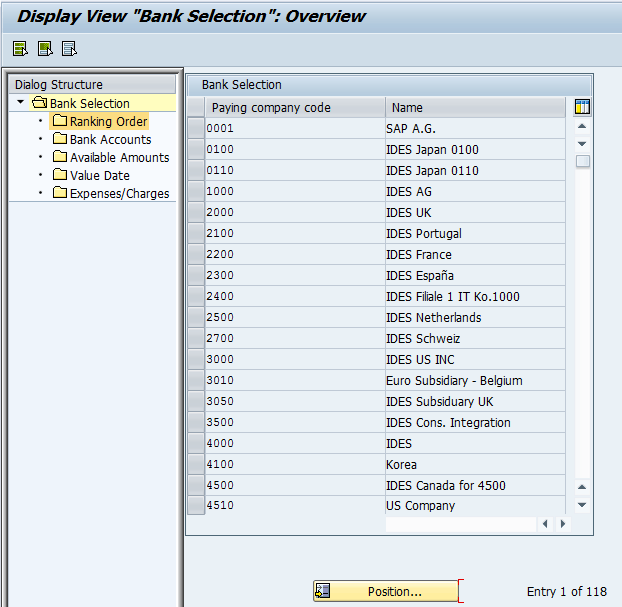
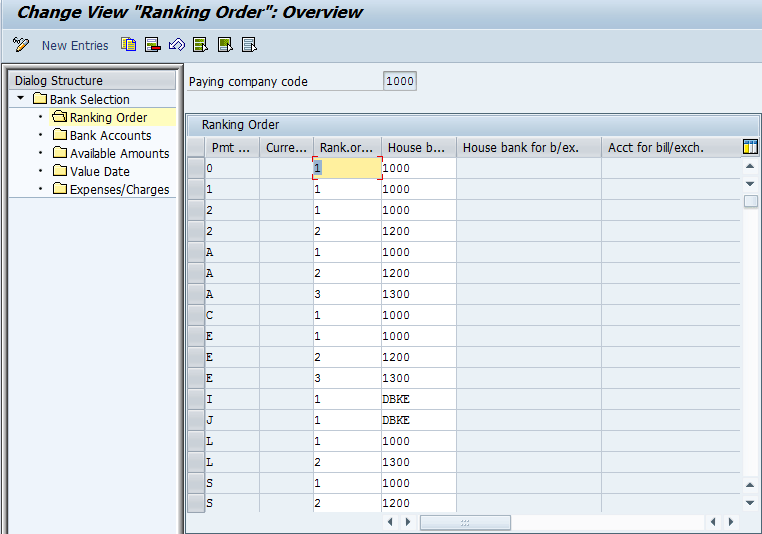
Ranking Order
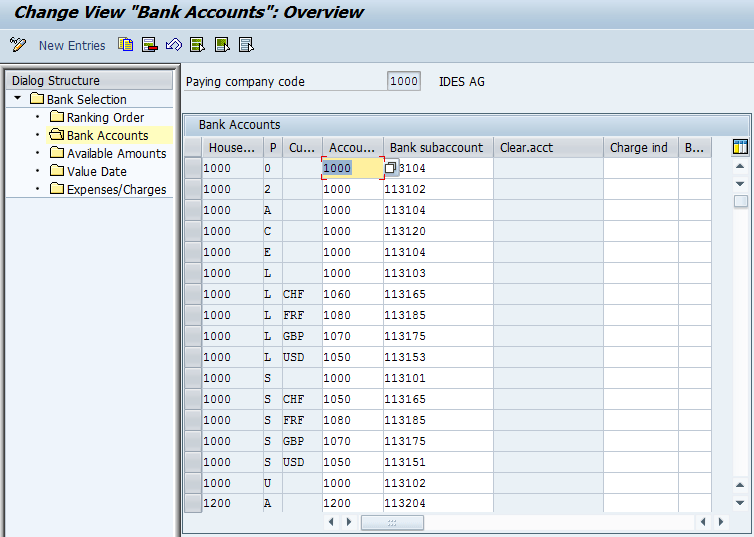
Bank Accounts
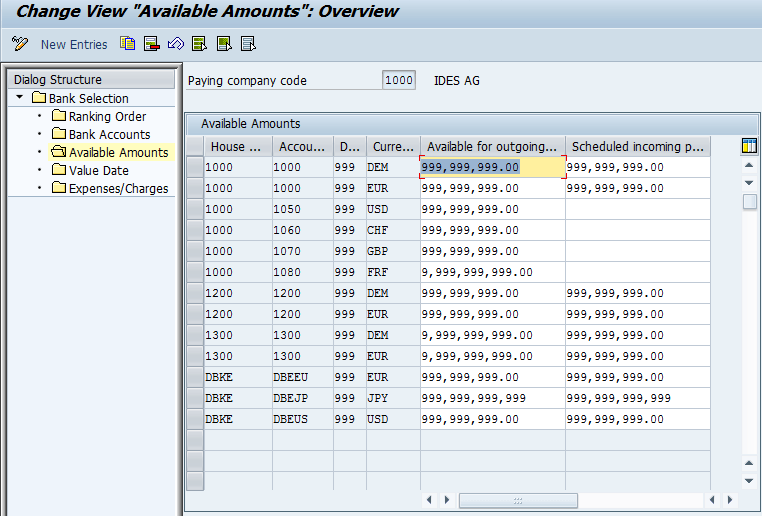
Available Amounts
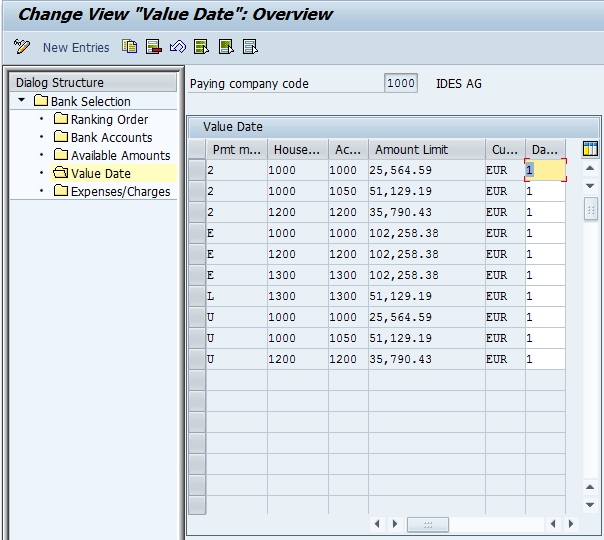
Value Dates
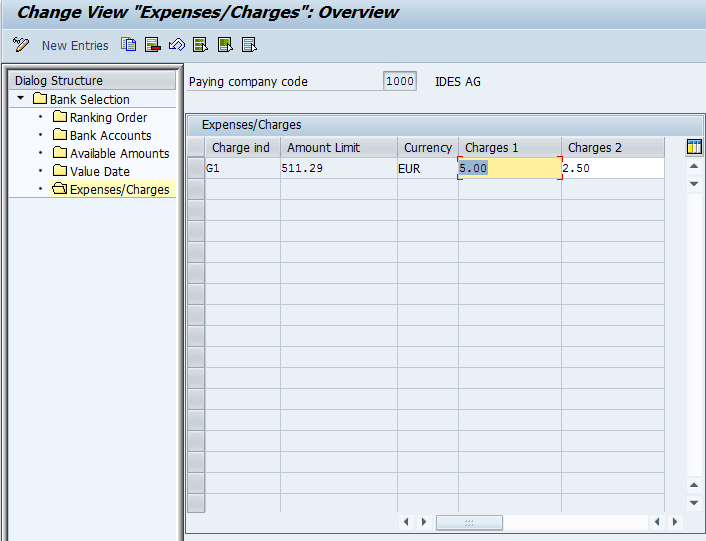
Expenses / Charges
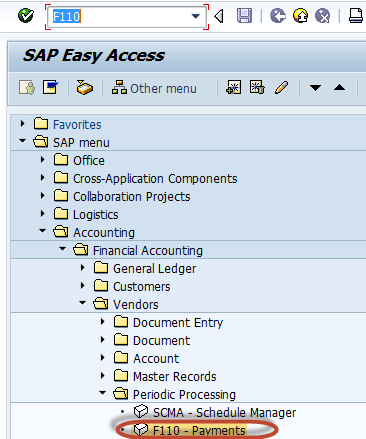
Execution : After Configuration of the Payment Process we will enter parameters to execute the program. Enter the Transaction code F110 in the SAP Command Field
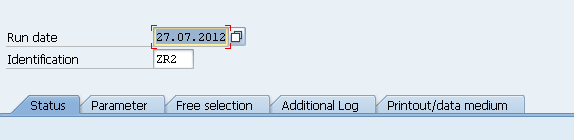
Every Payment Program run is identified by two fields
- Run date
- Identification
In the Parameters Tab, We have to define the following
- What is to be paid – Docs. Entered Up to
- What payment methods will be used – Payment Methods
- When will the payments be made – Posting Date
- Which company codes will be considered – Company Codes
- How are they going to be paid – Payment Method Sequence decides the Priority of the Payment Method

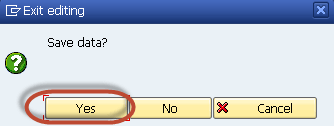
Save the Parameters Entered
After the Parameters are Entered we execute the Program by pressing the proposal button in Application Toolbar

In the next dialog box, Check the “Start Immediately” and press Continue
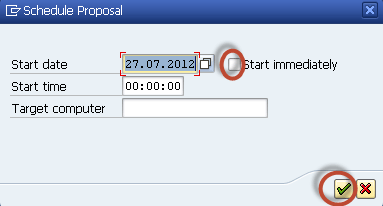
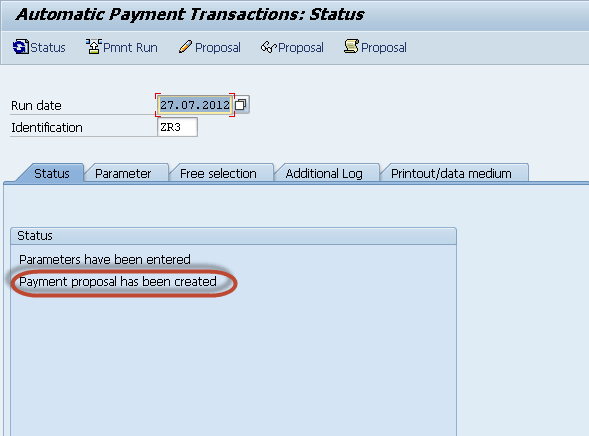
A payment proposal is generated based on the parameters.
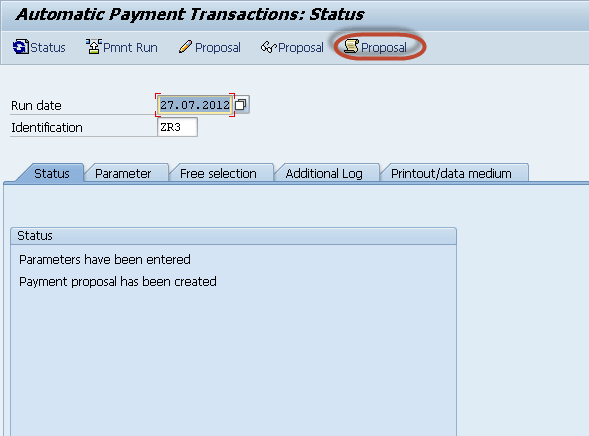
We can view the Proposal Log for possible errors by Pressing the Proposal Log Button
We can edit the proposal to block the some payments if we want, Press the Edit Proposal Button

In the next screen, the Proposal List of Vendors is generated who are to receive the Payments

After edit the Proposal, and then run the payment run to release the payments. We can schedule the payment run by coming back to main screen pressing the Payment Run button
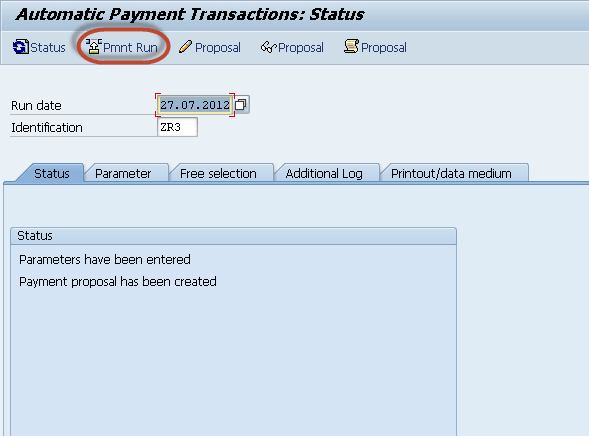
In the next Dialog box, Check “Start Immediately” to start the payment run instantly and Press continue

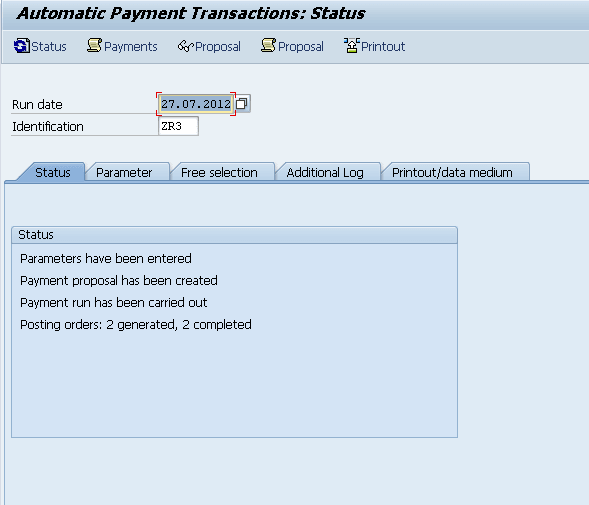
We can check the status of the Payment run on the Status Tab
Best Practices for the Automatic Payment Run
A disciplined F110 process protects cash and prevents duplicate or wrong payments. Apply these best practices:
- Always review the proposal: Check the proposal log for errors before posting payments.
- Use test parameters: Validate configuration in a test client before a live run.
- Block disputed items: Edit the proposal to block payments that are in dispute.
- Control run identification: Use a clear run date and identification to trace each run.
- Schedule carefully: Run payments after due-date analysis to capture cash discounts.
Common F110 Errors and Troubleshooting
Most payment-run problems appear in the proposal log. Typical issues and fixes include:
- No valid payment method: Check the vendor master and payment-method configuration.
- House bank not found: Confirm bank selection and available amounts are maintained.
- Items not selected: Verify the posting date, document date, and company codes in parameters.
- Blocked for payment: Remove the payment block on the relevant open items.
