
How to Create One Time Customer FD01 in SAP
 Editorial Team
⚡ Smart Summary
One-Time Customer Master records in SAP FI capture infrequent buyers without maintaining separate, permanent master data. This walkthrough explains how transaction code FD01 and a CPDA-style account group let finance teams capture address, communication, and reconciliation account details at posting time.
What Is a One-Time Customer Master in SAP FI?
A One-Time Customer Master in SAP FI is a special type of customer record used for buyers that do not generate frequent business and therefore do not need their own permanent master data. Instead of creating an individual record for every walk-in or occasional customer, a single shared master is created, and the actual name, address, phone number, and other general data are entered later, at the time of the transaction.
The record is created with transaction code FD01 and is assigned to a One-Time Customer account group (typically CPDA). Selecting this account group is what tells SAP to keep the general data fields open during invoice posting, instead of pulling them from the customer master. The result is a lean Accounts Receivable sub-ledger that supports walk-in sales without inflating master data volumes.
Why Use a One-Time Customer Master Record?
Maintaining a full master record for every infrequent customer adds noise to the AR sub-ledger, slows down reporting, and increases data-maintenance effort. A One-Time Customer Master solves this by acting as a placeholder that accepts a fresh set of general data at every posting, while still posting cleanly to the same reconciliation G/L account.
This approach is preferred over generic G/L journal entries because it preserves customer-level analytics, supports tax determination, and keeps the open-item logic intact in transactions such as FB70 (customer invoice) and F-28 (incoming payment). Finance teams therefore get the cash-application benefits of an AR posting without the overhead of permanent master data for every occasional buyer.
Steps to Create One-Time Customer in SAP
Follow the sequence below to create a One-Time Customer Master in SAP FI using transaction FD01. Make sure the One-Time Customer account group (CPDA) and the reconciliation G/L account are already configured in the target company code before starting.
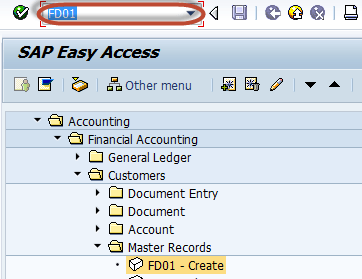
Step 1) Open Transaction FD01
To create a One-Time Customer Master, enter transaction code FD01 in the SAP Command Field and press Enter.
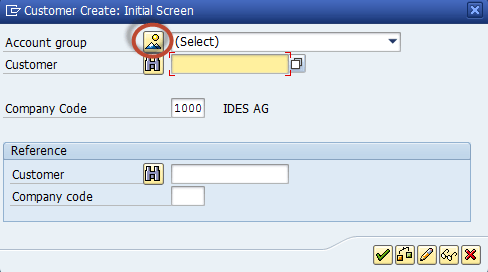
Step 2) Open the Account Group Overview
In the initial FD01 screen, choose the Account Group overview button so you can pick the correct one-time customer account group.
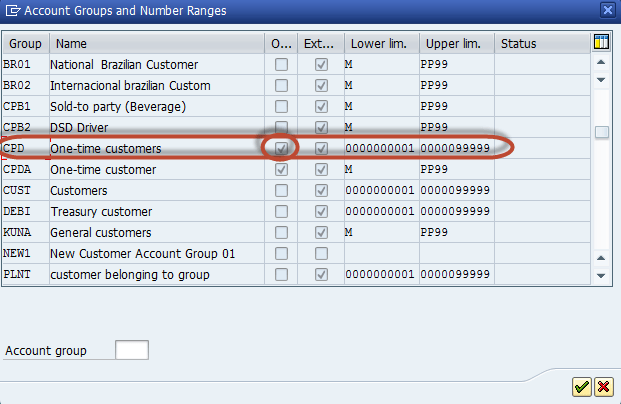
Step 3) Select the One-Time Customer Account Group
In the dialog box, select the account group where the One-Time Customer property is checked (commonly the CPDA account group). This ensures the address fields remain open at invoice posting.
Step 4) Enter Customer ID and Company Code
Back in the main FD01 screen, enter the following:
- Enter the Customer ID as per the number range assigned to the One-Time Customer account group.
- Enter the Company Code in which the master record is to be created.
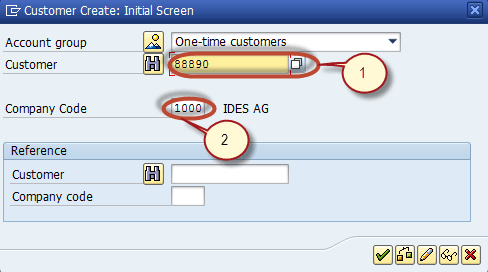
Step 5) Maintain the General Data Address Tab
In the next screen, on the General Data – Address tab, enter the following:
- Enter the name for the One-Time Customer Master.
- Enter the Search Term.
- Enter the Communication Language.

Step 6) Switch to the Company Code Section
From the application menu, select the Company Code section to maintain the FI-specific data on the one-time customer.

Step 7) Enter the Reconciliation G/L Account
In the Company Code section:
- Select the Account Management tab.
- Enter the reconciliation G/L Account number that the AR sub-ledger should post to.
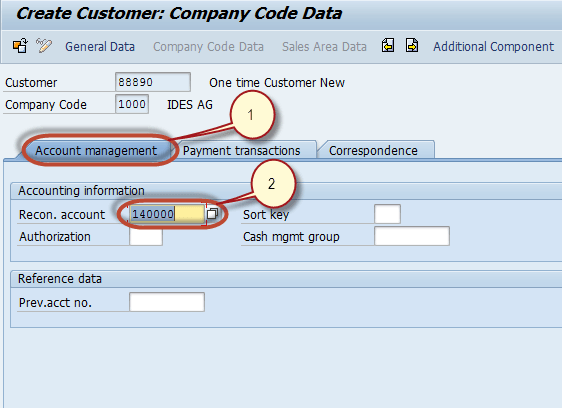
Step 8) Save the One-Time Customer Master
Press Save to create the new One-Time Customer Master record in the chosen company code.

Step 9) Verify Creation in the Status Bar
Check the status bar at the bottom of the screen for the confirmation message generated by FD01. The message contains the new customer number, which confirms that the One-Time Customer Master was created.

The One-Time Customer Master is now ready to be used in downstream FI-AR transactions.
How to Verify and Use the One-Time Customer Record
After saving, use FD03 or XD03 to display the new One-Time Customer Master and confirm the account group, reconciliation account, and address-tab placeholder. Because the master is shared across many infrequent buyers, validate that no permanent address data is stored: the address must remain blank or generic so that each invoice posting captures the actual customer’s data.
When posting a customer invoice with FB70 for this record, SAP will prompt you with a One-Time Data screen to enter the buyer’s name, address, and bank details. The posting still hits the configured reconciliation G/L account, so the entry flows correctly into the General Ledger and into reports such as FBL5N and the AR aging analysis.
Common Errors and Troubleshooting Tips
Several validation messages can appear while creating or posting against a One-Time Customer Master. The most frequent are listed below along with the typical resolution.
- “Account group is not allowed”: The CPDA-style One-Time Customer account group is missing for the company code; configure it through transaction OBD2.
- “Number range not maintained”: Assign a valid number range to the One-Time Customer account group via XDN1 before creating the master.
- “Reconciliation account missing”: Maintain the reconciliation G/L account in the Account Management tab; the field is mandatory for AR postings.
- “Customer XXXX not extended to company code YYYY”: Run FD01 again in the missing company code so the one-time customer can post in that ledger.
Best Practices for One-Time Customer Master Data
Apply the following practices to keep the One-Time Customer Master clean and audit-ready. They reduce duplicate creation, prevent posting errors, and keep the AR sub-ledger reliable.
- Use a dedicated CPDA-style account group only for buyers that truly do not need a permanent record; route repeat customers to a regular master.
- Leave address and bank fields blank on the master so that each FB70 posting captures the actual buyer’s details.
- Maintain a single reconciliation G/L account for one-time customers to simplify reporting and reconciliation.
- Restrict creation rights for one-time customer masters through SAP authorization roles to avoid duplicate or unauthorized records.
- Periodically review one-time postings through FBL5N to detect recurring buyers that should be promoted to a regular customer master.
