
10 Best FREE Cloud Storage (2026)
 Editorial Team
Disclosure: Guru99 is reader-supported. We may earn a commission when you buy through links on this page. Learn more

Free cloud storage should reduce device pressure, yet slow synchronization, confusing permissions, weak recovery, hidden quotas, limited uploads, and inconsistent mobile apps often create more work. A missed setting can expose private files, stop new uploads, or leave an outdated copy on another device. Important differences rarely fit inside a pricing headline. Comparing capacity, encryption, recovery, sharing, and account rules brings clarity, protects important files, and gives users a practical path forward without paying too soon.
I spent 64+ hours researching 20+ free and paid cloud storage solutions, checking capacity, encryption, synchronization, recovery, sharing, device limits, integrations, and recurring user feedback. From that research, I shortlisted the 10 best free cloud storage services. This comparison covers features, pros, cons, and practical limits, helping readers move important files with fewer surprises. Read more…

Zoho WorkDrive is an online file storage and content collaboration platform for modern teams, small businesses, and large enterprises. It offers a Smart Search for instant file retrieval and unlimited version history to restore documents.
Best Free Unlimited Cloud Storage Providers: Top Picks!
| Name | Free Storage | Supported Platforms | Link |
|---|---|---|---|
👍 Zoho WorkDrive |
5GB | Web, Windows, Mac, iOS and Android | Learn More |
 👍 Icedrive |
10GB | Web, iOS, Android, Windows, Mac and Linux | Learn More |
 pCloud |
10GB | Web, iOS, Android, Windows, Mac and Linux | Learn More |
 Proton Drive |
5GB | Web, Windows, Mac, iOS and Android | Learn More |
 EaseUS Todo Backup |
Free + Cloud | Windows, macOS | Learn More |
1) Zoho WorkDrive
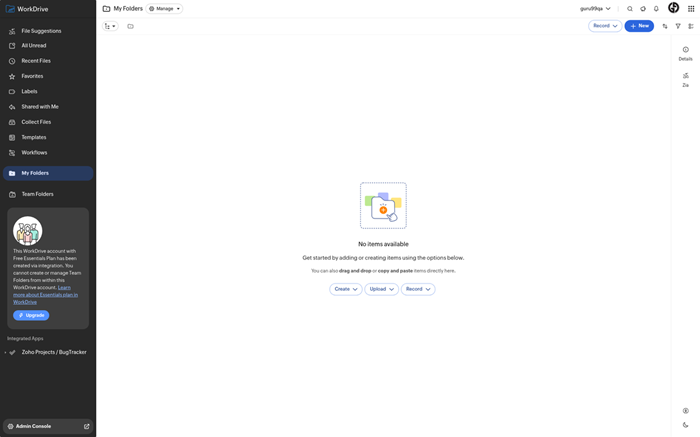
Zoho WorkDrive combines cloud storage, Office editors, and external sharing. Its free Individual plan provides 5 GB and accepts files up to 1 GB. Freelancers can share proposals through browser links, while small teams can test Team Folders during the 15-day trial.
Recipients may view or download shared files without buying licenses. Editors can work in Writer, Sheet, and Show in the browser. The free plan omits Team Folders and the Admin Console, so growing teams will outgrow it. WorkDrive still offers a bridge between personal sharing and managed collaboration.
Features:
- External Links: Share files with people outside the account through browser links. Recipients can view or download content without purchasing a WorkDrive license.
- Office Editors: Writer, Sheet, and Show open inside WorkDrive for browser editing. Zoho-format files do not consume storage, leaving more room for uploaded documents and media.
- Access Roles: Folder and file permissions separate viewers, commenters, and editors. This reduces accidental changes when clients only need downloads or reviews.
- File Requests: Request links let external contacts upload files into one chosen folder. Teams can collect submissions without exposing any unrelated workspace content.
- Desktop Access: TrueSync and mobile applications keep selected files reachable across devices. Offline availability depends on which files users select for local download.
- Activity Timeline: The timeline records uploads, edits, and sharing events. Team members can trace recent changes and resolve ownership questions after project handoffs.
- AI Assistance: Zia can summarize, transcribe, and help find content on eligible plans. Users should review privacy settings before processing confidential files.
Pros
Cons
How to Get It Free?
- Open the Zoho WorkDrive sign-up page and create an Individual account.
- Upload files within the 5 GB allowance and 1 GB file limit.
- Create external links, or start the 15-day team trial without a card.
5 GB free plan / 15-day team trial
2) Icedrive
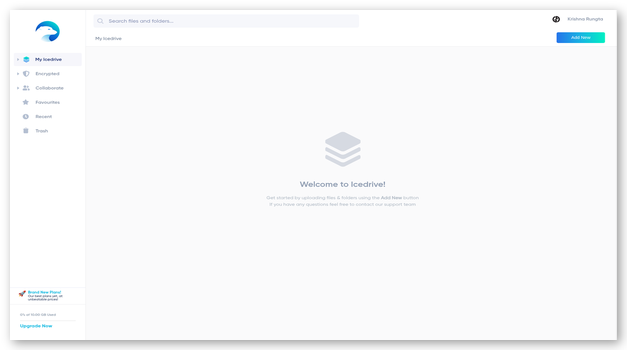
Icedrive gives free users 10 GB for browser, desktop, and mobile access. Public links make photos, documents, and project files easy to send. Basic collaboration also supports shared work without turning every transfer into an email attachment or temporary download page.
The free plan excludes client-side encrypted storage and file history. Passwords, expiration dates, download limits, file requests, and richer folder permissions belong to paid plans. That division keeps ordinary link sharing simple, but confidential or frequently revised files need another option. The clean dashboard remains approachable for personal transfers.
Features:
- Public Links: Create browser links for stored files and folders. Recipients can download shared content without installing Icedrive or creating an account.
- Free Storage: A permanent account includes 10 GB without payment. The allowance fits documents and selected media better than complete device backups.
- Basic Collaboration: Free accounts receive basic collaboration for shared content. Paid plans add viewer, editor, upload, and update permissions for larger workflows.
- Virtual Drive: The Windows virtual drive displays cloud content without storing everything locally. This saves disk space while keeping shared files accessible.
- Mobile Uploads: Android and iOS applications upload files from phones and tablets. Completed uploads can be shared immediately through browser links with outside recipients.
- Transfer Controls: Paid links can add passwords, expiration dates, and download limits. Free users should avoid sharing sensitive material through unrestricted links.
- File Requests: Paid plans let outsiders upload directly into a selected cloud folder. The feature removes email attachment limits when teams collect client files.
Pros
Cons
How to Get It Free?
- Open Icedrive through the tracked link and create a free account.
- Upload files within the permanent 10 GB storage allowance.
- Generate a public link, then test it while signed out before sharing.
Permanent free plan with 10 GB
3) pCloud
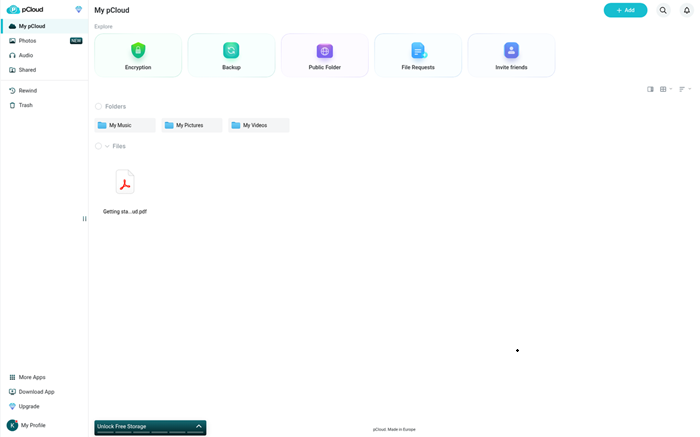
pCloud stores files across browser, desktop, and mobile applications, then creates public download links for recipients. A Basic account starts with 2 GB and can reach 10 GB through tutorial tasks and referrals. Free users also receive 50 GB of monthly shared-link traffic.
Folder invitations support ongoing collaboration with other pCloud users. A 15-day trash and history window helps recover overwritten or deleted files. Link passwords and expiration dates require payment, while client-side pCloud Encryption is sold separately. For routine client delivery, the traffic allowance and link workflow stand out.
Features:
- Public Links: Create download links for files and folders stored in pCloud. Outside recipients can open them without joining or installing the service.
- Link Traffic: Free accounts receive 50 GB of monthly shared-link traffic. Popular downloads can stop working after that separate allowance is exhausted.
- Folder Invites: Invite pCloud users into folders with view or edit access. This suits recurring collaboration better than repeatedly sending new links.
- File Requests: Upload links let clients send files into a selected folder. Contributors cannot browse other account content, and uploads arrive in the specified destination.
- File History: Basic accounts retain trash and previous versions for 15 days. Older recoverable copies and longer history windows require a paid subscription.
- Device Access: Desktop, browser, Android, and iOS applications keep shared content reachable. Mobile users can optionally upload camera photos into designated cloud folders.
- Link Protection: Passwords and expiration dates require paid access. Free users must revoke old links manually because existing links remain active until removed.
Pros
Cons
How to Get It Free?
- Open pCloud through the tracked link and create a Basic account.
- Complete eligible tutorial and referral tasks to expand free storage.
- Create a public link and stay within the 50 GB monthly traffic allowance.
Up to 10 GB free storage
4) Proton Drive
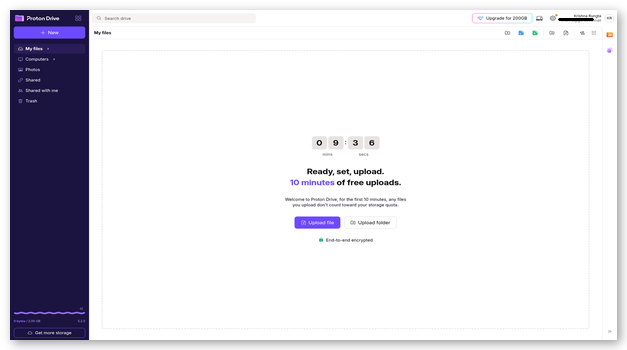
Proton Drive encrypts files, names, and folders before they reach its servers. Users can share documents, photos, and videos through encrypted links. New free accounts begin with 2 GB and can unlock another 3 GB by completing onboarding tasks within 30 days.
Proton Docs and Sheets add private browser editing for basic collaboration. Desktop and mobile applications keep shared files available across devices. The privacy model is strong, though outside integrations remain limited. Some recurring feedback mentions synchronization and offline-download friction, so large migrations deserve a smaller pilot folder first.
Features:
- Encrypted Links: Share files through end-to-end encrypted links. Recipients can download content while file names and stored data remain protected from Proton.
- Free Capacity: Accounts begin with 2 GB and can reach 5 GB. Users must finish the listed onboarding tasks within 30 days or retain 2 GB.
- Online Editors: Proton Docs and Sheets support encrypted browser editing. Teams can collaborate while their documents remain protected inside the Proton Drive environment.
- Folder Sharing: Shared folders keep related files together for repeated access. Owners can change or remove collaborator permissions later when a project ends.
- Photo Backup: Mobile applications can upload camera photos into encrypted storage. Users can then share selected images rather than entire device galleries.
- Device Apps: Windows, macOS, mobile, web, and command-line options cover common workflows. Offline access and synchronization behavior can vary by operating system.
- Recovery Options: Free accounts retain up to 10 versions or seven days of history. Keep another copy because the short recovery window can expire quickly.
Pros
Cons
How to Get It Free?
- Open Proton Drive through the tracked link and create a free account.
- Complete onboarding tasks within 30 days to reach 5 GB.
- Upload a sample, create an encrypted link, and test recipient access.
Up to 5 GB free storage
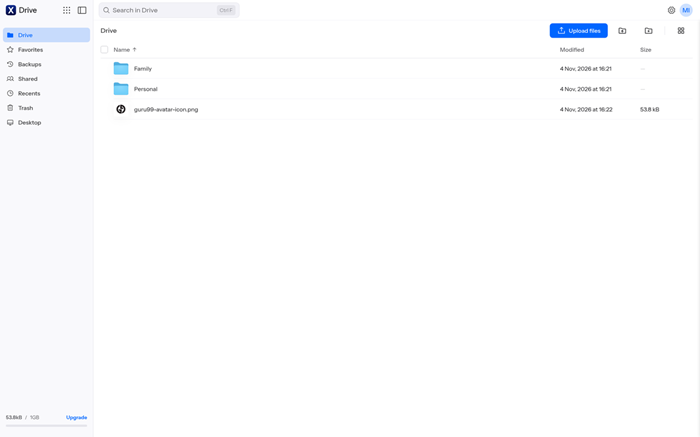
5) Internxt
Internxt provides client-side, zero-knowledge encryption for stored and shared files. Its permanent free plan includes 1 GB without a payment card. Users can create encrypted links from web, desktop, mobile, command-line, WebDAV, and Rclone workflows, which suits small confidential transfers.
The quota fills quickly with video or design files. Paid plans add larger storage, collaborative folders, and advanced versioning. Recurring feedback praises the privacy model, while transfer reliability and support response remain mixed. Internxt fits sensitive documents better than large public distribution, especially when recipients need a simple encrypted download.
Features:
- Encrypted Links: Share selected files through encrypted browser links. Recipients receive the content without gaining access to unrelated folders or account data.
- Free Capacity: The permanent plan includes 1 GB without a card. It fits documents and selected images better than large media files.
- Zero Knowledge: Client-side encryption keeps file contents unreadable to Internxt. Users must protect passwords and recovery details because provider recovery is limited.
- Flexible Access: Web, desktop, mobile, command-line, WebDAV, and Rclone options support both scripted transfers and ordinary manual uploads across several device types.
- Open Source: Internxt publishes its application code for inspection. Users can review the clients and encryption design, though source access does not guarantee service reliability.
- Version Limits: Advanced versioning requires paid access. The free tier cannot restore older copies, so users need another backup for overwritten or deleted files.
- Recipient Testing: Encrypted delivery still depends on browser and network behavior. A small pilot can expose slow downloads or compatibility problems before an urgent transfer.
Pros
Cons
How to Get It Free?
- Open Internxt through the tracked link and create a free account.
- Upload files within the permanent 1 GB allowance.
- Create an encrypted link, then verify the download in a private browser.
Permanent free plan with 1 GB
6) Google Drive
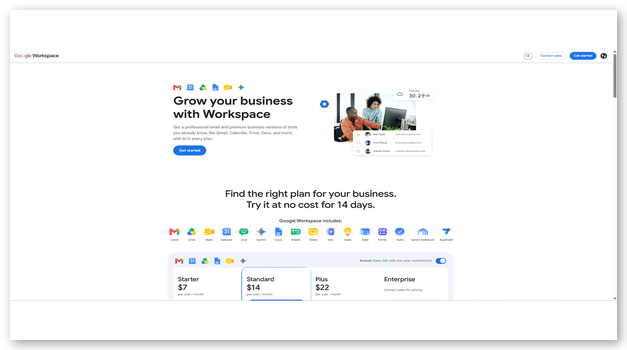
Google Drive shares files and folders with people, groups, or anyone holding a link. Owners can assign viewer, commenter, or editor access. A Google account includes up to 15 GB shared across Drive, Gmail, and Google Photos, which supports everyday documents and selected media.
Docs, Sheets, and Slides enable editing with comments and revision history. Folder permissions inherit downward, so one setting can expose every nested file. Provider-managed encryption protects data, but Drive is not zero knowledge. Its familiar interface and extensive integrations make recipient onboarding easier for teams.
Features:
- Access Roles: Choose viewer, commenter, or editor access for shared items. Permissions remain attached until the owner changes them or removes the recipient.
- Link Sharing: Anyone-with-link access lets unsigned recipients view content. Personal accounts permit public links, while managed work or school accounts may restrict them.
- Live Editing: Docs, Sheets, and Slides support simultaneous editing and comments. Suggestions and revision history remain inside the document for later review.
- Folder Inheritance: Files inside shared folders inherit parent permissions. Moving a file can change who sees it, so sensitive material needs a restricted folder.
- Sharing Limits: A single file can reach up to 600 email addresses. Active editing is limited to 100 open tabs or devices.
- Desktop Sync: Drive for desktop streams or synchronizes chosen folders. Shared content stays available, though offline copies can consume substantial local disk space.
- App Ecosystem: Drive connects with many workplace applications and Google services. These integrations reduce manual downloads but may request broad account permissions.
Pros
Cons
How to Get It Free?
- Open Google Drive through the tracked link and sign in.
- Review shared usage across Drive, Gmail, and Google Photos.
- Upload within the 15 GB allowance, then assign the narrowest suitable role.
Up to 15 GB shared free storage
7) TeraBox
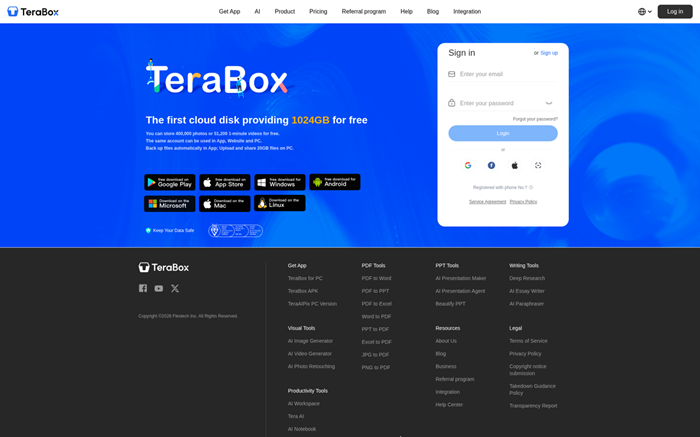
TeraBox advertises up to 1,024 GB of free capacity for files, photos, and videos. Web, desktop, and mobile applications support uploads, folders, mobile backup, and sharing links. The allowance can handle secondary copies or occasional large transfers that exceed smaller free plans.
Free access includes advertising and may deliver slower downloads than paid service, according to feedback. TeraBox terms permit changes to allowances and action on inactive accounts after notice. That makes it unsuitable as the only copy of important files. Users should test recipient downloads before sharing a package.
Features:
- Large Allowance: The free plan advertises up to 1,024 GB, offering substantially more stated capacity than most mainstream personal storage services for secondary copies.
- Mobile Backup: Android and iOS applications can upload photos and videos automatically, reducing manual transfers and protecting recent media from supported mobile devices.
- Share Links: Users can generate links for selected files or folders, allowing recipients to access chosen content without browsing the rest of the account.
- Cross-Platform Apps: Web, Windows, Android, and iOS access covers common devices. Free-plan limits can still affect transfer speed and media playback quality.
- Free-Tier Ads: Advertising helps fund free access and can make the interface less focused than storage services with smaller allowances and paid subscriptions.
- Account Activity: Terms permit storage changes and action on inactive accounts after notice. Ignoring messages sent to the registered email can put stored files at risk.
- Backup Role: The generous capacity works best as a secondary copy because no free storage provider should hold the only original of important files.
Pros
Cons
How to Get It Free?
- Open TeraBox through the referral link and create a free account.
- Review current storage, inactivity, transfer, and advertising conditions.
- Upload a sample, test export speed, and retain independent originals.
Up to 1,024 GB free storage
8) IDrive
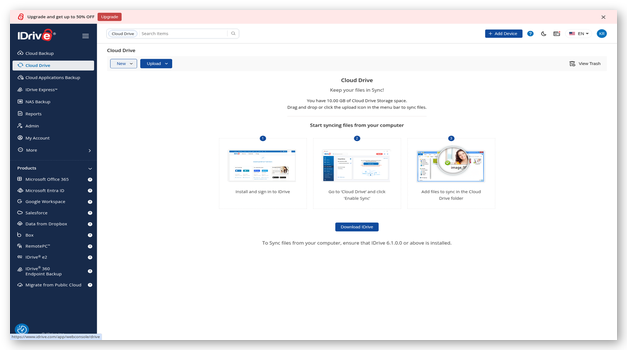
IDrive Basic provides 10 GB without a payment card and separates online backup from Cloud Drive synchronization. Users can share synced files with view-only or edit permissions. Desktop, mobile, and browser applications also keep content available across several supported device types.
Snapshots and up to 30 previous versions support recovery when shared work changes unexpectedly. IDrive Office can edit common business formats inside Cloud Drive. The split between backup storage and synchronized files takes time to understand, but it serves users who want sharing and recovery within one account.
Features:
- Free Capacity: IDrive Basic provides 10 GB without requiring a payment card, making it useful for testing backup, restoration, and synchronization workflows.
- Online Backup: Scheduled backup can protect selected computer folders independently from ordinary file synchronization, supporting recovery after local loss or accidental deletion.
- Cloud Drive: A separate synchronization area keeps chosen files aligned across linked devices. It remains distinct from the service’s primary online backup destination.
- Snapshots: IDrive Snapshots preserve historical data states and can help recover files affected by accidental deletion, unwanted changes, or ransomware attacks.
- File Versions: The service can retain up to 30 previous versions of backed-up files without counting them separately against storage, supporting recovery after recent overwrites.
- Device Coverage: Applications support common desktop and mobile platforms, although the 10 GB allowance limits the size and number of complete device backups.
- Support Channels: IDrive publishes phone, chat, and email support options, giving free users several routes for account, backup, and restoration questions or problems.
Pros
Cons
How to Get It Free?
- Open IDrive through the tracked link and select the Basic plan.
- Install the official application, then separate backup folders from Cloud Drive.
- Run a sample backup and restore before adding important data.
Free Basic plan with 10 GB
9) Box
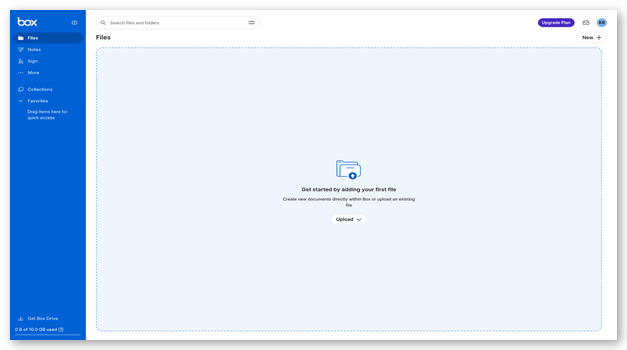
Box Individual provides 10 GB for one user, shared links, browser previews, and five monthly Box Sign requests. External recipients can open links without Box accounts. The service suits contracts, reports, and other compact business documents that need familiar browser access.
A 250 MB upload ceiling blocks many videos, archives, and design packages. The free tier also retains only one file version, limiting recovery after overwrites. Microsoft 365 and Google Workspace integrations support work, while link protection and administration require payment. Box fits document exchange better than large media delivery.
Features:
- Free Capacity: The Individual plan includes 10 GB for one user, with no team administration, pooled storage, or shared paid workspace allowance.
- Upload Limit: Each free-plan upload is limited to 250 MB, excluding many high-resolution videos, disk images, and large archives while accommodating smaller documents.
- Box Sign: Individual accounts include five electronic signature requests each month, adding a useful contract and approval workflow beyond basic cloud storage.
- File Versioning: The free plan retains only one file version, so overwritten documents need another recovery method or independent backup.
- App Integrations: Box connects with many productivity and business applications, supporting file access inside established workplace tools without repeated downloads or manual transfers.
- Sharing Controls: Users can share files or folders externally, although advanced link protection, governance settings, and administrative controls depend on paid plans.
- Device Access: Official browser, desktop, and mobile applications provide access across common work devices and operating systems, including Windows, macOS, Android, and iOS.
Pros
Cons
How to Get It Free?
- Open Box through the tracked link and choose Individual Free.
- Create the account, then review the 250 MB upload ceiling.
- Test sharing and signatures with small documents before wider adoption.
Free Individual plan with 10 GB
10) Dropbox
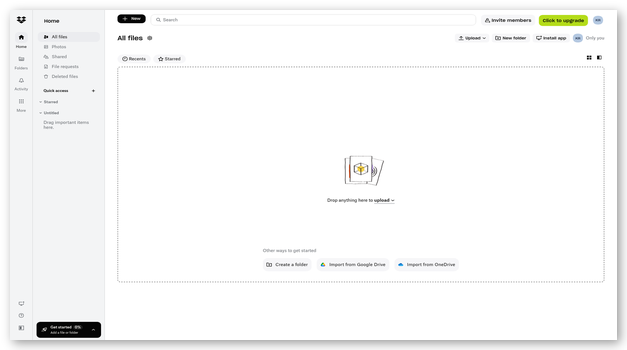
Dropbox Basic provides 2 GB and supports synchronization across up to three connected devices. Desktop, web, and mobile applications offer camera uploads, public links, file previews, and folder-based workflows. Recipients can open shared links without creating an account, which simplifies external delivery.
Basic accounts include 30 days of deleted-file recovery and version history. The small allowance fills quickly, while link passwords, expiration, and extended recovery require paid access. Dropbox remains easy to understand, but users with media libraries or many devices will reach its free limits sooner than competing services.
Features:
- Free Capacity: Dropbox Basic provides 2 GB, enough for selected documents but restrictive for high-resolution photos, videos, and complete device backups or media libraries.
- Device Limit: A Basic account can connect up to three devices, requiring users to unlink older hardware before adding another computer, phone, or tablet.
- File Recovery: Deleted files and previous versions remain recoverable for 30 days. Longer history and broader restoration controls require a paid subscription.
- Camera Uploads: Mobile applications can upload camera photos automatically, although the 2 GB quota can fill rapidly when users include high-resolution videos.
- File Previews: The web interface previews more than 175 file types, helping recipients inspect common documents and media without downloading every file.
- External Links: Recipients can open shared links without Dropbox accounts, reducing account setup and download friction for clients, family members, and contractors.
- Paid Controls: Passwords, expiration dates, larger transfers, longer recovery windows, and broader sharing controls require a paid plan rather than Basic access.
Pros
Cons
How to Get It Free?
- Open Dropbox through the tracked link and select Basic.
- Connect no more than three devices and enable required folders only.
- Upload a sample, test sharing, and confirm recovery before migration.
Free Basic plan with 2 GB
Comparison Between Top Cloud Storage Tools
| Tool | Permanent Free Plan | Desktop Sync App | Mobile Applications | External Share Links | Free File Recovery | Zero Knowledge Free |
|---|---|---|---|---|---|---|
| Zoho WorkDrive | ✅ | ✅ | ✅ | ✅ | ✅ | ❌ |
| Icedrive | ✅ | ❌ | ✅ | ✅ | ❌ | ❌ |
| pCloud | ✅ | ✅ | ✅ | ✅ | ✅ | ❌ |
| Proton Drive | ✅ | ✅ | ✅ | ✅ | ✅ | ✅ |
| Internxt | ✅ | ✅ | ✅ | ✅ | ❌ | ✅ |
What Is Free Cloud Storage?
Free cloud storage keeps files on a provider's remote servers without an immediate subscription. Users reach content through browsers, desktop applications, or mobile devices. Free plans usually cap capacity, upload size, devices, recovery history, or sharing controls. Some providers also share one quota across email and photos. The service can reduce local storage pressure and simplify access, but it should not hold the only copy of important data. Read inactivity, deletion, export, and privacy terms before moving files that cannot be replaced.
How Does Cloud Storage Differ From Cloud Backup?
Cloud storage focuses on access, synchronization, sharing, and collaboration. Cloud backup focuses on recoverable copies after deletion, device failure, malware, or theft. Synchronized folders can copy an unwanted deletion across every connected device. Backup services often preserve historical versions, scheduled jobs, and broader folder selections. Some products offer both functions, but users must configure each area correctly. Keep three copies of important files, on two storage types, with one copy located separately. This approach protects against account problems and local hardware loss.
How Much Free Cloud Storage Do You Need?
Measure current files, yearly growth, and connected devices.
- Documents: Text files and office documents consume little space, so small free plans stay practical.
- Photos: Phone libraries grow quickly when original-resolution images, screenshots, and edited copies share the same quota.
- Video: High-resolution clips can consume several gigabytes, making upload ceilings and download speed as important as capacity.
- Shared Quotas: Email attachments, photo backups, trash, and hidden application data may reduce the space available for files.
- Growth: Add room for twelve months of new files and temporary duplicates before selecting a permanent account.
What Limits Matter Beyond the Free Storage Quota?
Capacity alone does not define a free plan. A low per-file ceiling can block videos or archives despite unused storage. Device limits may force users to unlink hardware before adding another computer. Short trash and version windows reduce protection after deletion, ransomware, or delayed discovery. Public-link downloads can have separate bandwidth allowances. Providers may also reduce capacity or remove content after warnings when accounts remain inactive or over quota. Match every limit with the largest file, device count, and recovery period your workload requires.
Is Free Cloud Storage Safe for Sensitive Files?
Free storage can protect ordinary files when accounts use unique passwords, two-factor authentication, and restricted links. Encryption in transit and at rest defends against common interception and server risks. However, provider-managed encryption can still permit provider access under defined circumstances. End-to-end encryption offers stronger confidentiality because files are encrypted before upload. Recovery becomes harder if credentials are lost. Confidential records should receive client-side encryption, minimal sharing permissions, and another independent copy. Review breach notices, data retention, and account recovery policies carefully.
What Does Zero-Knowledge Encryption Protect?
Zero-knowledge encryption means the provider should not possess the key needed to read file contents. Strong designs may also protect file names and folder structures. This reduces exposure from provider access, internal misuse, or server compromise. It does not protect an unlocked device, weak password, malicious browser extension, or careless public link. Account recovery can be limited because the provider cannot recreate lost encryption keys. Users should store recovery details safely, enable two-factor authentication, and test downloads before depending on encrypted storage.
How Do File Sync and Version History Prevent Data Loss?
File synchronization keeps current folders available across devices, while version history preserves earlier states after changes. Together they support flexible work and limited recovery. They are not full protection because synchronized deletion can spread quickly, and free recovery windows eventually expire. Check whether old versions count against storage and whether ransomware changes can be restored in bulk. Test a sample by editing, deleting, and recovering it. Important projects still need a separate backup that does not synchronize every change automatically.
Can AI Organize Cloud Files Without Exposing Privacy?
AI can summarize documents, recognize images, improve search, and suggest file organization for large accounts. These features may process confidential names, locations, contracts, or customer information. Check whether analysis occurs on the device or provider servers. Read whether stored content trains broader models and whether administrators can disable AI features. End-to-end encrypted services may offer fewer content-aware tools because the provider cannot inspect files. Keep descriptive folders and metadata so exports remain understandable when automated labels fail or become unavailable.
What Happens When a Free Account Fills or Becomes Inactive?
When a free account fills, new uploads and synchronization usually stop. Some providers also restrict editing, email, or sharing because several services consume one quota. Long-term over-quota status can eventually risk deletion after notices. Inactive accounts may lose capacity or content under provider terms. Keep the registered email current and respond to every warning. Export important files before deadlines, then verify the downloaded copies. Never rely on a free account as the only home for irreplaceable work, photographs, or records.
How Do We Select the Best Free Cloud Storage?

Guru99 reviews current plans, official policies, and recurring user feedback to separate practical free cloud storage from outdated quotas, unclear security claims, weak recovery, and unsupported marketing promises for readers.
- Free Capacity: We verify starting quotas, unlock tasks, shared allowances, upload ceilings, device restrictions, and inactivity terms through current provider pages for every shortlisted service. This prevents conditional storage from appearing automatically available.
- Security Design: Our team compares transport encryption, stored-data protection, end-to-end encryption, two-factor security, recovery procedures, and public-link controls before making recommendations. The researchers distinguish provider-managed encryption from genuine zero-knowledge designs.
- Sync Reliability: The researchers assess desktop and mobile availability, offline access, background uploads, conflict handling, and recurring synchronization feedback across supported operating systems. The team favors clear status indicators and dependable export paths.
- Recovery Tools: The team checks trash retention, file version history, snapshots, ransomware restoration, and over-quota behavior during realistic failure scenarios. Our testers consider how quickly a user must notice and reverse an unwanted change.
- Sharing Value: Our testers compare recipient requirements, permissions, link traffic, passwords, expiration, collaboration, previews, and document editing before making recommendations. Our experts match those controls with personal, client, and team workflows.
- Privacy Terms: Our experts review data access, AI processing, training language, deletion, ownership, and regulatory information. The experts also check whether confidential files can remain unreadable to the provider.
- User Evidence: The experts examine repeated patterns across professional reviews and user platforms involving performance, support, bugs, billing, and usability. Isolated comments never outweigh current documentation or broader recurring evidence.
How Can You Troubleshoot Common Cloud Storage Problems?
Cloud-storage failures usually involve quotas, permissions, synchronization conflicts, or expired recovery windows. Preserve local originals while checking each cause.
Issue: Desktop files stop synchronizing even though the application still shows an active connection.
Solution: The user should check quota, paused folders, account status, network access, and application updates before restarting synchronization.
Issue: A shared link opens for its owner but fails for every external recipient.
Solution: The owner should test a private browser, review audience settings, and create a new restricted link when required.
Issue: Uploaded files appear online, but recent desktop changes never reach other connected devices.
Solution: The user should inspect conflict copies, timestamps, excluded folders, and local permissions before replacing any cloud version.
Issue: A full shared quota blocks uploads even though the storage folder appears small.
Solution: The account holder should inspect email, photos, trash, and hidden application data before purchasing or deleting capacity.
Issue: Deleted documents are missing from both trash and the normal file-version history.
Solution: The user should contact support immediately, then restore an independent backup when the documented retention period has ended.
Issue: Duplicate folders appear after several computers reconnect following an extended offline period.
Solution: The account holder should pause synchronization, compare contents and timestamps, then merge copies only after creating another backup.
How Should You Migrate Between Cloud Storage Providers?
A migration protects files, permissions, metadata, versions, and shared access.
- Inventory: Record folder counts, file totals, largest items, shared links, and current storage usage before exporting anything.
- Export: Download original files and metadata, then compare sizes, timestamps, formats, and representative checksums locally.
- Pilot: Upload one mixed folder and test sharing, editing, synchronization, recovery, mobile access, and complete downloads.
- Transfer: Move batches while logging failures and keeping the old account active throughout validation.
- Retire: Replace shared links only after signed-out testing, then preserve local and separate off-site copies.
Do not delete the old account based only on thumbnails or sync icons.
What Future Trends Will Shape Free Cloud Storage?
Cloud storage will add stronger AI search, automated summaries, passkeys, content provenance, and ransomware recovery. Providers may process more organization tasks on devices, reducing exposure of sensitive content. Free plans will probably keep smaller quotas, shorter version history, limited protected links, and fewer administrative controls than paid tiers. Regulatory pressure may improve portability and deletion transparency. Users should value clear exports, interoperable formats, predictable recovery, and understandable privacy controls above novelty. A portable file library remains safer than content trapped inside one proprietary organizer.
Verdict
After reviewing current quotas, encryption, sharing, recovery, device limits, and account terms, I found these three services offered the clearest value for distinct storage needs.
- Zoho WorkDrive: I preferred its 5 GB individual plan, Office editors, and external sharing for organized document work.
- Icedrive: Its uncomplicated dashboard and 10 GB allowance suit personal storage that does not need encrypted folders or file history.
- pCloud: I valued its public links, 50 GB monthly link traffic, cross-platform access, and 15-day recovery window for recurring delivery.
FAQs
Zoho WorkDrive is an online file storage and content collaboration platform for modern teams, small businesses, and large enterprises. It offers a Smart Search for instant file retrieval and unlimited version history to restore documents.
