
10 Best FREE File Sharing Websites (2026)
 Editorial Team
Disclosure: Guru99 is reader-supported. We may earn a commission when you buy through links on this page. Learn more

File-sharing websites should make delivery simple, yet slow uploads, broken links, confusing permissions, short expiration windows, weak privacy, and hidden size limits often create more work. A missed setting can expose a folder, block a client download, or force a rushed resend. Important differences are easy to miss on pricing pages. A careful comparison clarifies recipient access, security, recovery, and real free limits, giving you a safer route from upload to confirmed delivery.
I spent 84+ hours researching 26+ free and paid sharing tools, checking storage, upload limits, permissions, encryption, recipient access, integrations, and recurring user feedback. My in-depth research shortlisted 10 Best Free File Sharing Websites. Each review covers current verified product features, pros and cons, plus backed-by-source limitations, so you can continue with a clearer decision. Read more…

Zoho WorkDrive is an online file storage and content collaboration platform for modern teams, small businesses, and large enterprises. It offers a Smart Search for instant file retrieval and unlimited version history to restore documents.
Best Free File Sharing Sites: Top Picks!
| Name | Free Storage | Supported Platforms | Link |
|---|---|---|---|
 Zoho WorkDrive |
5GB | Windows, iOS, Linux, Android | Learn More |
 Icedrive |
10GB | iOS, Android, Windows, Mac and Linux | Learn More |
 pCloud |
10GB | iOS, Android, Windows, Mac and Linux | Learn More |
 Proton Drive |
5 GB | Windows, macOS, Android, iOS, Web | Learn More |
 EaseUS ToDo Backup |
Free + Cloud | Windows, macOS | Learn More |
1) Zoho WorkDrive
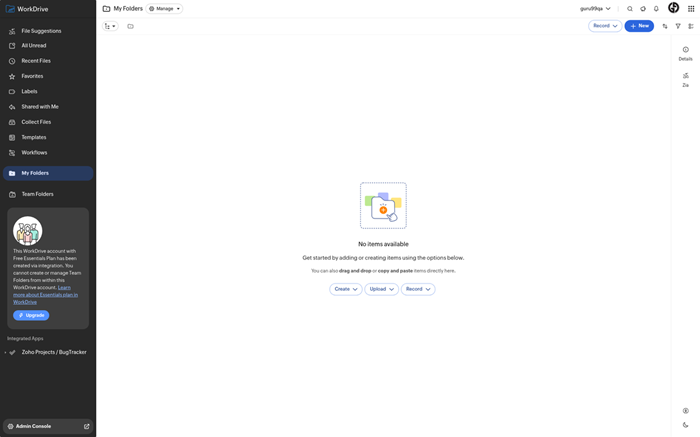
Zoho WorkDrive combines cloud storage, Office editors, and external sharing. Its free Individual plan provides 5 GB and accepts files up to 1 GB. Freelancers can share proposals through browser links, while small teams can test Team Folders during the 15-day trial.
Recipients may view or download shared files without buying licenses. Editors can work in Writer, Sheet, and Show in the browser. The free plan omits Team Folders and the Admin Console, so growing teams will outgrow it. WorkDrive still offers a bridge between personal sharing and managed collaboration.
Features:
- External Links: Share files with people outside the account through browser links. Recipients can view or download content without purchasing a WorkDrive license.
- Office Editors: Writer, Sheet, and Show open inside WorkDrive for browser editing. Zoho-format files do not consume the individual storage allowance. Confirm the setting with a sample.
- Access Roles: Folder and file permissions separate viewers, commenters, and editors. This reduces accidental changes when clients only need downloads or reviews.
- File Requests: Request links let external contacts upload files into a chosen folder. Teams collect submissions without exposing unrelated workspace content. Verify access in a private browser.
- Desktop Access: TrueSync and mobile applications keep selected files reachable across devices. Users can avoid storing every shared project locally. Check the result before client delivery.
- Activity Timeline: The timeline records uploads, edits, and sharing events. Team members can trace recent changes without searching through separate messages. Test this before a larger transfer.
- AI Assistance: Zia can summarize, transcribe, and help find content on eligible plans. Users should review privacy settings before processing confidential files.
Pros
Cons
How to Get It Free?
- Open the Zoho WorkDrive sign-up page and create an Individual account.
- Upload files within the 5 GB allowance and 1 GB file limit.
- Create external links, or start the 15-day team trial without a card.
5 GB free plan / 15-day team trial
2) Icedrive
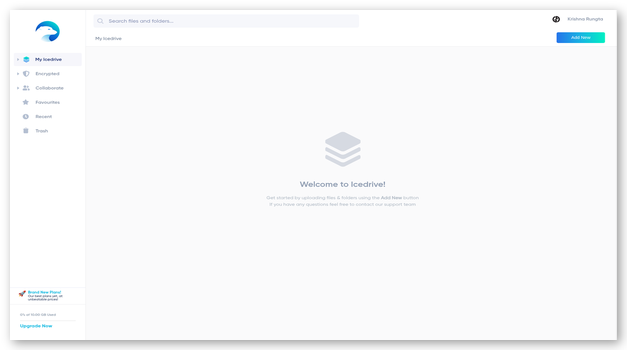
Icedrive gives free users 10 GB for browser, desktop, and mobile access. Public links make photos, documents, and project files easy to send. Basic collaboration also supports shared work without turning every transfer into an email attachment or temporary download page.
The free plan excludes client-side encrypted storage and file history. Passwords, expiration dates, download limits, file requests, and richer folder permissions belong to paid plans. That division keeps ordinary link sharing simple, but confidential or frequently revised files need another option. The clean dashboard remains approachable for personal transfers.
Features:
- Public Links: Create browser links for stored files and folders. Recipients can download shared content without installing the Icedrive desktop application. Confirm the setting with a sample.
- Free Storage: A permanent account includes 10 GB without payment. The allowance fits documents and selected media better than complete device backups.
- Basic Collaboration: Free accounts receive basic collaboration for shared content. Paid plans add viewer, editor, upload, and update permissions for larger workflows.
- Virtual Drive: The Windows virtual drive displays cloud content without storing everything locally. This saves disk space while keeping shared files accessible.
- Mobile Uploads: Android and iOS applications upload files from phones and tablets. Users can create links after confirming each transfer finished. Test this before a larger transfer.
- Transfer Controls: Paid links can add passwords, expiration dates, and download limits. Free users should avoid sharing sensitive material through unrestricted links.
- File Requests: Paid plans let outsiders upload directly into a selected cloud folder. This removes attachment limits when collecting client files. Review current limits inside the account.
Pros
Cons
How to Get It Free?
- Open Icedrive through the tracked link and create a free account.
- Upload files within the permanent 10 GB storage allowance.
- Generate a public link, then test it while signed out before sharing.
Permanent free plan with 10 GB
3) pCloud
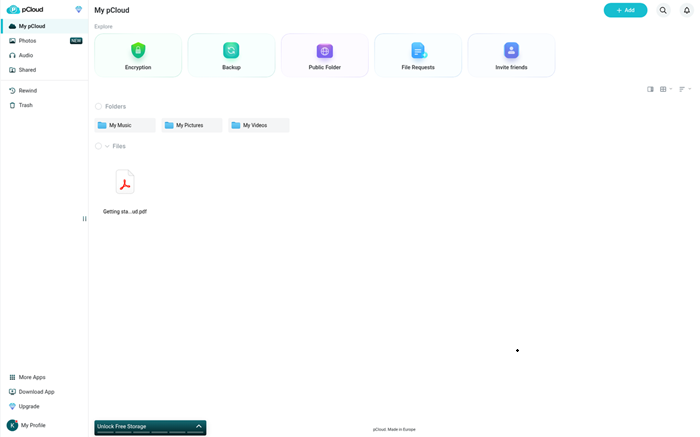
pCloud stores files across browser, desktop, and mobile applications, then creates public download links for recipients. A Basic account starts with 2 GB and can reach 10 GB through tutorial tasks and referrals. Free users also receive 50 GB of monthly shared-link traffic.
Folder invitations support ongoing collaboration with other pCloud users. A 15-day trash and history window helps recover overwritten or deleted files. Link passwords and expiration dates require payment, while client-side pCloud Encryption is sold separately. For routine client delivery, the traffic allowance and link workflow stand out.
Features:
- Public Links: Create download links for files and folders stored in pCloud. Outside recipients can open them without joining the service. Review current limits inside the account.
- Link Traffic: Free accounts receive 50 GB of monthly shared-link traffic. Popular downloads can stop working after that separate allowance is exhausted.
- Folder Invites: Invite pCloud users into folders with view or edit access. This suits recurring collaboration better than repeatedly sending new links.
- File Requests: Upload links let clients send files into a selected folder. Contributors cannot browse other account content during submission. Test this before a larger transfer.
- File History: Basic accounts retain trash and previous versions for 15 days. That window provides limited recovery after accidental changes. Confirm the setting with a sample.
- Device Access: Desktop, browser, Android, and iOS applications keep shared content reachable. Mobile uploads can place camera files into cloud folders. Review current limits inside the account.
- Link Protection: Passwords and expiration dates require paid access. Free users should revoke old links manually after every sensitive delivery finishes. Verify access in a private browser.
Pros
Cons
How to Get It Free?
- Open pCloud through the tracked link and create a Basic account.
- Complete eligible tutorial and referral tasks to expand free storage.
- Create a public link and stay within the 50 GB monthly traffic allowance.
Up to 10 GB free storage
4) Proton Drive
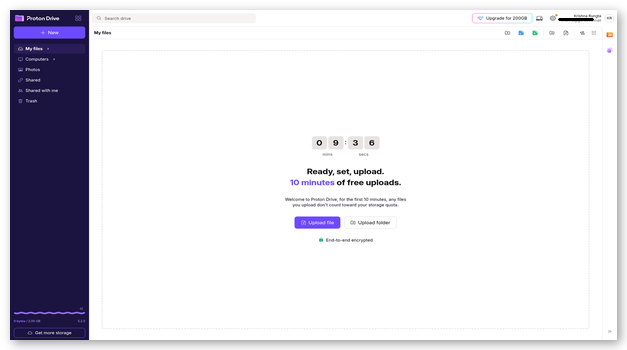
Proton Drive encrypts files, names, and folders before they reach its servers. Users can share documents, photos, and videos through encrypted links. New free accounts begin with 2 GB and can unlock another 3 GB by completing onboarding tasks within 30 days.
Proton Docs and Sheets add private browser editing for basic collaboration. Desktop and mobile applications keep shared files available across devices. The privacy model is strong, though outside integrations remain limited. Some recurring feedback mentions synchronization and offline-download friction, so large migrations deserve a smaller pilot folder first.
Features:
- Encrypted Links: Share files through end-to-end encrypted links. Recipients can download content while file names and stored data remain protected from Proton.
- Free Capacity: Accounts begin with 2 GB and can reach 5 GB. Users must finish listed onboarding tasks within 30 days. Check the result before client delivery.
- Online Editors: Proton Docs and Sheets support encrypted browser editing. Teams can collaborate without moving sensitive content into an advertising-funded workspace. Test this before a larger transfer.
- Folder Sharing: Shared folders keep related files together for repeated access. Permission options should be checked before inviting external collaborators. Confirm the setting with a sample.
- Photo Backup: Mobile applications can upload camera photos into encrypted storage. Users can then share selected images rather than entire device galleries.
- Device Apps: Windows, macOS, mobile, web, and command-line options cover common workflows. Platform behavior can differ during offline access and synchronization. Verify access in a private browser.
- Recovery Options: Version and recovery limits depend on the selected plan. Free users should keep another copy of every irreplaceable shared file.
Pros
Cons
How to Get It Free?
- Open Proton Drive through the tracked link and create a free account.
- Complete onboarding tasks within 30 days to reach 5 GB.
- Upload a sample, create an encrypted link, and test recipient access.
Up to 5 GB free storage
5) EaseUS ToDo Backup
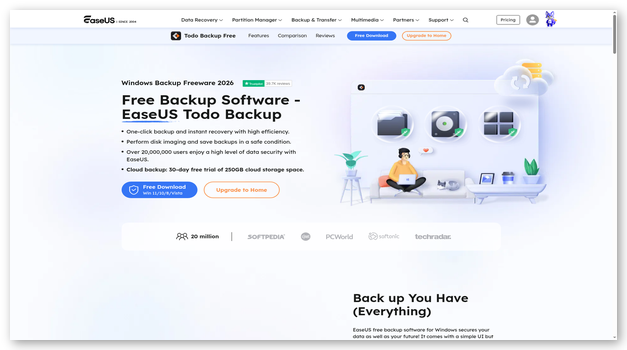
EaseUS Todo Backup creates file, disk, partition, and system backups on Windows. It can save backup images to local drives, NAS, networks, or cloud storage. The free edition advertises 250 GB of EaseUS cloud capacity for 30 days, which supports off-site copies.
This product is not a normal browser-based file-sharing website. Recipients generally need access to the backup location and compatible recovery software. Scheduled, incremental, differential, and password-protected backups suit recovery tasks better than quick client delivery. It belongs here for protected backup transfer, but public links remain easier elsewhere.
Features:
- File Backup: Select individual folders and files for protected backup images. This helps preserve project material before sending or changing original copies.
- Cloud Backup: EaseUS advertises 250 GB of cloud storage for 30 days. Users can hold temporary off-site backups during that period. Test this before a larger transfer.
- Backup Encryption: Password protection can encrypt backup files before storage. Recipients need the password and compatible software to recover protected content. Confirm the setting with a sample.
- Scheduled Jobs: Daily, weekly, or monthly schedules create updated backup images automatically. This suits repeated protection more than one-time public delivery. Review current limits inside the account.
- Incremental Backup: Incremental and differential jobs transfer changed data after the first full backup. Smaller updates reduce repeated network and storage use.
- Multiple Destinations: Backups can target local drives, external disks, NAS, network folders, or cloud services. Users control where recovery images live. Check the result before client delivery.
- Recovery Media: WinPE media restores files when Windows cannot start. This recovery focus separates Todo Backup from ordinary file-sharing websites. Test this before a larger transfer.
Pros
Cons
How to Get It Free?
- Open EaseUS through the tracked link and download Todo Backup Free.
- Create a file backup and choose a supported destination.
- Use the advertised 250 GB cloud allowance within its 30-day period.
250 GB cloud access for 30 days
6) Internxt
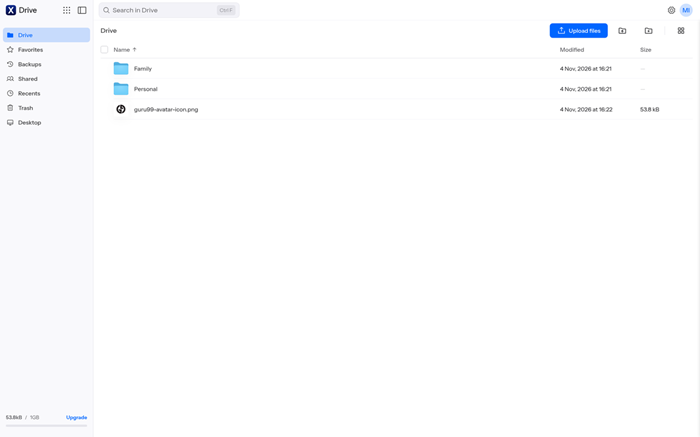
Internxt provides client-side, zero-knowledge encryption for stored and shared files. Its permanent free plan includes 1 GB without a payment card. Users can create encrypted links from web, desktop, mobile, command-line, WebDAV, and Rclone workflows, which suits small confidential transfers.
The quota fills quickly with video or design files. Paid plans add larger storage, collaborative folders, and advanced versioning. Recurring feedback praises the privacy model, while transfer reliability and support response remain mixed. Internxt fits sensitive documents better than large public distribution, especially when recipients need a simple encrypted download.
Features:
- Encrypted Links: Share selected files through encrypted browser links. Recipients receive the content without gaining access to unrelated folders or account data.
- Free Capacity: The permanent plan includes 1 GB without a card. It fits documents and selected images better than large media files.
- Zero Knowledge: Client-side encryption keeps file contents unreadable to Internxt. Users must protect passwords and recovery details because provider recovery is limited.
- Flexible Access: Web, desktop, mobile, command-line, WebDAV, and Rclone options support varied upload workflows. Teams can connect existing transfer tools. Verify access in a private browser.
- Open Source: Internxt publishes application code for inspection. This improves transparency around encryption design without guaranteeing service availability or transfer performance. Check the result before client delivery.
- Version Limits: Advanced versioning requires paid access. Free users need another backup if a shared file is overwritten or deleted. Test this before a larger transfer.
- Recipient Testing: Encrypted delivery still depends on browser and network behavior. Send a sample first when deadlines or large files matter. Confirm the setting with a sample.
Pros
Cons
How to Get It Free?
- Open Internxt through the tracked link and create a free account.
- Upload files within the permanent 1 GB allowance.
- Create an encrypted link, then verify the download in a private browser.
Permanent free plan with 1 GB
7) Google Drive
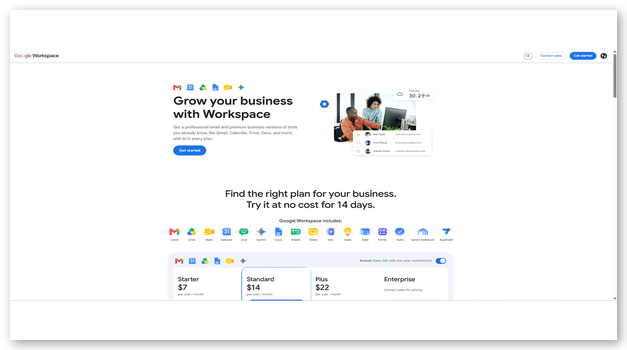
Google Drive shares files and folders with people, groups, or anyone holding a link. Owners can assign viewer, commenter, or editor access. A Google account includes up to 15 GB shared across Drive, Gmail, and Google Photos, which supports everyday documents and selected media.
Docs, Sheets, and Slides enable editing with comments and revision history. Folder permissions inherit downward, so one setting can expose every nested file. Provider-managed encryption protects data, but Drive is not zero knowledge. Its familiar interface and extensive integrations make recipient onboarding easier for teams.
Features:
- Access Roles: Choose viewer, commenter, or editor access for shared items. Owners can remove access when a project or relationship ends. Confirm the setting with a sample.
- Link Sharing: Anyone-with-link access lets unsigned recipients view content. Work and school administrators may restrict external sharing for managed accounts. Review current limits inside the account.
- Live Editing: Docs, Sheets, and Slides support simultaneous editing and comments. Revision history helps teams review changes after collaborative sessions. Verify access in a private browser.
- Folder Inheritance: Files inside shared folders inherit parent permissions. Owners should create limited-access folders when individual files need stricter controls. Check the result before client delivery.
- Sharing Limits: A single file can reach up to 600 email addresses. Active editing is limited to 100 open tabs or devices.
- Desktop Sync: Drive for desktop streams or synchronizes chosen folders. Shared content stays available without storing every cloud file locally. Confirm the setting with a sample.
- App Ecosystem: Drive connects with many workplace applications and Google services. Integrations reduce manual downloads between communication and productivity tools. Review current limits inside the account.
Pros
Cons
How to Get It Free?
- Open Google Drive through the tracked link and sign in.
- Review shared usage across Drive, Gmail, and Google Photos.
- Upload within the 15 GB allowance, then assign the narrowest suitable role.
Up to 15 GB free storage
8) TeraBox
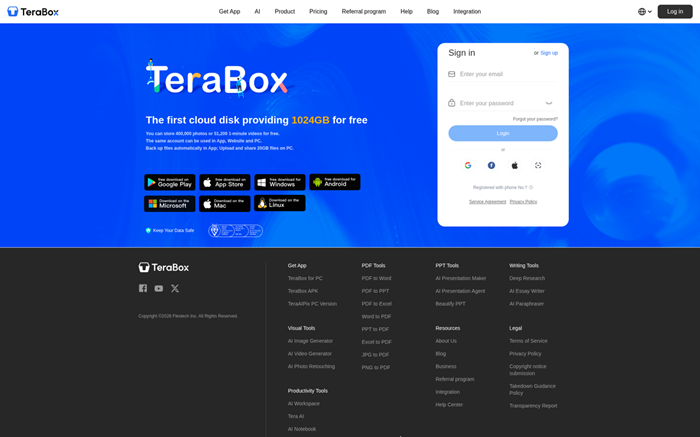
TeraBox advertises up to 1,024 GB of free capacity for files, photos, and videos. Web, desktop, and mobile applications support uploads, folders, mobile backup, and sharing links. The allowance can handle secondary copies or occasional large transfers that exceed smaller free plans.
Free access includes advertising and may deliver slower downloads than paid service, according to feedback. TeraBox terms permit changes to allowances and action on inactive accounts after notice. That makes it unsuitable as the only copy of important files. Users should test recipient downloads before sharing a package.
Features:
- Large Allowance: The free plan advertises up to 1,024 GB, offering substantially more stated capacity than most mainstream personal storage services. Validate the workflow on every device.
- Mobile Backup: Android and iOS applications can upload photos and videos automatically, reducing manual transfers from supported mobile devices. Compare the setting with backup needs.
- Share Links: Users can generate links for selected files or folders, allowing recipients to access content without browsing the entire account. Verify this during account setup.
- Cross-Platform Apps: Web, Windows, Android, and iOS access covers common devices, with plan-dependent limits affecting transfer and playback behavior. Test this before storing critical files.
- Free-Tier Ads: Advertising helps fund free access and can make the interface less focused than storage services with smaller allowances. Review this before a larger migration.
- Account Activity: Terms permit changes to storage conditions and action on inactive accounts after notice, so registered email warnings require attention. Confirm the behavior with sample files.
- Backup Role: The generous capacity works best as a secondary copy because no free storage provider should hold the only original. Check current limits inside the account.
Pros
Cons
How to Get It Free?
- Open TeraBox through the referral link and create a free account.
- Review current storage, inactivity, transfer, and advertising conditions.
- Upload a sample, test export speed, and retain independent originals.
Up to 1,024 GB free storage
9) IDrive
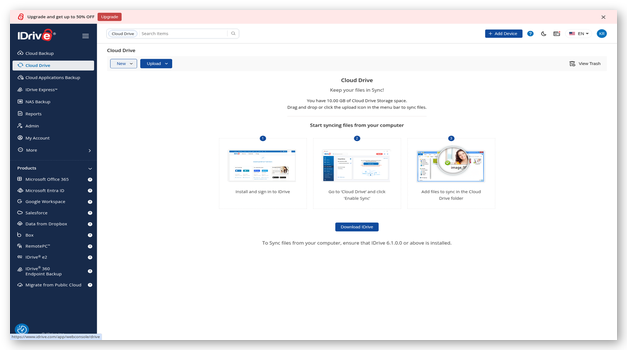
IDrive Basic provides 10 GB without a payment card and separates online backup from Cloud Drive synchronization. Users can share synced files with view-only or edit permissions. Desktop, mobile, and browser applications also keep content available across several supported device types.
Snapshots and up to 30 previous versions support recovery when shared work changes unexpectedly. IDrive Office can edit common business formats inside Cloud Drive. The split between backup storage and synchronized files takes time to understand, but it serves users who want sharing and recovery within one account.
Features:
- Free Capacity: IDrive Basic provides 10 GB without requiring a payment card, making it useful for testing backup and sync workflows. Compare the setting with backup needs.
- Online Backup: Scheduled backup can protect selected computer folders independently from ordinary file synchronization, supporting recovery after local loss. Verify this during account setup.
- Cloud Drive: A separate synchronization area keeps chosen files aligned across devices, distinct from the service’s primary backup destination. Test this before storing critical files.
- Snapshots: IDrive Snapshots preserve historical data states and can help recover files affected by accidental deletion or ransomware. Review this before a larger migration.
- File Versions: The service can retain up to 30 previous versions of backed-up files without counting them separately against storage. Confirm the behavior with sample files.
- Device Coverage: Applications support common desktop and mobile platforms, although a 10 GB allowance limits the scale of complete device backups. Check current limits inside the account.
- Support Channels: IDrive publishes phone, chat, and email support options, providing more assistance routes than many permanent free storage plans. Validate the workflow on every device.
Pros
Cons
How to Get It Free?
- Open IDrive through the tracked link and select the Basic plan.
- Install the official application, then separate backup folders from Cloud Drive.
- Run a sample backup and restore before adding important data.
Free Basic plan with 10 GB
10) Box
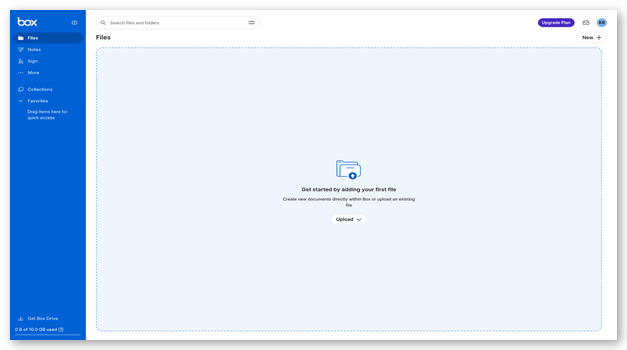
Box Individual provides 10 GB for one user, shared links, browser previews, and five monthly Box Sign requests. External recipients can open links without Box accounts. The service suits contracts, reports, and other compact business documents that need familiar browser access.
A 250 MB upload ceiling blocks many videos, archives, and design packages. The free tier also retains only one file version, limiting recovery after overwrites. Microsoft 365 and Google Workspace integrations support work, while link protection and administration require payment. Box fits document exchange better than large media delivery.
Features:
- Free Capacity: The Individual plan includes 10 GB for one user, with no team administration or shared paid workspace allowance. Verify this during account setup.
- Upload Limit: Each free-plan upload is limited to 250 MB, excluding many high-resolution videos, disk images, and large archives. Test this before storing critical files.
- Box Sign: Individual accounts include five electronic signature requests each month, adding practical document workflow value beyond basic storage. Review this before a larger migration.
- File Versioning: The free plan retains only one file version, so overwritten documents need another recovery method or independent backup.
- App Integrations: Box connects with many productivity and business applications, supporting file access inside established workplace tools and processes. Check current limits inside the account.
- Sharing Controls: Users can share files or folders externally, although advanced link protection and governance controls depend on paid plans. Validate the workflow on every device.
- Device Access: Official browser, desktop, and mobile applications provide access across common work devices and operating systems. Compare the setting with backup needs.
Pros
Cons
How to Get It Free?
- Open Box through the tracked link and choose Individual Free.
- Create the account, then review the 250 MB upload ceiling.
- Test sharing and signatures with small documents before wider adoption.
Free Individual plan with 10 GB
Comparison Between Top File Sharing Websites
| Tool | Permanent Free Access | External Share Links | Recipient Account Optional | Desktop Application | Encrypted Storage or Backups | Version Recovery |
|---|---|---|---|---|---|---|
Zoho WorkDrive |
✅ | ✅ | ✅ | ✅ | ✅ | ✅ |
Icedrive |
✅ | ✅ | ✅ | ✅ | ✅ | ❌ |
pCloud |
✅ | ✅ | ✅ | ✅ | ✅ | ✅ |
Proton Drive |
✅ | ✅ | ✅ | ✅ | ✅ | ✅ |
EaseUS ToDo Backup |
✅ | ❌ | ❌ | ✅ | ✅ | ✅ |
What Is a Free File Sharing Website?
A free file sharing website stores or transfers files, then gives recipients a browser link or account invitation. Some services keep files until users delete them. Others remove transfers after a deadline. Free plans commonly limit storage, file size, download traffic, devices, or link protection. A browser link can replace large email attachments and simplify client delivery. However, users should verify permissions, expiration, encryption, and recovery before sending confidential or irreplaceable content. The original file should remain available until every recipient confirms a successful download.
How Do File Sharing Websites Work?
Users upload a file to remote storage or create a synchronized cloud folder. The service then produces a link, invitation, or access request for recipients. Permissions may allow viewing, commenting, editing, uploading, or downloading. Some links work without accounts, while others require sign-in. Providers can impose separate limits on storage and public-link traffic. Encryption protects the transfer, but public links still depend on careful handling. Owners should test links while signed out, confirm the intended role, and revoke access after work finishes.
How Is Cloud Sharing Different From One-Time File Transfer?
Cloud sharing keeps files inside an ongoing folder structure with synchronization, version history, permissions, and repeated access. One-time transfer services focus on sending a package that expires after several days or downloads. Cloud folders suit team projects and recurring client work. Temporary transfers suit large deliveries that do not need collaboration. Backup software creates recoverable images and usually requires compatible restore tools, so it is less convenient for ordinary recipients. Choose by access duration, recipient behavior, editing needs, and recovery requirements.
What Free Limits Should You Check Before Sharing?
A storage headline does not describe every sharing limit.
- File Size: A per-file ceiling can block videos, archives, images, and design packages despite unused account storage.
- Link Traffic: Download bandwidth may stop a popular link even when the original file remains safely stored.
- Recipient Access: Some links open anonymously, while others require accounts, codes, applications, or explicit invitations.
- Recovery Window: Short trash and version periods reduce protection after deletion, overwriting, malware, or delayed discovery.
- Protection Controls: Passwords, expiration dates, download limits, and watermarking often belong to paid plans rather than permanent free tiers.
Are Free File Sharing Websites Safe?
Free sharing can protect ordinary or business files when owners apply restricted permissions, strong passwords, two-factor authentication, and verified recipient addresses. Encryption in transit protects uploads and downloads from basic interception. Provider-managed storage may still permit internal access under defined circumstances. End-to-end encryption offers stronger confidentiality because the provider cannot read stored content. Public links can be forwarded, so sensitive files need passwords or named recipients. Keep independent copies, remove expired collaborators, and review every link before sending confidential records.
Which Encryption and Link Controls Matter?
Look for encryption during transfer and while files remain stored. End-to-end or zero-knowledge designs reduce provider access, though lost keys can make recovery difficult. Link passwords stop casual opening, while expiration dates shorten exposure. Download limits help control repeated access but cannot prevent copying after a legitimate download. Named invitations provide clearer accountability than unrestricted links. Two-factor authentication protects the owner account from takeover. For confidential work, combine restricted recipients, short access periods, separate passwords, and a verified backup of the original file.
Can Recipients Download Files Without Creating Accounts?
Yes. Many services allow anyone-with-link downloads through common desktop browsers and phones. The owner must select public or external access rather than account-only permissions. Managed workplace accounts may block anonymous sharing through administrator policy. Account-free links reduce recipient friction, but they can also be forwarded outside the intended audience. Test each link in a private browser before sending it. For confidential material, prefer named recipients, verification codes, or password-protected links. Remove access after the recipient confirms the download completed correctly.
How Can AI Improve File Sharing Workflows?
AI can summarize documents, transcribe media, extract action items, and improve file search before or after sharing. These features reduce manual review for large folders and recorded meetings. They may also process confidential contracts, customer names, locations, or creative work. Check where analysis occurs, whether content trains broader models, and which administrators can disable it. Encrypted services may provide fewer content-aware tools because the provider cannot inspect files. Keep clear filenames and folders so exports remain understandable without automated labels.
When Should You Avoid Public Sharing Links?
Avoid unrestricted public links or passwords for identity documents, financial records, health information, unreleased products, credentials, or confidential client files. Anyone receiving the address may forward it. Search engines or automated scanners can also discover poorly configured content. Use named recipients, strong link passwords, expiration dates, and the narrowest role available. Confirm that editors cannot reshare files when that matters. If the service lacks suitable controls on its free plan, encrypt the file locally or select another platform before delivery.
How Do We Select the Best Free File Sharing Websites?
Guru99 reviews official plans, sharing workflows, security documentation, screenshots, and recurring user feedback to separate useful free services from outdated quotas, hidden restrictions, and unsupported promotional claims for readers today.
- Free Access: We verify permanent plans, timed trials, starting quotas, onboarding tasks, upload ceilings, and public-link traffic through current provider pages for every service. These checks prevent conditional offers from appearing automatically available.
- Recipient Experience: Our team compares account requirements, browser downloads, invitations, upload requests, mobile access, and link failures during sample deliveries. The researchers favor workflows that recipients can understand without technical support.
- Security Controls: The researchers review transport encryption, stored-data protection, end-to-end encryption, two-factor security, passwords, expiration, and permission roles before making recommendations. The team separates provider-managed protection from zero-knowledge designs.
- Collaboration: The team examines shared folders, comments, editing, version history, activity records, and external contributors during active projects. Our testers consider whether permissions remain understandable when projects add more people and files.
- Transfer Limits: Our testers check storage, per-file size, bandwidth, device limits, inactivity rules, and recovery windows before large transfers. Our experts match those limits with documents, videos, archives, and repeated delivery.
- Reliability Evidence: Our experts compare official status information and repeated review patterns involving uploads, synchronization, downloads, support, and bugs across review platforms. The experts do not turn isolated complaints into general conclusions.
- Practical Fit: The experts identify whether each option suits quick links, team collaboration, encrypted delivery, large secondary copies, or recoverable backups for each reader. This keeps fundamentally different workflows from appearing interchangeable.
How Can You Troubleshoot Common File Sharing Problems?
Sharing failures usually involve permissions, quotas, expired links, browser restrictions, or incomplete uploads. Keep the original file while checking each cause before changing settings.
- Issue: A recipient opens the link but sees an access-denied or account-required message.
Solution: The owner should review general access, recipient addresses, administrator policy, and the selected viewer or editor role. - Issue: A large upload repeatedly stops before the progress indicator reaches complete status.
Solution: The user should check file size, free storage, browser stability, network rules, and the desktop application option. - Issue: A shared folder exposes more files than the owner intended recipients to see.
Solution: The owner should inspect inherited permissions, move sensitive files, and create a separate limited-access folder immediately. - Issue: Download links worked yesterday but now report expired, unavailable, or traffic-limit errors.
Solution: The owner should review expiration, monthly bandwidth, account status, and inactivity notices before generating a replacement link. - Issue: Recipients download an older file even though the owner uploaded a revision.
Solution: The owner should confirm version labels, clear cached links, and resend the current file from the correct folder. - Issue: Mobile uploads appear finished, but several files remain missing from the shared folder.
Solution: The user should check background permissions, battery restrictions, network access, and pending queues before deleting local copies.
How Should You Share Large Files Reliably?
Large deliveries need planning because browsers, quotas, and networks fail.
- Check Limits: Compare the file with upload ceilings, free storage, link traffic, and expiration before starting.
- Prepare Files: Compress related items into a named archive, then scan content and remove unnecessary confidential data.
- Upload Once: Prefer a desktop application for unstable networks, then wait until each progress indicator confirms completion.
- Test Access: Open the link in a private browser and download a file before contacting recipients.
- Keep Originals: Retain independent backup copies until recipients verify integrity and the project no longer needs access.
What Trends Will Change Online File Sharing?
File-sharing services will add passkeys, stronger content provenance, on-device AI, automated classification, and ransomware recovery. More providers may let users remove metadata or watermark documents before delivery. Zero-knowledge platforms will face pressure to add collaboration without weakening private encryption. Free plans will probably keep smaller transfer quotas, shorter recovery, and fewer protected-link controls than paid tiers. Users should value clear exports, predictable expiration, dependable recipient access, and transparent AI policies above novelty. Portable files remain safer than content trapped inside one proprietary workspace.
Verdict:
I have always relied on file-sharing websites to transfer large media files and documents efficiently. My experience with different platforms over the years has helped me find the most secure, user-friendly, and cost-effective options. Check my verdict below to see which ones stand out.
- Zoho WorkDrive 5 GB free, Office editors, and viewer, commenter, and editor roles for client sharing.
- Icedrive 10 GB free with simple public links and desktop, mobile, and virtual-drive access.
- pCloud up to 10 GB free, 50 GB of monthly link traffic, and 15-day file recovery.
FAQs
Zoho WorkDrive is my top pick for secure file sharing and team collaboration, with generous storage, granular access controls, and smooth syncing across every device. It bundles an online office suite so I can create, share, and co-edit files without ever leaving the platform.
