
15 BEST Coding Books for Beginners (2026 Update)
 Editorial Team
We are reader supported and may earn a commission when you buy through links on our site
Choosing a programming book is difficult because each title solves a different problem. A beginner needs guided practice, while an experienced developer may need help with old code, architecture, testing, or teamwork. A useful choice starts with your present skill level and the kind of software you want to build.
This guide compares 15 books across programming basics, code quality, software design, enterprise systems, artificial intelligence, and career growth.
Each review says what the book covers, what you need to know first, and who will get the most from it. Working Effectively with Legacy Code is the top recommendation for developers responsible for changing existing software safely. Read more…
Best Coding & Programming Books for Beginners
| Book Title | Author Name | Latest Edition | Publisher | Ratings | Link |
|---|---|---|---|---|---|
| Working Effectively with Legacy Code | Michael Feathers | 1st edition | Pearson |  |
Learn More |
| The Clean Coder | Martin | 1st edition | Pearson | |
Learn More |
| Code Complete | Steve McConnell | 2nd edition | Microsoft Press US | |
Learn More |
| The Pragmatic Programmer | David Thomas | 2nd edition | Addison-Wesley |  |
Learn More |
| Soft Skills | John Sonmez | 1st edition | Manning Publications | |
Learn More |
Ratings: Ratings are average Amazon reader scores as of October 2026 and may change.
1) Working Effectively with Legacy Code
Author Name: Michael Feathers
Publisher: Pearson
Latest Edition: 1st edition
No of Pages: 464 pages

Working Effectively with Legacy Code explains how to change an existing codebase when tests are missing or unreliable. Michael Feathers focuses on finding safe places to make changes, breaking hard dependencies, and putting small tests around the behavior that matters before editing it.
The examples use Java, C#, and C++, but the problem-solving method applies across languages. The material can feel slow if you only work on new projects. It is more useful for developers who inherit large systems and need a practical path toward safer maintenance.
What You’ll Learn:
- Identify safe places to change untested existing code
- Break hard dependencies before adding focused unit tests
- Protect current behavior while making careful structural improvements
- Find hidden seams that make difficult code testable
- Handle large classes without rewriting the whole system
- Plan small changes that reduce future maintenance risk
Best For: Developers maintaining legacy systems who need safer changes, dependency control, and practical testing methods without rewriting large applications or starting from scratch during active maintenance.
2) The Clean Coder: A Code of Conduct for Professional Programmers
Author Name: Martin
Publisher: Pearson
Latest Edition: 1st edition
No of Pages: 256 pages

The Clean Coder looks at programming as a professional responsibility, not only a technical job. Robert C. Martin discusses estimation, commitments, pressure, focus, testing, and communication. The short chapters connect coding choices with the way developers work with managers and teammates.
This is not a guide to syntax or software architecture. Its value comes from situations that help readers think about deadlines, quality, and honest communication. Some advice reflects the author’s personal working style, so readers should compare it with their team culture instead of treating every rule as fixed.
What You’ll Learn:
- Set realistic commitments without hiding delivery risks from teammates
- Explain estimates clearly when requirements remain uncertain or changing
- Handle deadline pressure without dropping essential quality checks
- Build steady practice habits for professional software work
- Say no clearly when a request cannot work
- Take responsibility for code quality and team communication
Best For: Working developers and team leads who need practical guidance on estimates, commitments, deadlines, communication, professional conduct, and protecting code quality under workplace pressure each day.
3) Code Complete: A Practical Handbook of Software Construction
Author Name: Steve McConnell
Publisher: Microsoft Press US
Latest Edition: 2nd edition
No of Pages: 960 pages
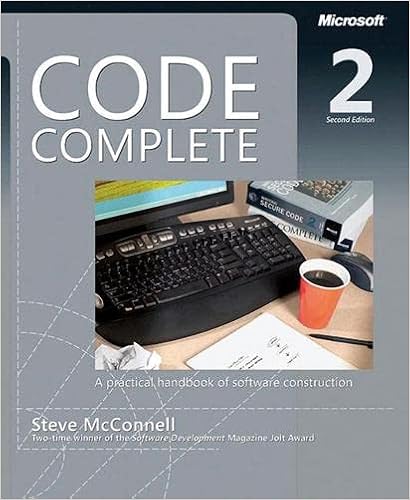
Code Complete explains the choices developers make while turning a design into working software. Steve McConnell covers naming, routines, classes, control flow, defensive programming, debugging, testing, and code improvement. The focus stays on construction practices that transfer between languages and project types.
It works as a desk reference because readers can open the chapter that matches the problem. Its size can be tiring for a first read, and some examples show their age. The underlying questions about clarity, complexity, reviews, and defect prevention help teams examine how they build code.
What You’ll Learn:
- Choose clear names for variables, functions, and classes
- Control complexity through smaller routines and simpler program flow
- Use defensive checks to catch errors near their source
- Review code with practical construction and maintenance criteria
- Improve debugging by narrowing causes before changing code
- Match coding practices to project size and risk
Best For: Programmers seeking a detailed reference for code construction, naming, debugging, reviews, defensive programming, complexity control, and reliable development practices across different languages and project sizes.
4) The Pragmatic Programmer
Author Name: David Thomas
Publisher: Addison-Wesley
Latest Edition: 2nd edition
No of Pages: 352 pages
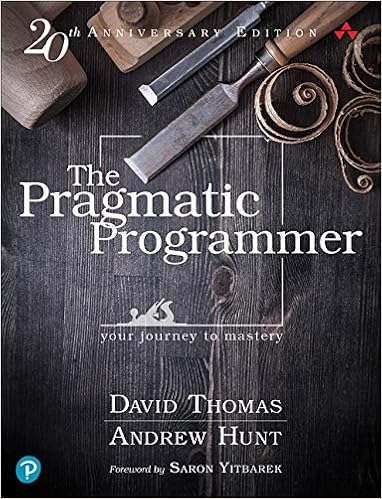
The Pragmatic Programmer presents lessons on responsibility, learning, debugging, design, testing, automation, and teamwork. David Thomas and Andrew Hunt show habits for changing requirements, tools, or systems. The advice is language independent and easy to connect with daily work.
Its topic-based format makes selective reading simple, but it does not teach one subject from start to finish. Readers get the most value by trying the exercises and discussing the ideas with a team. Choose it for broad engineering judgment, not for a detailed guide to one language or framework.
What You’ll Learn:
- Reduce duplicated knowledge across code, documents, and team work
- Use small experiments before committing to expensive technical choices
- Debug causes instead of treating only visible error symptoms
- Keep code flexible when product requirements continue changing
- Improve feedback through testing, automation, and steady review
- Take clear ownership of decisions, learning, and communication
Best For: Developers wanting practical habits for debugging, learning, automation, teamwork, responsibility, and adapting their code when tools, systems, or product requirements change frequently during development work.
5) Soft Skills: The Software Developer's Life Manual
Author Name: John Sonmez
Publisher: Manning Publications
Latest Edition: 1st edition
No of Pages: 504 pages
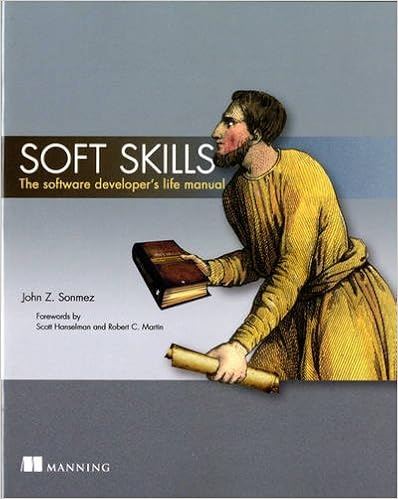
Soft Skills: The Software Developer’s Life Manual covers the parts of a development career that code books often ignore. John Sonmez discusses career planning, learning, productivity, personal finance, fitness, and professional relationships in many short chapters designed for selective reading.
What You’ll Learn:
- Plan a software career around skills and visible work
- Build learning routines that fit changing technical demands
- Manage personal projects without losing focus or direction
- Think clearly about income, saving, and career choices
- Improve workplace communication and long-term professional relationships
- Connect physical habits with steady, sustainable work routines
Best For: Developers seeking practical guidance on career planning, learning, productivity, money, health, and workplace relationships, while treating the author’s personal advice as optional rather than rules.
6) Domain-Driven Design: Tackling Complexity in the Heart of Software
Author Name: Eric Evans
Publisher: Addison-Wesley
Latest Edition: 1st edition
No of Pages: 560 pages
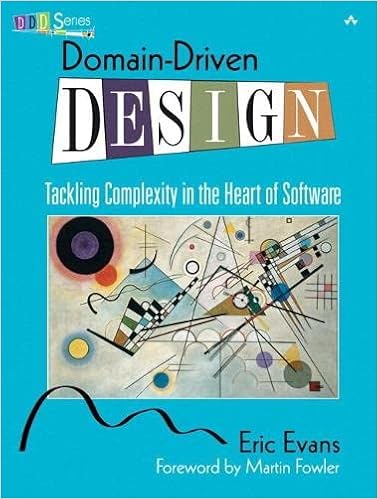
Domain-Driven Design explains how software teams can build a shared model of a complex business area. Eric Evans connects conversations with domain experts to code through ideas such as a common language, entities, value objects, services, aggregates, and bounded contexts.
The book is dense and uses long examples, so it is easier after readers have built business software. It is less useful for small applications with simple rules. Choose it when unclear terms, shifting business logic, and team boundaries create more trouble than the programming language itself.
What You’ll Learn:
- Build a shared language with experts and developers
- Keep software models close to real business rules
- Separate large systems into clear bounded business contexts
- Design entities, values, services, aggregates, and repositories in software models
- Refine models when new domain knowledge changes assumptions
- Protect core business logic from unrelated technical details
Best For: Experienced developers, architects, analysts, and product experts modeling complex business rules, shared terminology, domain boundaries, and software structures across large team-based applications with changing requirements.
7) Refactoring: Improving the Design of Existing Code
Author Name: Martin Fowler
Publisher: Addison-Wesley
Latest Edition: 2nd edition
No of Pages: 448 pages

Refactoring explains how to improve code structure without changing what users see. Martin Fowler shows small code transformations, the problems that suggest them, and the role of tests in keeping each change safe. It uses JavaScript examples.
The catalog works well when readers have a real codebase beside them. Reading every entry in order is less useful than learning the process and returning when a code smell appears. This book fits developers who can already write working code but want a careful method for making that code easier to change.
What You’ll Learn:
- Recognize code smells that signal difficult future changes
- Apply small transformations without changing visible program behavior
- Use tests as protection during repeated structural improvements
- Break large functions into clearer, focused pieces safely
- Improve names and boundaries while keeping behavior stable
- Choose refactorings by problem, context, and expected benefit
Best For: Developers improving existing code who need repeatable refactoring steps, reliable tests, clearer structure, safer changes, and practical methods for handling common code smells during maintenance.
8) Design Patterns: Elements of Reusable Object-Oriented Software
Author Name: Erich Gamma
Publisher: Addison Wesley
Latest Edition: 1st edition
No of Pages: 416 pages
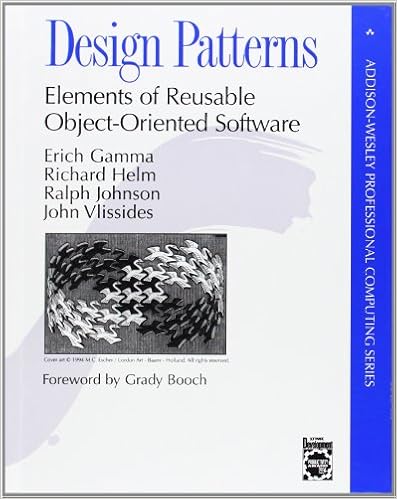
Design Patterns collects 23 named solutions to recurring object-oriented design problems. Erich Gamma, Richard Helm, Ralph Johnson, and John Vlissides explain when each pattern applies, how its parts work together, and what trade-offs come with using it.
The examples use C++ and Smalltalk, and the writing assumes prior object-oriented design experience. That makes the book harder for beginners and less direct for teams using newer styles. Its lasting value is the shared vocabulary it gives developers for discussing creation, structure, behavior, and reuse.
What You’ll Learn:
- Recognize recurring object-oriented design problems across different systems
- Compare creational, structural, and behavioral pattern families clearly
- Discuss design choices with a shared pattern vocabulary
- Understand consequences before applying a familiar pattern mechanically
- Separate interfaces from implementations to support future changes
- Adapt proven structures without copying examples without thought
Best For: Object-oriented developers who understand classes and interfaces and need a shared vocabulary for discussing reusable design solutions, trade-offs, composition, inheritance, and code structure with teams.
9) Patterns of Enterprise Application Architecture
Author Name: Martin Fowler
Publisher: Addison-Wesley
Latest Edition: 1st edition
No of Pages: 526 pages

Patterns of Enterprise Application Architecture organizes common solutions for business applications that use databases, domain logic, web interfaces, sessions, and distributed calls. Martin Fowler first explains the larger architecture choices, then presents patterns that teams can name, compare, and combine.
Many examples reflect older enterprise platforms, but the underlying problems still appear in current systems. The catalog is not a recipe for one architecture, and copying every layer can add needless work. It suits readers who need to reason about data mapping, transaction boundaries, presentation, and application structure.
What You’ll Learn:
- Separate presentation, domain logic, and stored data responsibilities
- Compare transaction scripts, domain models, and table modules
- Map objects and relationships into relational database structures
- Handle sessions, concurrency, and distribution in business applications
- Name architecture choices so teams can discuss trade-offs
- Avoid adding layers that do not solve real problems
Best For: Backend developers, architects, and technical leads comparing database mapping, domain logic, transaction control, web presentation, distribution, and application structures for data-heavy business systems at scale.
10) Enterprise Integration Patterns
Author Name: Gregor Hohpe
Publisher: Pearson Addison-Wesley
Latest Edition: 1st edition
No of Pages: 736 pages
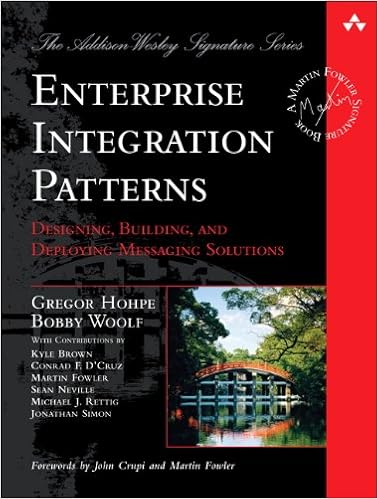
Enterprise Integration Patterns gives teams a common language for systems that exchange messages. Gregor Hohpe and Bobby Woolf explain channels, routers, translators, endpoints, message construction, and system management. Diagrams make complex flows easier to discuss before choosing a product or framework.
The technology examples include JMS, MSMQ, BizTalk, SOAP, and XSL, so some implementation details are dated. The core patterns still help when reasoning about queues, events, and asynchronous workflows. Choose it for integration design, but pair it with current platform documentation for implementation details.
What You’ll Learn:
- Model message channels, endpoints, routers, and translators clearly
- Compare request, event, queue, and publish-subscribe communication styles
- Design message flows that handle errors and retries
- Translate data formats between systems with different models
- Track messages across distributed workflows and service boundaries
- Discuss integration designs without depending on one vendor
Best For: Integration engineers, architects, and backend developers designing message-based systems with queues, routers, translators, endpoints, asynchronous flows, distributed tracking, and current cloud platform guidance for implementation.
11) Python Crash Course
Author Name: Eric Matthes
Publisher: No Starch Press
Latest Edition: 2nd edition
No of Pages: 544 pages
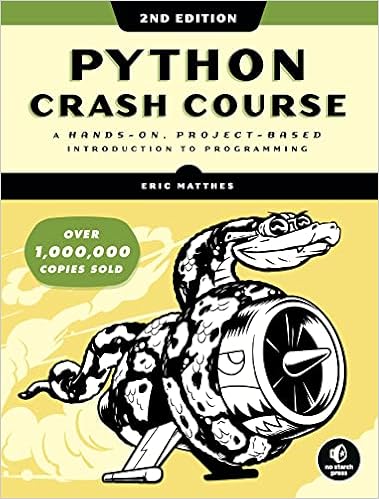
Python Crash Course teaches Python basics and then moves into larger projects. Eric Matthes covers variables, lists, dictionaries, functions, classes, files, exceptions, and testing before applying them to a game, data visualizations, and a web application.
The quick pace rewards readers who type the examples and solve the exercises. It gives less space to computer science theory and advanced language internals. Choose it when you want a structured path from syntax to usable projects, especially if visible results help you stay focused while learning.
What You’ll Learn:
- Write Python programs with variables, collections, loops, and functions
- Organize related data and behavior with simple classes
- Read files, handle errors, and test program behavior
- Build an interactive game from several connected parts
- Turn public data into clear charts and visualizations
- Create a web application with accounts and stored data
Best For: Beginners who learn by writing code and building projects, or experienced programmers seeking a direct introduction to Python syntax, testing, games, data, and web development.
12) Artificial Intelligence For Dummies
Author Name: John Paul Mueller
Publisher: Wiley
Latest Edition: Illustrated edition
No of Pages: 340 pages

Artificial Intelligence For Dummies introduces AI in plain language for readers who do not want to begin with equations or code. It explains terms, uses, limits, risks, and the difference between what current systems do and what popular stories suggest.
The broad survey makes the book easier to enter than an academic AI text, but it does not teach readers to build models. The third edition (2024) adds Stephanie Diamond as a co-author. Choose it for a general understanding of AI at work rather than engineering depth.
What You’ll Learn:
- Explain common artificial intelligence terms in everyday language
- Separate current AI abilities from common public misconceptions
- Recognize where organizations use prediction and automated decisions
- Understand basic data, model, and learning relationships clearly
- Consider bias, privacy, risk, and responsible system use
- Ask better questions before trusting an automated result
Best For: Managers, students, and general readers seeking a plain-language explanation of AI terms, common uses, limits, risks, responsible use, and important questions before trusting automated systems.
13) Artificial Intelligence: A Modern Approach
Author Name: Stuart Russell
Publisher: Pearson
Latest Edition: 3rd edition
No of Pages: 1152 pages
Artificial Intelligence: A Modern Approach explains AI through agents, search, reasoning, learning, language, vision, and robotics. Stuart Russell and Peter Norvig move from clear introductions into mathematical and algorithmic detail, so the book works as a course text and a long-term reference.
The scope is much wider than a coding tutorial. Readers need patience with probability, logic, and formal models. Choose it when you want to understand how AI methods connect, but start elsewhere if your main goal is building a small program quickly or learning basic programming syntax.
What You’ll Learn:
- Understand how intelligent agents choose actions under uncertainty
- Compare search methods for solving structured decision problems
- Represent knowledge with logic, probability, and formal models
- Study machine learning, deep learning, and reinforcement learning
- Connect language, vision, planning, and robotics concepts within modern systems
- Examine safety, fairness, privacy, and ethical AI choices
Best For: University students, instructors, researchers, and developers seeking an academic AI reference covering agents, search, logic, probability, learning, language, vision, planning, robotics, safety, and ethics together.
14) Eloquent JavaScript: A Modern Introduction to Programming
Author Name: Marijn Haverbeke
Publisher: No Starch Press
Latest Edition: 3rd edition
No of Pages: 472 pages

Eloquent JavaScript teaches programming through JavaScript, starting with values, control flow, functions, objects, and data structures. Marijn Haverbeke then moves into modules, asynchronous work, browser programming, the document object model, events, HTTP, forms, and Node.js.
The exercises and project chapters ask readers to think, not merely copy code. That makes the book rewarding but sometimes difficult for a first-time programmer. Choose it if you want one path from language basics to browser and server projects, and expect to pause often to solve problems.
What You’ll Learn:
- Use values, functions, objects, arrays, and control flow
- Handle errors, modules, regular expressions, and asynchronous work
- Build browser programs with events and document elements
- Send web requests and process forms with JavaScript
- Create server-side programs using the Node.js runtime
- Solve programming exercises that require independent reasoning without guided answers
Best For: Motivated beginners and self-taught developers seeking a challenging JavaScript course with exercises, browser programming, server development, asynchronous code, data structures, and independent problem solving practice.
15) Learning PHP, MySQL & JavaScript: With jQuery, CSS & HTML5
Author Name: Robin Nixon
Publisher: O′Reilly
Latest Edition: 5th edition
No of Pages: 800 pages

Learning PHP, MySQL & JavaScript: With jQuery, CSS & HTML5 shows how server, database, browser, and styling layers work together. Robin Nixon builds from each technology into an interactive, data-driven site, showing readers how requests, stored data, sessions, forms, and interfaces connect.
The wide scope is useful for learning the full flow, but it also means less depth in each language. The seventh edition (2025) ends with chapters on React and Node.js, so you see a modern front end and a JavaScript server alongside PHP. Choose it for a connected web foundation rather than deep framework training.
What You’ll Learn:
- Build dynamic pages with PHP and submitted form data
- Store, query, update, and protect data with MySQL
- Add browser behavior through JavaScript events and functions
- Style responsive pages with CSS and HTML structure
- Manage sessions, cookies, validation, and basic application security
- Combine server, database, and browser code into projects
Best For: Beginners with basic HTML knowledge who want to connect PHP, MySQL, JavaScript, CSS, forms, sessions, security, browser behavior, and server-side development in complete web projects.
How Do You Choose the Right Programming Book?
Start with the problem you need to solve. New programmers usually need one language, short explanations, runnable examples, and exercises. Working developers may gain more from testing, refactoring, design, or architecture. A book about professional habits can help with estimates and teamwork, but it will not replace technical practice.
- Check the level: confirm the book explains required ideas before advanced topics.
- Match the format: choose projects for practice or a catalog for reference.
- Review the edition: current syntax and libraries matter in language books.
- Inspect the examples: make sure the language and platform fit your work.
- Plan practice: select a small project that uses each major chapter.
Do not choose by page count or star rating alone. A focused book that matches your next task can be more useful than a larger title covering subjects you are not ready to use.
Which Programming Book Should You Start With?
Begin with a language or project book if you cannot yet build a small program alone. Python Crash Course offers a direct path from syntax to projects, while Eloquent JavaScript connects language basics with browser and server work. Learning PHP, MySQL & JavaScript is useful when you want to see a traditional web stack working together.
Once you can write, run, and debug a small application, choose the next book by the problem in front of you. Code Complete helps with construction choices. Refactoring helps improve existing code. Domain-Driven Design and the enterprise pattern books fit larger business systems. Artificial Intelligence: A Modern Approach belongs later if you want a formal study of AI methods.
How Can You Learn More From a Programming Book?
- Type each important example instead of copying and pasting it.
- Change one part and predict the result before running it.
- Complete exercises before looking for an answer or solution.
- Keep a small project that uses ideas from each chapter.
- Write down errors, causes, and fixes in your own words.
- Check current official documentation when an example no longer runs.
Reading speed is not the goal. A short section becomes useful when you can apply it without the page open. For design and architecture books, test the ideas against a real system and record where the advice does not fit. That comparison develops judgment instead of turning patterns into rules.
Verdict
Three books stand out, each for a different stage of a developer’s work. The top recommendation focuses on safer maintenance, while the other picks cover professional conduct and day-to-day code construction.
- Working Effectively with Legacy Code: Choose it when you maintain hard-to-test systems. Skip it if you have not learned basic testing and object-oriented code.
- The Clean Coder: Choose it for estimates, commitments, pressure, and professional habits. Skip it when you need a programming language course.
- Code Complete: Choose it as a broad construction reference. Skip it if you want a short, project-led introduction.
