
10 BEST Software Engineering Books (2026 Update)
 Editorial Team
We are reader supported and may earn a commission when you buy through links on our site
Software engineering is the work of planning, designing, building, testing, and maintaining software that solves a clear user problem. It includes more than writing code. Engineers also gather requirements, choose an architecture, review changes, find defects, document decisions, and work with other people throughout a project.
The right book can help you learn these habits without drowning in theory. Some titles focus on readable code, while others cover design patterns, enterprise systems, teamwork, professional conduct, or career growth.
This guide compares ten software engineering books for beginners, students, and working developers. Each review explains what the book teaches, the background you need, where its advice may feel dated, and who will gain the most from reading it. Read more…
Best Software Engineering Books
| Book Title | Author Name | Latest Edition | Publisher | Ratings | Link |
|---|---|---|---|---|---|
| Clean Code | Robert C. Martin | 1st edition | Pearson |  |
Learn More |
| Design Patterns | Erich Gamma | 1st edition | Addison Wesley | |
Learn More |
| Patterns of Enterprise Application Architecture | Martin Fowler | 1st edition | Addison-Wesley | |
Learn More |
| Enterprise Integration Patterns | Gregor Hohpe | 1st edition | Pearson Addison-Wesley Professional | |
Learn More |
| Code Complete | Steve Mcconnell | 2nd edition | Microsoft Press US | |
Learn More |
Ratings: These ratings come from Amazon book listings, not Guru99. They may vary by book edition or seller. Ratings, publisher names, and edition details were checked in October 2026.
1) Clean Code: A Handbook of Agile Software Craftsmanship
Author Name: Robert C. Martin
Publisher: Pearson
Latest Edition: 1st edition
No of Pages: 464 pages
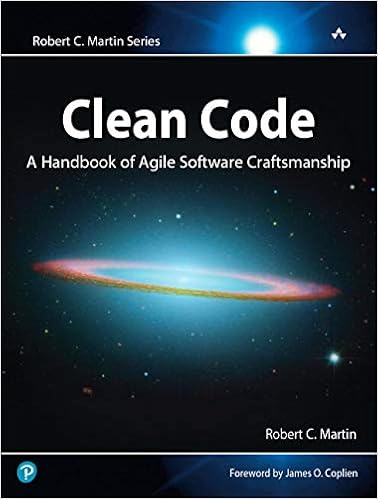
Clean Code by Robert C. Martin focuses on the small decisions that make source code easier to read and change. It covers names, functions, comments, formatting, objects, error handling, unit tests, classes, and the warning signs often called code smells.
The case studies show how code improves through repeated cleanup. Published in 2008, the book uses Java for most of its examples, so readers working in other languages will need to translate some details. Treat the rules as discussion points rather than laws, and compare the advice with your team’s own standards.
What You’ll Learn:
- Recognize naming choices that make code easier to read
- Break large functions into focused units with clear purposes
- Spot common code smells and weak design decisions
- Improve error handling without hiding useful failure details
- Write tests that support safe code changes later
- Apply practical formatting and class organization rules consistently
Best For: Developers with basic programming experience who want practical rules for readable code, smaller functions, better names, and safer refactoring habits.
2) Design Patterns: Elements of Reusable Object-Oriented Software
Author Name: Erich Gamma
Publisher: Addison Wesley
Latest Edition: 1st edition
No of Pages: 416 pages
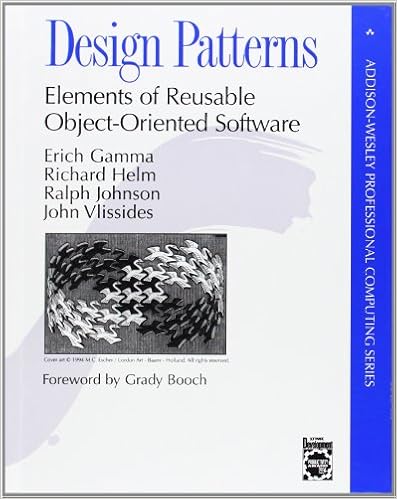
Design Patterns by Erich Gamma, Richard Helm, Ralph Johnson, and John Vlissides explains 23 reusable approaches to recurring object-oriented design problems. Each pattern describes its purpose, structure, participants, and likely effects, giving teams a common vocabulary for discussing design.
The ideas remain useful, but the C++ and Smalltalk examples can feel distant from modern development. Readers should already understand classes, inheritance, interfaces, and composition. Use the patterns when they simplify a real problem, not as a checklist that every design must follow.
What You’ll Learn:
- Understand creational, structural, and behavioral pattern categories clearly
- Match recurring design problems with suitable object structures
- Compare inheritance and composition in practical design decisions
- Discuss software structure using a shared pattern vocabulary
- See how pattern choices introduce useful design trade-offs
- Avoid forcing patterns into problems that need simpler code
Best For: Intermediate object-oriented programmers who understand classes and inheritance and want a shared vocabulary for reusable design solutions and common trade-offs.
3) Patterns of Enterprise Application Architecture
Author Name: Martin Fowler
Publisher: Addison-Wesley
Latest Edition: 1st edition
No of Pages: 560 pages

Patterns of Enterprise Application Architecture by Martin Fowler organizes common solutions for business software. It covers domain logic, data mapping, object-relational behavior, web presentation, distribution, concurrency, and session state, with diagrams and examples that help readers compare approaches.
This is a reference book rather than a step-by-step course. Published in 2002, it illustrates its patterns with Java and C# examples, and the architecture problems it describes still appear in current systems. Readers need experience with databases and application design. Use your framework’s documentation when turning a pattern into production code.
What You’ll Learn:
- Separate domain logic from database and presentation concerns
- Compare active record and data mapper approaches carefully
- Manage transactions, sessions, and concurrent business operations safely
- Choose web presentation patterns for different application needs
- Understand distribution boundaries and remote communication costs clearly
- Use pattern catalogs to discuss enterprise architecture choices
Best For: Experienced application developers and architects who need proven patterns for data access, domain logic, transactions, web presentation, and distributed systems.
4) Enterprise Integration Patterns
Author Name: Gregor Hohpe
Publisher: Pearson Addison-Wesley Professional
Latest Edition: 1st edition
No of Pages: 736 pages

Enterprise Integration Patterns by Gregor Hohpe and Bobby Woolf explains how applications exchange messages without tight connections. Its catalog covers channels, routing, transformation, endpoints, message construction, system management, and common ways to connect older and newer systems.
The pattern language is still useful for queues, event systems, and integration platforms. Published in 2003, its examples use JMS, .NET messaging, and XML-based tools, so pair it with the documentation for the broker or cloud service you use. This is a dense reference for readers who already know distributed systems.
What You’ll Learn:
- Design message channels for dependable application communication flows
- Route messages according to content and business rules
- Transform data between systems with different message formats
- Build endpoints that send and receive messages safely
- Track message flow and diagnose failed integration steps
- Compare asynchronous messaging benefits with added operational complexity
Best For: Architects and senior developers who design message-based systems and need practical guidance on channels, routing, transformation, endpoints, and asynchronous communication.
5) Code Complete: A Practical Handbook of Software Construction
Author Name: Steve Mcconnell
Publisher: Microsoft Press US
Latest Edition: 2nd edition
No of Pages: 960 pages

Code Complete by Steve McConnell is a broad guide to software construction. It covers design before coding, routines, classes, variables, control flow, defensive programming, debugging, testing, code improvement, and the way teams can review construction quality.
At 960 pages, the second edition is long, and its examples use C++, Java, and Visual Basic, but its reasoning carries across most programming environments. Beginners can read selected chapters, while experienced developers can use it as a reference. Readers seeking framework-specific guidance will need another source beside it.
What You’ll Learn:
- Plan code construction before writing detailed implementation logic
- Create routines and classes with clear responsibilities throughout
- Choose variables and control structures that reduce confusion
- Apply defensive programming without masking important failures unnecessarily
- Debug and test code through repeatable working methods
- Review existing code and improve construction quality gradually
Best For: Developers at any career stage who want construction guidance on design, naming, control flow, debugging, testing, and code improvement practices.
6) Soft Skills: The Software Developer’s Life Manual
Author Name: John Sonmez
Publisher: Manning Publications
Latest Edition: 1st edition
No of Pages: 504 pages

Soft Skills: The Software Developer’s Life Manual by John Sonmez looks beyond programming technique. Its short chapters discuss career planning, productivity, learning, personal branding, finances, fitness, and the habits that can affect a developer’s working life.
The wide scope makes it easy to sample, but some personal finance and career advice may not fit every country or reader. It is not a coding guide. Choose it when you want practical prompts for managing work and life, then check local professional and financial guidance before acting.
What You’ll Learn:
- Plan a software career around specific personal goals
- Build learning routines that fit regular development work
- Manage time, focus, and common productivity problems better
- Present professional work without relying on empty promotion
- Consider finances through a developer career planning lens
- Balance technical growth with health and personal priorities
Best For: Developers who want career planning, productivity, personal finance, fitness, and professional growth advice beyond programming languages and technical reference material.
7) Peopleware: Productive Projects and Teams
Author Name: Tom DeMarco
Publisher: Addison-Wesley
Latest Edition: 3rd edition
No of Pages: 272 pages

Peopleware by Tom DeMarco and Timothy Lister argues that many software project failures come from workplace and management problems rather than coding ability. It examines team formation, office conditions, hiring, meetings, leadership, turnover, and the time people need for focused work.
Managers, project managers, and team leads will get more from it than developers seeking technical instruction. Some examples reflect older office settings, but the questions about trust, interruptions, and team culture remain useful. Read it as a management discussion, not as a fixed formula for every organization.
What You’ll Learn:
- Identify workplace conditions that reduce focused development time
- Build teams around trust, ownership, and shared purpose
- Recognize management habits that damage project performance quickly
- Improve meetings, hiring, and team communication practices steadily
- Understand how turnover affects knowledge and delivery speed
- Question process changes that ignore people and working conditions
Best For: Engineering managers, team leads, and senior developers who want to understand workplace culture, team performance, hiring, meetings, and productive environments.
8) The Pragmatic Programmer
Author Name: David Thomas
Publisher: Addison-Wesley
Latest Edition: 2nd edition
No of Pages: 352 pages
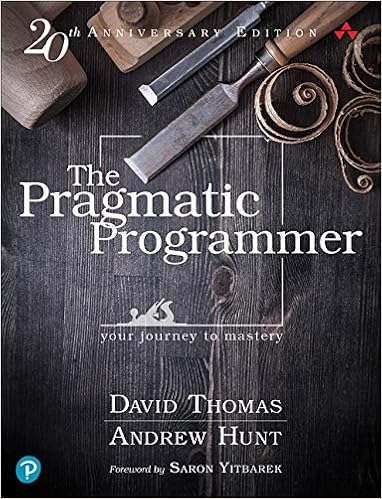
The Pragmatic Programmer by David Thomas and Andrew Hunt presents habits that can travel across languages and tools. It discusses responsibility, knowledge portfolios, design, duplication, testing, automation, debugging, requirements, teamwork, and ways to keep software easier to change.
The advice is broad, so it will not replace a language guide or an architecture reference. Its strength is helping readers question how they work. This 20th Anniversary Edition, published in 2019, also covers concurrency, security, and testing, and its lessons are intentionally general so each team can adapt them.
What You’ll Learn:
- Take responsibility for code choices and project communication
- Reduce duplication across code, knowledge, and project processes
- Use automation to remove repeated development tasks safely
- Debug problems through evidence instead of quick assumptions
- Design software that can change without needless disruption
- Maintain technical knowledge through steady deliberate learning habits
Best For: Developers with project experience who want durable habits for design, debugging, automation, communication, learning, and adapting across tools and languages.
9) Artificial Intelligence For Dummies
Author Name: John Paul Mueller
Publisher: Wiley
No of Pages: 340 pages

Artificial Intelligence For Dummies by John Paul Mueller and Luca Massaron introduces AI for readers without a technical background. It explains common terms, data, algorithms, machine learning, computer uses, and the history of AI without requiring readers to build a full system.
This is the outlier in a software engineering list because it explains AI concepts rather than software construction. It can help developers understand product discussions and limits, but it will not teach production machine learning. Published in 2018, it works best as a grounding in core ideas such as data, algorithms, and machine learning rather than a guide to current AI tools.
What You’ll Learn:
- Understand common artificial intelligence terms without advanced mathematics
- See how data supports machine learning system behavior
- Compare common AI uses across everyday computer applications
- Recognize limits, misconceptions, and risks around automated decisions
- Follow the history of AI and major technical ideas
- Separate general AI concepts from software engineering practice
Best For: Beginners, managers, and developers who need a nontechnical introduction to AI concepts, common uses, limits, data, algorithms, and social questions.
10) The Clean Coder: A Code of Conduct for Professional Programmers
Author Name: Martin
Publisher: Pearson Education India
Latest Edition: 1st edition
No of Pages: 256 pages

The Clean Coder by Robert C. Martin discusses professional behavior in software work. It covers commitments, estimates, pressure, collaboration, testing, practice, time management, and the responsibility to explain risks clearly when a schedule or request is unrealistic.
The advice is direct and sometimes opinionated, so readers should compare it with their workplace and experience. This is about conduct rather than clean-code technique. It suits developers preparing for team work, but it does not replace technical study or local employment guidance.
What You’ll Learn:
- Separate realistic commitments from unsupported promises at work
- Estimate tasks while explaining uncertainty and changing information
- Respond to schedule pressure without hiding technical risks
- Use testing and practice to support dependable work
- Communicate disagreements clearly with teammates and managers respectfully
- Build professional habits around responsibility and steady improvement
Best For: Working developers and students preparing for teams who want guidance on estimates, commitments, testing, pressure, communication, and professional conduct standards.
How to choose a software engineering book
Choose a book that matches the problem you are trying to solve. New developers often need help with readable code and basic construction. Experienced programmers may need architecture or integration patterns. Team leads may get more value from books about people, estimates, communication, and professional conduct.
Look at the publication date before buying. Several books on this list are classics from the 1990s and 2000s; their ideas hold up, but their language examples, tools, and workplace assumptions reflect when they were written. Read the sample pages when possible. A useful book should fit your current background and give you something you can apply to a real project.
What are the highest-paying software careers and majors?
Pay depends on country, industry, experience, and responsibility. In the United States, computer and information systems managers generally earn more than individual software developers, but management jobs usually require several years of related work. Security and specialized engineering roles can also pay well.
Computer science, software engineering, and information technology are direct majors for this field. Engineering and mathematics can also lead to software work when students build strong programming skills. A degree can help with entry-level hiring, but projects, internships, communication, and steady technical learning still matter.
What are the major problems in software development?
Software projects often struggle when requirements are unclear, priorities change without control, or teams make estimates before they understand the work. Weak communication can hide risks until late in the schedule. Large codebases also collect technical debt when teams delay testing, documentation, and maintenance.
Integration failures, security gaps, unreliable deployments, and poor ownership can make these problems worse. Teams reduce the risk by reviewing requirements, delivering small changes, testing important behavior, tracking decisions, and discussing delays early. No single method removes every problem, so the process should match the product and team.
