
10 BEST Ethical Hacking Books (2026 Update)
 Editorial Team
We are reader supported and may earn a commission when you buy through links on our site
Ethical hacking means finding security weaknesses with the system owner’s clear permission and reporting them responsibly. Hacking: The Art of Exploitation is our top recommendation because it explains how code, memory, networks, and exploits work together.
This article compares top ethical hacking books for beginners, working testers, web security learners, and hardware enthusiasts.
Each review explains what the book teaches, who it suits, and when it was published. Use every technical exercise only on systems you own or have written permission to test. Read more…
Best Ethical Hacking Books for Beginners and Advanced Readers
| Book Title | Author Name | Latest Edition | Publisher | Ratings | Link |
|---|---|---|---|---|---|
| Hacking: The Art of Exploitation | Jon Erickson | 2nd edition | No Starch Press |  |
Learn More |
| The Basics of Hacking and Penetration Testing | Patrick Engebretson | 2nd edition | Syngress | |
Learn More |
| The Hacker Playbook 2 | Peter Kim | 1st edition | Independently Published | |
Learn More |
| Penetration Testing | Georgia Weidman | 1st edition | No Starch Press | |
Learn More |
| The Web Application Hacker’s Handbook | Dafydd Stuttard | 2nd edition | Wiley | |
Learn More |
Ratings: These ratings come from Amazon book listings, not Guru99. They may vary by book edition or seller. Ratings, publisher names, and edition details were checked in October 2026.
1) Hacking: The Art of Exploitation
Author Name: Jon Erickson
Publisher: No Starch Press
Latest Edition: 2nd edition
No of Pages: 681 pages

Hacking: The Art of Exploitation by Jon Erickson is our top recommendation for understanding what happens beneath security tools. It uses C, assembly, memory, networking, and debugging to explain how software flaws can become working exploits.
The low-level approach builds useful foundations for exploit development and defensive work. Published in 2008, the second edition runs its examples on 32-bit x86 Linux, so set up a matching virtual machine to follow along. Basic C knowledge will make the exercises easier to follow.
What You’ll Learn:
- Read memory, registers, and assembly during program execution
- Understand buffer overflows and common memory corruption errors
- Use a debugger to inspect vulnerable program behavior
- Follow network communication from packets through working code
- Write basic C code from a security viewpoint
- Connect exploit ideas with practical defensive programming choices
Best For: Programmers with basic C knowledge who want low-level exploit concepts, memory behavior, debugging practice, and software security foundations and skills.
2) The Basics of Hacking and Penetration Testing
Author Name: Patrick Engebretson
Publisher: Syngress
Latest Edition: 2nd edition
No of Pages: 224 pages

The Basics of Hacking and Penetration Testing by Patrick Engebretson follows a penetration test from planning through reporting. It introduces common tools and explains why each stage matters, giving new learners a clear order for their first authorized security assessment.
Examples and end-of-chapter exercises help readers interpret results instead of copying commands without context. The second edition, published in 2013, works through each stage with Kali Linux and tools such as Nmap and Metasploit. Practice only inside an approved lab
What You’ll Learn:
- Plan an authorized penetration test from start to finish
- Gather information before scanning a target system carefully
- Run common tools and understand their reported results
- Move from initial discovery toward controlled exploitation safely
- Record findings and explain important security risks clearly
- Practice each testing stage through guided chapter exercises
Best For: Beginners seeking a guided penetration testing process, practical exercises, common security tools, and explanations that avoid technical detail and overload.
3) The Hacker Playbook 2: Practical Guide to Penetration Testing
Author Name: Peter Kim
Publisher: Independently Published
Latest Edition: 1st edition
No of Pages: 359 pages

The Hacker Playbook 2 by Peter Kim presents penetration testing as a repeatable workflow. It covers building a lab, planning attacks, working through test cases, and writing small pieces of custom code when an off-the-shelf tool does not fit.
Published in 2015, the book organizes its chapters like plays in a football game, moving from lab setup and scanning through lateral movement, social engineering, and antivirus evasion. The playbook format suits readers who already understand basic networking and security terms. Run every step in your own lab before using it in an authorized test.
What You’ll Learn:
- Build a controlled lab for legal security practice
- Plan red-team work using repeatable assessment workflows and checklists
- Choose suitable tools for different penetration testing stages
- Adapt sample code for specific lab situations safely
- Connect separate attacks into a complete test path
- Document lessons learned after each controlled lab exercise
Best For: Learners with security knowledge who want red-team workflows, lab ideas, attack planning, and practical penetration testing examples to study closely.
4) Penetration Testing: A Hands-On Introduction to Hacking
Author Name: Georgia Weidman
Publisher: No Starch Press
Latest Edition: 1st edition
No of Pages: 766 pages

Penetration Testing by Georgia Weidman teaches the main stages of an authorized assessment through hands-on examples. Topics include reconnaissance, scanning, passwords, wireless networks, web applications, exploitation, and ways an attacker may move from one system to another.
The book gives beginners a connected view of the testing process. Published in 2014, it builds its lab around Kali Linux with Windows XP, Windows 7, and Ubuntu targets, and closes with mobile testing using the Smartphone Pentest Framework. Run the exercises only on vulnerable systems you own, never on public or unapproved targets.
What You’ll Learn:
- Set up a controlled penetration testing practice lab
- Gather target information and scan for possible weaknesses
- Test passwords, wireless networks, and web applications safely
- Understand controlled exploitation and access inside isolated systems
- Follow approved post-exploitation steps within isolated practice targets
- Connect separate techniques into one complete testing process
Best For: Beginners ready for hands-on labs covering reconnaissance, exploitation, passwords, wireless attacks, and post-exploitation across a complete testing process from start.
5) The Web Application Hacker’s Handbook: Finding and Exploiting Security Flaws
Author Name: Dafydd Stuttard
Publisher: Wiley
Latest Edition: 2nd edition
No of Pages: 912 pages
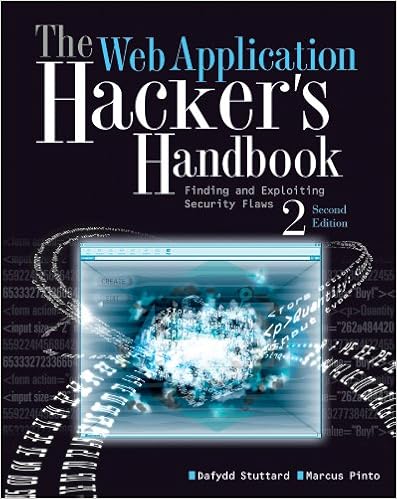
The Web Application Hacker’s Handbook by Dafydd Stuttard and Marcus Pinto explains a method for finding and understanding web application flaws. It covers browser behavior, sessions, authentication, access controls, input handling, client-side attacks, and ways to organize a web security review.
Published in 2011, the second edition covers HTML5, cross-domain integration, UI redress, and HTTP parameter pollution, and many of its walkthroughs use Burp Suite, which Stuttard created. Read it for the reasoning process, then practice each technique in legal web security labs.
What You’ll Learn:
- Map web applications before testing their security controls
- Review sessions, authentication, and access control behavior together
- Find unsafe input handling across common application features
- Understand browser-based attacks and client-side security issues clearly
- Organize web testing into a repeatable working method
- Practice each method in legal web security labs
Best For: Web developers and security testers who want a detailed, repeatable method for finding and understanding web application flaws.
6) Computer Hacking Beginners Guide
Author Name: Alan T. Norman
Publisher: Independently Published
No of Pages: 167 pages

Computer Hacking Beginners Guide introduces common attack terms, basic security tools, and simple defensive ideas. Its main value is helping new readers understand how attackers look for weak settings and how system owners can reduce easy risks.
The broad overview is easier to approach than a long technical manual, but it cannot replace current lab practice or detailed networking study. Its examples cover wireless networks and Kali Linux basics; treat any commands as learning examples and use them only on systems you own or have permission to test.
What You’ll Learn:
- Recognize common attacks and basic hacker terminology clearly
- Understand how weak settings can expose computer systems
- Learn simple steps that reduce common security risks
- Compare tools used by attackers and security testers
- Spot warning signs of an attempted system attack
- Build background knowledge before starting deeper security labs
Best For: Complete beginners wanting plain explanations of common attacks, basic defenses, security terms, and a starting point before deeper lab work.
7) The Hardware Hacker: Adventures in Making and Breaking Hardware
Author Name: Andrew Huang
Publisher: No Starch Press
Latest Edition: 1st edition
No of Pages: 416 pages

The Hardware Hacker by Andrew “bunnie” Huang collects essays and stories about electronics manufacturing, open hardware, reverse engineering, and supply chains. It gives readers a view of how hardware moves from an idea to a finished product.
This is a career and industry book rather than a step-by-step penetration testing manual. Readers looking for network attacks or certification exercises should choose another title. It fits makers and security readers who want to understand manufacturing tradeoffs, hardware access, and open-source design.
What You’ll Learn:
- Follow hardware products from design through factory production
- Understand open hardware and reverse engineering goals clearly
- See how supply chains affect hardware security decisions
- Compare manufacturing choices across different hardware project needs
- Learn from practical stories about building electronic products
- Recognize business and legal questions around hardware work
Best For: Readers interested in hardware design, manufacturing, open hardware, supply chains, and personal stories from an experienced hardware maker and hacker.
8) Hacking the Hacker: Learn From the Experts Who Take Down Hackers
Author Name: Roger A. Grimes
Publisher: Wiley
Latest Edition: 1st edition
No of Pages: 250 pages

Hacking the Hacker by Roger A. Grimes explains cybersecurity through profiles of security researchers, white-hat hackers, writers, and industry leaders. It connects their work with common attack methods and the defensive practices used to reduce risk.
The interview and profile format makes the topic readable for students, managers, and curious professionals. It offers industry context rather than a full technical course. Readers who want command-by-command labs, exploit code, or certification practice will need a separate hands-on guide.
What You’ll Learn:
- Meet security researchers working across different technical fields
- Understand how defenders study and respond to attackers
- Connect common threats with practical defensive security thinking
- Learn useful career lessons from experienced security professionals
- See how careful security research supports safer computer systems
- Compare technical work with policy and leadership concerns
Best For: Security students and managers who want expert perspectives, defensive lessons, industry context, and readable profiles rather than step-by-step technical labs.
9) Gray Hat Hacking: The Ethical Hacker’s Handbook
Author Name: Daniel Regalado
Publisher: McGraw Hill
Latest Edition: 5th edition
No of Pages: 640 pages

Gray Hat Hacking: The Ethical Hacker’s Handbook brings together chapters from several security specialists, including Allen Harper, Daniel Regalado, and Shon Harris. The fifth edition, published in 2018, covers Windows and Linux exploit development, PowerShell attacks, software-defined radio, IoT devices, ransomware analysis, and web application attacks.
Its breadth makes it useful as a reference, though the pace can be demanding for complete beginners. Practice only in an isolated lab or during a clearly authorized assessment.
What You’ll Learn:
- Review attack methods across several security subject areas
- Understand common network device weaknesses and defensive responses
- Study malware analysis and basic reverse engineering ideas
- Explore IoT, software-defined radio, and operating system attack surfaces
- Connect exploitation methods with practical network defense planning
- Use a broad handbook for later technical reference
Best For: Intermediate security professionals needing broad coverage of attack methods, network defense, malware analysis, IoT security, and exploit development in one reference.
10) Advanced Penetration Testing: Hacking the World’s Most Secure Networks
Author Name: Wil Allsopp
Publisher: Wiley
Latest Edition: 1st edition
No of Pages: 229 pages

Advanced Penetration Testing by Wil Allsopp moves beyond basic scanners and packaged exploitation tools. It combines social engineering, custom programming, network access, and multi-stage attack planning for readers studying controlled assessments of highly protected environments.
The book includes coding examples in VBA, C, Java, and JavaScript. It assumes readers already understand common penetration testing tools and lab safety. Beginners should first learn networking, Linux, and standard assessment steps before attempting these advanced scenarios inside an approved environment.
What You’ll Learn:
- Plan multi-stage tests against heavily protected lab environments
- Combine social engineering with controlled technical assessment work
- Write custom code when standard tools fall short
- Study network access methods beyond basic scanner output
- Adapt attack planning to unusual system security controls
- Document advanced scenarios without losing authorized assessment boundaries
Best For: Experienced penetration testers who understand common tools and want custom attack planning, coding examples, social engineering, and high-security scenarios covered.
How to Choose an Ethical Hacking Book
Match the book to your current skills and the kind of security work you want to learn. Beginners need networking, Linux, basic programming, and a clear testing process. Experienced readers may prefer web security, exploit development, hardware, or advanced assessment planning.
- For low-level foundations: Choose Hacking: The Art of Exploitation.
- For a guided first assessment: Read The Basics of Hacking and Penetration Testing.
- For hands-on labs: Consider Penetration Testing.
- For web security: Use The Web Application Hacker’s Handbook for method, then add current labs.
- For hardware: Choose The Hardware Hacker.
- For advanced work: Read Advanced Penetration Testing after learning the basics.
Check the publication date before buying. Security tools and setup steps change over time, while concepts such as reconnaissance, exploitation, and reporting stay stable.
Ethical Hacking Books vs Cybersecurity Books
Ethical hacking books usually focus on finding and explaining weaknesses through authorized testing. They may cover reconnaissance, scanning, exploitation, web testing, and reporting. Cybersecurity books cover a wider area, including secure design, access control, monitoring, incident response, risk, policy, and recovery.
Choose an ethical hacking title when you want to understand how an assessment works. Choose broader cybersecurity books when your goal includes defensive operations, governance, or security management. Many readers need both because testing shows how attacks happen, while defensive study explains how organizations prevent, detect, and handle them.
How to Practice Ethical Hacking Safely
Use systems you own or have clear written permission to test. Build an isolated lab with virtual machines, snapshots, and intentionally vulnerable targets. Keep the lab away from work networks, public services, and personal data. Do not scan an address merely because it is reachable.
Write down the allowed targets, test window, and actions before starting. Stop if a test reaches a system outside that scope. Rules differ by country, employer, and platform, so check the law, contract, and service terms that apply to your work.
