
10 Best FREE Unlimited Photo/Video Storage (2026)
 Editorial Team
Disclosure: Guru99 is reader-supported. We may earn a commission when you buy through links on this page. Learn more

People look for unlimited photo storage when phone backups fill, family albums scatter, paid plans grow expensive, or unclear limits make every upload uncertain. Slow syncing, compressed originals, confusing privacy controls, and hidden inactivity rules can also waste time or put memories at risk. The details that matter often sit outside the pricing page. A clearer comparison shows which services preserve quality, protect access, and support dependable backups, bringing relief before you move an entire photo library.
I spent 55+ hours researching 25+ cloud storage solutions, checking current free allowances, image quality rules, privacy controls, recovery policies, mobile backup, and recurring user feedback. After reviewing those findings, I shortlisted 10 Best Free Unlimited Photo Storage options, including paid unlimited services and finite free plans. Each recommendation includes features, pros and cons, and the limits that matter, so you can choose with realistic expectations. Read more…

IceDrive is a next-generation cloud service that helps you access, manage, and update your files on cloud storage. Icedrive provides a clean and easy to use interface to manage your files. No time-consuming Sync Needed as you can Mount IceDrive with a simple click.
Best Free Unlimited Photo & Video Storage Sites: Top Picks!
| Name | Free Space | Additional space price | Supported Devices | Link |
|---|---|---|---|---|
IceDrive |
10GB | $2.99 a month for 100GB | iOS, Android, Windows, Mac and Linux | Learn More |
 Zoho Workdrive |
5 GB | $5 per month for 10GB | Windows, Mac, Web, Android, iOS | Learn More |
 pCloud |
10 GB | $195 for 500GB | iOS, Android, Windows, Mac and Linux | Learn More |
 SmugMug |
14 Days Free Trial | $13 a month for unlimited storage | iOS, Android and Windows | Learn More |
 EaseUS Todo Backup |
Free + Cloud | $59.95 a year for 1TB | Windows, macOS | Learn More |
1) IceDrive
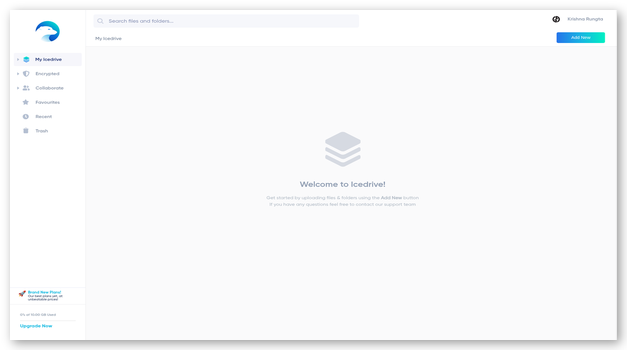
Icedrive combines web, mobile, and desktop storage with public sharing links and a Windows virtual drive. Its free plan provides 10 GB, making it suitable for selected photo collections, temporary delivery folders, and access across several devices without payment.
Free accounts include encrypted transport, server-side protection, and authenticator-based two-factor security. Client-side encrypted folders, file history, link passwords, and link expiration require payment. Icedrive publishes no numeric consumer uptime SLA, so important originals still need an independent backup. Its interface supports uploads without requiring full local synchronization.
Features:
- Free Capacity: Store up to 10 GB without a paid subscription. The allowance suits selected albums, compressed exports, and working files better than complete RAW archives.
- Public Links: Create shareable links for files and folders through the web interface. Free links lack paid password and expiration controls, so avoid sensitive client material.
- Virtual Drive: Mount cloud files as a Windows virtual drive without downloading everything locally. This saves disk space, although reliable access still depends on connectivity.
- Mobile Backup: Upload and browse photos through Android and iOS applications. Camera backup can centralize new images, but users should verify transfers before deleting originals.
- Security Controls: Free accounts receive encrypted transport, server-side storage protection, and authenticator-based two-factor security. Zero-knowledge encrypted folders remain a separate paid-plan capability.
- Recovery Limits: The current free plan does not include file version history. Keep a separate backup because overwrites or deletions may offer fewer recovery options.
- Service Terms: Icedrive does not publish a numeric availability SLA for free consumer accounts. The provider has also retired WebDAV, directing transfers through supported applications.
Pros
Cons
How to Get It Free?
- Open the Icedrive sign-up page and create a personal account.
- Verify the email address, enable two-factor security, and install only the required official apps.
- Upload selected photos within the 10 GB allowance, then test every public link before sharing.
Permanent free plan with 10 GB
2) Zoho Workdrive
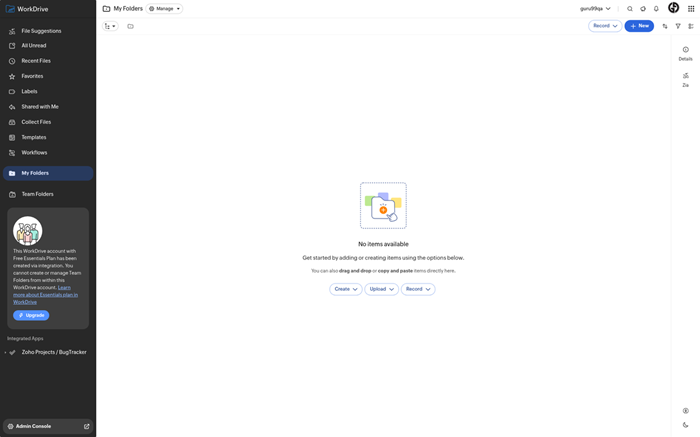
Zoho WorkDrive organizes photos and documents inside folders, team folders, and shared workspaces. Its free individual route provides 5 GB, while a 15-day business trial opens broader collaboration controls without requiring a credit card.
Paid tiers add richer previews, version management, external-link controls, and administration. Zoho documents ISO 27001 and SOC 2 Type II programs, but does not advertise a numeric free-tier uptime SLA. Teams should confirm contractual terms before using it for time-sensitive client delivery. The interface also connects closely with Zoho’s wider productivity ecosystem.
Features:
- Team Folders: Separate shared assets from personal files through organized workspaces. Roles and permissions help teams keep approved images visible without exposing every internal folder.
- Free Storage: The free plan provides 5 GB for individual access and lightweight sharing. Larger creative libraries will need careful selection, compression, or a paid team plan.
- Business Trial: Test paid WorkDrive capabilities for 15 days without a credit card. Trial accounts include expanded storage and collaboration features for evaluation.
- External Sharing: Send files and folders outside the organization through links. Advanced passwords, expiration dates, and administrative restrictions depend on the selected paid plan.
- File Previews: WorkDrive previews common image and document formats inside the browser. Wider format coverage and richer collaboration controls are emphasized on paid business tiers.
- Version Handling: Paid plans preserve file versions and make earlier work easier to recover. Confirm current retention allowances before treating the platform as an archival backup.
- Security Program: Zoho documents encryption and recognized compliance programs, including ISO 27001 and SOC 2 Type II. A numeric consumer availability SLA is not published.
Pros
Cons
How to Get It Free?
- Open Zoho WorkDrive and register an account with a verified email address.
- Select the free 5 GB plan, or start the 15-day business trial without a card.
- Create folders, assign permissions, upload sample images, and test external access before moving a library.
5 GB free plan / 15-day team trial
3) pCloud
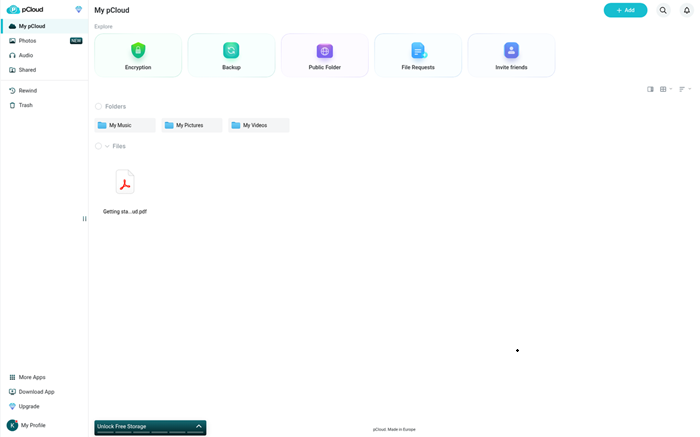
pCloud provides cross-platform storage, photo uploads, shared folders, and public links. A free account starts with 2 GB and can unlock 10 GB through account tasks and referrals. Free link traffic is capped, making it better for personal sharing than high-volume delivery.
Free accounts include 15 days of file versions and trash recovery. Link passwords and expiration dates require payment, while client-side pCloud Encryption is sold separately. The provider advertises 99.98% uptime, but it does not publish a contractual free-plan SLA or service-credit schedule.
Features:
- Expandable Storage: Begin with 2 GB and unlock up to 10 GB through account tasks and referrals. The full allowance is not granted immediately.
- Shared Links: Create links for files and folders without requiring recipients to register. Free accounts receive monthly shared-link traffic limits that constrain popular public downloads.
- Photo Uploads: Mobile applications can upload camera images automatically. Users should confirm completion and preserve a second copy before clearing any local device library.
- Version Recovery: Free users receive 15 days of file revisions, trash, and account rewind coverage. Paid plans extend the standard recovery window.
- Link Controls: Password protection and expiration dates are premium features. Public free links should contain only material intended for anyone possessing the URL.
- Security Option: Transport and server-side protections cover ordinary accounts. Client-side zero-knowledge pCloud Encryption remains a separate paid product rather than a free default.
- Uptime Claim: pCloud advertises 99.98 percent uptime, but it publishes no contractual free-tier SLA or service-credit process.
Pros
Cons
How to Get It Free?
- Open the pCloud sign-up page and create a verified free account.
- Complete the listed account tasks and referral requirements to unlock storage beyond 2 GB.
- Upload sample photos, enable mobile backup carefully, and monitor shared-link traffic and 15-day recovery limits.
Up to 10 GB free storage
4) SmugMug
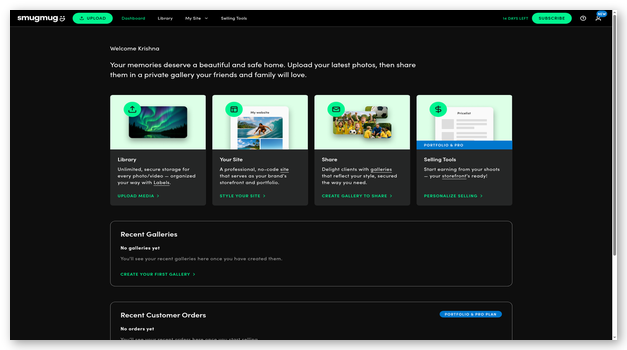
SmugMug is a portfolio and gallery service for photographers who value presentation, client access, and full-resolution delivery. Paid plans store unlimited JPEG photos without reducing resolution, while layouts, privacy controls, mobile uploads, and direct links support professional workflows.
There is no permanent free plan. Its 14-day trial requires no credit card and ends unless the user selects a subscription. SmugMug provides a public status page but no numeric consumer SLA. RAW storage remains a separate paid SmugMug Source add-on. Higher plans add commerce and customization tools.
Features:
- Unlimited Photos: Paid plans accept unlimited JPEG photo storage and preserve uploaded resolution. The policy suits large finished-image libraries, but RAW files require a separate add-on.
- Gallery Design: Choose layouts, themes, and organizational settings for portfolios or client collections. Customization depth increases on higher plans and may take time to learn.
- Privacy Options: Protect galleries with access settings and passwords, then control downloading where supported. Always test guest access before delivering sensitive client images.
- Direct Links: Generate direct image URLs at multiple display sizes, plus HTML and forum codes. This offers more embedding flexibility than ordinary cloud-drive shares.
- Upload Tools: Transfer images through browser, desktop, and mobile workflows. Individual image limits and accepted formats should be checked before migrating unusual archival files.
- Status Page: SmugMug publishes current service health and incident history. The consumer plan pages do not include a numeric availability SLA with credits.
- Trial Access: The 14-day trial requires no card and does not renew automatically. Continued hosting after evaluation requires choosing a paid subscription.
Pros
Cons
How to Get It Free?
- Open the SmugMug sign-up page and start the 14-day trial without a credit card.
- Create sample galleries, upload representative JPEG files, and configure privacy, watermark, or download settings.
- Test guest links and direct embeds, then subscribe or export everything before the trial period ends.
14-day free trial
5) Proton Drive
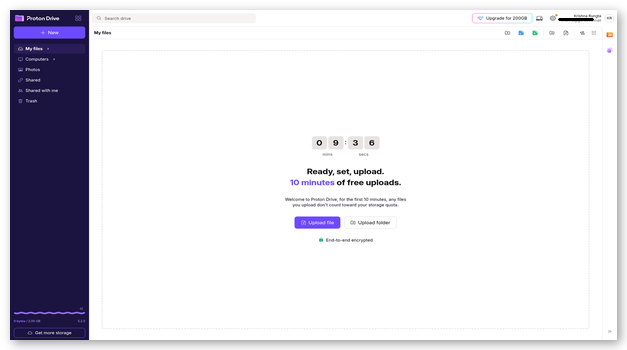
Proton Drive protects files with end-to-end encryption and zero-access architecture across its free and paid plans. New free accounts start with 2 GB and can unlock 5 GB by completing onboarding tasks within the first 30 days.
Mobile photo backup, secure links, and cross-platform access make it suitable for private collections. Advanced recovery is plan-dependent, with paid Drive Plus advertising long version retention. Recurring feedback praises privacy but reports occasional synchronization, offline-download, and duplicate-management friction. The free plan suits curated albums better than complete archives.
Features:
- Free Capacity: New accounts begin with 2 GB and can unlock 5 GB by completing onboarding tasks within 30 days. The larger allowance is not automatic.
- End-to-End Encryption: Files, names, and folders receive end-to-end protection before leaving the device. Proton cannot inspect stored content under its zero-access design.
- Photo Backup: Mobile applications can upload camera photos automatically into encrypted storage. Users should verify completion before removing originals from their phones.
- Secure Sharing: Create encrypted links for selected files and control access with available protections. Test every recipient workflow before sharing private family or client media.
- Cross-Platform Access: Use supported web, desktop, and mobile applications to reach the same library. Offline behavior and synchronization should be tested on each device.
- Recovery Limits: Previous-file recovery depends on the selected plan. Paid Drive Plus advertises extended version retention, while free users should confirm current limits inside their account.
- Privacy Model: Proton states that its business model does not rely on advertising or scanning personal files. Account recovery still requires careful credential management.
Pros
Cons
How to Get It Free?
- Open the Proton Drive sign-up page and create a free Proton account.
- Complete the listed onboarding tasks within 30 days to unlock the full 5 GB allowance.
- Enable photo backup, test one encrypted share, and keep a second copy of irreplaceable originals.
Up to 5 GB free storage
6) TeraBox
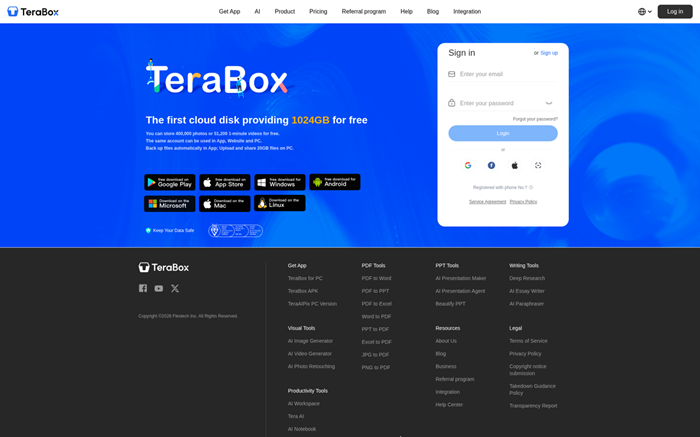
TeraBox advertises 1,024 GB of free cloud storage, beyond typical consumer allowances. Its apps support uploads, album browsing, automatic backup, and share links with access codes. The capacity can accommodate large collections when local storage is tight.
The trade-offs require attention. TeraBox terms allow free capacity and service limits to change, particularly for inactive accounts, while recurring user feedback mentions advertising and slow free downloads. No numeric uptime SLA or clear file-version history applies to free accounts. Valuable originals should remain backed up elsewhere rather than entrusted to one account.
Features:
- Large Allowance: TeraBox advertises 1,024 GB for free accounts. Its terms permit capacity and feature adjustments, so confirm the actual allocation after registration.
- Photo Backup: Mobile applications can back up camera images and organize them for browsing. Completion checks remain essential before deleting any device originals.
- Share Links: Generate links for selected files and apply access codes or expiration choices where available. Recipients may encounter advertising or slower free download speeds.
- Image Formats: The service accepts common photo and general file types. Check the per-file upload limit shown in the account before moving large videos.
- Security Basics: TeraBox documents encrypted transfer and storage safeguards, two-factor authentication, and optional AI organization. These controls do not replace an independent backup.
- Retention Risk: Current terms allow free storage capacity to shrink for inactive users after notice. Regular sign-ins and exports reduce dependence on changing account conditions.
- Service Limits: TeraBox publishes no numeric consumer uptime SLA or free-plan version history. The platform should serve as an additional copy, not the sole archive.
Pros
Cons
How to Get It Free?
- Open the TeraBox sign-up page and create a verified account.
- Check the storage allowance, upload limits, and security controls displayed for that account.
- Enable two-factor authentication, upload test copies, and retain every valuable original in another independent location.
Up to 1,024 GB free storage
7) Internxt
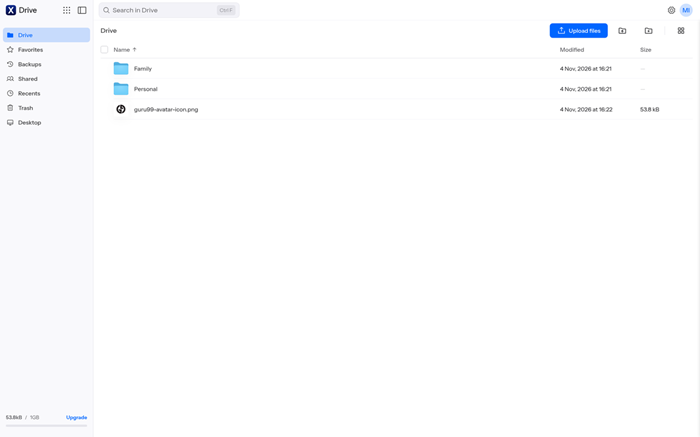
Internxt emphasizes privacy through client-side, zero-knowledge encryption across web, desktop, and mobile applications. Its permanent free plan provides 1 GB without requiring a credit card, fitting selected photographs or sensitive documents rather than a complete media archive.
Paid plans add collaborative folders, advanced versioning, and larger allowances. Internxt does not publish a numeric free-plan uptime SLA. Recurring feedback praises its privacy model and clean interface, while synchronization, transfer reliability, and support response remain common concerns. This makes testing essential before any large or time-sensitive migration.
Features:
- Free Capacity: The permanent free plan provides 1 GB while the account remains active. This allowance suits selected images better than a complete camera library.
- Zero Knowledge: Client-side encryption prevents the provider from reading stored files. Strong credential recovery practices remain essential because private encryption reduces provider access.
- Photo Access: Web, desktop, and mobile applications provide access across common devices. Users should test synchronization behavior before moving a large or active collection.
- Secure Links: Share selected files through encrypted links outside the account. Recipients should test downloads before a time-sensitive delivery or account migration.
- Versioning: Advanced file versioning belongs to paid access. Free users should maintain separate backups because overwritten or deleted images may have limited recovery options.
- Open Source: Internxt publishes application code for inspection, supporting transparency around its security design. Open code does not eliminate operational or synchronization risks.
- Service Terms: No numeric availability SLA applies to the free plan. Important originals should remain in local and independent off-site copies under the user’s control.
Pros
Cons
How to Get It Free?
- Open the Internxt sign-up page and create a free account without a payment card.
- Set recovery details, enable two-factor security where available, and install only required official applications.
- Upload a representative sample within 1 GB, test sharing, and keep original files in another location.
Permanent free plan with 1 GB
8) Dropbox
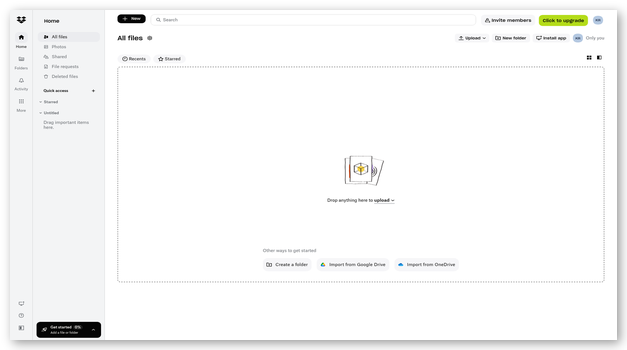
Dropbox Basic offers 2 GB of free storage, synchronization, camera uploads, previews, and links recipients can open without accounts. Its familiar interface supports selected picture delivery, project collection, or a compact folder synchronized across three devices.
Free accounts include 30 days of deleted-file recovery and version history, plus transfers up to 2 GB. Link passwords, expiration dates, and download controls require higher plans. Dropbox publishes no numeric Basic-plan uptime SLA. Accounts that remain over quota can face restrictions and eventual deletion after repeated advance notices under current policy.
Features:
- Basic Storage: Dropbox Basic provides 2 GB of free storage. The allowance fits selected exports and delivery folders better than full-resolution personal archives.
- Device Limit: A Basic account can link up to three devices. Browser access remains available, but additional synchronized computers require unlinking or upgrading.
- Shared Links: Recipients can preview many supported file types without creating accounts. Free links lack password protection, expiration dates, and download-disabling controls.
- Version Recovery: Basic preserves deleted files and earlier versions for 30 days. This helps with mistakes but cannot replace a second independent backup.
- File Transfer: Dropbox Transfer sends packages up to 2 GB on free accounts. It suits short delivery jobs without exposing the surrounding folder structure.
- Camera Uploads: Mobile applications can upload new photos automatically. Available free quota may disappear quickly when videos and original-resolution images are included.
- Quota Policy: Persistently over-quota accounts can face limitations and later deletion after repeated email notices. Dropbox provides no numeric Basic-plan availability SLA.
Pros
Cons
How to Get It Free?
- Open the Dropbox sign-up page and choose the free Basic account.
- Verify the email address, enable two-step verification, and connect no more than three devices.
- Upload a sample folder, test recipient access, and monitor both quota and 30-day recovery dates.
Free Basic plan with 2 GB
9) Google Photos
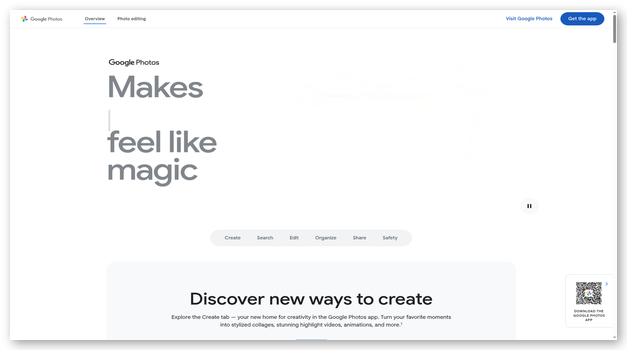
Google Photos combines backup, visual search, albums, editing, and sharing through a Google Account. The free 15 GB allowance is shared with Gmail and Drive, so space may be smaller. Original-quality uploads consume full size, while Storage Saver may resize media.
The service is excellent for libraries but unsuitable as a website image CDN. It offers album and partner sharing, not stable direct-image hosting or file version history. Accounts inactive for two years, or over quota for two years, may face content deletion after warnings under Google’s current storage policy.
Features:
- Shared Quota: Each Google Account receives 15 GB shared across Photos, Drive, and Gmail. Existing mail and documents can leave much less room for pictures.
- Backup Quality: Original quality retains uploaded resolution and consumes actual storage. Storage Saver can resize photos above 16 megapixels and videos above 1080p.
- AI Search: Search can group and locate pictures by people, places, objects, or text. Accuracy varies, and sensitive face grouping remains optional.
- Album Sharing: Share albums and individual photos through links or Google contacts. Anyone with an unrestricted link may forward it, so review audience settings.
- File Limits: Google accepts supported photos up to 200 MB or 200 megapixels and videos up to 10 GB. Unusual RAW formats need compatibility checks.
- Retention Policy: Two years of inactivity or sustained over-quota status can trigger deletion after notice. Regular account activity and exports protect important collections.
- Hosting Boundary: Google Photos provides albums, not stable hotlinks, custom ports, or CDN delivery. It also offers no per-photo version history for overwritten originals.
Pros
Cons
How to Get It Free?
- Open Google Photos and sign in with the intended Google Account.
- Review remaining shared storage, then choose Original quality or Storage Saver before enabling backup.
- Upload a small sample, verify album permissions, and keep regular exports of irreplaceable images.
Up to 15 GB shared free storage
10) OneDrive website
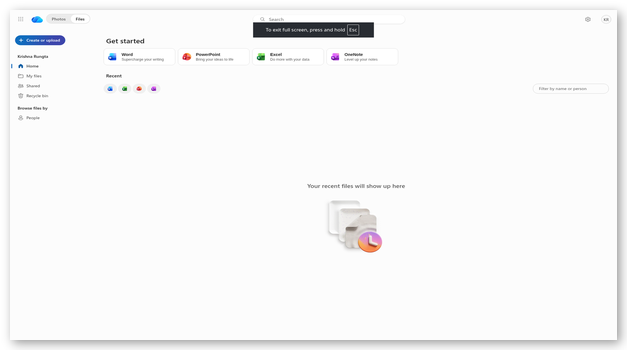
OneDrive provides 5 GB through a free Microsoft account for photos, files, and Outlook attachments. Its Windows integration, mobile camera backup, albums, sharing, and Files On-Demand make it convenient for users already working across Microsoft devices and applications.
The allowance is shared across Microsoft storage services. Over-quota accounts cannot upload, edit, or synchronize, and prolonged excess can risk deletion after warnings. Personal deleted files remain recoverable for a limited period, while full-drive restoration is tied to Microsoft 365 subscriptions. Windows users receive particularly direct desktop integration.
Features:
- Shared Capacity: A free Microsoft account includes 5 GB shared across OneDrive files, photos, Outlook attachments, and connected Microsoft 365 application data.
- Camera Backup: Android and iOS applications can upload camera photos automatically. Users should confirm the queue finishes before deleting media from the device.
- Files On-Demand: Windows can display cloud files without storing every item locally. This saves disk space while keeping folders visible through File Explorer.
- Photo Tools: Albums, tags, search, and browser previews help organize common image formats. Advanced editing remains limited compared with dedicated photo-library services.
- Large Uploads: The current web service supports individual files up to 250 GB. Actual transfer speed still depends on connectivity, browser stability, and account quota.
- Recovery Window: Personal deleted files normally remain in the recycle bin for up to 30 days. Full OneDrive restoration requires an eligible Microsoft 365 plan.
- Quota Policy: Uploads and synchronization stop when storage is full. Microsoft may delete content after prolonged over-quota status and repeated notices, so warnings require action.
Pros
Cons
How to Get It Free?
- Open OneDrive and sign in with an existing Microsoft account or create a free account.
- Review the shared 5 GB allowance, then enable camera backup only on the intended mobile device.
- Upload a sample folder, verify sharing permissions, and keep independent copies of every irreplaceable photo.
5 GB free storage
Comparison Between Top Unlimited Photo/Video Storage Services
| Tool | Permanent Free Plan | Original Quality Storage | Automatic Photo Backup | Two-Factor Security | Recovery History | Cross-Platform Apps |
|---|---|---|---|---|---|---|
| IceDrive | ✅ | ✅ | ✅ | ✅ | ❌ | ✅ |
| Zoho Workdrive | ✅ | ✅ | ❌ | ✅ | ✅ | ✅ |
| pCloud | ✅ | ✅ | ✅ | ✅ | ✅ | ✅ |
| SmugMug | ❌ | ✅ | ✅ | ✅ | ❌ | ✅ |
| Proton Drive | ✅ | ✅ | ✅ | ✅ | ✅ | ✅ |
What Does Unlimited Photo Storage Really Mean?
Unlimited photo storage usually describes a paid plan that removes a total JPEG quota, not a free account without conditions. Providers may still cap video length, individual file size, transfer traffic, RAW uploads, or account activity. Some services apply fair-use rules or reserve the right to change free capacity. Others say unlimited devices, which is different from unlimited storage. Read the plan language, accepted formats, retention rules, and export options together. A large allowance helps, but it never replaces an independent copy of irreplaceable originals.
Is Truly Free Unlimited Photo Storage Available?
No mainstream service in this comparison provides permanent, unrestricted photo and video storage entirely free. SmugMug offers paid unlimited JPEG storage after a 14-day trial. TeraBox advertises 1,024 GB free, but that is a finite allowance and its terms permit changes. Google Photos provides 15 GB shared across several Google services, not unlimited capacity. Treat “free unlimited” as a search goal rather than a literal plan promise. Compare realistic quotas, image quality, recovery, and deletion rules before registering or migrating a library.
How Much Free Storage Do Photos and Videos Need?
Storage needs depend on camera resolution, video quality, and editing habits. Ten thousand compressed phone photos may consume tens of gigabytes, while RAW files and 4K video can require hundreds. Check the current library size on every phone, computer, and external drive. Add room for one year of growth and temporary duplicates. A 2 GB or 5 GB free plan fits selected albums, not a complete archive. Large free quotas remain secondary storage until reliability, export speed, and account rules have been tested.
How Do Photo Backup and File Sync Differ?
Backup preserves another recoverable copy, while sync keeps selected folders aligned across devices. A deletion or unwanted edit can spread through synchronized folders quickly. Version history and recycle-bin retention provide limited recovery, but those windows eventually end. Mobile camera upload is useful, yet it may pause because of battery, network, or permission settings. Verify that sample photos appear online and download correctly before removing local files. For meaningful protection, combine cloud storage with local media and another off-site copy under separate credentials.
Which Features Protect Original Photo Quality?
Check settings that can alter uploaded or downloaded media.
- Quality Mode: Choose original quality when archival resolution matters, and understand how any storage-saver setting resizes large files.
- Format Support: Confirm support for RAW, HEIC, Live Photos, sidecar files, and uncommon camera formats before migration.
- Metadata: Test whether dates, locations, ratings, captions, and embedded color profiles survive upload and export.
- Download Test: Download representative files and compare dimensions, file sizes, metadata, and visible detail against local originals.
- Video Rules: Review resolution, duration, transcoding, and individual-file limits separately because unlimited photo claims may exclude videos.
How Should You Store RAW, HEIC, and Large Videos?
RAW files, HEIC images, Live Photos, and large videos need more than a generous headline quota. Confirm accepted formats, preview support, metadata preservation, upload ceilings, and downloadable originals. Gallery platforms may accept unlimited JPEG files while charging separately for RAW storage. Video policies often limit duration, resolution, or monthly traffic. Upload a mixed folder containing the exact camera formats you produce. Then download everything and compare it locally. When a service cannot preview a format, it may still store the file, but recovery testing becomes more important.
Are Free Photo Storage Services Safe and Private?
Free storage can protect ordinary family photos when account settings are configured carefully. Enable two-factor authentication, use a unique password, and review every public link. Server-side encryption protects stored data but still allows provider access under defined circumstances. End-to-end or zero-knowledge encryption offers stronger confidentiality, though account recovery becomes harder. Face grouping and automated categorization can process sensitive people and places. Read training, deletion, ownership, and law-enforcement policies before uploading confidential images. Never store identity documents or intimate media behind an unrestricted sharing link.
How Can AI Organize Photos Without Exposing Privacy?
AI photo organization can group faces, read text, recognize objects, and surface events without manual tagging. These features save time but may analyze sensitive locations, children, documents, and relationships. Check whether face grouping is optional, where analysis occurs, and whether stored content trains broader models. Disable features that exceed the library’s purpose. Automated labels also make mistakes, so retain descriptive folders and metadata for dependable exports. Privacy-focused encrypted services may offer fewer visual-search features because the provider cannot inspect file contents.
What Happens When Free Storage Fills or an Account Becomes Inactive?
When free storage fills, new uploads and synchronization usually stop. Some services also restrict editing or sharing until space is cleared. Long-term over-quota status can eventually risk deletion after warnings. Inactivity policies may reduce allowances or remove content, especially on unusually generous free plans. Keep the registered email address current and act on every storage notice carefully. Export important albums before deadlines. A 3-2-1 backup plan remains safer: maintain three copies, on two storage types, with one copy stored separately.
How Do We Select the Best Free Unlimited Photo Storage?

Guru99 reviews current plans, official policies, and recurring user feedback to separate realistic photo storage from outdated unlimited claims, unclear quotas, weak recovery, and unsupported marketing promises.
- Storage Limits: We verify starting allowances, unlock requirements, shared quotas, accepted formats, file ceilings, and inactivity rules across official pricing pages and help documents. These checks expose plans that grant less capacity than readers expect.
- Image Integrity: We review compression, resizing, original-quality settings, metadata behavior, RAW support, and downloaded results with representative files. We favor providers that explain every transformation before it affects archival photographs.
- Backup Behavior: We compare mobile camera uploads, desktop synchronization, offline access, device limits, and export workflows. Clear completion indicators matter because a sync icon alone does not prove that every original is recoverable.
- Privacy Standards: We examine encryption, two-factor security, account recovery, sharing permissions, and zero-knowledge claims in current policies. We distinguish ordinary server-side protection from private client-side encryption and restricted provider access.
- Recovery Options: We check version history, recycle-bin retention, over-quota behavior, inactivity notices, and restoration tools. These controls determine whether an accidental deletion becomes a temporary setback or a permanent loss.
- Availability Evidence: We look for public status pages, incident history, numeric uptime commitments, and consumer-plan exclusions from contractual terms. Marketing percentages are not treated as enforceable service-level agreements without clear remedies.
- Practical Feedback: We compare recurring review patterns involving upload speed, synchronization, advertising, mobile usability, support, and download reliability across several platforms. Isolated praise or complaints never override stronger documented evidence.
How Can You Troubleshoot Common Photo Storage Problems?
Most photo-storage failures come from quotas, permissions, background limits, or quality settings. Work through each issue without deleting local originals.
Issue: Mobile backup stops before recent photos finish transferring into the selected cloud account.
Solution: The user should check quota, app permissions, battery restrictions, and network rules before restarting the official upload queue.
Issue: Uploaded photographs appear online, but downloaded copies look softer or noticeably smaller.
Solution: The account holder should select original-quality storage, compare pixel dimensions, and reupload masters from a verified local copy.
Issue: Shared albums open for the owner but fail for friends using other accounts.
Solution: The owner should test a private browser, review audience restrictions, and generate a new link with intentional access settings.
Issue: A full free quota prevents new uploads, edits, or synchronization across connected devices.
Solution: The user should export important files, remove verified duplicates, or upgrade before any provider warning reaches its deadline.
Issue: Deleted images cannot be restored after the documented recycle-bin or version-history window expires.
Solution: The user should check every recovery area immediately, then restore from an independent backup when platform retention has ended.
Issue: Duplicate photos appear after several phones upload the same shared family library.
Solution: The account holder should pause extra camera backups, compare metadata carefully, and remove duplicates only after securing another complete copy.
How Should You Migrate a Large Photo Library?
A controlled migration protects originals, metadata, albums, and shared access.
- Inventory: Record folder counts, storage totals, formats, albums, and shared links before exporting.
- Export: Download original files and sidecar metadata where available, then compare checksums, dimensions, dates, and RAW images.
- Pilot: Upload one mixed folder and test quality, privacy, search, mobile access, downloads, duplicates, and recovery behavior.
- Transfer: Move content in manageable batches while tracking failures and keeping the former service active throughout validation.
- Retire: Update shared links only after signed-out testing, then preserve local and separate off-site backups after migration.
What Trends Will Change Cloud Photo Storage?
Photo or Video storage will combine stronger AI search, automated editing, passkeys, content provenance, and privacy controls. More services may process some organization tasks on-device, reducing provider access to sensitive images. Generated-media labels and camera credentials could help distinguish captured photographs from synthetic content. Free plans will probably keep tighter quotas, shorter recovery, and fewer protected-sharing controls than paid tiers. Users should value clear exports, dependable deletion notices, and transparent training policies above novelty. A portable library remains safer than one trapped behind a proprietary organizer.
Verdict
After reviewing current quotas, quality controls, privacy terms, recovery rules, and sharing limits, I found these three services offered the clearest value for different photo workflows.
- IceDrive: I preferred its straightforward 10 GB allowance and Windows virtual drive for simple personal storage without filling local disks.
- Zoho Workdrive: Its team folders and structured permissions stood out for organized media, approvals, and small-business collaboration.
- pCloud: I valued its mobile backup, public links, and free recovery history, although reaching 10 GB required extra account tasks.
FAQs
IceDrive is a next-generation cloud service that helps you access, manage, and update your files on cloud storage. Icedrive provides a clean and easy to use interface to manage your files. No time-consuming Sync Needed as you can Mount IceDrive with a simple click.
