
Posting Rounding Differences in SAP Tutorial
 Editorial Team
⚡ Smart Summary
Rounding differences in SAP arise when a clearing document amount is rounded during payment or foreign-currency processing, and the small residual is posted automatically to a dedicated general ledger account configured as either an expense or a revenue.

When a clearing document is posted in SAP, its amount is sometimes rounded, leaving a small residual that must go somewhere. That residual is the rounding difference, and it is posted to a general ledger account that you define once in Customizing so every future clearing handles it automatically.
What Are Rounding Differences in SAP?
A rounding difference is the small residual that remains when the amount on a clearing document is rounded to the precision the currency allows. Because the debit and credit sides must still balance, the residual cannot simply be dropped, so SAP posts it to a nominated general ledger account in Accounting.
The difference is usually a fraction of a currency unit, so the account behaves as a minor expense when the company loses the fraction and as a minor revenue when it gains it. You configure the account per chart of accounts, which means every company code that shares the chart uses the same rounding-difference account without further setup.
- The residual keeps the clearing document in balance
- It posts as an expense or a revenue depending on the direction of the rounding
- The account is defined once per chart of accounts and reused automatically
When Do Rounding Differences Occur?
Rounding differences are most common wherever an exact amount cannot be shown at the required precision. The typical triggers are currency rounding rules and foreign-currency clearing, but a few other situations produce them too.
- Currencies that round to whole units or to a fixed step, so sub-unit amounts cannot be posted
- Foreign-currency clearing, where the translated local-currency amounts do not net exactly to zero
- Cash-discount calculations that leave a fractional residual after the discount is applied
- Automatic payment runs that group several items and round the total
In each case the residual is small and predictable, which is why a single rounding-difference account can absorb it rather than stopping the posting for manual correction.
How to Post Rounding Difference in SAP
The rounding-difference account is set up in Customizing, under the outgoing-payment global settings. The steps below define the account, its posting keys, and the transport request that carries the change.
Step 1) Enter transaction code SPRO in the SAP command field, then select “SAP Reference IMG” on the next screen.


Step 2) In the Display IMG screen, follow the menu path Financial Accounting → Accounts Receivable and Payable → Business Transactions → Outgoing Payments → Outgoing Payments Global Settings → Define Accounts for Rounding Differences.

Step 3) Select the Chart of Accounts in which the G/L account has been created.
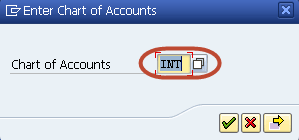
Step 4) On the next screen, enter the G/L account in which the rounding differences are posted, then click the Posting Key button to set the credit and debit keys.

Step 5) Enter the credit posting key and the debit posting key that the difference should use.

Step 6) Press Save from the SAP standard menu.

Step 7) On the next screen, enter the Customizing request number to save the configuration so it can be transported.

The rounding-difference account is now active, and every clearing document that produces a residual will post it here automatically. These postings then appear in the standard FI tables alongside the related clearing documents.
Rounding Differences vs Payment Differences
Rounding differences are easy to confuse with payment differences, but SAP treats them separately. A rounding difference is generated by the system from currency rounding and is always tiny. A payment difference occurs when a customer or vendor pays more or less than the open item, and can be any size.
| Aspect | Rounding difference | Payment difference |
|---|---|---|
| Cause | Currency rounding on a clearing document | Under or over payment by a business partner |
| Size | A fraction of a currency unit | Any amount, within tolerance or not |
| Configuration | Define Accounts for Rounding Differences | Tolerance groups and reason codes in OBXL |
| Posting | Automatic to the rounding account | Write-off, residual item, or partial payment |
Both settings live under Business Transactions in accounts receivable and accounts payable Customizing, and both feed the account determination used during an outgoing payment. Keeping them distinct avoids over-writing genuine payment shortfalls as harmless rounding.
