
What is a MEAN Stack Developer? Skills & Salary
 Editorial Team
⚡ Smart Summary
MEAN Stack Developer roles combine MongoDB, Express.js, AngularJS, and Node.js into one JavaScript workflow. This guide explains the architecture, skills, salary, and growth path so you can evaluate the career.
What is Mean Stack?
Mean Stack is a collection of JavaScript-based technologies used to build modern web applications. From the client to the server and to the database, every component is written in JavaScript. MEAN is a full-stack development toolkit used to develop fast and robust web applications.
MEAN is a user-friendly stack and the ideal choice for building dynamic websites and applications. The free and open-source toolkit offers a quick, organized method for creating rapid prototypes for web-based applications.
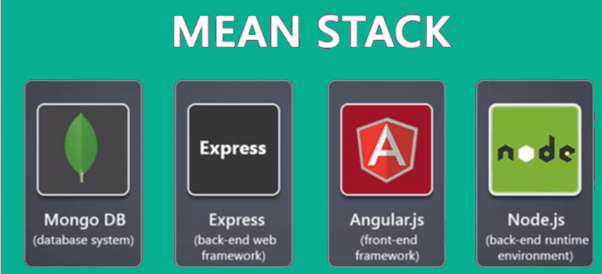
MEAN is comprised of four technologies:
- MongoDB is a schemaless NoSQL database system
- Express.js is a framework used to build web applications on Node.js
- AngularJS is a JavaScript front-end framework developed by Google
- Node.js is a server-side JavaScript execution environment
What is a Mean Stack Developer?
A MEAN Stack Developer is a JavaScript-focused application programmer who works across the MEAN stack (MongoDB, Express.js, AngularJS, and Node.js). MEAN stack developers work on both the back-end and the front-end of the application. Because every layer is JavaScript-based, a MEAN stack developer must have in-depth knowledge of JavaScript.
What is MongoDB?
MongoDB is an open-source, cross-platform database written in C++. It stores data in key-value pairs using a binary data format similar to JSON. It is a document-oriented NoSQL database. A document in MongoDB resembles an object in OOPS.
MongoDB is an ideal choice for a database system where you need to manage large sized tables with millions of records. Adding a field to MongoDB is easier because it does not require updating the entire table. With MongoDB, you develop an entire application with just one language: JavaScript.
Example MongoDB Document
db.users.insertOne({
  "name": "Jane Doe",
  "email": "jane@example.com",
  "active": true
}); // inserts a single document
What is Express.js?
Express is a mature, flexible, lightweight server framework. It is designed for building single, multi-page, and hybrid web applications. This lightweight framework uses the Pug engine to provide support for templates.
Express is the de-facto framework for Node.js and draws heavy inspiration from Sinatra, the popular Ruby framework.
Minimal Express Server
const express = require("express");
const app = express();
app.get("/", (req, res) => res.send("Hello"));
app.listen(3000); // listens on port 3000
What is AngularJS?
AngularJS is an open-source JavaScript framework maintained by Google. The goal of the framework is to bring MVC (Model-View-Controller) architecture into the browser, which makes development and testing easier. The framework helps you create a smarter web app that supports personalization.
AngularJS allows you to use HTML as a template language. You can extend HTML’s syntax to express the components of your application. Angular features like dependency injection and data binding eliminate boilerplate code.
What is Node.js?
Node.js allows developers to create web servers and build web applications on it. It is a server-side JavaScript execution environment.
Node.js uses a non-blocking and event-driven I/O model. This makes it lightweight and efficient, which is perfect for data-intensive real-time applications that run across distributed devices. You can run the Node.js runtime on Microsoft Windows, macOS, and Linux.
Mean Stack Architecture
The primary function of each component of the MEAN stack architecture is as follows:
AngularJS: Accepts requests and displays results to the end user.
Node.js: Handles client and server requests.
Express.js: Makes requests to the database and returns a response.
MongoDB: Stores and retrieves data.

Mean Stack Architecture Diagram
- The client makes a request which is processed by AngularJS.
- The request moves to Node.js, which parses the request.
- Express.js makes calls to MongoDB to get or set data.
- MongoDB retrieves the requested data and returns it to Express.js.
- Node.js returns the response to the client.
- On the client side, AngularJS displays the result fetched from MongoDB.
What is the Mean Stack Developer Salary?
The average salary for a MEAN stack developer in the United States is approximately $90,148 per year. Senior developers with cloud or AI integration experience often earn significantly more.

Skillsets of a Mean Stack Developer
- A MEAN stack developer should work on the front-end and back-end processes.
- A MEAN stack developer should be able to work with HTML and CSS.
- He or she should understand programming templates and architecture design guidelines.
- Knowledge of web development, continuous integration, and cloud technologies.
- Good understanding of database architecture.
- Knowledge of SDLC and experience developing in an Agile environment.
- Collaborate with the IT team to build strong systems that support business objectives.
- Hands-on experience with Mongo, Express, Angular, and Node.
What is the Future of a Mean Stack Developer?
Being a MEAN stack developer is a highly desirable and challenging vocation. If you are ready to work on a diverse skill set and gain experience across various code languages and applications, you can become a successful MEAN stack developer.
Application Architecture (Technical Architect) is an area you can easily progress into after gaining experience as a MEAN stack developer. Many engineers also move into cloud-native or AI-augmented full-stack roles.
Advantages of Mean Stack
Here are the most prominent reasons for using MEAN stack technology:
- Allows creating a simple open-source solution to build robust and maintainable products.
- Helps in rapid development of applications.
- MEAN is full-stack JavaScript and is 100% free.
- Uses a uniform language throughout your stack.
- Uses a very low memory footprint and overhead.
- Helps you avoid unnecessary groundwork and keeps your application organized.
- MongoDB is built for the cloud.
- Node.js simplifies the server layer.
- MEAN makes code isomorphic.
Disadvantages of Mean Stack
- MongoDB is ideal for small to mid-sized applications but is not the best option for very large-scale systems.
- There are no specific general JS coding guidelines.
- Once you have built your first site with MEAN, it is hard to go back to the old approach.
- It offers poor isolation of the server from business logic.
- You could potentially lose records.
