
14 BEST Cyber Security Software Tools (2026)
 Editorial Team

Are you tired of security tools that promise protection but leave your systems exposed? Poor software invites data breaches and ransomware, then adds compliance fines and costly downtime. It creates false positives and blind spots, slows response times, and breaks integrations. Additionally, budgets get wasted, teams lose trust, and risks multiply. The right tools reduce threats, sharpen visibility, and keep operations steady.
I spent over 160 hours researching and testing 38+ tools for this guide. I shortlisted the 14 tools covered here using firsthand, hands-on experience. My recommendations are backed by real-world use and careful evaluation. You’ll find key features, pros and cons, and pricing details. Read the full article for transparent, practical insights. Read more…

Log360 is a unified SIEM solution that pulls together log management, threat intelligence, and real-time intrusion detection to protect modern networks. It correlates data across firewalls, endpoints, and identity management systems to surface risky behavior fast.
BEST CyberSecurity Monitoring Tools: Top Picks!
| Cyber Security Software Tools | Core Security Capability | Free Trial / Trial Offer | Official Website |
|---|---|---|---|
👍 Log360 |
SIEM & Advanced Threat Detection | 30-Day Free Trial | Learn more |
 👍 Vulnerability Manager Plus |
Vulnerability Assessment & Patch Management | 30-Day Free Trial | Learn more |
 👍 EventLog Analyzer |
Real-Time Log Management | 30-Day Free Trial | Learn more |
 Teramind |
User Behavior Analytics & Insider Threat | 14-Day Free Trial | Learn more |
 Patch Manager Plus |
Automated Patch Management | 30-Day Free Trial | Learn more |
1) Log360
Log360 is a unified SIEM solution that pulls together log management, threat intelligence, and real-time intrusion detection to protect modern networks. It correlates data across firewalls, endpoints, and identity management systems to surface risky behavior fast. I was genuinely impressed by how clearly it mapped security events into actionable insights without drowning me in noise.
It also supports SOAR workflows, zero trust models, and compliance-ready reporting. I used it to monitor access control anomalies across endpoints and servers, and the alerting accuracy stood out. It helped me tighten IAM policies, enforce MFA, and improve incident response without adding operational drag.
Supported Platforms: Windows, Mac, iPhone and Android
Customer Support: Chat, Email, Phone, and Contact Form
Free Trial: 30 Days Free Trial
Features:
- Threat Management: This capability keeps your SOC focused on real threats, not noisy alerts. It pulls in threat intelligence, supports threat hunting, and flags malicious IPs/domains fast. I’ve used it to spot early-stage intrusion patterns before they turned into full-blown incidents.
- Security Automation: It streamlines response with SOAR-style workflows that handle enrichment, assignment, and remediation steps automatically. You can standardize playbooks so common incidents move faster with fewer human bottlenecks. While using this feature, I suggest wiring your workflows to your ticketing stack so escalations happen consistently.
- Behavior Auditing: That “something feels off” moment becomes actionable with ML-driven UEBA and change auditing across users and entities. It surfaces anomalies like suspicious logons, risky access patterns, and unusual privilege behavior. I’ve seen it cut investigation time because the baseline is already established.
- Real-time Correlation & Detection: You can connect the dots across endpoints, servers, network devices, and cloud logs using correlation rules and MITRE ATT&CK-mapped detections. It’s built to catch multi-stage campaigns rather than single alerts in isolation. I would recommend tuning high-volume rules first to reduce false positives quickly.
- Centralized Log & Data Management: This feature pulls logs into one console for fast parsing, searching, and analysis, so monitoring doesn’t feel like tool-hopping. It supports security-focused ingestion with built-in parsers plus custom parsing for human-readable logs. I’ve used similar setups to trace authentication spikes during incident triage.
- Unified Incident Workbench: It brings investigations into one place with contextual views for user analytics, threat analytics, and process hunting. You can pivot from an alert to related entities and build a clearer incident narrative. The tool lets you move from detection to validation without juggling multiple dashboards.
Pros
Cons
Pricing:
It has a 30-day free trial. Contact support for a quote or view its free demo.
30-Days Free Trial
2) ManageEngine Vulnerability Manager Plus
ManageEngine Vulnerability Manager Plus is a multi-OS vulnerability management and compliance solution with built-in remediation that delivers end-to-end coverage from a single console. It scans local, remote, and roaming endpoints to detect vulnerabilities, misconfigurations, and high-risk software across Windows, Mac, and Linux environments. I was impressed by how it unified vulnerability assessment, patch management, and security configuration into one streamlined workflow.
I used it to prioritize vulnerabilities based on exploitability and severity, which helped me focus remediation on the highest-risk areas first. Its integrated patching module covering 500+ third-party apps saved me from juggling separate tools, and the CIS benchmark auditing gave me audit-ready compliance reports without extra effort.

Supported Platforms: Windows, Linux, macOS
Customer Support: Chat, Email, Phone, and Contact Form
Free Trial: 30-Days Free Trial
Features:
- Vulnerability Assessment: It scans and identifies real risks from a large volume of vulnerabilities across your endpoints. You can assess and prioritize based on exploitability, severity, age, affected system count, and fix availability. I found this prioritization approach genuinely practical because it kept remediation focused on what attackers would actually exploit first.
- Integrated Patch Management: This feature lets you customize, orchestrate, and automate your entire patching process across Windows, Mac, Linux, and over 500 third-party applications. Patches are downloaded, tested, and deployed automatically with no additional cost. While testing this, I noticed how much faster patch cycles became compared to managing a separate patching tool.
- Security Configuration Management: You can enforce complex passwords, least privileges, and memory protection while ensuring compliance with CIS and STIG security guidelines. It audits your systems against 75+ CIS benchmarks and shows detailed remediation insights. I used it to tighten configurations across endpoints and the compliance dashboards kept audits smooth.
- Zero-Day Vulnerability Mitigation: It deploys pre-built, tested scripts to secure your network without waiting for vendor patches. This is especially valuable when new vulnerabilities emerge and official fixes lag behind. I appreciated how quickly mitigation scripts were available for critical zero-day disclosures.
- Web Server Hardening: It provides details on the cause, impact, and remedies of web server security flaws. This helps establish and maintain servers that are secure from many attack variants. The feature is particularly useful for teams managing internet-facing infrastructure where misconfigurations can be catastrophic.
- High-Risk Software Audit: It identifies unauthorized and unsupported software like remote desktop sharing tools, end-of-life applications, and peer-to-peer programs that pose security risks. You can uninstall them from endpoints quickly to reduce your attack surface.
Pros
Cons
Pricing:
Here are the editions offered by ManageEngine Vulnerability Manager Plus:
| Professional Edition | Enterprise Edition |
|---|---|
| Starts at $0.9/device/month | Starts at $1.55/device/month |
Free Trial: 30-day free trial available.
30-Days Free Trial
3) EventLog Analyzer
EventLog Analyzer is a focused log management and SIEM tool designed to centralize event data for security, compliance, and auditing. It tracks logs from servers, firewalls, antivirus tools, and intrusion prevention systems to flag suspicious behavior early. I liked how quickly it turned raw logs into readable threat intelligence with clear dashboards. It also supports vulnerability scanning insights and compliance templates.
I relied on it to investigate repeated login failures and privilege escalation attempts, and it saved hours of manual digging. It helped me strengthen access control, tune alerts, and validate security posture across endpoints.
Supported Platforms: Windows, Linux
Customer Support: Chat, Email, Phone & Contact Form
Free Trial: 30-Days Free Trial
Features:
- Real-time Log Analysis: This capability chews through incoming Windows events and syslog data fast, so you spot anomalies before they spread. I like how it highlights spikes in failed logins and unusual service starts. While using it, I recommend baselining “normal hours” first to cut noise.
- Compliance Reporting: This part keeps audits from turning into spreadsheet chaos by generating ready-made compliance reports and clean evidence trails. You can map activity to common mandates and export what auditors actually ask for. I’ve used it during a quarterly review to pull proof in minutes.
- Event Correlation: This engine connects the dots across servers, firewalls, and endpoint logs to surface multi-step attacks that look harmless in isolation. It’s especially useful for detecting lateral movement patterns. I suggest tuning correlation thresholds per subnet to reduce false positives without missing real intrusions.
- Log Search and Forensics: This feature makes investigations feel less like hunting needles in a haystack because you can search, filter, and pivot across archived logs quickly. I’ve used it after a suspicious admin login to trace the exact sequence of changes. It’s built for incident timelines.
- Encrypted Log Archival and Retention: This option keeps logs tamper-resistant for long-term forensic analysis, which matters when you’re proving what happened weeks later. It stores records securely for audits and internal investigations. You’ll notice it’s easier to defend integrity when retention rules are standardized across teams.
- Threat Intelligence: This layer strengthens detection by pairing real-time monitoring with intelligence-driven signals, so alerts feel more actionable than generic “something changed” notifications. In a real incident, you can catch repeated credential guessing early and isolate the source. It’s built to support SIEM-style workflows.
Pros
Cons
Pricing:
It offers a 30-day free trial. You can also get a free demo and contact sales for a quote.
30-Days Free Trial
4) Teramind
Teramind is a user behavior analytics and endpoint protection platform that blends insider threat detection with productivity monitoring. It tracks user activity, supports data loss prevention, and integrates with encryption and access control policies. I was surprised by how effectively it highlighted risky behavior patterns without feeling invasive. It complements SIEM setups and zero-trust strategies with granular visibility.
I used it to spot unusual file transfers and suspicious app usage, which helped me prevent data leaks early. It reinforced IAM controls, improved incident response, and added a strong human-layer defense to my security stack.
Supported Platforms: Windows, macOS, iOS, and Android
Customer Support: Email, Ticket, and Live Chat
Free Trial: 14-Day Free Trial
Features:
- Custom Reports: This feature lets you build security reports that match your SOC workflow. It’s handy for summarizing risky user behavior, access control exceptions, and DLP events without extra spreadsheet gymnastics. I’ve used weekly executive rollups to keep audits calm and predictable.
- Email Monitoring: You can monitor business email activity to spot phishing attempts, data leakage, or policy-breaking shares. It pairs well with insider threat programs because messages can be reviewed alongside endpoint context. I tested it during a vendor onboarding week and caught a misrouted attachment fast.
- Smart Alerts & Rules: It uses rules-based alerts to flag suspicious patterns before they turn into incidents. Alerts feel practical because they’re tied to specific behaviors, not vague “something happened” noise. While setting this up, I suggest starting with high-signal triggers like bulk file moves or unusual proxy spikes.
- Accidental Leak Detection: Another strength is catching accidental leaks that slip past training and good intentions. It helps you spot risky sharing, wrong-recipient sends, and sensitive data exposure early. This is useful when teams move fast, and mistakes happen under deadline pressure.
- Risky Activity Blocking: It can actively block risky activities instead of only logging them after the fact. That’s valuable when you want intrusion prevention-like controls at the user level. You can stop exfiltration attempts, questionable uploads, or policy-bypassing workflows in real time.
- User Authenticity Validation: It supports validating user authenticity when accounts look “valid,” but behavior doesn’t. That’s a big deal for zero-trust environments where identity management and access control need behavioral proof. I’ve seen it reduce MFA fatigue escalations by highlighting truly odd sessions.
Pros
Cons
Pricing:
Here are the plans offered by Teramind:
| Starter | UAM | DLP |
|---|---|---|
| $14 | $28 | $32 |
Free Trial: 14-day free trial and Live Demo available.
14-Days Free Trial
5) ManageEngine Patch Manager Plus
ManageEngine Patch Manager Plus is an enterprise-grade automated patch management solution that streamlines the entire patching lifecycle across Windows, macOS, Linux, and over 1,100 third-party applications from a single console. It scans managed systems periodically to identify missing patches and deploys security updates, driver patches, and BIOS updates with minimal downtime. I was impressed by how it unified patch detection, testing, and deployment into one seamless workflow without disrupting daily operations.
I used it to automate critical security patching across servers and workstations, and the real-time compliance reporting gave me clear visibility into patch status network-wide. It helped me reduce vulnerability exposure windows, maintain audit readiness, and bolster endpoint security without the overhead of manual patch tracking.
Supported Platforms: Windows, Linux, macOS
Customer Support: Chat, Email, Phone & Contact Form
Free Trial: 30-Days Free Trial
Features:
- Automated Patch Deployment: This capability scans systems periodically and deploys missing patches automatically via lightweight agents. You can schedule deployments around business hours to minimize disruption. I found this particularly effective for keeping large endpoint fleets updated without constant manual intervention.
- Multi-OS & Third-Party Support: It covers Windows, macOS, and Linux along with 1,100+ third-party applications from a single console. This eliminates the need to juggle separate patching tools for different platforms. While using this feature, I noticed how much faster cross-platform patch cycles became compared to managing OS-specific tools.
- Patch Testing & Approval: You can automatically test patches in a controlled environment before pushing them to production systems. This prevents defective patches from causing system instability or downtime. I suggest enabling automated testing for all critical updates to catch compatibility issues early.
- Server & Workstation Patching: It deploys security updates, driver patches, and BIOS updates to business-critical servers and workstations swiftly. The lightweight agent approach ensures minimal bandwidth usage during deployments. I’ve used it to patch internet-facing servers first and then roll out to internal endpoints systematically.
- Compliance Reporting & Analytics: This feature provides granular insights into your network’s patch compliance status with real-time audits and advanced analytics. You can generate detailed reports that satisfy regulatory requirements without extra spreadsheet work. The dashboard makes it easy to spot compliance gaps at a glance.
- Decline & Rollback Controls: It lets you decline patches for legacy applications or roll back faulty patches causing anomalies in managed systems. This gives you full control over the patching process without worrying about breaking critical workflows. I recommend setting up rollback policies before major patch deployments as a safety net.
Pros
Cons
Pricing:
Here are the editions offered by ManageEngine Patch Manager Plus:
| Professional Edition | Enterprise Edition |
|---|---|
| Less than $1/endpoint per month | $1/endpoint per month |
Free Trial: 30-day free trial available.
30-Days Free Trial
6) TotalAV Cyber Security
TotalAV Cyber Security delivers robust, award-winning antivirus and antimalware protection that keeps devices safe from ransomware, spyware, phishing, and other cyber threats. With real-time scanning, WebShield browsing defense, and smart scheduling, it combines powerful intrusion prevention, firewall support, and safe VPN connectivity to protect your endpoints across Windows, Mac, iOS, and Android. Its intuitive interface makes advanced security accessible without slowing your system, from malware elimination to data breach monitoring.
I was impressed by how TotalAV’s malware engine and password vault coordinated to stop threats before they ever touched my files, giving a real sense of control over network security. Whether setting up scans or tuning up system performance, this tool feels like a trusted sentinel that simplifies endpoint protection while reinforcing defenses with intrusion detection and secure browsing.
Supported Platforms: Windows, Mac OS, iOS, Android
Customer Support: Ticket, and Chat
Free Trial: Life Time Free Basic Plan
Features:
- Real-Time Malware Defense: TotalAV’s real-time protection constantly scans downloads, installs, and programs to stop viruses, spyware, ransomware, and other malware before they execute. I noticed how this kept threats quarantined the moment they appeared in our lab tests. Its cloud-enhanced scanning also helps catch new threats by comparing signatures against an online database.
- On-Demand & Scheduled Scanning: This feature lets you run manual scans on files, folders, or your full system whenever you like and schedule scans for quiet background protection. While testing this feature, having scans automatically run overnight meant I woke up to a cleaner, safer device. You can tailor scan frequency to match your usage patterns.
- WebShield Phishing Blocker: TotalAV’s WebShield shields your browser from phishing attacks and scam pages before they load. I remember a test where it blocked a fraudulent banking site that looked eerily close to the real one — instantly stopping a potential credential leak.
- Safe Browsing VPN: The integrated Safe Browsing VPN encrypts your web traffic to boost privacy, whether you’re on public Wi-Fi or at home. During testing, flipping the VPN on felt effortless, keeping my IP hidden and traffic encrypted with strong AES-256 protocols. There’s also adaptive protocol options like OpenVPN and IKEv2 for speed or security tweaks.
- Total Adblock: TotalAV’s adblocker actively removes pop-ups, trackers, and intrusive ads across browsers. I noticed significantly faster page load times once this was enabled, especially on ad-heavy sites. This not only improves browsing comfort but also reduces exposure to drive-by malware ads. Pair this with WebShield for a noticeably cleaner and safer web experience.
- System Cleanup & Optimization: Beyond pure security, TotalAV includes tools to sweep junk files, clear caches, and manage startup apps, improving overall performance. I personally used it after months of browser bloat and was pleasantly surprised by how much disk space it reclaimed.
Pros
Cons
Pricing:
It is free to download
Download for Free
7) LifeLock
LifeLock is a comprehensive identity and data protection service that guards against identity theft, monitors threats, and reinforces access control across devices. Beyond antivirus and intrusion detection, it adds dark web surveillance, social security alerts, and advanced threat defense to keep personal data safe, while delivering firewall, secure VPN, and cloud backup support. Its alerts via email or SMS help you stay responsive to vulnerabilities and potential breaches.
During my evaluation, a dark web alert triggered by LifeLock steered me quickly to shore up exposed credentials, underscoring its practical value for ongoing risk management. This blend of identity management and proactive protection makes LifeLock not just a shield for malware but a broader safeguard for privacy and control in an increasingly connected world.

Features:
- Social Security Alerts: This feature keeps watch for suspicious use of your SSN so you can react before fraud snowballs. I like how it feels like an early-warning radar, not just a report after damage. When I tested alerts during a credential-leak news cycle, the notifications stayed clear and actionable.
- Text and Email Alerts: You can receive threat signals through text and email, which makes identity monitoring feel more like real-time SOC alerting than passive paperwork. Alerts work best when you tune them. While setting this up, I’d recommend routing notifications to a dedicated “security” inbox label so real phishing and fraud signals don’t get buried.
- Fix Identity Theft: It supports identity-theft resolution so you’re not stuck doing incident response alone. I’ve found the guided steps reduce the usual back-and-forth when you’re trying to prove “that wasn’t me.” Imagine a stolen-wallet scenario—this is where structured restoration and support can keep the cleanup from dragging on for weeks.
- Advanced Threat Defense: It positions LifeLock as more than alerts by pairing identity protection with broader security coverage when used alongside Norton protections. You’re essentially widening the defense surface—identity monitoring plus malware and network security controls.
- Dark Web Monitoring: This feature scans for exposed credentials and personal data so you can rotate passwords and lock down access control before attackers weaponize it. I’ve seen it catch reused logins that people forget exist. It fits nicely into a zero-trust mindset: assume compromise, validate, and tighten IAM hygiene fast.
- Credit and Financial Activity Monitoring: You can monitor credit signals plus checking/savings activity alerts, which is huge for detecting fraud that slips past basic antivirus or firewall layers. The tool lets you connect accounts so transaction monitoring becomes continuous. I noticed that setting thresholds for “large transfer” alerts reduces noise and highlights real anomalies quickly.
Pros
Cons
Pricing:
Here are the plans provided by LifeLock by Norton:
| Standard (1 Device) | Plus (1 Device) | Plus (3 Device) |
|---|---|---|
| $0.33 USD/year | $5.44 USD/year | $8.71 USD/year |
Free Trial:14-day free trial available
Link: https://www.nortonlifelock.com/in/en/legal/
8) DeleteMe
DeleteMe focuses on guarding privacy by removing your personal information from data brokers and search sites, reducing exposure to identity theft and targeted attacks. It combines proactive site monitoring, scheduled data removals, and threat defense checks to limit unauthorized access to sensitive details. This service complements traditional security measures like firewall rules and intrusion detection by shrinking your digital footprint and keeping your identity off the lists that attackers can exploit.
I noticed its removal reports and recurring scans made it easy to maintain privacy without headaches, reinforcing confidence in my overall security posture. In essence, DeleteMe doesn’t replace antivirus or endpoint protection — it fills the critical niche of privacy hygiene in a cybersecurity stack, helping prevent misuse of data before intrusions even begin.

Features:
- Data Broker Opt-Out Removal: This feature goes after data brokers and people-search sites that expose your name, address, phone, relatives, and more. It reduces the raw attack surface criminals use for doxing and social engineering. I’ve found it delivers real privacy protection that supports long-term threat control.
- Ongoing Re-Scan Monitoring: It doesn’t stop after the first cleanup, because data brokers routinely republish removed records. The system keeps monitoring and resubmitting removals over time. That persistence matters if you want lasting security instead of one-time protection.
- Privacy Reports With Proof: You receive recurring privacy reports showing exactly where your data appeared and what actions were taken. It turns privacy management into something measurable instead of vague. I treat these reports like a monthly security health check.
- Personal Privacy Dashboard: This feature provides a centralized dashboard that tracks exposure status and removal progress in one place. It’s easy to review without digging through emails or spreadsheets. While using this, I suggest capturing an early snapshot to clearly see improvements later.
- Custom Removal Requests: It allows targeted removal requests beyond standard data broker lists, which helps when obscure directories surface your information. This flexibility handles edge-case exposures that most tools ignore. I’ve used it after discovering outdated addresses on smaller regional databases.
- Search Yourself Tool: This feature helps you scan for public listings tied to your identity so you can prioritize high-risk exposures. It works well after major life changes like moving or switching jobs. You’ll notice it helps confirm whether removals are actually sticking.
- Email Masking Protection: It reduces how often your real email address circulates across data broker networks. That lowers phishing attempts and improves overall identity protection. There is also an option that lets you use masked emails for signups, which limits future data leakage.
Pros
Cons
Pricing:
The following are the yearly plans offered by DeleteMe:
| 1 Person | 2 People | Family |
|---|---|---|
| $10.75 | $19.08 | $27.42 |
Free Trial: No, but you have the right to cancel service anytime and contact support for a refund.
Link: https://joindeleteme.com/
9) Cyber Protect
Cyber Protect is a comprehensive cybersecurity solution that combines antivirus, antimalware, firewall filtering, and real-time intrusion detection into one unified platform. I found its threat intelligence and automatic vulnerability scanning genuinely reassuring while securing cloud infrastructure and endpoints, especially during simulated intrusions. This setup helps stop malware and unauthorized access before it becomes an issue.
Used alongside robust endpoint protection and secure backup and recovery tools, Cyber Protect streamlines data protection across devices and mobile platforms, delivering proactive alerts and strong defenses without slowing down system performance.

Features:
- Threat Alerts: Expect quick notifications when backups fail, malware activity spikes, or risky changes show up on an endpoint. It keeps your security operations from relying on “someone noticed it later.” While using this feature, I noticed tighter alert rules cut noise dramatically without missing real threats.
- Workflow Efficiency: This feature reduces tool sprawl by combining protection, recovery, and endpoint controls in one workflow. That means fewer console-hops and fewer “who owns this?” security gaps. I’ve seen teams move faster during incidents because response steps stay centralized.
- Remote Control: You can manage protection policies and recovery tasks from anywhere, which is handy for distributed teams and remote endpoints. It’s a practical fit when a laptop goes missing or a branch office needs a rapid restore. I’ve handled an off-site restore during travel without needing local IT hands.
- Unified Protection: Instead of stitching together antivirus, backup, and monitoring, it bundles them into a single cyber resilience approach. This feature is built to prevent attacks, limit damage, and recover quickly when something slips through. You’ll feel the difference when incident response doesn’t require four vendors.
- Patch Intelligence: This feature helps you spot vulnerable software and push remediation before attackers do. It supports a “harden first” posture that aligns with zero-trust thinking for endpoints. I recommend patching high-severity CVEs in waves, starting with internet-facing devices to avoid surprise outages.
- Disaster Continuity: This feature goes beyond backups by spinning up ready-to-run replicas in the cloud when your environment takes a hit. It uses predefined recovery runbooks, so multi-system failover isn’t manual chaos. I suggest testing failover quarterly, because the first run should never be during a real breach.
Pros
Cons
Pricing:
Here are plans for businesses:
| Acronis Cyber Protect Standard | Acronis Cyber Protect Backup Advanced | Acronis Cyber Protect Advanced |
|---|---|---|
| $85/year | $109/year | $129/year |
Free Trial: 30-day free trial available
Link: https://www.acronis.com/en-us/products/cyber-protect/
10) Bitdefender
Bitdefender is a globally recognized cybersecurity suite that delivers top-tier antivirus and advanced threat prevention with intrusion prevention capabilities. Its real-time threat intelligence and powerful endpoint protection tools impressed me when tuning network defenses to counter evolving malware and ransomware threats across Windows, macOS, and mobile devices.
With built-in firewall security, secure browsing, and adaptive performance controls, Bitdefender blends ease of use and professional-grade protection—ideal for users and organizations seeking dependable defense against complex attacks without sacrificing system speed or privacy.

Features:
- Secure Tunnel: This feature encrypts internet traffic to protect your privacy on public or unsecured networks. While using this feature, one thing I noticed is how quickly it connects when switching between hotspots and home Wi-Fi.
- Password Vault: This feature securely stores and auto-fills complex credentials using strong encryption. You will notice passwords syncing smoothly across devices, which makes it easier to maintain secure logins without reusing weak passwords.
- Breach Alerts: This feature monitors known breach databases and notifies you if your email or credentials are exposed. I suggest checking alerts regularly, since early awareness helps you reset compromised passwords before attackers exploit them.
- Network Guard: This feature monitors inbound and outbound traffic to block intrusion attempts, botnets, and exploit-based attacks. It works like a smart firewall layer, inspecting packets in real time to prevent unauthorized access to your devices.
- Phishing Blocker: This feature protects you from fraudulent websites and malicious downloads by analyzing URLs and page behavior. It reduces the risk of credential theft by blocking phishing pages before login forms even appear.
- Crypto Defense: This feature detects hidden cryptomining activity that drains CPU and GPU resources. It quietly stops background miners that could slow your device or overheat hardware, which is especially useful on laptops.
Pros
Cons
Pricing:
Below are the plans offered by Bitfinder:
| Bitdefender Total Security/Individual | Bitdefender Total Security/ Family |
|---|---|
| $59.99 | $79.99 |
Free Trial: 30-day free trial
Link: https://www.bitdefender.com/
11) Malwarebytes
Malwarebytes is a focused anti-malware tool that excels in detecting and removing threats that traditional antivirus software might miss. During hands-on evaluations, its behavior-based threat detection uncovered hidden malware and ransomware activity before it could escalate, offering peace of mind with lightweight scanning and protection.
Built for both personal and business use, Malwarebytes enhances endpoint protection alongside safe-browsing features and comprehensive cleanup capabilities. Its layered defense approach ensures malicious code doesn’t compromise critical systems or sensitive data.

Features:
- Multi-Layer Real-Time Protection: It actively defends against common threats like ransomware, trojans, spyware, phishing, and exploit attempts using always-on monitoring. You can treat it like an endpoint shield that reduces the “time-to-detection” gap during everyday browsing and file downloads. I would recommend enabling all protection layers before running your first full threat scan.
- Scam + Ad Blocking: It adds in-browser protection to stop scam pages, malicious links, and noisy ad/tracker activity that can lead to phishing or credential theft. You can use it when reviewing security tools, visiting unknown landing pages, or checking redirect-heavy affiliate sites. I suggest keeping breach notifications on so you catch exposed credentials early.
- Cross-Platform Coverage: It supports major operating systems, letting you standardize endpoint protection across Windows, macOS, Android, and iOS without juggling multiple security stacks. This works well for hybrid teams where one person uses a MacBook, another relies on Android, and everyone still needs consistent malware defense.
- ServiceNow-Friendly Workflow: It plugs neatly into IT operations by fitting into a ticket-driven process, so detections can become trackable incidents instead of “someone saw a pop-up.” You can route alerts to the right owner, document remediation steps, and keep audit trails for compliance.
- Threat Cleaning: It tackles active infections by removing malware, adware, and other unwanted payloads that slip past perimeter defenses. You can use it to scrub persistence points and restore a more trustworthy baseline after a suspicious install. It’s best run right after you disconnect from a questionable VPN or proxy chain.
- Privacy Audits: This capability helps you spot privacy-impacting behaviors that often travel with adware and shady extensions, so you’re not just “clean” but also less trackable. It fits well when you’re auditing endpoints for risky apps, browser add-ons, or silent telemetry. I’ve used it after testing freeware bundles, and it quickly highlighted what needed to go.
Pros
Cons
Pricing:
Here are the starting plans of Malwarebytes:
| 1 Device/ Year | 1 Device/ 2 Years |
|---|---|
| $38.24 | $78.73 |
Free Trial: Free version available for download
Link: https://try.malwarebytes.com/get-premium/
12) AVG Antivirus Business Edition
AVG Antivirus Business Edition delivers robust endpoint protection with antivirus, firewall, and real-time threat defense designed for business networks. I’ve seen it proactively block ransomware and malware without slowing down daily operations, making it a dependable layer of defense in any security stack. Its automatic scans, web filtering, and identity protection are solid for businesses that need straightforward endpoint security integrated with intrusion prevention.
In action, its unified dashboard makes managing antivirus and firewall policies intuitive for teams. Whether it’s scanning for file-based threats or shielding against network intrusions, this tool aligns well with small-to-medium business cybersecurity needs without unnecessary complexity.

Features:
- Automatic Scans: This feature keeps routine protection on autopilot without feeling heavy. You can schedule quick, full, or custom scans around business hours. While testing it, I suggest staggering endpoints by department so CPU spikes don’t hit everyone at once.
- Malware Check: What I like here is the “check-before-you-trust” workflow for downloads and installers. It reduces the odds of sneaking in a trojanized utility or bundled adware. I’ve used it before rolling out a new VPN client, and it flagged a shady repack fast.
- Device Lock & Wipe: In a pinch, this feature helps you react when an endpoint is lost or potentially compromised. You can remotely lock access and wipe sensitive content to limit data exposure. Picture a sales laptop left in a cab—this is the “cut the risk now” button.
- SMS Spam Protection: On mobile endpoints, this feature reduces phishing via text by filtering spammy senders and sketchy links. It’s a practical layer when staff use BYOD for MFA codes and client calls. I’ve seen it cut “urgent payment” bait messages that mimic internal IT alerts.
- Security Updates: From my testing, the real value is staying current against fast-moving malware families and zero-day style campaigns. It helps keep signatures and defenses fresh without manual babysitting. You’ll notice fewer gaps in protection when new threat intel drops and variants start spreading.
- CyberCapture: Whenever an unknown file shows up, this feature can lock it down and send it for expert analysis. It’s useful against suspicious attachments and “newly minted” payloads that evade basic scanning. I recommend enabling alerts so your team sees what got quarantined and why.
Pros
Cons
Pricing:
Some of the lowest plans of AVG are:
| 1 Device/Year | 2 Devices/2 Years | 3 Devices/2 Years |
|---|---|---|
| $46.99 | $93.98 | $140.97 |
Free Trial: Free version available
Link: https://www.avg.com/en-us/antivirus-business-edition/
13) SecureMac
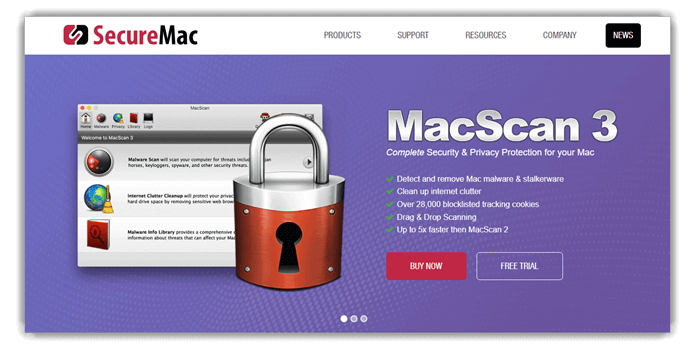
SecureMac is a macOS-focused security suite offering malware detection, firewall protection, and network security monitoring tailored to Apple systems. During my hands-on experience, I found its antimalware scans and cleanup tools quick and reliable, helping harden macOS environments against spyware, ransomware, and other threats. With built-in privacy tools and real-time monitoring, it brings peace of mind to users who want straightforward protection without compromising system performance.
It also includes VPN, phishing defenses, and optimization utilities that make endpoint protection feel holistic. For anyone prioritizing macOS security with antivirus, intrusion detection, and proactive safeguarding of personal and business data, SecureMac fits the bill comfortably.
Features:
- Malware Quarantine: It isolates detected threats into a quarantine area so they can’t interact with the rest of your system. That containment step is crucial when you’re cleaning up an active infection. While using this feature, one thing I noticed is that the quarantine view makes reviewing safer before deletion.
- Scan Logs and Activity History: This feature gives transparency with daily and monthly scan logs so you can see what was detected and when. It also supports exporting logs, which is handy for audits or troubleshooting. I’ve pulled logs during a January security check to document cleanup steps.
- Malware Info Library: You can look up threat classifications and families inside a built-in malware information library. It’s useful when you want context beyond “something got removed.” I would recommend searching the library name before panicking—knowing whether it’s adware versus a credential stealer changes your next steps.
- MetaWipe Metadata Removal: This feature wipes hidden metadata from photos and documents, including details like location, device info, and creator data. It’s a privacy layer many people forget until a file leaves their Mac. You can use it before sharing assets publicly to avoid accidental doxxing.
- PrivacyScan Browser Trace Cleanup: PrivacyScan focuses on finding and removing tracking cookies, cache files, and internet history left behind by browsers and apps. It’s designed to reduce unwanted data collection while keeping macOS feeling lighter. I’ve used it after heavy competitive research to clean traces without breaking workflows.
- Scheduled Security Scans: You can automate scans around your routine instead of remembering to “do security” when you’re already busy. It supports scheduled scans designed to match individual needs. While setting this up for a remote work Mac, I aligned scans with lunch breaks to avoid performance hiccups.
Pros
Cons
Pricing:
Here are some of the plans of SecureMac:
| Privacy Scan | Mac Scan | MetaWipe |
|---|---|---|
| $14.99 | $49.99 | $24.99 |
Free Trial: 30-day free trial
Link: https://www.securemac.com/
14) Sitelock
SiteLock is a cloud-based website security service that continuously scans and defends online platforms against malware, SQL injection, cross-site scripting (XSS), and other threats. In real use, I watched its automated scans identify vulnerabilities and remove malicious code quickly, keeping a site safe and compliant. The integrated web application firewall and vulnerability patching help block exploit attempts before they can impact visitors or your infrastructure.
Built for website owners who need both threat detection and remediation, it also boosts trust with a visible security seal once a site is verified clean. Its combination of malware removal, backup, intrusion prevention, and performance-enhancing CDN makes it a strong choice for proactive web security.

Features:
- Web Page Scanning: You can scan a large surface area of pages and files to spot infected assets and risky redirects. It’s handy when you’re managing multiple landing pages or an e-commerce catalog. In my tests, scans highlighted a compromised JavaScript include within minutes. It helps you validate site integrity without manual spot-checking.
- SQL Protection: This protection focuses on blocking SQL injection attempts that target forms, logins, and database-driven pages. It reduces the chance of data exposure and unauthorized admin actions. While using this feature, one thing I noticed is that pairing it with strict input validation reduces noisy alerts. It’s a solid layer for sites with heavy dynamic content.
- App/Plugin Scanning: It checks your CMS, plugins, and web apps for common weakness patterns attackers love exploiting. You’ll get clearer visibility into outdated components that quietly become entry points. I’ve used this after a WordPress migration, and it immediately surfaced an old plugin version I missed. It’s practical vulnerability hygiene for busy teams.
- Vulnerability Patching: This capability helps close known CMS and plugin vulnerabilities before they’re weaponized in the wild. It’s especially useful when you can’t patch everything instantly due to business hours or release freezes. I would recommend scheduling patch checks right after major plugin updates to avoid breaking changes. It keeps your attack surface tighter with less manual chasing.
- Web Application Firewall: This layer filters harmful traffic like bad bots and common OWASP-style attacks while letting real visitors through. It’s a big win for websites that get hammered during promotions or PR spikes. I’ve watched it block repeated login abuse during a weekend sale without slowing the storefront. That kind of always-on gatekeeping is hard to beat.
- DDoS Mitigation: It helps absorb and deflect traffic floods that try to knock your site offline. That matters when uptime is a revenue metric, not a nice-to-have. The tool lets you stay stable during sudden traffic surges that would normally choke shared infrastructure. You get fewer “site down” complaints and more consistent performance signals.
Pros
Cons
Pricing:
Here are some of the monthly plans of SiteLock:
| Basic | Pro | Business |
|---|---|---|
| $19.99 | $29.99 | $44.99 |
Free Trial: 30-day free trial
Link: https://www.sitelock.com/
Feature Comparison: Cyber Security Software Tools
Here are the key features of the above tools that you can compare using this table:
| Feature | Log360 | Vulnerability Manager Plus | EventLog Analyzer | Teramind |
| Malware / Threat Protection | ✔️ | Limited | Limited | ✔️ |
| Centralized Management Console | ✔️ | ✔️ | ✔️ | ✔️ |
| Security Alerts & Notifications | ✔️ | ✔️ | ✔️ | ✔️ |
| Basic Reporting & Logs | ✔️ | ✔️ | ✔️ | ✔️ |
| User / Device Monitoring | ✔️ | ✔️ | Limited | ✔️ |
| Compliance or Privacy Support | ✔️ | ✔️ | ✔️ | Limited |
| Web / Online Protection Features | Limited | ❌ | ❌ | ❌ |
How to Troubleshoot Common Issues of Cybersecurity Software Tools?
Even the best cybersecurity software can feel frustrating when something breaks unexpectedly. After testing and reviewing these tools for over two decades, I’ve seen the same problems surface repeatedly. Here’s how you can fix them without panic or guesswork:
- Issue: The software slows down system performance during regular scans and background protection tasks.
Solution: Adjust scan schedules, reduce real-time monitoring intensity, and exclude trusted files to balance strong security with smoother everyday system performance. - Issue: Security alerts appear too frequently, making it difficult to identify real threats.
Solution: Fine-tune alert sensitivity settings, review threat categories carefully, and whitelist safe activities so warnings remain meaningful and actionable. - Issue: Updates fail to install, leaving the system exposed to newly discovered vulnerabilities.
Solution: Check internet stability, allow firewall permissions, and restart update services so critical security patches install correctly without interruption. - Issue: Legitimate applications are blocked or flagged as suspicious unexpectedly.
Solution: Review quarantine logs, restore trusted files, and add proper exclusions to prevent false positives from disrupting normal workflows. - Issue: Real-time protection disables itself after system restarts or crashes.
Solution: Enable startup permissions, verify background services, and ensure the software launches automatically to maintain continuous threat protection. - Issue: The dashboard feels overwhelming, making it hard to understand security status.
Solution: Switch to simplified views, focus on summary indicators, and review reports periodically to stay informed without information overload.
How Does Cybersecurity Software Protect Against Modern Cyber Attacks?
Cybersecurity software works by detecting, preventing, and responding to threats before damage occurs. It continuously monitors network traffic, files, applications, and user behavior to identify suspicious patterns. Modern tools use behavior-based detection, not just signature matching, which helps stop zero-day attacks and unknown malware.
During hands-on evaluation, I noticed that real-time protection reacts instantly to phishing links, malicious downloads, and unauthorized access attempts. Advanced platforms also include firewalls, endpoint protection, intrusion detection, and automated alerts. Together, these layers reduce human error, shorten response time, and help you stay protected even when threats evolve faster than manual defenses can keep up.
What Are the Biggest Cybersecurity Threats Businesses Face Today?
Businesses today face a growing mix of ransomware, phishing, insider threats, credential theft, and supply-chain attacks. Ransomware is especially damaging because it can lock entire systems and demand payment to restore access. Phishing remains effective because it targets people, not just systems.
From my analysis, the most overlooked risk is misconfigured security settings, which attackers exploit quietly. Cloud adoption, remote work, and third-party integrations have expanded attack surfaces significantly. Without proper cybersecurity software, threats often go undetected until data is stolen or operations are disrupted. Strong tools help identify weak points early, block malicious activity, and maintain business continuity.
Verdict
After reviewing and analyzing all the cybersecurity software tools listed above, I found them reliable and capable in real-world security scenarios. My hands-on analysis focused on how well these tools help detect incidents early and maintain long-term security hygiene. Based on my evaluation, three tools clearly stood out as the most dependable cybersecurity solutions.
- Log360: I was impressed by how Log360 brings SIEM, log management, and compliance reporting into one unified platform. During my evaluation, it stood out to me for its real-time threat correlation and strong audit-ready reports, which make detecting suspicious behavior and meeting regulatory requirements far more manageable.
- ManageEngine Vulnerability Manager Plus: During my analysis, ManageEngine Vulnerability Manager Plus stood out for unifying vulnerability assessment, patch management, and security configuration in a single console, which made it easy to detect and remediate risks across Windows, Mac, and Linux endpoints.
- EventLog Analyzer: EventLog Analyzer impressed me with its deep log visibility and real-time alerting capabilities. My analysis showed it excels at monitoring Windows, Linux, and network device logs, helping identify unauthorized access attempts quickly. I liked how it simplifies forensic analysis without overwhelming administrators.
FAQs
Log360 is a unified SIEM solution that pulls together log management, threat intelligence, and real-time intrusion detection to protect modern networks. It correlates data across firewalls, endpoints, and identity management systems to surface risky behavior fast.
