
10 Best FREE Live Streaming Software (2026)
 Editorial Team

Do your live streams often freeze, lose audio sync, or look unprofessional, no matter how much effort you put in? That usually happens when you rely on poor-quality live streaming software that can crash mid-broadcast, limit resolution, or cause frustrating lag. It can also disrupt overlays, restrict platform compatibility, and ruin engagement. Over time, such issues hurt your brand image and audience trust. With the right tools, though, your streams become stable, sharp, and effortlessly engaging—just the way they should be.
I invested over 160 hours researching and testing more than 40 live streaming tools to compile this detailed guide. Featuring 10 of the best options, it’s backed by firsthand experience and rigorous evaluation. Inside, you’ll discover each tool’s key features, pricing, and clear pros and cons to make an informed choice. Take a moment to explore the entire article—it’s designed to help you stream smarter and perform better. Read more…
Best FREE Live Streaming Software: Top Picks!
| Name | Free Plan | Multi-streaming | Number of on-screen participants | Supported platforms | Link |
|---|---|---|---|---|---|
 Restream |
Yes | Two Simultaneous Channels | Six | Microsoft Windows, MacOS. | Learn More |
 Upstream |
Yes | Up to 10 Platforms | Up to 10 | Browser-based (Windows, Mac, Linux, Android, iOS) | Learn More |
 Zoho Webinar |
Yes | YouTube Live and Facebook Live | Up to 5000 attendees | Browser-based (Windows, Android, iOS) | Learn More |
 StreamYard |
Yes | Supported on Paid Tier | Six | Microsoft Windows, macOS, and Linux | Learn More |
 ManyCam |
Yes | Facebook, YouTube, Twitch, and RTMP | Multiple camera sources | Windows, macOS | Learn More |
“ Many options that do not have free plans do have free trials available so that you can try out the program’s basic functionality. You can then determine if you want to upgrade to one of the paid plans based on your needs.“
1) Restream
Restream is a powerful browser-based live streaming platform designed for creators who want to broadcast across multiple platforms simultaneously. I found its real-time video encoding and adaptive bitrate streaming particularly useful when I wanted my content to reach audiences on YouTube, Facebook, and LinkedIn—all at once. The ability to manage stream keys, customize overlays, and handle virtual camera output directly from my browser made my streaming sessions both professional and seamless.
Its integrated analytics dashboard helped me measure viewer engagement and optimize future broadcasts effortlessly. With built-in multi-platform broadcasting and smooth compatibility with tools like OBS Studio, Restream feels like the ideal choice for both beginners and professionals looking to amplify their reach with minimal setup.
Free Plan: Yes
Multi-streaming: Two Simultaneous Channels
On-screen participants: Six
Supported platforms: Microsoft Windows, MacOS
Features:
- Guest Integration: This feature allows you to seamlessly invite and display guests directly within your live stream. I’ve used it to conduct expert interviews, and the integration was impressively smooth. It helps foster dynamic conversations that keep audiences engaged throughout the broadcast.
- Storage Capacity: You can store individual videos up to 10GB or four hours long, offering decent flexibility for extended sessions. I liked how easily I could revisit past streams from the library. It’s an ideal setup for creators who repurpose content across platforms.
- Video Quality: Restream ensures professional-grade output with support for the H.264 (x264) codec, maintaining crisp visuals at 30 or 60 FPS. I once streamed a high-motion gaming session, and the adaptive bitrate kept the visuals remarkably stable without drops.
- Channel Management: It gives you the ability to stream not only on your channels but also to guest channels simultaneously. This expands your reach and visibility significantly. I suggest using this feature when collaborating with influencers to amplify brand exposure effectively.
- Streaming Flexibility: You’ll appreciate its flexibility with platforms — from Facebook groups to custom RTMP servers. I once streamed to a client’s private platform and was impressed with how effortlessly Restream handled the RTMP setup for a stable feed.
- Software Compatibility: It integrates natively with popular broadcasting tools like OBS Studio, Elgato, and XSplit, reducing the need for complex configurations. I would recommend syncing your OBS scenes directly with Restream to streamline multi-platform broadcasting and save valuable setup time.
Pros
Cons
2) Upstream
Upstream is a YouTube-verified, cloud-based streaming software built for both pre-recorded (24/7 or scheduled) and live studio broadcasts with guests. I was genuinely impressed by how it handles multistreaming to up to 10 channels simultaneously from a single stream, all without taxing my CPU. Its Stream Designer overlay editor stands out as one of the best I’ve tried — it’s drag-and-drop, lets you embed OBS streams, websites, scrolling text, and interactive widgets, giving you full on-screen control.
Setting up is remarkably easy thanks to a step-by-step wizard, and you can still tweak everything after your stream goes live. What surprised me most was how Upstream covers pre-recorded, 24/7, and live studio scenarios entirely from the cloud. The overlay editor feels like Canva for live streams — you move things around, layer them, and everything just works right from the browser.
Free Plan: Yes
Multi-streaming: Up to 10 Platforms
On-screen participants: Up to 10
Supported platforms: Browser-based (Windows, Mac, Linux, Android, iOS)
Features:
- Live Studio + Guests: Upstream’s live studio lets you mix different sources, blending pre-recorded playlists with live content and guests. You can completely take over by going live, appear in an overlay commentary-style, or plug in your OBS via ingest. I found the flexibility incredibly useful for dynamic broadcast formats.
- 24/7 Streaming: Upstream supports 24/7 streaming out of the box — you don’t need to restart or refresh. It simply keeps your video loops running continuously. Some streams on Upstream’s servers have been running for years, which speaks volumes about its reliability.
- Stream Designer: The simple drag-and-drop interface lets you add overlays, visuals, and interactive widgets in seconds. I found it feels like using Canva for live streams — intuitive and incredibly productive for creating professional-looking broadcasts.
- On-the-fly Editing: You can edit your stream live without interrupting it. Reorder or change your playlist, save and publish new content while broadcasting. This is a game-changer for creators who need real-time content flexibility during long sessions.
- Scheduling & Automation: You can schedule repeating pre-recorded streams without manually starting each one. Set your schedule, save, and turn off your computer — streams start and end on time automatically. I appreciated how hands-off this made recurring broadcasts.
- Separate Audio & Video Playlists: For music or audio streams, you can loop audio and video independently. Each playlist follows its own rules, keeping your stream dynamic and never repetitive. You don’t have to render long video files with audio baked in, which saves significant production time.
Pros
Cons
3) Zoho Webinar
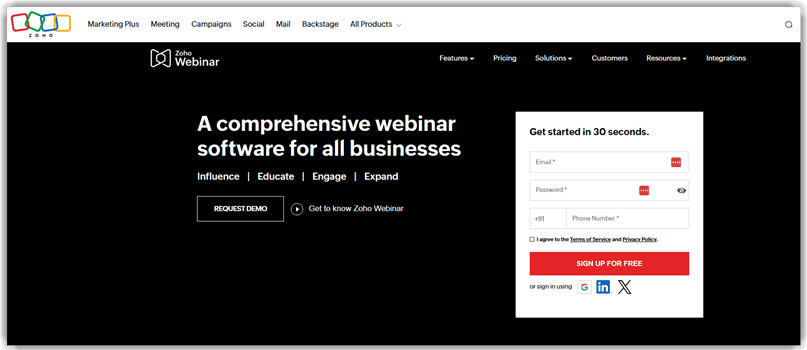
Zoho Webinar is a browser-based live streaming and webinar platform I reach for when I need to host a large audience and push the same session out to YouTube Live or Facebook Live. I could run the event from my browser, share my screen, bring co-organizers on stage, and keep attendees involved with polls, Q&A, and hand raising without forcing anyone to install extra software.
What stood out during testing was how cleanly it handled registration, moderator controls, and CRM follow-up after the stream ended. I livestreamed a product demo to social and still had a cloud recording I could share on demand, which made it feel like a live studio and a lead-capture tool in one.
Features:
- YouTube and Facebook Live Streaming: Paid plans let me livestream the webinar to YouTube Live and Facebook Live from the same session. I used this for a product launch and reached people who never registered for the webinar itself. It is the simplest way I have found to turn one broadcast into a multi-platform live stream.
- Browser-Based Broadcast Studio: I hosted and joined from a modern browser with no extra download for organizers or attendees. That cut setup time before I went live and kept late joiners from bouncing on an installer. I suggest testing your camera and mic in the browser studio a few minutes before showtime.
- Interactive Audience Tools: I used polls, Q&A, hand raising, public chat, and emoji reactions to keep a large audience involved during the stream. Questions stayed organized instead of disappearing into a generic chat flood. I liked how I could answer in public or privately without breaking the presentation flow.
- Screen Sharing and Moderator Controls: I shared my screen, an app window, or a second monitor while deciding what actually appeared on stage. Muting, removing, or promoting attendees kept the live feed clean when someone joined with noisy audio. You will notice the broadcast looks more produced when you control the stage instead of showing every tile.
- Session Recording and On-Demand Access: I recorded the webinar, stored the paid-plan recording in the cloud, and shared it with people who missed the live event. That gave me an on-demand version without a second production pass. I often clip the recording into short recaps after the livestream ends.
- CRM Integrations and Analytics: Zoho Webinar connects with Zoho CRM, HubSpot, Zoho Campaigns, Zapier, and Zoho Flow so I could push registrants into follow-up workflows. After the stream I reviewed registration, attendance, poll, and engagement reports and exported the data. I recommend tagging the traffic source before you promote the event so the reports stay useful.
Pros
Cons
14-Days Free Trial (No Credit Card Required)
4) StreamYard
StreamYard makes professional live broadcasting remarkably accessible, even for those with minimal setup. While testing it, I was genuinely impressed by how easily I could launch a stream directly from my browser and connect with audiences on multiple platforms. Its adaptive layout management, live chat integration, and custom branding options gave my streams a polished and engaging look without the need for external tools.
I appreciated how StreamYard handled stream overlays, scene transitions, and real-time collaboration. It’s perfect for interviews, webinars, or virtual conferences where seamless communication and audio mixing are essential. For anyone wanting to elevate their broadcasts with simple yet robust production tools, StreamYard delivers consistent quality and reliability.

Features:
- Screen Recording Capability: OBS Studio makes screen recording effortless with a scene-by-scene setup. You can capture tutorials, gameplay, or presentations without additional software. I’ve recorded multi-window content seamlessly, and the quality remained pristine even in long sessions.
- Plugin and Extension Support: OBS Studio boasts an extensive plugin ecosystem, enabling advanced overlays, analytics, and automation. I integrated a stream alert plugin to notify me of real-time chat engagement—an incredible addition for audience interaction.
- Content Creation and Management: This allows you to record, edit, and stream high-quality video and audio content directly from your computer. I’ve used it for several real-time sessions, and it never lagged even under multi-input conditions. It’s intuitive once you get used to the layout. I suggest organizing your scenes in advance to ensure seamless transitions during live broadcasts.
- Participant Management: It lets you manage participant visibility based on the streaming platform rather than internal limitations. I found this particularly helpful while hosting collaborative sessions on Twitch and YouTube Live. This flexibility ensures a clutter-free screen layout and maintains visual balance throughout the stream.
- Customization Options: You can easily tweak every detail—from hotkeys to audio filters—through the settings panel. While using this, I loved how deeply customizable each source and scene could be. The tool lets you adjust parameters for each device independently, which enhances fine-grained control during multi-camera setups.
- Local Video Hosting: OBS Studio automatically stores all recordings locally, giving you total control over your content archive. I once lost internet mid-session, and thanks to this capability, the recording continued smoothly without interruptions. It’s an essential safeguard for professional streamers who value reliability and privacy.
Pros
Cons
5) ManyCam
ManyCam is the desktop live-streaming and virtual-camera app I open when one webcam has to look like a small production. I can multicast to Facebook, YouTube, Twitch, or any RTMP destination at the same time, switch scenes, and stack picture-in-picture layers without standing up a separate studio.
What I keep coming back to is the virtual camera. The same layout, background, and lower thirds drop into Zoom, Teams, Google Meet, or Webex, and I can still record the live window while the broadcast is already going out.

Features:
- Multicast Streaming: I broadcast to Facebook, YouTube, Twitch, or a custom RTMP endpoint from the same desktop session. I used it for a demo that had to hit two platforms at once, and the feeds stayed in sync without a second encoder.
- Virtual Camera Output: ManyCam sits in front of Zoom, Microsoft Teams, Google Meet, and Webex as my camera. I keep one branded layout whether I am live on YouTube or on a client call.
- Picture-in-Picture Layers: I stack a webcam, a screen share, and slides into one frame with resizable layers and saved presets. Switching layouts mid-stream is what makes a solo broadcast look produced.
- Virtual Backgrounds: I blur, remove, or replace the background without a green screen. The cutout held up in a normally lit room, which is the setup I actually stream from.
- Live Window Recording: I record the main output with one click while the stream is running. That left me a clean file to cut into clips after the broadcast ended.
- Extra Camera Sources: I add a phone, a document camera, or an NDI feed as another angle. It is the simplest way I have found to get a second shot without a capture card.
Pros
Cons
6) OBS Studio
OBS Studio stands out as an open-source powerhouse for streamers who want full control over their production environment. When I used it for the first time, I was amazed at how efficiently it managed real-time video encoding, audio mixing, and multi-scene transitions—all without any subscription cost. The tool’s flexibility allows creators to configure everything from stream overlays and screen capture to custom bitrate streaming with professional-grade precision.
Its browser source support and virtual camera output make OBS Studio ideal for streaming to platforms like Twitch, YouTube, or Facebook. With recording options, adaptive bitrate settings, and an active community offering plugins, OBS Studio empowers streamers to create high-quality broadcasts that rival paid alternatives.

Features:
- Content Creation and Management: This allows you to record, edit, and stream high-quality video and audio content directly from your computer. I’ve used it for several real-time sessions, and it never lagged even under multi-input conditions. It’s intuitive once you get used to the layout. I suggest organizing your scenes in advance to ensure seamless transitions during live broadcasts.
- Participant Management: It lets you manage participant visibility based on the streaming platform rather than internal limitations. I found this particularly helpful while hosting collaborative sessions on Twitch and YouTube Live. This flexibility ensures a clutter-free screen layout and maintains visual balance throughout the stream.
- Customization Options: You can easily tweak every detail—from hotkeys to audio filters—through the settings panel. While using this, I loved how deeply customizable each source and scene could be. The tool lets you adjust parameters for each device independently, which enhances fine-grained control during multi-camera setups.
- Local Video Hosting: OBS Studio automatically stores all recordings locally, giving you total control over your content archive. I once lost internet mid-session, and thanks to this capability, the recording continued smoothly without interruptions. It’s an essential safeguard for professional streamers who value reliability and privacy.
- Screen Recording Capability: OBS Studio makes screen recording effortless with a scene-by-scene setup. You can capture tutorials, gameplay, or presentations without additional software. I’ve recorded multi-window content seamlessly, and the quality remained pristine even in long sessions.
- Plugin and Extension Support: OBS Studio boasts an extensive plugin ecosystem, enabling advanced overlays, analytics, and automation. I integrated a stream alert plugin to notify me of real-time chat engagement—an incredible addition for audience interaction.
Pros
Cons
Link: https://obsproject.com/
7) Wirecast
Wirecast is a professional-grade live streaming software designed for users who demand broadcast-quality production. I was genuinely impressed by how effortlessly it handled real-time video encoding and adaptive bitrate streaming, even with multiple camera inputs. Its chroma keying, animated graphics, and layer-based compositing helped me achieve a polished, television-level stream without requiring external plugins.
While streaming a live sports event, I found its instant replay and multi-platform broadcasting invaluable. The ability to integrate stream overlays and manage scene transitions seamlessly made every broadcast visually dynamic and production-ready.

Features:
- Source Capture: This feature lets you capture anything from IP cameras, screen shares, or connected devices like HDMI and SDI inputs. It’s highly flexible for real-time video encoding. I’ve used it to broadcast sports events seamlessly, switching between multiple sources without frame drops. The capture fidelity is exceptional, even under heavy CPU load.
- Remote Guest Integration: You can invite remote participants using Wirecast Rendezvous, accommodating up to seven guests. It’s incredibly useful for interviews and live panels. I once used it to co-host a multi-speaker virtual event, and it maintained stable sync and clear audio throughout the session. It’s a great tool for dynamic, collaborative broadcasts.
- Advanced Compositing Engine: Wirecast’s layer-based compositing gives you full creative control over stream overlays, transitions, and multi-camera layouts. I found this especially powerful when creating custom-branded scenes for corporate events. I suggest saving frequently used templates — it speeds up production and keeps visuals consistent across sessions.
- Adaptive Bitrate Streaming: This feature intelligently adjusts the streaming bitrate based on your network stability. It ensures smooth streaming even during sudden bandwidth drops. While testing, my connection briefly fluctuated, but viewers never noticed any buffering. You can depend on it for broadcast-grade reliability.
- Chroma Key: The chroma key feature performs beautifully, allowing crisp virtual backgrounds with accurate edge detection. I used it for a product launch stream, and the virtual set looked remarkably professional. You will notice that proper lighting drastically improves chroma results — invest in even lighting to avoid spill shadows.
- Instant Replay & Scoreboard: This is a gem for sports broadcasting. The replay system allows instant playback of key moments, complete with customizable scoreboard graphics. During a local esports tournament, this feature was invaluable for highlighting winning moments. It brings a genuine TV-production feel to your streams.
Pros
Cons
Link: https://www.wirecast.io/
8) OneStream
OneStream offers a seamless all-in-one solution for multi-platform broadcasting and pre-recorded streaming. I liked how it simplified complex setups by integrating cloud-based storage and browser source support directly into its interface. Its stream scheduling and analytics dashboard helped me optimize engagement while maintaining stream quality across various platforms.
During a recent multi-channel product demo, I scheduled my pre-recorded video to stream simultaneously on YouTube and Facebook. Watching the adaptive bitrate streaming maintain perfect sync across all platforms reinforced how practical and reliable OneStream truly is for creators and professionals alike.

Features:
- Multi-Streaming Capabilities: You’ll love how this feature simplifies real-time broadcasting across multiple platforms like YouTube, Facebook, and LinkedIn. It lets you connect with wider audiences simultaneously without technical hassles. I’ve used this during a product launch—seeing engagement triple across channels was impressive.
- Visual and Audio Enhancements: This feature empowers you to add background visuals, music overlays, and media elements that elevate your stream’s production quality. It feels like directing your own live show, blending crisp audio and stunning visuals for maximum viewer impact.
- Cloud Integrations: The integration with cloud storage services like Google Drive and Dropbox is a time-saver. You can directly import videos without worrying about upload limits. While testing this, I noticed how smoothly it synced large files—ideal for teams handling frequent live content.
- Screen Recording: This feature lets you record and repurpose your live sessions for future use. It’s particularly handy for educational or promotional content. I’ve used it to create highlight reels after webinars—saving both time and editing effort.
- Embedded Player: OneStream’s embedded player allows you to stream directly on your website with zero fuss. It gives brands full control over their audience experience while keeping them within their ecosystem. You will notice this works best for maintaining consistent viewer engagement and boosting watch time.
- Customization and Branding: The tool supports stream overlays, custom logos, and watermarks, allowing you to align every broadcast with your brand identity. It’s an essential touch for businesses looking to reinforce their professional image across platforms.
Pros
Cons
Link: https://onestream.live/
9) Lightstream
Lightstream is a cloud-based live streaming tool built for creators who value flexibility and simplicity. I appreciated how its intuitive interface automatically optimized my stream layout and branding without manual setup. Its browser-based editing tools, combined with real-time overlays and live chat integration, offered a studio-like experience straight from my browser.
While streaming gameplay from my console, Lightstream’s virtual camera output and cloud capture made it effortless to broadcast directly to Twitch in HD. The adaptive design and collaborative features ensured I stayed connected with my audience in real time without worrying about hardware limitations.

Features:
- On-the-Go Broadcasting: This feature empowers you to go live instantly from your iOS or Android device without any additional hardware. I tried it during an outdoor event, and it maintained excellent connection stability. It’s perfect for real-time mobile streaming.
- Audience Interaction Tools: Designed to build stronger viewer relationships, this feature includes analytics and engagement widgets that make every broadcast feel dynamic. I’ve found that using on-screen alerts encourages higher chat participation. You will notice the difference in audience retention almost immediately.
- Console-to-Cloud Streaming: Lightstream lets gamers stream directly from Xbox or PlayStation to Twitch or YouTube — no capture card required. While testing this, I admired how cloud processing managed encoding efficiently. It’s a powerful option for console creators who want professional-quality visuals.
- Unified Platform Connectivity: The platform syncs smoothly with Twitch, Facebook Live, and YouTube, plus supports custom RTMP endpoints. I’ve streamed multi-platform charity events effortlessly using it. The seamless integration truly enhances professional reach and real-time video encoding flexibility.
- Collaborative Studio Sessions: You can host up to ten live guests in one session, making it great for talk shows, interviews, or online panels. I once hosted a cross-country discussion using this feature, and the real-time sync worked flawlessly. It’s a strong asset for community-driven streams.
- Integrated Capture Suite: Lightstream’s built-in screen recorder captures gameplay, presentations, or behind-the-scenes sessions directly. I often use it to create short-form highlight reels for social media. The recordings automatically sync to the cloud, eliminating manual transfers.
Pros
Cons
Link: https://golightstream.com/
10) XSplit
XSplit is purpose-built for gaming enthusiasts and content creators who want control without complexity. While testing it, I was struck by how seamlessly it handled real-time video encoding and audio mixing without impacting my system’s performance. With support for adaptive bitrate streaming and dynamic scene transitions, every live session felt crisp and polished.
Its stream overlays, screen capture tools, and stream key management make customizing broadcasts effortless. I particularly appreciated its virtual camera output and mobile integration, which let me manage transitions and interact with my audience in real time. XSplit truly bridges the gap between professional production and user-friendly design for every serious streamer.

Features:
- Scene Customization: This feature lets you create multiple custom scenes with dynamic layouts, perfect for seamless transitions during your broadcast. You can assign hotkeys to switch scenes instantly, which comes in handy during fast-paced live gaming sessions. I often use this while covering esports events, and the transitions look incredibly professional.
- Platform Integrations: You can broadcast directly to platforms like Twitch, YouTube, and Facebook Live with native integration support. It eliminates the need for complicated setup workflows, saving a lot of time during live sessions. I suggest linking your social media channels beforehand to enable one-click live broadcasting.
- Virtual Camera Output: This functionality turns your XSplit output into a camera source for apps like Zoom, Google Meet, or Microsoft Teams. It’s a handy option when you want professional-quality video production during webinars or virtual events. I used it for a corporate presentation, and the difference in visual quality was immediately noticeable.
- Stream Overlays: The built-in overlay editor allows adding alerts, text, donation pop-ups, and widgets seamlessly. I used this to display follower alerts during a charity stream, and it added a professional, interactive touch. Custom branding elements can be imported easily, giving your stream a unique personality.
- Audio Mixing: XSplit’s intuitive audio mixer enables real-time volume balancing and supports multiple input sources like game, mic, and background music. I often adjust each track during live commentary to maintain a polished sound balance. This feature’s precise control helps maintain professionalism, especially in collaborative broadcasts.
- Analytics Dashboard: You can track live stream performance metrics, such as viewer engagement, dropped frames, and average bitrate. This data helps you fine-tune your stream settings for future sessions. While testing, I found these insights invaluable for optimizing quality and understanding audience behavior.
Pros
Cons
Link: https://www.xsplit.com/broadcaster
Feature Comparison: Best Free Live Streaming Software
You use the table below for a quick comparison of the streaming apps mentioned above:
| Feature | Restream | Upstream | Zoho Webinar | StreamYard |
| Multistreaming | ✔️ | ✔️ | ✔️ | ✔️ |
| Browser-based streaming | ✔️ | ✔️ | ✔️ | ✔️ |
| Custom RTMP support | ✔️ | ✔️ | ❌ | ✔️ |
| Overlays & Graphics | ✔️ | ✔️ | ✔️ | ✔️ |
| Recording Option | ✔️ | ✔️ | ✔️ | ✔️ |
| Guest Invitations | ✔️ | ✔️ | ✔️ | ✔️ |
| Ease of Use | ✔️ | ✔️ | ✔️ | ✔️ |
What Are Live Streaming Software and How Do They Work?
Live streaming software are specialized tools that help you capture, mix, and broadcast video and audio content to online platforms in real time. They act as a bridge between your camera, microphone, and streaming platform, letting you create professional-quality live videos with graphics, overlays, and multiple sources. These tools are used by content creators, gamers, educators, and businesses to produce polished, interactive live streams that attract and engage audiences.
They work by encoding your video and audio into digital signals, compressing them for smooth delivery, and sending the stream to platforms like YouTube or Twitch through streaming protocols such as RTMP or SRT. Most software also provides options for screen sharing, transitions, and real-time editing, allowing complete control over how your broadcast looks and feels.
How to Troubleshoot Common Issues of Live Streaming Software?
In this section, I will take you through the best tips to solve the common challenges you face while using live streaming software:
- Issue: Video quality becomes blurry or pixelated during high-resolution live broadcasts.
Solution: Lower your stream bitrate and resolution to suit your internet speed. Test different configurations beforehand to maintain consistent, high-quality visuals. - Issue: Audio becomes desynchronized from video after several minutes of live streaming.
Solution: Adjust the audio sync offset in your streaming settings. Running short test recordings before going live helps maintain perfect lip-sync alignment. - Issue: The live stream frequently pauses or buffers due to unstable network conditions.
Solution: Connect via Ethernet instead of Wi-Fi and close background apps. Performing a network speed test ensures stable upload bandwidth for smooth streaming. - Issue: Dropped frames create choppy visuals, especially when streaming graphically demanding content.
Solution: Lower the frame rate or reduce the encoder load. Update your GPU drivers and ensure no other high-performance applications are running simultaneously. - Issue: The computer overheats, and performance drops significantly during long streaming sessions.
Solution: Improve ventilation by using cooling pads or external fans. Close unnecessary tabs, limit multitasking, and monitor CPU usage throughout the broadcast. - Issue: Viewers report annoying background noise, echo, or static during your stream.
Solution: Enable noise suppression filters, use a cardioid microphone, and avoid hard surfaces nearby. Additionally, continually monitor your audio feed through headphones for clarity. - Issue: The live stream unexpectedly disconnects or crashes midway through a broadcast.
Solution: Enable auto-reconnect features in your software and verify network stability. Regularly check firewall and antivirus permissions that might interrupt software connectivity. - Issue: Display capture shows a black screen or fails to record the correct window.
Solution: Run the program with administrator privileges and check screen capture permissions. Updating graphics drivers usually resolves compatibility issues efficiently. - Issue: Viewers experience a significant delay between real-time actions and broadcast playback.
Solution: Enable low-latency streaming mode and reduce buffer size. Test latency before live sessions to enhance real-time interaction and viewer engagement. - Issue: On-screen graphics, text overlays, or animations fail to appear during streaming.
Solution: Re-order your scene layers to ensure overlays sit above video sources. Use transparent PNG files and verify resolution compatibility for clean visuals.
What Is Multistreaming and Why Does It Matter?
Multistreaming means broadcasting your live content to multiple platforms simultaneously — for example, YouTube, Facebook, Twitch, and LinkedIn. Tools like Restream, OneStream Live, and other proven OneStream Live alternatives make this seamless, letting you expand audience reach without extra bandwidth or setup hassle.
This feature is essential for brand growth, as it ensures your content reaches different audience segments at once. Instead of manually running several streams, multistreaming software manages distribution and chat integrations automatically. It’s a smart way to maximize visibility, boost engagement, and grow faster without needing multiple devices or complex technical setups.
How Did We Select the Best Live Streaming Software?
At Guru99, we take pride in delivering well-researched, unbiased, and expert-tested recommendations. We invested over 160 hours researching and testing more than 35 live streaming tools to compile this comprehensive guide. Backed by firsthand experience, our analysis ensures that every recommendation reflects quality, usability, and performance.
- Ease of Use: Our reviewers focused on tools offering intuitive interfaces suitable for both beginners and professional streamers.
- Streaming Quality: We prioritized platforms that deliver consistent, high-resolution, and lag-free streaming performance during real-world tests.
- Compatibility: Our research team evaluated software compatibility across popular operating systems, browsers, and streaming platforms.
- Customization Options: We selected tools that allow easy customization of layouts, overlays, and scenes to match individual branding needs.
- Integration Support: The experts considered seamless integration with social media, video conferencing apps, and third-party plug-ins.
- Pricing Transparency: We examined cost structures, ensuring that each shortlisted tool provides clear and fair pricing, including free versions.
- Technical Support: Our reviewers assessed the responsiveness and reliability of customer support teams for troubleshooting and setup guidance.
- Security & Privacy: The team emphasized tools with secure streaming protocols and strong user data protection policies.
- Performance Stability: We tested how each tool performed under heavy streaming loads to guarantee reliability during live broadcasts.
- User Feedback: Our research group reviewed verified user experiences and community feedback to validate long-term satisfaction and credibility.
Verdict
After carefully analyzing and testing each of the above live streaming tools, I can confidently say that all of them perform reliably and offer distinctive advantages for different use cases. My evaluation process involved comparing interface usability, streaming stability, integrations, and feature flexibility. Every tool I tried demonstrated solid performance and thoughtful design, but three of them truly stood out during my analysis.
Zoho Webinar is my recommendation when I want a browser-based live webinar that can also stream to YouTube Live and Facebook Live. I launch from the browser, share my screen, and keep attendees involved with polls, Q&A, and hand raising.
- Restream : I was genuinely impressed by Restream’s multi-channel broadcasting capabilities and effortless setup process. It stood out to me because it enables users to stream simultaneously across multiple platforms without compromising quality. My analysis also found its integrations with OBS and XSplit particularly seamless and time-saving.
- Upstream : I was genuinely impressed by Upstream’s cloud-based approach that handles pre-recorded, 24/7, and live studio broadcasts without taxing system resources. It stood out for its powerful Stream Designer overlay editor and seamless multistreaming to up to 10 channels. My analysis confirmed it’s an excellent choice for creators who want professional-quality broadcasts entirely from the browser.
- Zoho Webinar : I was genuinely impressed by how easily I could host a webinar from the browser and livestream it to YouTube and Facebook. Its polls, Q&A, moderator controls, and CRM integrations gave my broadcasts a polished, follow-up-ready workflow without extra software.
