
10 BEST C++ Programming Books for Beginners (2026)
 Editorial Team
We are reader supported and may earn a commission when you buy through links on our site
C++ is a general-purpose programming language used for software, games, embedded systems, and other applications that need speed and direct control over computer resources. It builds on ideas from C while supporting classes, objects, templates, and several programming styles.
Learning C++ can feel difficult because the language includes many rules, tools, and standards. A well-chosen book can explain these topics in a clear order and provide examples you can practice.
This guide compares C++ books for beginners, students, and experienced programmers. It covers step-by-step tutorials, quick references, object-oriented programming, modern C++ practices, and Standard Template Library recipes, helping you choose a book that matches your skills and learning goals closely. Read more…
Best C++ Programming Books
| Book Title | Author Name | Latest Edition | Publisher | Ratings | Link |
|---|---|---|---|---|---|
| C++ Primer 5th Edition | Stanley Lippman | 5th edition | Addison-Wesley |  |
Learn More |
| C++ Pocket Reference 1st Edition | Kyle Loudon | 1st edition | O′Reilly |  |
Learn More |
| C++ in One Hour a Day, Sams Teach Yourself 8th Edition | Siddhartha Rao | 8th edition | Sams Publishing | |
Learn More |
| C++ All-in-One For Dummies 3rd Edition | Jeffrey M. Cogswell | 3rd edition | For Dummies | |
Learn More |
| C++: The Complete Reference Fourth Edition | Herbert Schildt | 4th edition | McGraw Hill Education | |
Learn More |
Ratings: These ratings come from Amazon book listings, not Guru99. They may vary by book edition or seller. Ratings, publisher names, and edition details were checked in October 2026.
1) C++ Primer 5th Edition
Author Name: Stanley Lippman
Publisher: Addison-Wesley
Latest Edition: 5th edition
No of Pages: 976 pages

C++ Primer, 5th Edition by Stanley B. Lippman, Josée Lajoie, and Barbara E. Moo is our top recommendation. It introduces the standard library early, so readers can write useful programs while learning core C++ concepts through examples and exercises.
The book covers the C++11 standard in depth, including classes, templates, containers, algorithms, copy control, and object movement. Its 976 pages make it a detailed course and reference, but complete beginners may find the pace dense. Check current documentation when working with features added after C++11.
What You’ll Learn:
- Use the standard library while learning core language concepts
- Write functions, classes, templates, and generic programs clearly
- Manage strings, vectors, iterators, containers, and algorithms safely
- Understand copy control, object movement, and dynamic memory
- Apply exceptions, inheritance, polymorphism, and operator overloading correctly
- Practice concepts through examples, exercises, and larger programs
Best For: Beginners with some programming patience who want a detailed C++11 tutorial, standard library coverage, exercises, and a lasting desk reference.
2) C++ Pocket Reference 1st Edition
Author Name: Kyle Loudon
Publisher: O′Reilly
Latest Edition: 1st edition
No of Pages: 144 pages

C++ Pocket Reference by Kyle Loudon is a compact lookup guide, not a step-by-step course. It covers types, conversions, expressions, declarations, statements, pointers, strings, classes, inheritance, templates, exceptions, namespaces, scope, and selected standard library topics.
Its small format helps programmers check unfamiliar syntax without searching through a large textbook. O’Reilly lists it as an intermediate-to-advanced reference published in 2008, so its language coverage is old. Use current documentation for newer standards, library additions, and recommended practices.
What You’ll Learn:
- Check C++ types, conversions, declarations, and expressions quickly
- Review statement syntax and common preprocessor directives easily
- Look up arrays, pointers, strings, and memory rules
- Refresh classes, inheritance, templates, and operator overloading concepts
- Find namespace, scope, exception, and casting syntax quickly
- Use standard library headers and stream references efficiently
Best For: C or Java programmers needing a compact C++ reference for occasional work, quick lookups, and review of older language rules.
3) C++ in One Hour a Day, Sams Teach Yourself 8th Edition
Author Name: Siddhartha Rao
Publisher: Sams Publishing
Latest Edition: 8th edition
No of Pages: 800 pages

C++ in One Hour a Day, Sams Teach Yourself, 8th Edition by Siddhartha Rao divides C++ into short lessons. It starts with variables, arrays, strings, functions, pointers, and references, then moves to classes, inheritance, polymorphism, templates, and the Standard Template Library’s containers and algorithms.
Exercises at the end of each lesson support self-study, and the book covers C++14 with a preview of C++17. InformIT now lists the print book as out of print. Check the seller, format, and condition before buying, and use current documentation for later standards.
What You’ll Learn:
- Build programs using variables, expressions, arrays, and strings
- Organize code with functions, pointers, and references correctly
- Create classes using inheritance, polymorphism, and operator overloading
- Use templates, smart pointers, lambdas, and move constructors
- Work with STL containers, iterators, algorithms, stacks, and queues
- Check progress through exercises after each short lesson
Best For: Complete beginners who prefer short lessons, daily practice, end-of-lesson exercises, and gradual coverage from syntax through object-oriented programming and STL.
4) C++ All-in-One For Dummies 3rd Edition
Author Name: Jeffrey M. Cogswell
Publisher: For Dummies
Latest Edition: 3rd edition
No of Pages: 864 pages

C++ All-in-One For Dummies, 3rd Edition by John Paul Mueller and Jeffrey M. Cogswell combines several topic guides in one volume. It covers language basics, objects, classes, templates, standard library features, lambda expressions, coding tools, and troubleshooting.
The broad structure helps readers move between learning and reference tasks without changing books. Wiley published this edition in 2014, so examples and tooling do not reflect every later C++ standard. It also covers many topics quickly, which may leave difficult memory and template concepts needing another source.
What You’ll Learn:
- Set up tools and write basic C++ programs
- Work with variables, functions, classes, and objects correctly
- Use templates and standard library containers in programs
- Write shorter code with practical lambda expressions correctly
- Find common errors through debugging and troubleshooting methods
- Move from basic syntax toward advanced programming topics
Best For: Beginners and returning programmers wanting one broad guide to C++ basics, object-oriented coding, templates, debugging, and standard library practice exercises.
5) C++: The Complete Reference Fourth Edition
Author Name: Herbert Schildt
Publisher: McGraw Hill Education
Latest Edition: 4th edition
No of Pages: 832 pages

C++: The Complete Reference, Fourth Edition by Herbert Schildt is a large lookup guide for core language features. It covers syntax, expressions, control statements, functions, arrays, pointers, classes, inheritance, templates, exceptions, namespaces, input and output, and standard library fundamentals.
McGraw Hill published this edition in 2002, so it predates C++11 and later standards. That age limits its value for learning modern ownership, move semantics, lambdas, and newer library tools. It is better for older codebases and language history than as the only guide for a new project.
What You’ll Learn:
- Review C++ syntax, expressions, statements, and functions carefully
- Work with arrays, pointers, references, and dynamic memory
- Create classes using inheritance and virtual functions properly
- Understand templates, exceptions, namespaces, and operator overloading clearly
- Use input, output, files, and library fundamentals correctly
- Recognize older language practices in existing C++ codebases
Best For: Programmers maintaining older C++ code who need a broad reference for syntax, pointers, classes, templates, exceptions, and core library fundamentals.
6) Starting Out with C++ from Control Structures to Objects plus
Author Name: Tony Gaddis
Publisher: Pearson College Div
Latest Edition: Student edition
No of Pages: 1238 pages

Starting Out with C++ from Control Structures through Objects by Tony Gaddis follows a classroom-style path. It teaches control structures, functions, arrays, and pointers before introducing objects and classes. Code listings, worked examples, review questions, and exercises support steady practice.
The gradual order suits readers with no programming background, but the full textbook is much longer than a quick self-study guide. Pearson now lists newer editions than the student edition shown in the preserved card. Confirm which edition the affiliate link opens before changing its book details.
What You’ll Learn:
- Solve programming problems with clear step-by-step planning methods
- Use decisions, loops, functions, arrays, and pointers correctly
- Build classes and objects after learning procedural foundations
- Read and adapt complete C++ code examples confidently
- Practice each chapter with review questions and exercises
- Connect basic programming ideas to larger program designs
Best For: Students and complete beginners who want a classroom-style path through problem solving, control structures, functions, arrays, pointers, objects, and classes.
7) Effective Modern C++
Author Name: Scott Meyers
Publisher: O′Reilly
Latest Edition: 1st edition
No of Pages: 336 pages

Effective Modern C++ by Scott Meyers explains how C++11 and C++14 change everyday programming decisions. Its guidelines cover type deduction, smart pointers, move semantics, perfect forwarding, lambda expressions, concurrency, braced initialization, and the relationship between std::move and std::forward.
Each guideline includes the reason behind the advice, which helps readers decide when an exception makes sense. This is not an introductory syntax book, and it does not cover standards after C++14. Readers should know classes, templates, and the standard library before starting it.
What You’ll Learn:
- Apply type deduction rules without hiding important behavior
- Choose smart pointers for clear resource ownership models
- Understand move semantics, forwarding, and reference collapsing deeply
- Write safer lambda expressions and capture lists correctly
- Compare atomic values with volatile language behavior accurately
- Update older C++ habits for C++11 and C++14
Best For: Intermediate and experienced C++ developers who know the basics and want practical guidance for writing safer C++11 and C++14 code.
8) Object-Oriented Programming In C++ 4th Edition
Author Name: Robert Lafore
Publisher: Sams
Latest Edition: 4th edition
No of Pages: 1040 pages
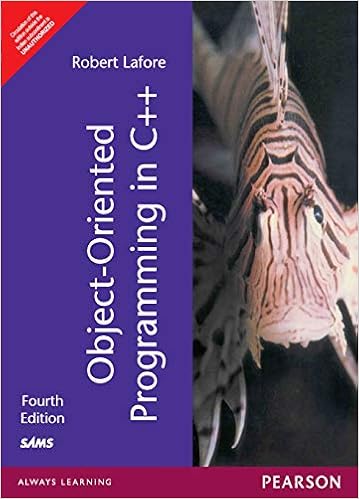
Object-Oriented Programming in C++, 4th Edition by Robert Lafore starts with basic syntax and gradually builds toward object-oriented design. It covers classes, objects, operator overloading, inheritance, pointers, virtual functions, streams, templates, exceptions, the standard library, and multifile programs.
The detailed examples give learners plenty of material for understanding classic object-oriented C++. InformIT published this edition in 2001, and several appendixes refer to tools from that period. Use it for OOP foundations, but check modern guidance for ownership, tooling, standards, and library use.
What You’ll Learn:
- Build classes and objects from basic language foundations
- Apply inheritance, virtual functions, and polymorphism correctly in programs
- Overload operators while keeping class behavior understandable and predictable
- Use pointers, streams, files, templates, and exceptions safely
- Organize larger programs across several source files clearly
- Connect C++ syntax with object-oriented software design principles
Best For: Learners focused on object-oriented programming who want detailed examples of classes, inheritance, virtual functions, operator overloading, templates, and software design.
9) C++ Programming: From Problem Analysis to Program Design 3rd Edition
Author Name: D. S. Malik
Publisher: Course Technology Inc
Latest Edition: 3rd edition
No of Pages: 1344 pages

C++ Programming: From Problem Analysis to Program Design, 3rd Edition by D. S. Malik is built for an introductory programming course. It connects problem analysis with program design and covers object-oriented methods, sorting algorithms, abstract classes, worked examples, and expanded chapter exercises.
The structured textbook format suits students who need practice beyond syntax, including calculus and engineering-related problems. This requested third edition is old, while Cengage now lists a much newer edition. Keep the third edition only when it matches the course or affiliate destination you need.
What You’ll Learn:
- Turn problem statements into clear program designs systematically
- Write C++ solutions using structured programming techniques correctly
- Apply object-oriented design methods to class-based programs correctly
- Understand sorting algorithms and abstract class concepts clearly
- Practice with expanded calculus and engineering-related exercises regularly
- Review complete examples before solving chapter assignments independently
Best For: Students following an introductory programming course who need structured problem analysis, program design, end-of-chapter exercises, and additional math-related practice problems.
10) C++17 STL Cookbook
Author Name: Jacek Galowicz
Publisher: Packt Publishing
Latest Edition: 1st edition
No of Pages: 534 pages

C++17 STL Cookbook by Jacek Galowicz uses focused recipes to teach standard library techniques. It covers containers, iterators, algorithms, lambda expressions, functional programming, structured bindings, filesystem tools, parallelism, concurrency, and other additions introduced through C++17.
The problem-and-solution format helps readers apply library features to small working tasks. It assumes basic C++ knowledge and does not teach the language from the beginning. Packt lists 532 pages, while the preserved Lasso card says 534 pages, so confirm the linked format before changing that field.
What You’ll Learn:
- Use C++17 language additions in small practical recipes
- Choose suitable containers for common data handling tasks
- Combine iterators, algorithms, and lambda expressions effectively together
- Write functional-style code with modern standard library tools
- Handle filesystems, parallel work, and concurrency patterns safely
- Solve everyday STL problems through complete examples independently
Best For: Intermediate C++ programmers who already know syntax and want recipe-based practice with C++17 containers, algorithms, iterators, lambdas, concurrency, and filesystems.
How to Choose a C++ Book
Start with your current programming experience and the C++ standard used by your course or project. A complete beginner needs explanations, exercises, and a steady order. A working programmer may need a compact reference, modern coding guidance, or focused standard library recipes instead.
- For a detailed first course: Start with C++ Primer.
- For short daily lessons: Choose Sams Teach Yourself.
- For classroom exercises: Use Starting Out with C++.
- For modern guidance: Read Effective Modern C++.
- For quick syntax checks: Keep C++ Pocket Reference nearby.
- For STL recipes: Choose C++17 STL Cookbook.
Do You Need to Learn C Before C++?
You do not need to learn C first. C and C++ share some syntax, but they support different programming styles and have different standard libraries. Starting directly with C++ also lets you learn strings, containers, classes, references, and resource management without first building habits around C-only approaches.
Learn C first only when your course, job, or embedded project requires it. Otherwise, choose a beginner C++ book that teaches current language practices and compile every example yourself.
How to Practice C++ While Reading
Type each example, compile it, and change one part before moving on. Try different inputs, break the program on purpose, read the compiler message, and fix it. This shows how the language behaves more clearly than copying finished code.
Build small projects that use several chapters together, such as a grade tracker, text menu, inventory list, or file organizer. Use compiler warnings and current reference documentation when an older book teaches outdated syntax or library choices.
