
Payment Gateway Test Cases: Types & Checklist
 Editorial Team
⚡ Smart Summary
Payment Gateway Testing verifies that every online transaction is processed securely, accurately, and quickly. This page explains gateway types, testing methods, a preparation checklist, and twenty-one ready-to-use test scenarios that quality assurance teams apply to live checkout flows.
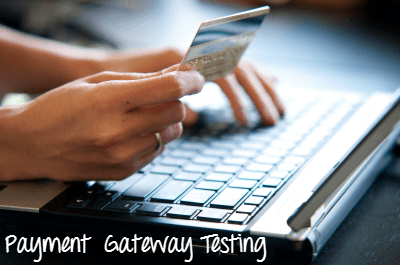
Payment Gateway Testing
Payment Gateway Testing is a testing of Payment Gateway in a system for online purchases and transactions by the users. The purpose of payment gateway testing is to ensure the security, reliability and performance of a payment gateway by encrypting and securing the payment details between user and merchant while providing a smooth payment experience.
A payment gateway system is an e-commerce application service that approves credit card payment for online purchases. Payment gateways safeguard the credit card details by encrypting sensitive information like credit card numbers, account holder details and so on. This information is passed safely between the customer and the merchant and vice versa. Modern payment gateways also securely approve payments via debit cards, electronic bank transfers, cash cards, reward points etc.
Because the gateway sits between shopper, merchant and bank, one defect there stops revenue immediately.
Join our Live Payment Gateway Testing Project for Free
Types of Payment Gateway System
Gateways differ in where the shopper enters card details, as shown below.
Hosted Payment Gateway
Hosted payment gateway system direct customer away from an e-commerce site to gateway link during the payment process. Once the payment is done, it will bring a customer back to an e-commerce site. For such type of payment you don’t need a merchant id, an example of a hosted payment gateway are PayPal, Noche, and WorldPay.
Shared Payment Gateway
In a shared payment gateway, while processing payment customer is directed to the payment page and stays on the e-commerce site. Once the payment detail is filled, the payment process proceeds. Since it does not leave the e-commerce site while processing payment, this mode is easy and more preferable, an example of a shared payment gateway is eWay, Stripe.
Self-hosted, API-hosted and mobile wallet gateways are further variants.
Why Payment Gateway Testing Matters
A checkout page is the last step between a shopper and revenue, so any defect there costs money the moment it appears. Systematic testing protects that step by finding problems before customers meet them.
- Protects revenue: A failed or slow transaction pushes shoppers to abandon the cart, and abandoned carts rarely come back.
- Builds trust: Masked card fields, encrypted traffic and clear confirmation messages reassure buyers that their money is handled properly.
- Prevents fraud losses: Verifying CVV rules, address verification and velocity checks stops fraudulent orders before goods are shipped.
- Keeps the merchant compliant: Card schemes demand strong customer authentication, and testing is the evidence those controls work.
- Reduces support cost: Duplicate charges, missing receipts and stuck refunds generate expensive tickets and chargebacks.
- Catches defects early: Fixing an integration bug in a sandbox costs a fraction of fixing it after a production outage.
These benefits depend on the right mix of test types, described next.
Testing Types for Payment Domain
Testing for Payment Gateway should include
Functional Testing: It is the act of testing the base functionality of the payment gateway. It is to verify whether the application behaves in the same way as it is supposed to be like handling orders, calculation, an addition of VAT as per the country etc.
Integration: Test integration with your credit card service.
Performance: Identify various performance metrics like the highest possible number of users coming through gateways during a specific day and converting them to concurrent users
Security: You need to perform a deep security pass for Payment Gateway.
Add localization testing for currency and language, compatibility testing for devices, and regression testing after every provider API update.
How to test Payment Gateway: Complete Checklist
Before you begin testing –
- Collect proper test data for the dummy credit card number for the maestro, visa, master etc.
- Collect payment gateway information like Google Wallet, Paypal or else
- Collect payment gateway document with error codes
- Understand the session and parameters passed through application and payment gateway
- Understand and test the amount related information passed through query string or variable or session
- Along with payment gateway language check the language of the application
- Under the various settings of payment gateway like currency format, subscriber data collected.
Tip: Map every expected failure to a documented provider error code, so a vague “payment did not work” defect becomes a reproducible ticket.
How to Set Up a Payment Gateway Test Environment
Reliable results start with an environment that behaves like production without moving real money. Almost every provider ships a sandbox that mirrors the live API but settles nothing, and that sandbox is where most payment gateway testing belongs.
- Request sandbox credentials. Obtain a separate merchant id, API key and secret, and store them outside the source repository.
- Point the application at the sandbox endpoint. Confirm from the network log that no request reaches the live gateway host.
- Load the official test cards. Every scheme publishes numbers that force a fixed outcome: approval, decline, insufficient funds, expired card or lost-card block.
- Never copy production data. PCI Security Standards Council rules forbid live cardholder data in test environments, so mask every record.
- Enable 3D Secure test mode. Trigger the frictionless and the challenge flow so redirect, timeout and cancel paths are exercised.
- Register a webhook receiver. Payment status often arrives asynchronously, so verify that capture, refund and chargeback notifications update the order record.
- Simulate network faults. Drop or delay responses through a proxy and confirm no duplicate charge appears when the shopper retries.
- Reset state between runs. Clear carts, sessions and stored tokens so a stale session does not mask a defect.
Keep a short runbook of sandbox URLs, test card numbers and expected response codes. It lets new testers reproduce any scenario immediately and doubles as audit evidence.
Warning: Never point a test suite at live credentials. A single stray authorisation on a real card is both a financial incident and a compliance breach.
Payment Gateway Test Cases Example
Following are important Test Scenarios/Cases to check Payment Gateway
| Sr# | Test Cases |
|---|---|
| 1 | During the payment process try to change the payment gateway language |
| 2 | After successful payment, test all the necessary components, whether it is retrieved or not |
| 3 | Check what happens if payment gateway stops responding during payment |
| 4 | During the payment process check what happens if the session ends |
| 5 | During the payment process check what happens in the backend |
| 6 | Check what happens if payment process fails |
| 7 | Check the Database entries whether they store credit card details or not |
| 8 | During the payment process check error pages and security pages |
| 9 | Check settings of pop-up blocker, and see what happens if a pop-up blocker is on and off |
| 10 | Between payment gateway and application check buffer pages |
| 11 | Check on successful payment, a success code is sent to the application and a confirmation page is shown to the user |
| 12 | Verify whether the transaction processes immediately or processing is hand to your bank |
| 13 | After successful transaction check if the payment gateway returns to your application |
| 14 | Check all format and messages when successful payment process |
| 15 | Unless you don’t have an authorization receipt from the payment gateway, good should not be shipped |
| 16 | Inform the owner for any transaction processed through e-mail. Encrypt the content of the mail |
| 17 | Check the amount format with currency format |
| 18 | Check if each of the payment options is selectable |
| 19 | Check if each listed payment option opens the respective payment option according to specification |
| 20 | Verify whether the payment gateway defaults to the desired debit/credit card option |
| 21 | Verify the default option for debit card shows card selection drop down menu |
The next decision is which of these scenarios deserve a script.
Manual vs Automated Payment Gateway Testing
Both approaches belong in a payment programme, and the useful question is which cases suit which method. Manual work is strongest on new integrations and anything needing human judgement. Automation earns its keep on stable, repetitive paths that must pass on every build.
| Aspect | Manual Testing | Automated Testing |
|---|---|---|
| Best suited for | Exploratory checks, first-time integrations, visual and wording review | Regression suites and smoke checks on every deployment |
| Speed | Slow; one tester runs one scenario at a time | Fast; many scenarios run in parallel |
| Cost profile | Low setup effort, high recurring effort | High setup effort, low recurring effort |
| Typical tooling | Browser developer tools and sandbox dashboards | Selenium, Appium, Postman for API checks |
| Main weakness | Hard to scale across many card types or load levels | Blind to layout and usability problems |
A practical split is to automate the successful, declined and refund paths for every card type, and reserve manual sessions for new gateway versions. Drive load profiles separately with JMeter.
Things to consider before Buying Gateway Package
- If you have bought a shopping cart package, find out about its compatibility
- If shopping gateway package is due, ask the payment gateway provider for a list of supported applications
- The gateway must offer Address Verification System Protection
- Find out the types of transaction protection being offered
- Check what types of debit or credit cards are accepted by your chosen payment gateway
- Check the transaction fees levied by a payment gateway
- Check whether the gateways collect the payment right on the form or direct to another page to complete the purchase
