
10 Best FREE Lead Management Software (2026)
 Editorial Team
Disclosure: Guru99 is reader-supported. We may earn a commission when you buy through links on this page. Learn more

Lead management software can create fresh frustration when poor results, unreliable routing, wasted setup time, confusing screens, hidden plan limits, and inconsistent follow-up disrupt sales work. Missed assignments leave promising inquiries unanswered, while duplicate records weaken reports and team confidence. Buyers often overlook data ownership, automation allowances, and upgrade costs. A suitable platform brings cleaner intake, faster responses, and dependable accountability. That clarity helps representatives prioritize prospects, managers measure conversions, and teams move forward with less uncertainty.
I spent nearly 90 research hours checking free access, trials, lead capture, routing, scoring, integrations, security, AI, and recurring user feedback. My in-depth research shortlisted ten Best FREE Lead Management Software options with distinct strengths and trade-offs. The evaluation covers features, pros and cons, backed-by current official evidence. Read more…

Zoho is a Sales CRM tool that helps you improve teams’ productivity with designs that are precise solutions to business activities. It is one of the best CRM for start-ups, providing an easy way to monitor key metrics and manage monthly targets.
Best Lead Management Software (Free & Paid)
| Tool | Zoho CRM |  Monday |  HubSpot |  Pipedrive |
| Features | ✔️ The team will always access the latest version of all project documents. ✔️ In-person Training is available. | ✔️ You can collaborate with your team in one shared workspace. ✔️ It helps your team to stay on track with sprints. | ✔️ Track emails, calls, and meetings on one timeline. ✔️ Get a live view of every deal in your sales funnel. ✔️ Automate repetitive lead follow-up tasks. ✔️ Sync contacts with Gmail and Outlook automatically. | ✔️ Create buyer personas using custom information fields. ✔️ It captures leads and converts them into happy customers. |
| Price | 15 Day Free Trial (No credit card required) | Free Forever Plan | Free Forever Plan | 30-Day Free Trial (No Credit Card Required) |
| Review/Rating |  4.7 | 4.5 | 4.5 | 4.5 |
| Link | Visit Website | Visit Website | Visit Website | Visit Website |
1) Zoho CRM
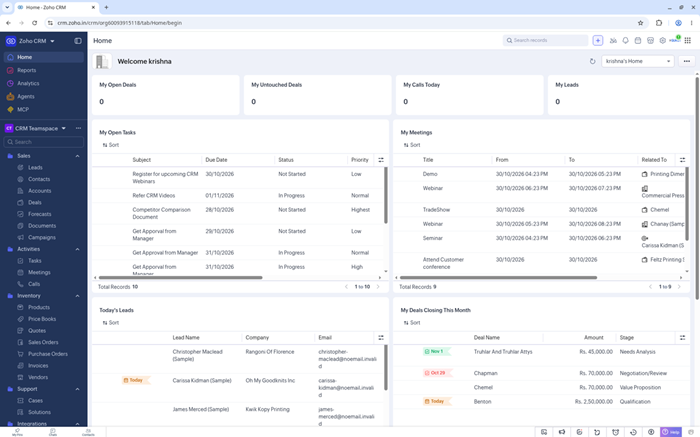
Zoho CRM gives sales teams a structured place for leads, contacts, deals, tasks, and meetings. Its free edition supports three users. Custom views and assignment rules help representatives organize inquiries, preserve activity history, and move qualified prospects into opportunities.
Paid editions add scoring, workflow automation, forecasting, and deeper reports. Email, mobile access, APIs, and Zoho integrations support broader routines. Its configuration range rewards patient setup because administrators must define fields and stages clearly. Teams can start free, test paid capabilities for 15 days, and expand without replacing records.
Features
- Lead Management: Capture leads, assign owners, record activities, and convert qualified prospects into contacts and deals while preserving useful sales history. This supports clearer pipeline reviews.
- Deal Pipelines: Track opportunities through configurable stages with values, probabilities, closing dates, and ownership details visible to the whole sales team. Teams gain more consistent ownership.
- Task Planning: Schedule calls, meetings, tasks, and reminders beside customer records so founders can follow up without maintaining separate lists. Founders avoid another manual spreadsheet.
- Custom Views: Filter CRM records by owner, status, source, date, or other fields to create focused working lists for daily outreach. That improves daily selling decisions.
- Reports: Build basic sales reports and dashboards from current records, helping small teams review pipeline activity, conversions, and representative workloads. This prepares each customer conversation.
- Mobile CRM: Access leads, contacts, deals, tasks, and notes from mobile applications when customer work happens away from a desk. Growing teams retain useful context.
- Integrations: Connect email, APIs, marketplace extensions, and other Zoho products as the startup adds marketing, support, finance, or analytics workflows. That supports later team expansion.
Pros
Cons
How to Get It Free?
- Open the tracked Zoho CRM page and select the free-edition signup option.
- Create the company account, invite teammates, and configure one lead pipeline.
- Keep three users on the free edition, or test paid features for 15 days.
Free for 3 users; 15-day paid trial
2) Monday CRM
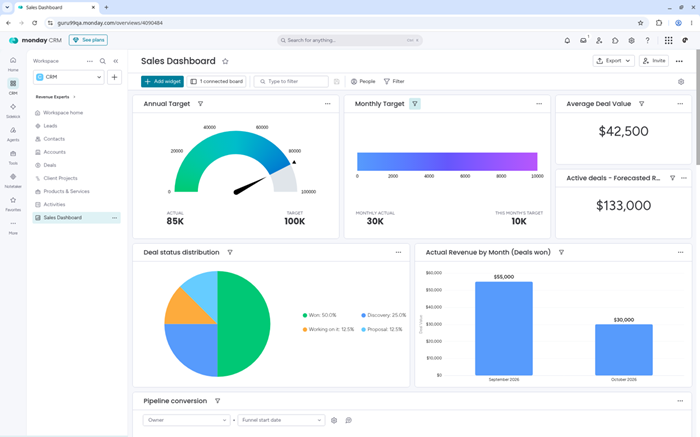
Monday CRM organizes leads, contacts, deals, emails, and activities through configurable visual boards. Teams can shape columns, stages, dashboards, and views around their sales process. Ownership and status fields make inquiries easy to scan, while connected records keep follow-up visible.
Automations can assign leads, schedule reminders, and update statuses after board events. Email tools and dashboards add customer context. The dedicated CRM lacks permanent free access, so buyers should treat its 14-day trial as a focused evaluation. Test imports, routing, reporting, and minimum-seat costs before committing.
Features
- Deal Boards: Arrange opportunities by stage, owner, value, expected date, and priority through flexible boards that mirror the team’s sales process. Users see cleaner activity patterns.
- Contact Records: Keep company details, communication history, activities, and related opportunities together so teammates can understand each relationship before responding. This clarifies shared account responsibility.
- Email Sync: Connect supported inboxes, log conversations, track engagement, and reuse templates while preserving messages beside the relevant customer record. Teams preserve important relationship context.
- Automations: Trigger assignments, reminders, notifications, and status changes from board events, reducing repetitive coordination across growing sales teams. That improves early revenue planning.
- Dashboards: Combine pipeline, target, activity, and forecast widgets into visual management views that update as connected boards change. Departments coordinate customer work consistently.
- AI Assistance: Summarize calls, prepare meetings, enrich information, and support prospecting through available AI features and plan-based credit allowances. This structures increasingly complex workflows.
- Integrations: Connect common productivity, communication, marketing, and work-management applications, with broader automation available on higher subscription levels. Small teams maintain faster sales routines.
Pros
Cons
How to Get It Free?
- Visit the tracked Monday CRM page and start the 14-day free trial.
- Import sample leads, assign owners, and configure one representative pipeline.
- Test the available CRM features, then choose a paid plan to continue.
14-day trial; no permanent CRM plan
3) HubSpot CRM
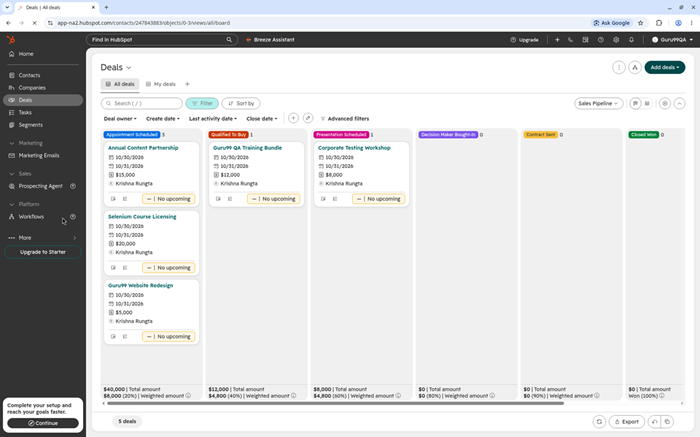
HubSpot CRM combines contact records, forms, pipelines, email tracking, meetings, and live chat. Its free tools support two users and 1,000 contacts. Marketing and sales activity appears within shared records, helping teams understand each inquiry before scheduling another call or task.
A large marketplace and learning resources support adoption. Paid editions add sequences, automation, scoring, forecasting, and deeper reports. Costs rise when teams need more seats or advanced controls, so buyers should map their upgrade point carefully. The free plan remains practical while lead volume and workflows stay modest.
Features
- Smart CRM: Centralize contacts, companies, deals, tickets, and engagement history within shared records that support coordinated customer work across teams. This supports clearer pipeline reviews.
- Email Tools: Track messages, store templates, schedule meetings, and log conversations from supported inboxes without repeatedly copying activity into customer records. Teams gain more consistent ownership.
- Deal Pipelines: Create opportunities, assign owners, set stages, record values, and monitor close dates through visual pipeline boards and customer timelines. Founders avoid another manual spreadsheet.
- Live Chat: Add chat and conversational tools to capture website inquiries, route visitors, and create records for follow-up from the CRM. That improves daily selling decisions.
- Reporting: Review deal activity, pipeline values, and team performance through included dashboards, while advanced reporting remains tied to paid editions. This prepares each customer conversation.
- Breeze AI: Summarize records, draft messages, research prospects, and assist selected workflows, with availability and credits depending on product access. Growing teams retain useful context.
- Marketplace: Connect thousands of supported applications, including email, calendars, ecommerce, communication, accounting, and data synchronization services. Business teams can extend their lead workflow. That supports later team expansion.
Pros
Cons
How to Get It Free?
- Open the tracked HubSpot CRM page and select the free CRM option.
- Create the account, connect an inbox, and import a clean lead sample.
- Continue with two free users and 1,000 contacts without an expiration date.
Free for 2 users and 1,000 contacts
4) Pipedrive
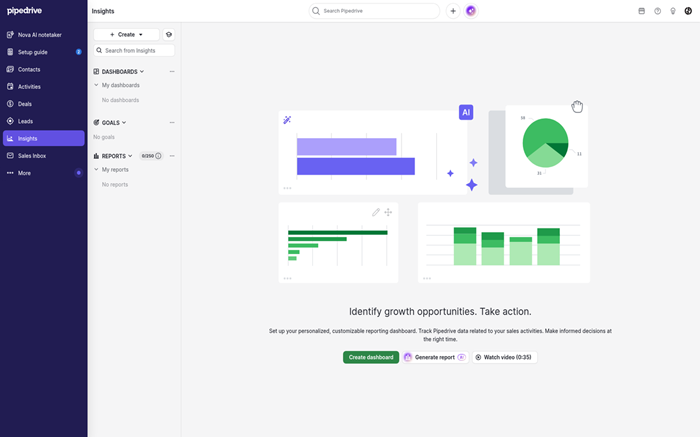
Pipedrive centers lead management on visual pipelines and the next activity attached to each deal. Representatives move opportunities through stages, schedule calls, and review communication timelines. This focused structure suits teams wanting stronger follow-up discipline without a broad operations platform.
Reports, automations, email synchronization, and Nova AI expand across paid plans. More than 500 marketplace applications extend the product. Pipedrive provides a 14-day card-free trial rather than permanent access. Buyers should carefully test lead imports, routing, daily activities, reports, exports, and required add-ons before subscribing.
Features
- Visual Pipeline: Move deal cards through custom stages with owners, values, dates, and activity signals visible during routine sales reviews. Users see cleaner activity patterns.
- Activity Selling: Schedule calls, meetings, emails, and follow-ups for each opportunity, emphasizing controllable actions that move deals toward completion. This clarifies shared account responsibility.
- Contact Timelines: Review messages, notes, files, activities, and related opportunities from a customer history that keeps relevant context together. Teams preserve important relationship context.
- Email Sync: Connect inboxes, track opens, reuse templates, and link conversations with contacts, although full synchronization begins above the entry plan. That improves early revenue planning.
- Automations: Create event-based assignments, reminders, and follow-up sequences, with workflow availability and monthly limits varying by subscription. Departments coordinate customer work consistently.
- Nova AI: Prepare meeting briefs, transcribe calls, suggest record updates, and create reports through plan-dependent artificial intelligence capabilities. This structures increasingly complex workflows.
- Marketplace: Connect more than 500 supported applications and extend specialized workflows through APIs when native options do not fit. Small teams maintain faster sales routines.
Pros
Cons
How to Get It Free?
- Open the tracked Pipedrive page and start the free account trial.
- Import representative leads and build the primary opportunity pipeline.
- Test the CRM for 14 days without a card, then select a paid plan.
14-day trial; no credit card
5) Creatio
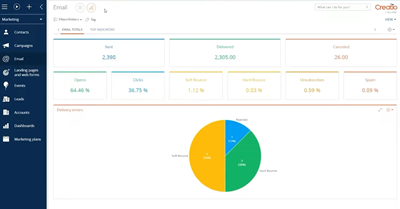
Creatio combines lead management with a no-code platform for complex customer processes. Teams can model inquiries, qualification, opportunities, activities, forecasts, and approvals while building tailored pages and workflows. Its composable approach fits operations requiring branching rules or specialized routing.
Predictive, generative, and agentic AI can assist scoring, recommendations, content, and defined actions. The visual process engine offers more flexibility than a simple pipeline but demands careful planning and ownership. Creatio provides a 14-day trial for unlimited users. Continued deployment requires paid licensing and structured implementation.
Features
- Customer View: Combine accounts, contacts, documents, activities, and interaction history inside connected profiles that support informed customer conversations. This supports clearer pipeline reviews.
- No-Code Studio: Design pages, data structures, applications, and workflows with visual tools instead of relying on conventional development for every change. Teams gain more consistent ownership.
- Process Engine: Model approvals, assignments, conditions, and cross-team steps for leads, opportunities, orders, contracts, and other repeatable work. Founders avoid another manual spreadsheet.
- AI Studio: Configure predictive models, generated actions, recommendations, and specialized agents, with packages and allowances affecting final deployment costs. That improves daily selling decisions.
- Sales Engagement: Create outreach sequences combining email, calls, and representative tasks while tracking which patterns help opportunities progress. This prepares each customer conversation.
- Revenue Intelligence: Review pipeline health, opportunity signals, forecast categories, and sales activity through current CRM data and configurable analytics. Growing teams retain useful context.
- Marketplace: Add connectors, industry components, and ready applications from the Creatio ecosystem, or build specialized connections through supported APIs. That supports later team expansion.
Pros
Cons
How to Get It Free?
- Visit the tracked Creatio page and start the 14-day free trial.
- Invite pilot participants and configure one complete lead-management workflow.
- Evaluate the platform with unlimited trial users, then request paid deployment terms.
14-day trial for unlimited users
6) Quickbase
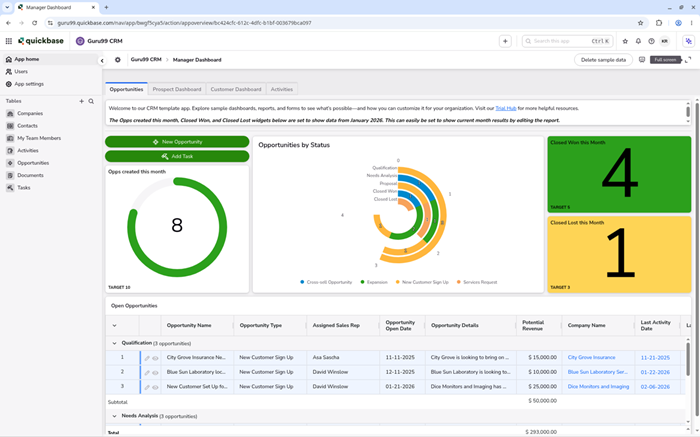
Quickbase is a no-code application platform rather than a packaged lead manager. Teams can build connected tables, forms, permissions, reports, and dashboards for specialized inquiry workflows. It fits organizations coordinating leads with projects, approvals, field work, or operational data.
Business users can import spreadsheets, create applications with AI assistance, and automate cross-system work through Pipelines. That flexibility adds responsibility for data design and access rules. Quickbase offers a 30-day Business trial, but platform pricing and user minimums may challenge small teams. Prototype the complete workflow before purchasing.
Features
- App Builder: Create connected tables, forms, relationships, and business rules that represent customer operations beyond standard sales pipeline structures. Users see cleaner activity patterns.
- Quickbase AI: Generate initial applications, import spreadsheet structures, and assist selected workflows through conversational tools available within supported plans. This clarifies shared account responsibility.
- Pipelines: Automate data movement and actions across Quickbase applications and connected services without writing every integration from scratch. Teams preserve important relationship context.
- Dashboards: Combine charts, reports, buttons, and record summaries into role-based views for sales, operations, management, or customer service. That improves early revenue planning.
- Permissions: Control application, table, field, and record access through roles that help protect sensitive customer and operational information. Departments coordinate customer work consistently.
- Mobile Access: Open forms, records, reports, and workflow actions from mobile devices when teams work in the field or with customers. This structures increasingly complex workflows.
- Audit Controls: Track important changes and apply governance features that support controlled processes, reviews, and regulated operational requirements. Small teams maintain faster sales routines.
Pros
Cons
How to Get It Free?
- Open the tracked Quickbase page and start the Business plan trial.
- Import sample leads and build one connected intake-to-assignment application.
- Test the prototype for 30 days, then request suitable production pricing.
30-day Business plan trial
7) Salesforce
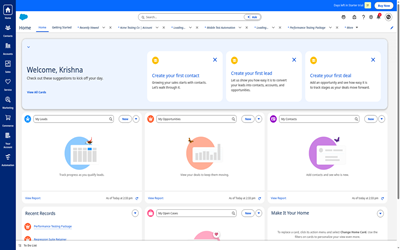
Salesforce Free Suite gives two users a lasting entry point for leads, contacts, accounts, opportunities, tasks, and sales activity. Teams can track inquiries through familiar records and preserve communication context. The account must remain active, so users should review current login conditions.
Paid editions expand automation, analytics, security, integrations, and AI across the Salesforce ecosystem. That depth supports growth but can introduce administration, add-ons, and implementation work. Teams should validate lead capture, assignment, conversion, reports, and exports within Free Suite before designing processes that depend on higher editions.
Features
- Sales Records: Manage leads, contacts, accounts, opportunities, tasks, and activities through connected records that support a structured sales process. This supports clearer pipeline reviews.
- Case Management: Track customer questions and service cases beside sales information so small teams can coordinate post-sale responses from shared records. Teams gain more consistent ownership.
- Email Marketing: Create simple customer campaigns and maintain engagement activity within the same environment used for sales and service work. Founders avoid another manual spreadsheet.
- Slack Access: Collaborate around customer work through included Slack access, helping two-person teams discuss records and actions outside CRM screens. That improves daily selling decisions.
- Flow Automation: Build a limited number of automated flows within Free Suite, with larger process capacity reserved for paid editions. This prepares each customer conversation.
- AI Assistance: Generate selected summaries and email drafts through included capabilities while keeping customer-facing communication subject to human review. Growing teams retain useful context.
- Security Controls: Apply roles, access settings, and platform protections from an ecosystem with extensive trust, compliance, and governance documentation. That supports later team expansion.
Pros
Cons
How to Get It Free?
- Open the tracked Salesforce page and choose the Free Suite signup option.
- Create the workspace for two users and configure lead stages and ownership.
- Keep the free account active and review upgrade limits before adding workflows.
Free Suite for 2 users
8) Freshsales
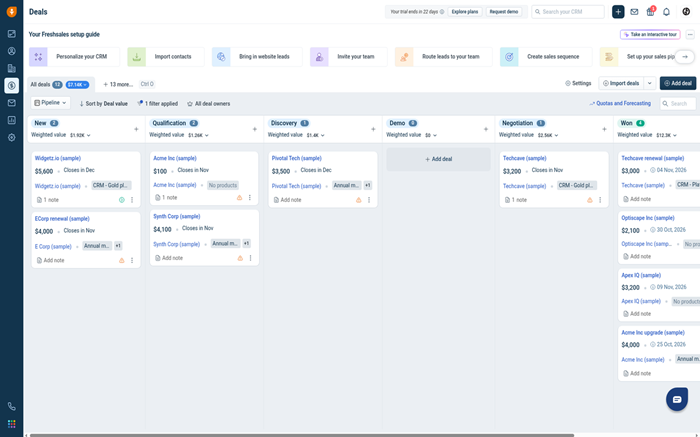
Freshsales combines lead records with visual pipelines, activity timelines, email, phone, and chat. Its free plan supports three users, giving small teams a practical place to assign inquiries and preserve conversations. Kanban views make stage movement and overdue follow-up visible.
A 21-day trial opens the fuller CRM for evaluation. Paid editions add workflows, sequences, advanced scoring, reports, and Freddy AI. Connected communication tools reduce context switching, although important automation and analytics sit above the free tier. Teams should test how plan limits affect lead volume and outreach channels.
Features
- Lead Capture: Collect inquiries from supported forms, imports, and connected channels while preserving ownership, source details, and contact information for follow-up. Users see cleaner activity patterns.
- Activity Timeline: Review calls, messages, meetings, notes, and record changes in chronological order before a representative contacts the prospect again. This clarifies shared account responsibility.
- Kanban Pipeline: Move opportunities across visible stages and filter cards by owner, value, status, or expected date during regular pipeline reviews. Teams preserve important relationship context.
- Multichannel Sales: Manage supported email, phone, and chat conversations from the CRM so representatives retain customer context during daily outreach. That improves early revenue planning.
- Lead Scoring: Prioritize contacts through plan-dependent scoring signals that combine profile information and engagement activity for more focused sales attention. Departments coordinate customer work consistently.
- Workflow Rules: Automate selected assignments, updates, reminders, and notifications after defined record events, with capacity depending on the chosen subscription. This structures increasingly complex workflows.
- Freddy AI: Generate summaries, suggestions, and predictive assistance through eligible plans while keeping customer-facing decisions under human review and control. Small teams maintain faster sales routines.
Pros
Cons
How to Get It Free?
- Open the tracked Freshsales page and register for the free CRM.
- Invite up to three users and import a representative lead sample.
- Keep the free plan or evaluate the fuller CRM during its 21-day trial.
Free for 3 users; 21-day trial
9) Apptivo
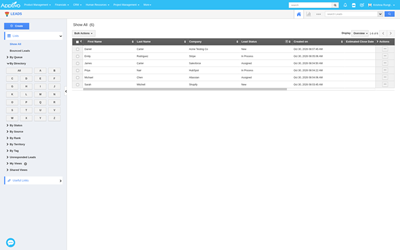
Apptivo organizes leads, contacts, opportunities, tasks, appointments, and notes inside a broad application suite. Teams can capture inquiries through forms, email, imports, and APIs, then assign ownership and create follow-up work. Custom fields and views support different qualification methods.
Workflow rules, territory controls, dashboards, reports, integrations, and mobile apps extend the sales process. Apptivo promotes a 14-day Ultimate trial without requiring a card. Its business suite offers expansion, but administrators should avoid unrelated applications that make navigation and governance harder for a focused lead team.
Features
- Lead Capture: Create lead records from forms, email, imports, integrations, and APIs while storing source and qualification details for later analysis. This supports clearer pipeline reviews.
- Lead Assignment: Assign inquiries by owner, team, or configured rules so new prospects enter a visible follow-up process instead of shared inboxes. Teams gain more consistent ownership.
- Custom Views: Filter records by status, source, owner, date, or custom fields to create focused lists for outreach and management reviews. Founders avoid another manual spreadsheet.
- Workflow Rules: Trigger tasks, notifications, updates, and related actions after defined events, helping teams standardize recurring qualification and handoff steps. That improves daily selling decisions.
- Sales Reports: Build dashboards and reports around lead sources, activities, stages, conversions, and representative workloads using current application data. This prepares each customer conversation.
- Email Sync: Connect supported business inboxes and preserve communication beside customer records, reducing repeated searches before another sales conversation begins. Growing teams retain useful context.
- Mobile CRM: Open leads, tasks, opportunities, notes, and calendars from mobile applications when sales work happens away from a desk. That supports later team expansion.
Pros
Cons
How to Get It Free?
- Open the tracked Apptivo page and start the Ultimate plan trial.
- Create the account without a card and configure one lead workflow.
- Evaluate the complete suite for 14 days, then select a paid plan.
14-day Ultimate trial; no card
10) Leadsquared
LeadSquared supports organizations handling large inquiry volumes across websites, campaigns, call centers, partners, and field teams. It tracks sources, engagement, activities, tasks, scores, and ownership. Distribution logic routes prospects by geography, product, priority, or representative capacity before follow-up delays develop.
Automation, Smart Views, mobile field selling, workflows, and reports support structured execution. Pricing is provided on request, and buyers can arrange a demo or discuss a pilot. The official trial page states no duration. Teams should define routing volume, integrations, roles, support, and implementation responsibilities before rollout.

Features
- Lead Capture: Collect inquiries from connected campaigns, forms, calls, partners, imports, and APIs while maintaining source information and acquisition context. Users see cleaner activity patterns.
- Source Tracking: Attribute prospects to channels and campaigns so managers can compare volume, quality, engagement, and conversion patterns across acquisition sources. This clarifies shared account responsibility.
- Lead Scoring: Combine profile fit and engagement activity into configurable scores that help teams prioritize high-intent prospects for immediate attention. Teams preserve important relationship context.
- Lead Distribution: Route incoming inquiries using territory, product, priority, capacity, or other rules to reduce delays and unclear ownership. That improves early revenue planning.
- Sales Workflows: Automate tasks, notifications, status changes, and follow-up sequences around defined sales processes while preserving responsible human oversight. Departments coordinate customer work consistently.
- Field Sales: Give mobile representatives assigned leads, schedules, navigation context, activities, and updates when customer work happens outside the office. This structures increasingly complex workflows.
- Activity History: Preserve messages, calls, meetings, tasks, notes, and status changes so each representative understands the prospect before responding. Small teams maintain faster sales routines.
Pros
Cons
How to Get It Free?
- Open the tracked LeadSquared page and request a product demonstration.
- Share lead volume, routing, integration, and field-sales requirements with the team.
- Ask about a pilot, since the official site states no fixed trial duration.
Demo and pilot on request
Comparison Between Top Lead Management Software
| Tool | Permanent Free Plan | Lead Capture Forms | Automated Lead Routing | Built-in AI | Business Integrations | Security Controls |
|---|---|---|---|---|---|---|
| Zoho CRM | ✅ | ✅ | ✅ | ✅ | ✅ | ✅ |
| Monday CRM | ❌ | ✅ | ✅ | ✅ | ✅ | ✅ |
| HubSpot CRM | ✅ | ✅ | ✅ | ✅ | ✅ | ✅ |
| Pipedrive | ❌ | ✅ | ✅ | ✅ | ✅ | ✅ |
| Creatio | ❌ | ✅ | ✅ | ✅ | ✅ | ✅ |
What Is Lead Management Software?
Lead management software organizes prospects from initial inquiry through qualification and sales handoff. It captures identifying details, records sources, assigns ownership, schedules follow-ups, and tracks movement through defined stages. Many products sit inside broader CRM platforms, while others specialize in high-volume routing or field sales. A useful system gives every prospect a visible owner and next action. Managers gain source, response, and conversion information from current records. The software works best when teams agree on qualification rules, stage definitions, and data responsibilities.
How Does Lead Tracking and Management Work?
Lead tracking begins when a prospect enters through a form, call, campaign, import, event, or connected application. The system creates a record, stores the source, and assigns an owner. Representatives add activities, notes, messages, qualification details, and scheduled actions. Scoring or routing rules can prioritize urgent inquiries automatically. Qualified prospects move into opportunities, while unsuitable records enter nurture or closure paths. Managers review response time, stage movement, conversions, and source quality. Clear ownership prevents duplicate outreach and forgotten follow-ups consistently.
What Features Should Free Lead Management Software Include?
A useful free platform should support the daily lead process clearly.
- Lead capture: Forms, imports, and integrations should create complete prospect records reliably.
- Ownership: Assignments and visible owners should prevent duplicate or missed follow-up.
- Pipeline tracking: Stages should show qualification status, next actions, and conversion progress.
- Communication history: Messages, calls, notes, and meetings should remain beside each record.
- Basic reporting: Teams should review sources, response activity, stage movement, and conversions.
- Data portability: Imports and exports should support cleanup, backup, and later migration.
Automation and AI add value after these lead management foundations work consistently.
How Do Permanent Free Plans Differ From Trials?
Free access can describe two very different buying conditions.
- Permanent plan: Access continues while the account stays within published users, contacts, and feature limits.
- Temporary trial: A paid edition remains available only during a fixed evaluation period.
- Feature changes: Automation, reports, AI, support, or integrations may disappear after evaluation.
- Data planning: Teams should confirm exports and document which tested capabilities belong to the final plan.
Checking plan boundaries prevents important workflows from depending on temporary capabilities.
What Is the Difference Between Lead Management Software and CRM?
Lead management focuses on prospects before they become established opportunities or customers. It covers capture, source tracking, qualification, scoring, assignment, nurturing, and conversion. A CRM system manages a broader relationship lifecycle that can include contacts, accounts, opportunities, customers, service cases, renewals, and historical communication. Many CRM platforms include lead management, so buyers often compare the same products under both categories. A specialized platform becomes attractive when inquiry volume, routing logic, field operations, or response-time requirements exceed a general CRM process.
What Lead Tracking Best Practices Improve Conversions?
Define one owner and next action for every active lead. Capture the original source, contact permission, qualification details, and timestamps consistently. Set response targets that match inquiry urgency and staffing. Keep pipeline stages short, specific, and measurable. Automate assignments and reminders only after testing the manual process. Review duplicate records before launching new campaigns. Managers should examine source quality, response speed, stage conversion, and stalled records each week. These lead tracking practices make problems visible before teams add more software or advertising.
How Can Teams Connect Lead Software With Existing Sales Tools?
Begin with email, calendars, and website forms because they capture daily prospect activity. Add advertising, calling, marketing automation, support, and accounting systems only when a documented workflow requires them. Test field mapping, update direction, ownership, duplicate handling, delays, and failure alerts. Native connections usually need less maintenance than custom integrations. Important connectors may require higher subscriptions. A controlled pilot should create and update representative records across both systems. Reliable data flow matters more than a long marketplace list during daily work.
How Can AI Improve Lead Management Workflows?
AI can summarize prospect histories, draft messages, enrich records, recommend next actions, and flag leads requiring attention. Predictive models may combine profile fit with engagement behavior for scoring. These functions reduce searching and repetitive preparation when source data remains accurate. Teams should examine credit allowances, eligible plans, permissions, and data handling. Generated communication needs human review before sending. AI assistance cannot repair vague qualification criteria or incomplete records. Clear stages, reliable inputs, and accountable owners improve every automated recommendation consistently.
Can AI Replace Manual Lead Qualification?
AI can rank prospects and highlight patterns across profile, behavioral, and historical data. It cannot fully judge unusual buying context, sensitive conversations, or strategic account value. Sales teams still need human review for borderline cases and high-value opportunities. Administrators should monitor scoring drift as campaigns, markets, and products change. Require explanations for automated recommendations where possible. Treat AI lead scoring as decision support around documented qualification criteria. People remain responsible for fairness, accuracy, privacy, and the final follow-up decision always.
How Secure Is Lead Data in Free Software?
Security depends on the provider, plan, configuration, and internal practices. Buyers should verify encryption, multifactor authentication, permissions, audit capabilities, exports, backups, retention, and published compliance details. Some advanced controls appear only on higher subscriptions. Administrators should remove inactive users and review connected applications regularly. Lead records may contain personal information and communication history, so consent and access rules matter. A reputable provider cannot prevent careless sharing or excessive access. Treat lead data security as an ongoing management responsibility for every team.
How Did We Choose the best lead management software?

At Guru99, we prioritize credibility by focusing on accurate, relevant, and objective information. Our content is rigorously reviewed to provide reliable resources for your questions. After nearly 90 hours of research, we curated a list of the top lead management software, thoroughly understanding their potential. We offer an honest perspective, covering features, pros and cons, and the best free options to help you make informed decisions. Our goal is to streamline your lead generation process by highlighting tools that integrate easily and offer great functionality, ensuring they provide the most value to users based on their needs.
Here are the important criteria for selecting the best sales lead management software for small business:
- Latest Features: Your selected lead management solution should have the latest features like Response to Leads, Automated Data Collection and Management, Scheduling and Tracking Leads, etc.
- Automation: Automation is the most vital feature of any lead management software. Once you set up, these workflows can automatically send emails such as x-date reminders and re-quotes.
- User-friendly: Your selected lead generation software is user-friendly so you can access it easily.
- Customizable: You should make sure that your selected lead management should be easily customizable according to your business needs.
- Reporting: Reporting is a must-have feature, for lead management software. You need to analyse the bigger picture when it comes to sales activity.
- Workflows: You can determine the event you want an action to follow, choose to delay action, and set up conditions so a specific action occurs. It should have certain criteria being met, and a different action occurs when it’s not.
- Integration with other systems: If your selected lead automation software can have several integrations, you can maintain your email and landing page templates.
- Customer support: You should make sure that lead management solutions provide best-in-class customer care support via email, support tickets, and chat.
How Do You Troubleshoot Common Lead Management Problems?
Lead management failures usually involve data, ownership, permissions, or integrations. Diagnose one workflow before expanding automation across the team.
- Issue: Imported leads appear twice because forms and spreadsheets format contact details differently.
Solution: The administrator should standardize email and phone fields, define matching rules, and merge duplicates before adding sources. - Issue: New inquiries remain untouched because assignment rules fail to select an available owner.
Solution: The manager should test every routing branch, add fallback ownership, and monitor unassigned records through a daily report. - Issue: Sales representatives miss follow-ups because tasks lack owners, dates, or clear priorities.
Solution: The manager should require ownership and due dates, then review overdue work during a recurring pipeline meeting. - Issue: Email messages stop attaching after mailbox passwords or organizational security policies change.
Solution: The user should reconnect the mailbox, review permissions, confirm address matching, and send controlled messages for verification. - Issue: Lead scores become unreliable when campaigns, products, and buyer behavior change significantly.
Solution: The analyst should compare scores with recent conversions, remove stale signals, and retest thresholds on representative records. - Issue: Pipeline reports disagree because team members interpret qualification stages and dates differently.
Solution: The administrator should document stage definitions, required fields, conversion rules, and date policies before rebuilding affected reports. - Issue: Connected applications overwrite newer details or update lead records much later than expected.
Solution: The integration owner should verify synchronization direction, field precedence, timestamps, error logs, and retry behavior before reconnecting.
Verdict
After comparing ten lead management platforms, I found three options that balanced practical access, workflow clarity, integrations, and future growth particularly well.
- Zoho CRM: I preferred its three-user free edition, configurable lead process, and credible upgrade path for increasingly detailed sales operations.
- Monday CRM: Its visual boards made collaborative lead ownership easy to review, although continued CRM access required payment after the trial.
- HubSpot CRM: The shared record impressed me by connecting forms, conversations, sales activity, learning resources, and broad integrations around every prospect.
