
How to Check Payroll Results using PC_PAYRESULT in SAP
 Editorial Team
⚡ Smart Summary
Checking Payroll Results using PC_PAYRESULT lets you verify an employee’s calculated pay before the bank transfer. This resource explains what payroll results are, the key result tables such as RT and BT, when to check them, and the step-by-step process.
When executing a Payroll run, you need to check your payroll results to ensure that employees are paid correctly. It should be done any time after you have executed a Start Payroll, and definitely before you execute a bank transfer in your SAP system.
You can use the transaction PC_PAYRESULT, which displays all payroll related tables in SAP.
Salient Features of PC_PAYRESULT:
- It includes customer wage types and technical wage types.
- Once you executed a “Start Payroll”, payroll results are created for the selected employees.
- No payroll results are created during a simulation.
- You can only display payroll results for ONE particular employee at a time.
What are Payroll Results in SAP?
Payroll results are the calculated outcomes SAP produces every time it runs payroll for an employee. When a live payroll run completes, the system stores each employee’s gross pay, deductions, net pay, tax amounts, and wage types in a compressed payroll cluster. Every country has its own cluster, but the results are read the same way through transaction PC_PAYRESULT.
A separate result set is created for each payroll run and period. This means an employee can have several results for one period—for example, an original run plus a later retroactive run or an off-cycle payment. PC_PAYRESULT lists all of them so you can see exactly how a figure was reached.
Because results are only written during a live run and never during a simulation, checking PC_PAYRESULT confirms that real, official numbers exist for the employee. Reviewing them is the standard way to verify pay before the money is transferred to the bank.
Key Payroll Result Tables (RT, CRT, BT)
When you drill into a payroll result in PC_PAYRESULT, the data is split into many internal tables. A few of them are checked far more often than the rest:
- RT (Results Table): The core table holding every wage type and amount for the period, such as basic pay, allowances, and deductions.
- CRT (Cumulative Results Table): Stores year-to-date and other cumulated totals used for tax and statutory reporting.
- BT (Bank Transfer): Contains the payment records that tell the bank how much to pay the employee and to which account.
- WPBP (Work Center / Basic Pay): Holds the organizational and pay-period split, such as cost center and pay scale.
- ARRRS / DDNTK: Track arrears and deductions not taken when net pay is insufficient.
Knowing which table to open lets you confirm a specific figure quickly—for example, opening RT to check a wage type or BT to verify the net amount going to the bank.



When Should You Check Payroll Results?
You should review payroll results at every point where an error would be costly to reverse. The most important moment is after Start Payroll but before the bank transfer, because once money leaves the account, corrections become far harder.
Typical times to check results include:
- After each live payroll run, to confirm gross-to-net calculations look correct.
- Before releasing the bank transfer, to verify net pay and bank details in table BT.
- After a retroactive run, to see the difference carried into the current period.
- When an employee queries their pay, to trace the exact wage types involved.
Checking results is quick because PC_PAYRESULT shows every run for the employee in one place. Making it a routine step catches problems—such as missing wage types or wrong tax—while they can still be fixed by correcting data and rerunning payroll, protecting both the employee and the organization.
Steps to Check Payroll Results using PC_PAYRESULT
Step 1) Type PC_PAYRESULT into the SAP transaction code box.

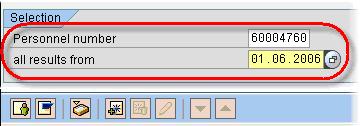
Step 2) Under Selection:
- Enter the Personnel number of the employee(s) whose pay results you want to view.
- Enter the date from which you wish to view all results.
Step 3) Hit the Enter Key.
Step 4) In the Personnel Numbers Selected section:
- Click on the personnel number for which you want to see payroll results.

In the Overview of Payroll Results section, you can now see all payroll runs that have been executed for this employee, including any payroll run caused by retroactive Accounting and off-cycle payroll processing.
Step 5) Double click on the Payroll results line item for which you want to view the tables.

Step 6) Double click on the payroll program table you want to view (i.e., RT, RT_, CRT, BT, etc.).

Step 7) The selected payroll program table for that particular payroll run will now be displayed.

