
Test Summary Report: Template, Format & Example
 Editorial Team
⚡ Smart Summary
Test Summary Reports document every testing activity and final result so stakeholders can decide on a release. This article explains what a test report is, why it matters, and the project, objective, summary, and defect sections every good report needs.

What is a Test Report?
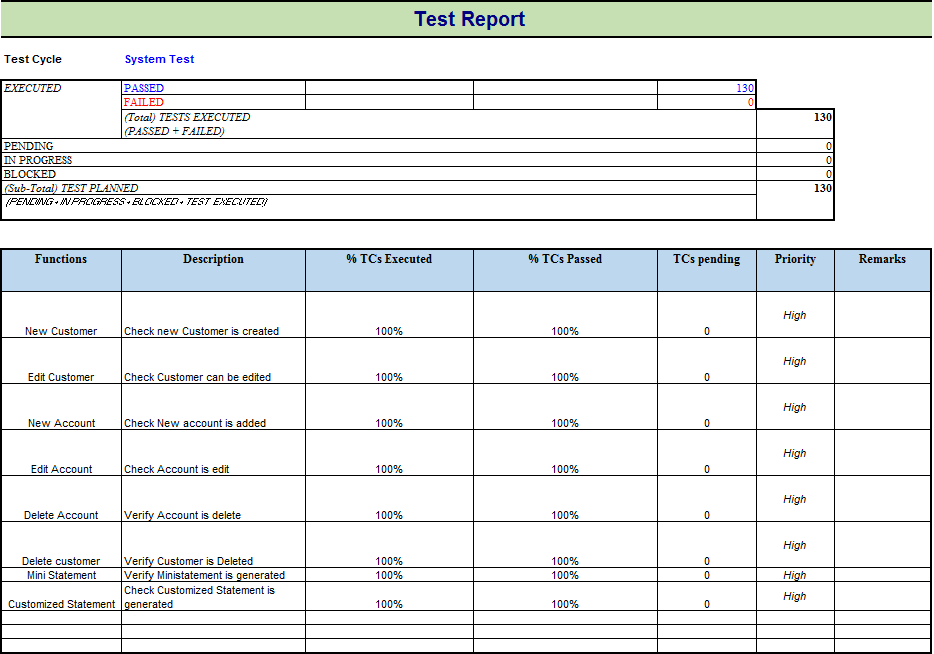
A Test Report is a document that summarises every test activity and the final test results of a project. It assesses how well the testing has been performed. Based on this report, stakeholders evaluate the quality of the product and decide whether to release the software.
For example, if the report shows that many defects remain in the product, stakeholders can delay the release until those defects are fixed.
Test Report Example
Why is a Test Report Important?
The scenario below shows exactly why a test report is needed.
|
|
|
| Earlier, when the manager asked whether the Guru99 Bank website was ready, you answered verbally. | The manager trusted you and released the website at the end of the month. Two months after release, the client reported defects. |


What is the root cause of this problem? Why does the website still have defects after the team has already tested it?
The problem is that the reporting and evaluation phase of Test Management was skipped. Without a test report, the manager had no information to evaluate the website’s quality — they simply trusted the verbal update and released the product blind.
The typical benefits of a test report include:

How to Make a Good Test Report
To build a useful test report, you first need to know what a standard report contains. The next section breaks it down into the four required components, illustrated with the Guru99 Bank example.
What Does a Test Report Contain?

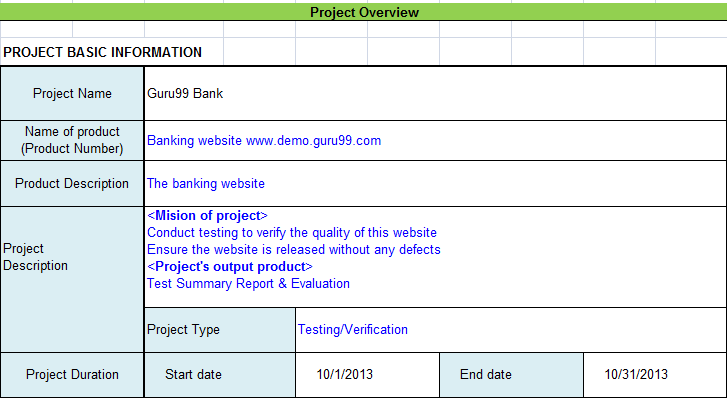
Project Information
All project metadata — project name, product name, and version — should be captured in the test report. For the Guru99 Bank project, the information is shown below.
Test Objective
As covered in the Test Planning tutorial, the report should state the objective of each round of testing — Unit Test, Performance Test, System Test, and so on.
Test Summary
This section presents the testing activity at a glance. The required data points are:
- Number of test cases executed.
- Number of test cases passed.
- Number of test cases failed.
- Pass percentage.
- Fail percentage.
- Comments.
Always display this information visually using colour indicators, graphs, and highlighted tables.
Download the Guru99 Bank Test Report template for a complete example.
Defect
One of the most important sections of a test report is the defect summary. It should contain:
- Total number of bugs.
- Status of each bug (open, closed, responding).
- Counts of bugs open, resolved, and closed.
- Breakdown by severity and priority.
Like the test summary, this section benefits from simple metrics such as defect density and percentage of fixed defects.
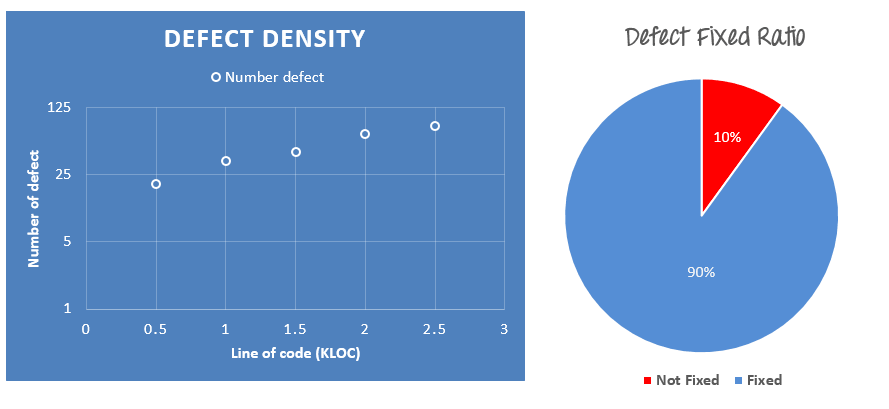
In our example, the project team reported:
- Defect density: 20 defects per 1,000 lines of code on average.
- 90% of defects fixed.
- The full bug list lives in the project defect tracker.
Data of this kind is best presented as a chart, like the one below.
Tips to Write a Good Test Report
A test report is a communication tool between the Test Manager and the stakeholders. A well-written report lets stakeholders understand the project situation, the quality of the product, and the readiness for release.
Consider this scenario: after performing Performance Testing on the Guru99 Bank website, an outsourced tester sends you the following test report.
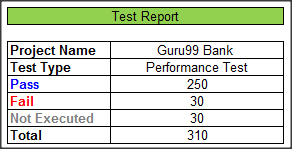
The information in this report is too abstract. It contains no detail, leaving the stakeholder puzzled and likely to ask:
- Why were the remaining 30 test cases not executed?
- Which test cases failed?
- Where is the bug description?
A good test report should therefore be:

- Detailed: Describe every testing activity and which test scopes were exercised. Avoid abstract language.
- Clear: Keep all information short and easy to understand at a glance.
- Standard: Follow a standard template so stakeholders can compare reports across projects.
- Specific: Summarise results and focus on the main points — do not write an essay about the project.
To correct the abstract report above, the tester should add:
- Project information.
- Test cycle (System Test, Integration Test, etc.).
- Coverage details (percentage of test cases executed, passed, or failed).
- Defect report (description, priority, and status).
