
10 Best FREE Contact Management App & Software (2026)
 Editorial Team
Disclosure: Guru99 is reader-supported. We may earn a commission when you buy through links on this page. Learn more

Contact management apps can become frustrating when poor search results, unreliable imports, wasted setup time, confusing screens, hidden record limits, and inconsistent synchronization interrupt customer work. Missed reminders weaken relationships, while duplicate profiles cause repeated or poorly timed outreach. Buyers often overlook export rules, permissions, and upgrade costs. The right platform creates dependable records, visible ownership, and steadier follow-up. That clarity helps teams respond faster, personalize conversations, and move forward without another spreadsheet cleanup.
I spent 85+ hours researching 20 contact management platforms, checking plans, records, integrations, security, AI capabilities, and recurring customer feedback. My in-depth research shortlisted ten Best Contact Management App options with different strengths and tradeoffs. This documentation review covers features, pros and cons, backed-by current official evidence. Continue reading to find a practical fit today. Read more…

Zoho is a Sales CRM tool that helps you improve teams’ productivity with designs that are precise solutions to business activities. It is one of the best CRM for start-ups, providing an easy way to monitor key metrics and manage monthly targets.
Best Contact Management Software (Free/Paid)
| Tool | Zoho CRM |
 Monday CRM |
 HubSpot CRM |
 Pipedrive |
| Best For | Flexible contact workflows for growing sales teams | Visual contact ownership across flexible revenue teams | Connected contacts across sales, marketing, and service | Clear activity tracking for relationship-focused sellers |
| Features | ✔️ Blueprint ✔️ Zia AI ✔️ Canvas |
✔️ Deal boards ✔️ AI agents ✔️ Automations |
✔️ Smart CRM ✔️ Email tools ✔️ Breeze AI |
✔️ Visual pipelines ✔️ Activities ✔️ Nova AI |
| Contact Details Importing | Yes | Yes | Yes | Yes |
| Contact Sharing | Yes | Yes | Yes | Yes |
| Contact Database | Yes | Yes | Yes | Yes |
| Price | Free for 3 users, 15-day trial | 14-day trial, no permanent CRM plan | Free for 2 users, paid trials vary | 14-day free trial, no credit card |
| Review/Rating |  4.7 |
4.5 |
4.6 |
4.4 |
| Link | Visit website | Visit website | Visit website | Visit website |
1) Zoho CRM
Zoho CRM gives growing teams broad sales automation without Salesforce-level costs. Its Blueprint builder standardizes lead stages, approvals, and handoffs. Canvas reshapes record layouts, while dashboards connect activity with forecasts. A free edition supports three users managing leads, contacts, and deals.
Sales teams can connect email, telephone, social channels, and Zoho applications. Zia adds scoring, predictions, summaries, and recommendations on eligible editions. The setup depth rewards careful planning, since advanced workflows contain many choices. Companies wanting configurable processes and predictable entry pricing should find substantial room to grow.
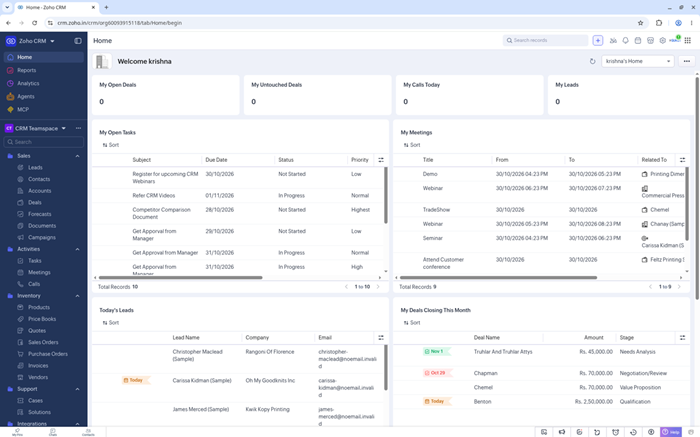
Features:
- Pipeline Control: Track leads, contacts, accounts, and deals through configurable stages. Forecasts and probability settings give managers a practical view of expected revenue.
- Blueprint: Define required steps, approvals, and field updates for each process stage. Reps follow consistent actions without memorizing internal operating rules.
- Canvas: Rearrange fields, components, and record layouts through a visual editor. Teams can present role-specific information without rebuilding the underlying CRM data.
- Zia AI: Score opportunities, summarize records, detect anomalies, and suggest suitable actions. Availability and usage limits vary across Professional, Enterprise, and Ultimate editions.
- Workflow Rules: Trigger assignments, notifications, field changes, webhooks, or custom functions from record events. Automation reduces repetitive updates across recurring sales processes.
- Omnichannel Sales: Connect email, calling, social messages, meetings, and customer portals with CRM records. Shared context helps representatives continue conversations without searching separate tools.
- Analytics: Build reports, dashboards, cohorts, and forecasting views around live sales data. Managers can examine conversion patterns by owner, source, territory, or stage.
- Integrations: Connect Zoho applications, marketplace extensions, APIs, and common productivity platforms. Teams can keep finance, marketing, support, and sales records coordinated.
Pros
Cons
Pricing
Zoho CRM includes three free users and a 15-day trial, with annual paid editions starting at $14 monthly.
| Plan | Pricing |
|---|---|
| Free | $0, up to 3 users, core lead, contact, and deal management |
| Standard | $14/user/month billed annually, workflows, cadences, and forecasting |
| Professional | $23/user/month billed annually, Blueprint, CPQ, and inventory management |
Free for 3 users, 15-day trial
2) Monday CRM
Monday CRM turns leads, accounts, activities, and deals into configurable visual boards. Teams can shape columns, stages, dashboards, and automations around their sales method. Email tracking and centralized activity records keep customer context beside each opportunity. New accounts receive a free 14-day trial.
Revenue teams already working in monday.com gain familiar navigation and shared data. AI agents can source leads, prepare meetings, summarize calls, and flag deal risks. Standard and Pro plans add stronger automation, communication, and reporting capacity. Seat minimums and contact limits deserve review before larger rollout.
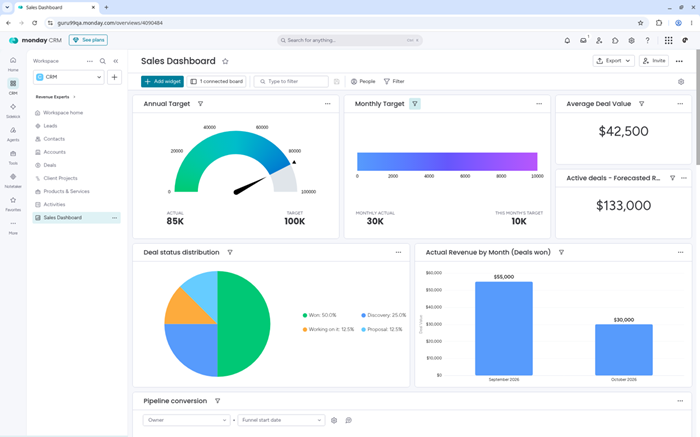
Features:
- Deal Boards: Arrange contacts and opportunities through customizable stages, owners, values, and dates. Multiple views expose pipeline movement without imposing a rigid sales structure.
- Communication Hub: Sync Gmail or Outlook, log activities, track engagement, and reuse templates. Every message remains connected with its matching contact or deal.
- Sales Sequences: Combine scheduled emails, calls, and tasks into repeatable outreach paths. Engagement history updates automatically so representatives can see each completed touchpoint.
- AI Agents: Source and enrich leads, prepare meeting briefs, or qualify prospects through specialized agents. Available functions and credits depend on the selected plan.
- Automations: Trigger ownership changes, reminders, status updates, and follow-up steps from board events. Monthly action allowances increase across Standard, Pro, and Ultimate.
- Dashboards: Combine pipeline, activity, target, and forecast widgets into live management views. Higher plans expand the number of boards included within one dashboard.
- Quotes: Create quotes and invoices from CRM records while preserving customer and deal context. Monthly document limits differ across subscription levels.
- Open Ecosystem: Connect APIs, MCP, and more than 200 supported integrations with revenue workflows. Shared data can span marketing, service, and work management products.
Pros
Cons
Pricing
Monday CRM provides a 14-day trial, while annual Basic pricing begins at $12 per seat monthly.
| Plan | Pricing |
|---|---|
| Basic | $12/seat/month billed annually, 1,000 active contacts and deals |
| Standard | $17/seat/month billed annually, 250 automations and centralized communications |
| Pro | $28/seat/month billed annually, sequences, mass email, and deeper reporting |
14-day trial, no permanent CRM plan
3) HubSpot CRM
HubSpot CRM combines contact records, deal pipelines, email tracking, meetings, and live chat. Its free tools support two users without requiring payment details. The Smart CRM also connects sales, marketing, service, content, and data products through one customer record.
Growing teams benefit from approachable navigation and a large integration marketplace. Sales Hub adds sequences, forecasting, calling, coaching, and advanced workflows across paid tiers. Breeze and credit-based agents assist prospecting, research, and record management. Costs rise sharply when teams require Professional automation, added seats, or formal onboarding.
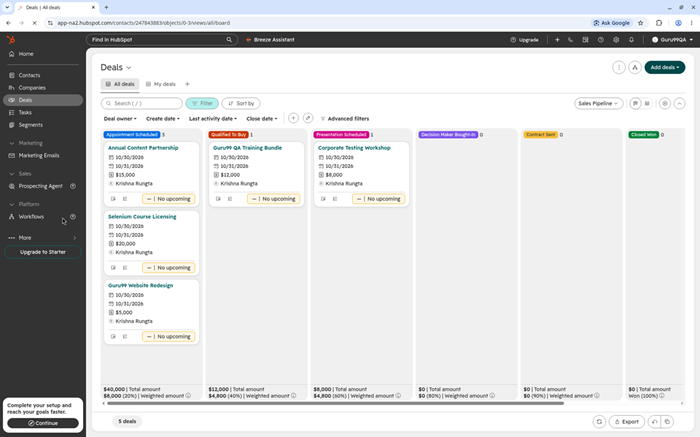
Features:
- Smart CRM: Centralize contacts, companies, deals, tickets, and engagement history within shared records. Teams can coordinate revenue activity without maintaining separate customer databases.
- Email Tools: Track opens, reuse templates, schedule meetings, and log conversations from connected inboxes. Limits increase as teams move from free tools upward.
- Sales Workspace: Organize prospects, tasks, sequences, and guided actions within one selling view. Representatives can prioritize follow-ups using current engagement and pipeline context.
- Breeze AI: Research companies, summarize records, draft communication, and run specialized agents. Some actions consume HubSpot Credits or require paid product editions.
- Automation: Create stage-based tasks, notifications, lead routing, sequences, and workflows. Professional and Enterprise provide substantially deeper automation than free or Starter access.
- Reporting: Monitor pipeline, activity, forecasting, and revenue metrics through configurable dashboards. Advanced report construction and custom objects remain tied to higher editions.
- App Marketplace: Connect Gmail, Outlook, LinkedIn tools, ecommerce services, and thousands of marketplace applications. Data Sync supports bidirectional information exchange across compatible systems.
- Customer Platform: Combine sales, marketing, service, content, commerce, and operations around shared records. Bundled adoption reduces handoffs but increases packaging and governance decisions.
Pros
Cons
Pricing
HubSpot offers a two-user free CRM, while paid Sales Hub tiers add automation, reporting, and usage credits.
| Plan | Pricing |
|---|---|
| Free | $0, up to 2 users, core contact, deal, email, and meeting tools |
| Starter | From $20 per Core Seat monthly, added sales productivity features |
| Professional | $100 per Sales Seat monthly, sequences, forecasting, and advanced automation |
Free for 2 users, paid trials vary
4) Pipedrive
Pipedrive centers daily work on a visual pipeline designed for sales activity. Representatives drag deals between stages, schedule the next action, and review contact timelines. The activity-based workflow keeps calls, meetings, and proposals visible. Every plan begins with a free 14-day trial.
Managers can build reports, forecasts, automations, and custom fields without enterprise administration. Growth adds email sync and sequences, while Premium expands permissions, scoring, and enrichment. Nova supplies meeting intelligence and report creation. Teams needing extensive marketing, service, or bespoke data models may eventually outgrow its sales-first scope.
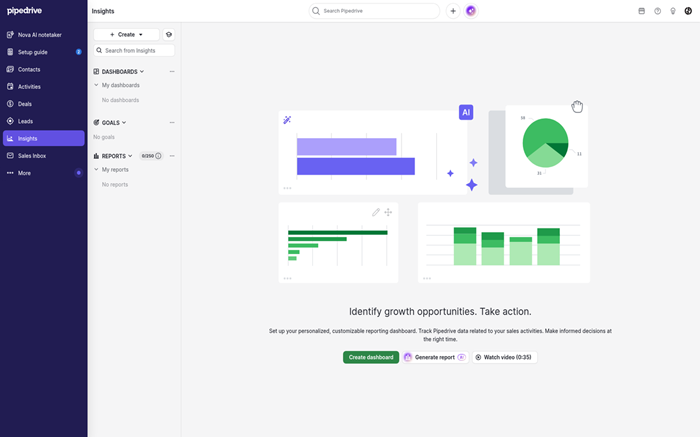
Features:
- Visual Pipeline: Move deal cards through custom stages with values, owners, and expected dates visible. Status signals make stalled or overdue activity easier to notice.
- Activity Selling: Schedule calls, meetings, emails, and follow-ups as each deal progresses. The system emphasizes controllable actions instead of relying only on final revenue.
- Email Sync: Connect inboxes, track opens, send templates, and preserve messages beside contact timelines. Full synchronization and sequences begin above the Lite plan.
- Nova AI: Generate reports from text, prepare meeting briefs, transcribe calls, and suggest record updates. Specific intelligence functions vary by subscription level.
- Automations: Build event-driven follow-ups, assignments, and multistep sequences through workflow rules. Growth introduces automation, while higher plans increase monthly capacity and controls.
- Insights: Create dashboards, reports, goals, and revenue forecasts from pipeline data. Premium expands reporting limits, custom fields, team filters, and scoring.
- Mobile Selling: Update deals, log activities, access contacts, and record notes through mobile applications. Field representatives can keep records current between customer visits.
- Marketplace: Connect more than 500 applications, including productivity and communication systems. APIs and MCP extend workflows when a native connection does not fit.
Pros
Cons
Pricing
Pipedrive provides full access for 14 days, and annual Lite pricing starts at $14 per seat monthly.
| Plan | Pricing |
|---|---|
| Lite | $14/seat/month billed annually, core lead, deal, and pipeline management |
| Growth | $39/seat/month billed annually, email sync, automations, and sequences |
| Premium | $59/seat/month billed annually, scoring, enrichment, and team controls |
14-day free trial, no credit card
5) Creatio
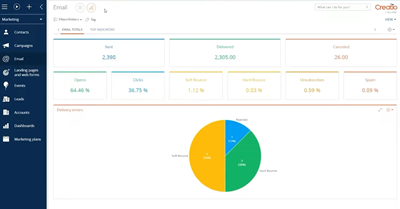
Creatio combines sales CRM with a no-code platform for building complex customer workflows. Its composable architecture covers leads, opportunities, forecasts, orders, contracts, and customer histories. Freedom UI Designer helps business teams reshape screens and processes without conventional application development.
Enterprise buyers can automate multistep sales journeys through a visual process engine. Predictive, generative, and agentic AI support scoring, recommendations, content, and custom agents. The platform also connects service and marketing products. Implementation demands stronger governance than a lightweight CRM, while current pricing includes platform, product, and annual minimum considerations.
Features:
- Customer View: Combine account details, contacts, documents, activities, and interaction history inside unified profiles. Sales teams can understand relationships before planning their next engagement.
- No-Code Studio: Design pages, data models, applications, and workflows through visual tools. Business teams can adapt CRM behavior without waiting for every developer change.
- Process Engine: Model approvals, assignments, branching steps, and cross-department workflows. Ready processes cover common lead, opportunity, order, and contract stages from initial setup.
- AI Studio: Configure predictive scoring, generative actions, recommendations, and custom agents. AI packages and action allowances affect the final cost of larger deployments.
- Revenue Intelligence: Evaluate pipeline movement, opportunity health, forecast categories, and sales activity. Managers can identify risk using current CRM signals instead of delayed reports.
- Sales Engagement: Build structured outreach sequences combining email, calls, and representative tasks. Analytics show which engagement patterns produce movement across the pipeline.
- Marketplace: Add connectors, industry components, and ready applications from the Creatio ecosystem. APIs also support integration with specialized internal and external systems.
- Mobile Sales: Access customer records, leads, opportunities, meetings, and dashboards through mobile applications. Offline work synchronizes when a connection becomes available again.
Pros
Cons
Pricing
Creatio offers a 14-day trial, with CRM pricing shaped by platform tier, selected products, and deployment scope.
| Plan | Pricing |
|---|---|
| Growth | From $55/user/month for current CRM packaging |
| Enterprise | From $70/user/month for current CRM packaging |
| Unlimited | Custom organization-wide pricing |
14-day trial, guided demo available
6) Quickbase
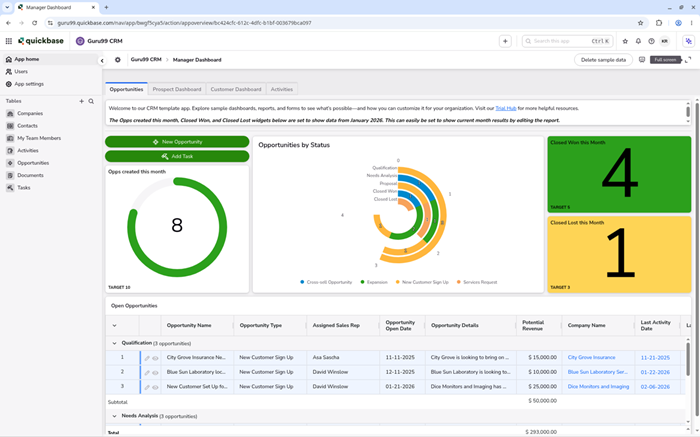
Quickbase is a no-code application platform that can replace rigid CRM structures. Teams model customer, project, asset, and operational data inside relational applications. Forms, reports, permissions, and Pipelines create workflows around the organization rather than forcing one standard sales model.
Operations groups benefit when customer work crosses delivery, field service, or internal approvals. More than 40 connectors and APIs link external systems with Quickbase data. Dashboards can differ by role, while audit and governance controls support organizations. Builders still need training, and platform minimums weaken its appeal for small teams.
Features:
- App Builder: Create relational tables, forms, formulas, rules, and interfaces through visual configuration. Teams can model customer operations that exceed conventional CRM record structures.
- Pipelines: Connect triggers, conditions, transformations, and external systems inside a visual workflow. Reusable steps automate work between Quickbase applications and connected services.
- Role Dashboards: Combine reports, charts, buttons, and relevant records for each audience. Sales, operations, and leadership can view different information from shared data.
- Smart Builder: Describe an application or connected workflow through a prompt, then review generated structure. Human validation remains important before activating business-critical logic.
- Connected Tables: Mirror selected datasets from cloud services, files, or other Quickbase applications. Teams can reference external information without creating uncontrolled duplicate spreadsheets.
- Governance: Control roles, permissions, encryption, audit logs, and application changes effectively across teams. Business adds single sign-on, provisioning, sandboxing, and regulated-industry options.
- Reporting: Build tables, charts, summaries, calendars, and dashboards around live operational data. More than thirteen report types support different management questions.
- Mobile Access: Open configured applications on mobile devices without separate development. Field teams can review records, complete forms, and update workflows outside offices.
Pros
Cons
Pricing
Quickbase includes a 30-day trial, while annual subscriptions combine per-user charges with a required platform minimum.
| Plan | Pricing |
|---|---|
| Free Trial | $0 for 30 days, includes Business plan features |
| Team | From $35/user/month billed annually, platform minimum applies |
| Business | From $55/user/month billed annually, SSO, sandbox, and compliance controls |
30-day free Business trial
7) SalesForce CRM
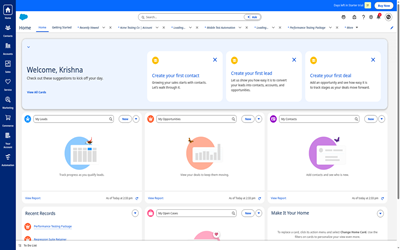
Salesforce CRM organizes contacts, accounts, leads, opportunities, cases, tasks, and activity within connected customer records. Free Suite supports two users, giving small teams a structured entry point. Its wider ecosystem offers extensive applications, consulting options, learning resources, and specialized industry configurations.
Starter Suite adds sales, service, marketing, and commerce tools for growing businesses. Pro Suite expands automation, customization, quoting, forecasting, and AppExchange access. The platform can scale far beyond contact management, although its terminology, administration, and edition choices demand more planning than simpler address-book products.
Features:
- Sales Records: Manage leads, contacts, accounts, opportunities, tasks, and activities through connected records that support a structured sales process across daily customer operations.
- Case Management: Track customer questions and service cases beside sales information so small teams can coordinate post-sale responses from shared records during coordinated service handoffs.
- Email Marketing: Create simple customer campaigns and maintain engagement activity within the same environment used for sales and service work for consistent customer follow-up.
- Slack Access: Collaborate around customer work through included Slack access, helping two-person teams discuss records and actions outside CRM screens throughout daily relationship work.
- Flow Automation: Build a limited number of automated flows within Free Suite, with larger process capacity reserved for paid editions as business processes expand.
- AI Assistance: Generate selected summaries and email drafts through included capabilities while keeping customer-facing communication subject to human review before messages reach customers.
- Security Controls: Apply roles, access settings, and platform protections from an ecosystem with extensive trust, compliance, and governance documentation across changing organizational requirements.
Pros
Cons
Pricing
Salesforce provides two free users and a 30-day Pro trial, with Starter Suite priced at $25 monthly.
| Plan | Pricing |
|---|---|
| Free Suite | $0, up to 2 users, core sales, service, and marketing tools |
| Starter Suite | $25/user/month, small-business CRM across customer functions |
| Pro Suite | $100/user/month billed annually, automation, customization, and AppExchange |
Free for 2 users, 30-day Pro trial
8) Pobuca Connect
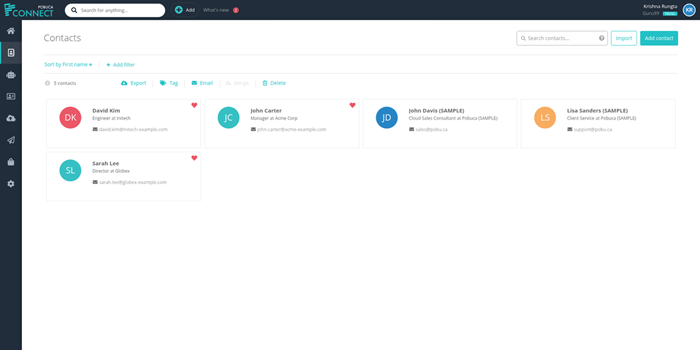
Pobuca Connect turns scattered employee address books into a shared company contact directory. Teams can import people and organizations, assign owners, add notes, preserve relationships, and search one coordinated database. Duplicate detection and merge tools help reduce repeated or conflicting records.
Email-signature capture, reminders, mobile access, Outlook connections, and role controls support everyday relationship work. The product is lighter than a complete sales CRM, which benefits organizations seeking contact consistency without elaborate pipelines. Its free edition provides an accessible starting point, while Pro and Enterprise add administration and integration capacity.
Features:
- Shared Directory: Create a searchable company address book where approved employees can view, update, and maintain consistent business contact information across departments and locations.
- Duplicate Merge: Identify similar people and organizations, then combine repeated records to reduce conflicting details and unnecessary outreach before teams begin outreach.
- Signature Capture: Collect available contact details from connected email signatures, helping teams update records during ordinary customer communication without separate data-entry projects.
- Relationship Links: Associate people with organizations, positions, notes, and responsible colleagues so users can understand the surrounding business relationship before planning further communication.
- Reminders: Create follow-up prompts around important contacts and dates, reducing forgotten conversations across shared relationship responsibilities during recurring customer care programs.
- Mobile Access: Search, call, edit, and review shared contacts from supported mobile applications while working away from the office during travel and customer visits.
- Administration: Apply roles, custom fields, imports, exports, and selected directory connections to govern shared contact maintenance at scale across growing company directories.
Pros
Cons
Pricing
Pobuca Connect includes a permanent free edition and 15-day paid trials, with Pro starting at $2.50 annually.
| Plan | Pricing |
|---|---|
| Free | $0, shared contact management with entry-level limits |
| Pro | $2.50/user/month billed annually, added productivity features |
| Enterprise | $10/user/month billed annually, administration and integration controls |
Free plan, 15-day paid trial
9) Google Contacts
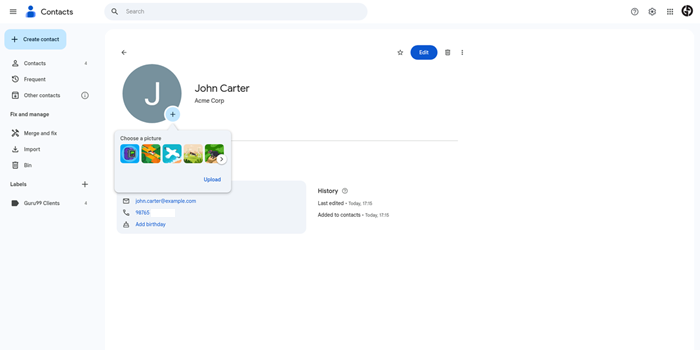
Google Contacts is a straightforward address book for people already working in Gmail, Android, and Google Workspace. It stores names, organizations, phone numbers, email addresses, notes, labels, and custom details. Merge and fix suggestions help users clean obvious duplicates with little setup.
Contacts synchronize across supported Google services and devices, while import and export tools simplify migration. Delegation can support selected shared responsibilities within Workspace. The application lacks deal pipelines, workflow automation, and advanced relationship reporting, making it better for basic organization than formal sales operations or complex team ownership.
Features:
- Contact Records: Store personal and business details, notes, labels, websites, dates, and custom fields inside searchable Google account records for routine personal relationship management.
- Merge Suggestions: Review possible duplicate contacts and combine matching details without manually comparing every repeated address-book entry across imported and synchronized address books.
- Labels: Group contacts by customer type, project, location, or relationship so users can find relevant people more quickly during repeated communication and planning.
- Google Sync: Keep contact details available across Gmail, Android, Calendar suggestions, and other supported Google services and devices without repeated manual address-book updates.
- Import Export: Move records through CSV or vCard files for migration, cleanup, backups, and transfers between address-book systems when changing services or devices.
- Contact Delegation: Allow authorized Workspace users to manage selected contact responsibilities without sharing the account owner password during vacations or staffing changes.
- Automatic Contacts: Surface people from recent interactions and let users decide which entries should become maintained business contacts instead of keeping every interaction.
Pros
Cons
Pricing
Google Contacts is free with a Google account, while Workspace business plans add administration and a 14-day trial.
| Plan | Pricing |
|---|---|
| Google Contacts | $0 with a Google account |
| Business Starter | $7/user/month with annual commitment |
| Business Standard | $14/user/month with annual commitment |
Free app, 14-day Workspace trial
10) Nutshell
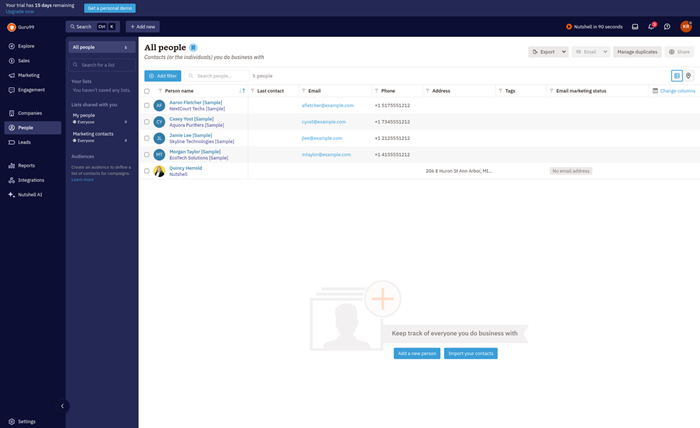
Nutshell combines contact management, sales pipelines, email, reporting, and team collaboration in an approachable B2B CRM. Every paid plan supports unlimited contacts and storage, reducing anxiety about database growth. Profiles connect people, companies, communication, activities, notes, and related opportunities.
Calendar and inbox synchronization keep relationship history near daily work. Higher editions add automation, sequences, advanced reporting, lead scoring, and AI assistance. The interface favors smaller revenue teams that want useful structure without enterprise administration. Buyers should still examine open-lead limits, marketing add-ons, and feature differences before selecting a tier.
Features:
- Contact Records: Connect people, companies, communication, notes, activities, files, and opportunities within searchable customer relationship profiles for complete relationship and account context.
- Unlimited Storage: Keep unlimited contacts and stored data across paid plans, reducing database cleanup caused only by subscription caps as the customer database expands.
- Sales Pipelines: Track leads through customizable stages, owners, values, priorities, and expected dates using visual and list-based working views throughout active sales cycles.
- Email Sync: Connect supported inboxes, preserve messages, reuse templates, and coordinate customer follow-up from matching CRM records during routine daily sales communication.
- Automation: Assign leads, create tasks, send messages, and update records through plan-dependent workflow rules and sales sequences across recurring revenue processes.
- Reporting: Review pipeline value, conversion, activity, forecast, and representative performance through dashboards and configurable reports for informed regular sales management decisions.
- AI Assistance: Summarize selected customer activity, support research, and automate suitable tasks while keeping business decisions under human review before customer-facing actions proceed.
Pros
Cons
Pricing
Nutshell includes a 14-day trial without a card, and annual Foundation pricing begins at $13 per user monthly.
| Plan | Pricing |
|---|---|
| Foundation | $13/user/month billed annually |
| Growth | $25/user/month billed annually |
| Pro | $42/user/month billed annually |
14-day trial, no credit card
Comparison Between Top Contact Management Tools
| Tool | Free Plan | Contact Import | Workflow Automation | Email Integration | Access Controls | AI and Onboarding |
|---|---|---|---|---|---|---|
| Zoho CRM | ✅ | ✅ | ✅ | ✅ | ✅ | ✅ |
| Monday CRM | ❌ | ✅ | ✅ | ✅ | ✅ | ✅ |
| HubSpot CRM | ✅ | ✅ | ✅ | ✅ | ✅ | ✅ |
| Pipedrive | ❌ | ✅ | ✅ | ✅ | ✅ | ✅ |
| Creatio | ❌ | ✅ | ✅ | ✅ | ✅ | ✅ |
What Is a Contact Management App?
A contact management app stores people, organizations, communication history, notes, tasks, and ownership in searchable records. It replaces scattered address books and spreadsheets with one maintained source for relationship work. Some products focus on simple contact organization. Others include sales pipelines, marketing, service, projects, or automation. The right scope depends on how many employees update records and what actions follow each conversation. Clean imports, dependable search, controlled access, and straightforward exports matter more than a long feature list for teams beginning formal contact management.
How Does Contact Management Software Work?
Contact management software creates a profile for each person or company. Teams import records, connect inboxes, assign owners, add notes, and schedule follow-up. Timelines then show messages, meetings, tasks, and related opportunities. Labels, views, and filters help users find useful groups for outreach. Providers may also add enrichment, duplicate controls, automation, dashboards, and mobile access. The system works best when administrators define required fields and ownership rules early. Consistent record maintenance keeps search results, reminders, reports, and customer conversations reliable.
What Is the Difference Between Contact Management Software and CRM?
Contact management focuses on people, organizations, communication, notes, and follow-up activity. A CRM usually extends those records with leads, deals, pipelines, forecasts, campaigns, service cases, and automation. The categories overlap because many contact products now include basic sales functions. Small teams should choose according to actual workflow needs rather than labels. A focused contact manager reduces administration for relationship-driven work. A broader CRM platform fits organizations needing revenue stages, team reporting, marketing coordination, or customer support processes across several departments.
What Features Should You Look for in a Contact Management App?
A practical product should cover relationship work before adding complex automation.
- Contact Profiles: Records should store details, notes, companies, communication, ownership, and custom fields.
- Search and Tags: Filters should find customer groups without rebuilding spreadsheets for every project.
- Task Reminders: Dates and assignments should reduce missed calls, meetings, and promised follow-up.
- Email Connection: Supported inboxes should preserve correspondence beside matching contact and organization records.
- Data Portability: Imports and exports should support cleanup, backups, migration, and analysis.
- Access Controls: Permissions should protect sensitive records as more teammates and departments gain access.
Automation and AI add value only after these foundations work.
How Do Contact Management Apps Handle Imports and Duplicate Records?
Most platforms accept CSV files, spreadsheets, address books, or connected application data. Before importing, teams should standardize email addresses, phone formats, company names, owners, and required fields. A small test batch reveals mapping errors without affecting the full database. Duplicate tools compare selected identifiers and suggest merges, but automated matching can join unrelated people. Administrators should review ambiguous results and preserve backups. A documented deduplication policy also prevents forms, inbox connections, and integrations from recreating records after the initial cleanup.
How Can Contact Management Software Integrate With Email and Calendars?
Email connections can log messages, track engagement, reuse templates, and associate correspondence with matching contacts. Calendar connections add meetings, reminders, and availability to relationship timelines. Buyers should test address matching, shared mailboxes, recurring events, privacy settings, and synchronization direction. Some providers reserve full inbox sync or automation for higher plans. Native connections usually require less maintenance than custom middleware. A controlled integration test should create, update, and remove representative records while checking delays, duplicate activity, permission changes, and failure alerts.
Are Contact Management Apps Safe for Customer Data?
Security depends on the provider, subscription, configuration, and internal business practices.
- Authentication: Require strong passwords and multifactor authentication for administrators and regular users.
- Permissions: Limit records, exports, integrations, and settings according to documented job responsibilities.
- Protection: Review encryption, backups, incident practices, data locations, and published compliance materials.
- Maintenance: Remove inactive accounts and inspect connected applications on a regular schedule.
- Portability: Confirm administrators can export complete records before subscription changes or migration.
A reputable platform cannot correct careless sharing or excessive access without disciplined administration.
How Can AI Improve Contact Management Workflows?
AI can enrich profiles, summarize histories, draft messages, score relationships, and suggest suitable follow-up. These functions reduce searching and repetitive writing when source records remain accurate. Teams should always review generated customer communication before sending it. They should also check credit limits, data handling, permissions, and plan availability. AI assistance cannot resolve unclear ownership or duplicate records independently. Reliable fields, consent practices, and human approval remain necessary for accurate contact decisions, responsible outreach, and lasting customer trust during daily operations.
When Should a Business Upgrade From a Free Contact App?
Upgrade when published limits repeatedly interrupt measured customer work. Common signals include missing seats, full contact allowances, manual assignment, weak reporting, unavailable integrations, or insufficient security controls. The added cost should solve a documented problem instead of satisfying general feature curiosity. Record the blocked task, affected users, and expected time savings first. Compare upgrading with simplifying the process or removing unused records. A controlled upgrade protects cash while giving the team enough capacity for dependable relationship management and sustainable growth.
How Do We Select the Best Contact Management App?
Guru99 dedicates extensive research to current software comparisons, checking official plans, contact capabilities, customer patterns, and practical buying risks before presenting recommendations that help businesses choose with greater confidence today.
- Pricing and Value: We compared free access, trial periods, annual rates, minimum seats, contact allowances, add-ons, and contract conditions. This revealed the practical cost beyond headline subscription figures.
- Record Quality: Our team reviewed profiles, custom fields, duplicate handling, imports, exports, tags, search, timelines, and ownership. Each option needed a credible method for maintaining usable contact data.
- Daily Usability: The researchers checked navigation, setup, reminders, email history, mobile access, and learning resources. Products received credit for making recurring relationship work understandable to ordinary users.
- Automation and AI: The team examined assignments, sequences, enrichment, summaries, drafting, scoring, agents, and usage limits. AI mattered only when it completed a clear contact task with human oversight.
- Integrations: Our testers mapped inboxes, calendars, forms, marketing tools, accounting systems, APIs, and automation services. They also identified connections restricted to higher subscription levels.
- Security: Our experts checked permissions, multifactor authentication, encryption, backups, exports, audits, and published compliance resources. Available protections were evaluated at the relevant plan level.
- Growth Path: The experts reviewed seat prices, contact allowances, workflow capacity, storage, support, and data portability. This showed whether a business could expand across changing teams without disruptive platform replacement.
- Feedback Patterns: We synthesized recurring observations across established review platforms. Repeated strengths and limitations informed the Pros and Cons without treating one isolated opinion as universal evidence for every buyer.
How Do You Troubleshoot Common Contact Management Problems?
Contact management failures usually involve data, permissions, synchronization, or unclear ownership. Diagnose one workflow at a time before expanding the rollout.
- Issue: Imported contacts appear twice after forms and spreadsheets create differently formatted records.
Solution: The administrator should standardize email and phone fields, define matching rules, and merge duplicates before adding new sources. - Issue: Employees miss follow-ups because contact tasks lack owners, dates, or clear priorities.
Solution: The manager should require ownership and due dates, then review overdue actions during a short recurring meeting. - Issue: Email messages stop attaching after passwords, permissions, or security policies change unexpectedly.
Solution: The user should reconnect the mailbox, confirm address matching, review permissions, and send controlled messages for verification. - Issue: Search results omit customers because tags and required fields remain inconsistent across teams.
Solution: The administrator should standardize field choices, update incomplete records, and document when each tag should be applied. - Issue: Automations stop running after the account reaches a monthly usage allowance unexpectedly.
Solution: The owner should inspect usage limits, disable low-value rules, and compare upgrade costs with measured manual effort. - Issue: New teammates cannot view contact histories needed for timely customer responses during handoffs.
Solution: The administrator should review roles, ownership, teams, sharing rules, and field permissions using a nonadministrator test account. - Issue: Connected applications overwrite newer contact details without producing visible warnings during synchronization.
Solution: The integration owner should verify synchronization direction, field precedence, timestamps, error logs, and retry behavior before reconnecting.
What Trends Will Shape Contact Management Software?
Contact platforms are moving toward automated enrichment, conversational search, identity resolution, and task-focused AI agents. Vendors are also connecting contact records with marketing, service, commerce, and project work. Privacy requirements will increase attention to consent, retention, permissions, and regional data handling. Buyers should expect more credit-based pricing for AI actions and enrichment. Strong products will make these costs visible and preserve human approval. The lasting advantage will come from trusted relationship data, not from adding automation to incomplete or poorly governed records.
Verdict
After comparing ten contact platforms, I found three options that balanced record quality, workflow flexibility, integrations, and growth potential particularly well.
- Zoho CRM: I preferred its configurable modules, useful free edition, multichannel context, and credible path toward structured customer processes.
- Monday CRM: Its visual boards made shared contact ownership easy to review, although permanent CRM access required payment after the trial.
- HubSpot CRM: The connected customer timeline impressed me by combining approachable contact tools, email activity, learning resources, and broad integrations.
FAQs
Zoho is a Sales CRM tool that helps you improve teams’ productivity with designs that are precise solutions to business activities. It is one of the best CRM for start-ups, providing an easy way to monitor key metrics and manage monthly targets.
