
10 BEST C Programming Books for Beginners (2026 Update)
 Editorial Team
We are reader supported and may earn a commission when you buy through links on our site

C is a general-purpose programming language used in operating systems, embedded devices, databases, compilers, and many command-line tools. It gives programmers direct control over memory and hardware, which makes it fast but also requires careful coding.
A good C book should explain syntax, pointers, memory, functions, and debugging in a clear order. Beginners need guided examples and exercises, while experienced programmers may want a reference or low-level systems guide.
This list compares 10 Best C programming books for different skill levels. It includes beginner courses, visual lessons, college textbooks, data structure guides, advanced language discussions, and books that connect C with assembly and program execution. Read more…
Best C Programming Books for Beginners and Experts
| Book Title | Author Name | Latest Edition | Publisher | Ratings | Link |
|---|---|---|---|---|---|
| C Programming Absolute Beginner’s Guide | Greg Perry and Dean Miller | 3rd edition | Que Publishing |  |
Learn More |
| C Programming Language | Brian W. Kernighan and Dennis M. Ritchie | 2nd edition | Pearson | |
Learn More |
| C: The Complete Reference | Herbert Schildt | 4th edition | McGraw Hill Education | |
Learn More |
| Head First C: A Brain-Friendly Guide | David Griffiths and Dawn Griffiths | 1st edition | Shroff | |
Learn More |
| C Programming in Easy Steps, 5th Edition | Mike McGrath | 5th edition | In Easy Steps Limited | |
Learn More |
Ratings: These ratings come from Amazon book listings, not Guru99. They may vary by book edition or seller. Ratings, publisher names, and edition details were checked in October 2026.
1) C Programming Absolute Beginner’s Guide
Publisher: Que Publishing; 3rd edition
Language: English
Print length: 354 pages
Screen Reader: Supported

C Programming Absolute Beginner’s Guide by Greg Perry and Dean Miller starts with the parts of C that new programmers use first. It explains variables, operators, input, output, loops, functions, arrays, and pointers through short examples. The order is easy to follow, and the tone does not assume a computer science background.
The book works best as a first course, not as a full language reference. Its examples help readers start writing code quickly, but experienced programmers may find the pace slow and will need newer documentation for current compilers and standards.
What You’ll Learn:
- Set up a compiler and run your first program
- Store and change data with variables and constants
- Use operators to calculate and compare program values
- Control program flow with decisions and repeated loops
- Organize reusable code with functions and header files
- Work with arrays, strings, pointers, and basic input
Best For: Complete beginners who want explanations, short examples, steady lessons, and practical coverage of core C syntax without heavy theory first.
2) C Programming Language
Publisher: Pearson; 2nd edition
Language: English
Print length: 279 pages
Screen Reader: Supported

The C Programming Language by Brian W. Kernighan and Dennis M. Ritchie is a compact guide written by two people closely tied to the language. It covers syntax, types, control flow, functions, pointers, structures, input and output, and the standard library. The examples are small, direct, and useful for readers who like learning from code.
This classic moves quickly and expects readers to solve exercises. Its brief explanations can frustrate complete beginners, so it is often easier after an introductory course or book. The language concepts remain useful, but readers should check current compiler documentation when details have changed.
What You’ll Learn:
- Understand core syntax, types, expressions, and program structure
- Write functions that pass values and manage variables
- Use pointers, arrays, strings, structures, and unions correctly
- Read and write files through standard library functions
- Build small programs from concise worked code examples
- Strengthen problem solving through focused exercises and examples
Best For: Students and programmers who know basic coding and want a concise, demanding guide with examples and exercises in standard C.
3) C: The Complete Reference
Publisher: McGraw Hill Education; 4th edition
Language: English
Print length: 832 pages
Screen Reader: Supported
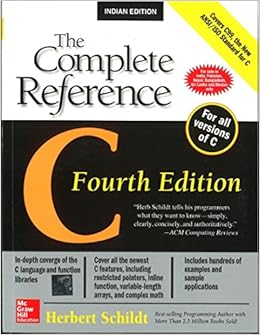
C: The Complete Reference by Herbert Schildt covers the language from basic statements through pointers, structures, file handling, and library functions. Its broad scope makes it useful when you need both a learning guide and a desk reference. Chapters are organized by topic, so readers can return to a single feature without rereading the whole book.
The amount of material can feel dense for a first-time programmer. Some examples and compiler notes reflect the age of this edition, so pair the book with current C documentation. It suits readers who prefer broad coverage over a short, guided course.
What You’ll Learn:
- Review C syntax, expressions, statements, and data types
- Control execution with loops, branches, and function calls
- Manage memory by using arrays, pointers, and structures
- Handle files, streams, errors, and formatted input correctly
- Find standard library functions for common programming tasks
- Use the book as a topic-based desktop reference
Best For: Learners wanting broad C coverage in one volume, plus working programmers who need a reference for syntax and library functions.
4) Head First C: A Brain-Friendly Guide
Author Name: David Griffiths
Publisher: Shroff
Latest Edition: 1st edition
No of Pages: 652 pages

Head First C by David Griffiths and Dawn Griffiths uses pictures, puzzles, questions, and projects to explain how C programs work. It covers pointers, memory, strings, structures, processes, networking, and basic development tools. The visual layout makes difficult ideas easier to revisit when a plain textbook feels too dry.
The busy page design will not suit every reader, and the book is not a compact reference. It is most useful when you type the examples and complete the projects. Readers wanting formal definitions may need a second book beside it.
What You’ll Learn:
- Read visual explanations of C syntax and memory
- Create functions, arrays, strings, and structured data confidently
- Understand pointers without relying on dense formal definitions
- Use development tools to compile and debug programs
- Explore processes, sockets, threads, and shared libraries safely
- Practice concepts through puzzles, exercises, and working projects
Best For: Visual learners and beginners who want projects, diagrams, puzzles, and memorable explanations of pointers, memory, tools, and practical C programming.
5) C Programming in Easy Steps, 5th Edition
Author Name: Mike McGrath
Publisher: In Easy Steps Limited
Latest Edition: 5th edition
No of Pages: 197 pages

C Programming in Easy Steps by Mike McGrath teaches the language in short, illustrated sections. It begins with compiler setup and basic program structure, then covers variables, operators, loops, functions, arrays, strings, pointers, and files. Clear screenshots and compact examples make each lesson easy to scan before practicing it yourself.
The brief format keeps the book approachable, but it cannot explain every topic in depth. It works well for a quick start or refresher. Readers planning systems work or advanced projects will need a larger reference and more practice after finishing it.
What You’ll Learn:
- Install a compiler and create simple C programs
- Declare variables, constants, arrays, and common data types
- Build decisions and loops for program control flow
- Create functions and pass values between program sections
- Use strings, pointers, structures, and file operations confidently
- Test small examples before combining them into programs
Best For: Beginners who prefer short lessons, screenshots, and small examples, or returning programmers needing a quick review of basic C features.
6) Expert C Programming: Deep Secrets
Author Name: Peter van der Linden
Publisher: Pearson
Latest Edition: 1st edition
No of Pages: 837 pages

Expert C Programming by Peter van der Linden looks at the surprising parts of C that cause bugs or confuse experienced developers. It explains declarations, arrays, pointers, linking, runtime behavior, and the way compilers interpret code. Stories and real examples make low-level details easier to remember than a list of rules.
This is not a beginner tutorial and does not teach the language in a steady order. Some platform references are old, yet the explanations of C behavior remain useful. Read it after you can already write and debug small C programs.
What You’ll Learn:
- Recognize confusing declarations and avoid common coding mistakes
- Understand arrays and pointers at a deeper level
- See how linking and runtime behavior affect programs
- Learn why compiler messages sometimes hide real problems
- Read historical examples that explain practical language behavior
- Debug tricky C code with stronger mental models
Best For: Intermediate C programmers who understand basic syntax and want clearer explanations of pointers, declarations, linking, compilers, and difficult language behavior.
7) C Programming: A Modern Approach
Author Name: K N King
Publisher: W. W. Norton & Company
Latest Edition: 2nd edition
No of Pages: 864 pages
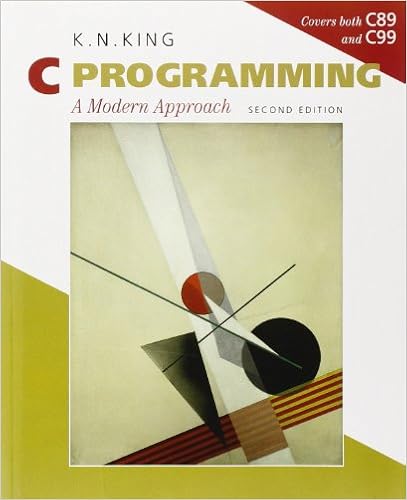
C Programming: A Modern Approach by K. N. King offers a structured course that starts with basic programs and moves into pointers, arrays, structures, files, and the standard library. Explanations are detailed without being needlessly formal. Numerous exercises make it suitable for college study or careful self-learning.
The book is long, and readers seeking a fast introduction may prefer a shorter guide. Its depth is valuable when you want one main textbook for a full course. Check current documentation for later C standards and compiler-specific features not covered by the edition.
What You’ll Learn:
- Follow a complete path from basics through advanced topics
- Write clear expressions, statements, functions, and complete programs
- Use arrays, pointers, strings, structures, and unions effectively
- Understand preprocessing, file handling, and standard library tools
- Practice each chapter with review questions and exercises
- Build careful programming habits through detailed worked explanations
Best For: Students and self-taught learners wanting a detailed textbook, many exercises, and steady coverage from first programs through advanced C topics.
8) Low-Level Programming: C, Assembly, and Program Execution
Author Name: Igor Zhirkov
Publisher: Apress
Latest Edition: 1st edition
No of Pages: 435 pages

Low-Level Programming by Igor Zhirkov connects C code with Intel 64 assembly and the way programs run on a computer. It explains memory, processes, compilation, linking, object files, performance, and related computer science topics. The book helps readers see what happens below source code instead of treating the compiler as a black box.
This book expects prior programming knowledge and becomes technical quickly. It is not the right starting point for learning basic C syntax. Readers interested in systems, compilers, operating systems, or performance will gain more from it than general application developers.
What You’ll Learn:
- Connect C statements with generated assembly instructions clearly
- Understand memory layout, addresses, stacks, and calling conventions
- Follow compilation from source code through executable files
- Read object formats, linking steps, and program symbols
- Study processes, system calls, and low-level input output
- Measure hardware-aware performance with practical profiling and timing techniques
Best For: Students and systems programmers who know C basics and want to connect source code with assembly, memory, linking, and execution.
9) Data Structures Using C
Author Name: Reema Thareja
Publisher: Oxford;
Latest Edition: 2nd edition
No of Pages: 560 pages

Data Structures Using C by Reema Thareja explains how common data structures are represented and implemented with C. It covers arrays, strings, stacks, linked lists, queues, trees, heaps, and graphs. The book also introduces algorithm analysis, helping students compare solutions instead of only copying code.
Its textbook style works well for coursework but may feel formal for casual learners. Readers should already understand basic C syntax, functions, and pointers. The focus is data structures, so it should follow a beginner C guide rather than replace one.
What You’ll Learn:
- Implement arrays, strings, linked lists, stacks, and queues
- Build trees, heaps, and graphs with C structures
- Compare algorithms by studying time and space costs
- Choose suitable data structures for different programming problems
- Trace insertion, deletion, searching, and sorting operations step-by-step
- Apply pointers while building linked dynamic structures correctly
Best For: Computer science students who know C and need textbook coverage of data structures, algorithms, complexity, and pointer-based implementations in coursework.
10) Computer Fundamentals and Programming in C
Author Name: Reema Thareja
Publisher: Oxford University Press
Latest Edition: 2nd edition
No of Pages: 544 pages

Computer Fundamentals and Programming in C by Reema Thareja combines basic computer concepts with an introduction to C. It explains hardware, software, number systems, program design, syntax, control statements, functions, arrays, pointers, structures, and files. The classroom-style order helps students understand the computer before writing larger programs.
The broad syllabus means some topics receive less depth than they would in a dedicated C reference. It best fits academic courses and first-year students. Independent learners focused only on coding may find the computer fundamentals sections slower than needed.
What You’ll Learn:
- Understand computer hardware, software, and number systems first
- Plan algorithms before turning them into C programs
- Write expressions, decisions, loops, and reusable functions clearly
- Store data in arrays, strings, structures, and unions
- Use pointers and files in larger student programs
- Review concepts through examples, exercises, and classroom questions
Best For: First-year students wanting computer fundamentals and C programming in one textbook, with structured explanations, examples, exercises, and exam preparation support.
How to Choose a C Programming Book
Choose a book that matches what you can already build. A complete beginner needs short examples, exercises, and compiler setup help. Students may prefer a textbook with review questions. Working programmers may need a reference, a data structures guide, or a low-level book about memory and program execution.
- For a gentle first course: Start with C Programming Absolute Beginner’s Guide.
- For a compact classic: Read The C Programming Language.
- For visual lessons: Choose Head First C.
- For a full textbook: Use C Programming: A Modern Approach.
- For data structures: Choose Data Structures Using C.
- For systems knowledge: Read Low-Level Programming after learning the basics.
Is C Still Worth Learning?
Yes. C remains useful for operating systems, embedded devices, drivers, databases, compilers, and software that needs close control over memory and performance. It also helps programmers understand pointers, memory layout, compilation, and the cost of common operations.
C is less convenient for many web and business applications, where languages with automatic memory management may be easier. Learn it when your course, job, device, or systems project benefits from its speed and low-level control.
How to Practice C While Reading
Install a compiler and type every example yourself. Turn on compiler warnings, change one part of the program, and predict what will happen before running it. When a program fails, read the message and fix the cause instead of copying a finished answer.
Build small console projects such as a calculator, contact list, file counter, text menu, or simple game. After learning pointers, use a debugger or memory checker to find invalid access and leaks. Check current compiler documentation when an older book uses dated commands or libraries.
