
8 BEST Accounting Books for Beginners (2026 Update)
 Editorial Team
We are reader supported and may earn a commission when you buy through links on our site
Accounting records and explains the financial activity of a person or business. It shows how much money comes in, where it goes, what the business owns, and what it owes. These records also help readers understand profit, cash flow, spending patterns, and areas where better decisions may reduce costs or improve results.
Learning accounting can feel difficult when terms such as assets, liabilities, equity, and revenue appear together.
A clear book can explain each idea in order and support it with examples, exercises, and sample financial statements. This guide compares accounting books for beginners, students, and small business owners, helping you choose a title that matches your experience, learning goals, preferred study style, and pace. Read more…
Best Accounting Books
| Book Title | Author Name | Latest Edition | Publisher | Ratings | Link |
|---|---|---|---|---|---|
| Accounting Made Simple | Mike Piper | 1st edition | Simple Subjects, LLC |  |
Learn More |
| The Accounting Game | Darrell Mullis | 2nd edition | Sourcebooks | |
Learn More |
| Accounting for Dummies | John A. Tracy | 6th edition | For Dummies | |
Learn More |
| Accounting for the Numberphobic | Dawn Fotopulos | 1st edition | AMACOM |  |
Learn More |
| Accounting for Small Business Owners | Tycho Press | Not shown | Tycho Press | |
Learn More |
Ratings: These ratings come from Amazon book listings, not Guru99. They may vary by book edition or seller. Ratings, publisher names, and edition details were checked in October 2026.
1) Accounting Made Simple: Accounting Explained in 100 Pages or Less
Author Name: Mike Piper
Publisher: Simple Subjects, LLC
Latest Edition: 1st edition
No of Pages: 115 pages

Accounting Made Simple by Mike Piper explains financial statements and core accounting ideas in a short, direct format. It covers the accounting equation, balance sheets, income statements, cash flow statements, and common financial ratios without assuming prior business training.
Its brief treatment makes it easy to finish, but readers needing exercises, tax guidance, or detailed bookkeeping workflows will need another source. Use it as a foundation before moving to a larger reference or the cash flow report guide for added practice.
What You’ll Learn:
- Understand how the basic accounting equation keeps records balanced
- Read balance sheets and identify assets, liabilities, and equity
- Follow income statements to see revenue, expenses, and profit
- Track cash movement with a basic cash flow statement
- Calculate common financial ratios and explain what they show
- Connect journal entries with the main financial statements
Best For: Beginners, students, and small business owners who want a short introduction to financial statements, ratios, and basic accounting concepts first.
2) The Accounting Game: Basic Accounting Fresh from the Lemonade Stand
Author Name: Darrell Mullis
Publisher: Sourcebooks
Latest Edition: 2nd edition
No of Pages: 220 pages
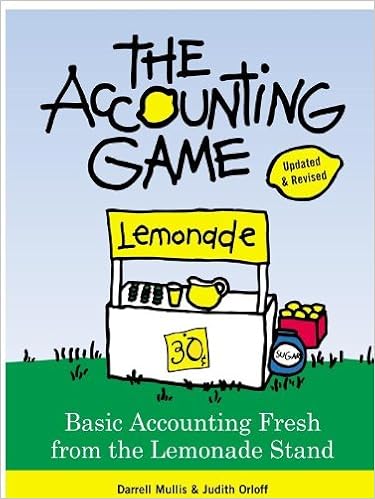
The Accounting Game by Darrell Mullis and Judith Orloff teaches basic accounting through a lemonade stand example. The story connects sales, expenses, inventory, assets, and profit with financial statements, while quizzes and worksheets give readers regular practice.
The playful method is easier to approach than a formal textbook, but it does not provide the depth needed for advanced reporting or professional exams. Readers who dislike fictional examples may prefer a direct reference with conventional exercises.
What You’ll Learn:
- Record lemonade stand sales, costs, inventory, and profit
- Connect daily transactions with the main financial statements
- Read simple balance sheets and income statements correctly
- Use quizzes and worksheets to check accounting knowledge
- Track business progress through practical record keeping exercises
- Apply basic accounting ideas to small business decisions
Best For: Visual learners and new business owners who prefer examples, quizzes, and worksheets while learning basic bookkeeping and financial statement skills.
3) Accounting for Dummies
Author Name: John A. Tracy
Publisher: For Dummies
Latest Edition: 6th edition
No of Pages: 416 pages

Accounting for Dummies by John A. Tracy explains accounting terms and reports in plain language. It covers income, expenses, inventory, budgets, profit margins, and the differences between private and public company reporting.
Its broad coverage works well as a general reference, but the length can feel heavy when readers need one quick answer. Edition-specific rules and examples should be checked against current professional accounting standards before applying them at work.
What You’ll Learn:
- Understand common accounting terms without dense professional language
- Record income, expenses, inventory, and other business activity
- Read financial reports for private and public companies
- Prepare budgets and compare results with business plans
- Calculate profit margins and review business performance clearly
- Recognize where accounting rules need current professional guidance
Best For: Beginners who want broad accounting coverage in plain language, including budgets, inventory, financial reports, and business performance analysis skills clearly.
4) Accounting for the Numberphobic: A Survival Guide for Small Business Owners
Author Name: Dawn Fotopulos
Publisher: AMACOM
Latest Edition: 1st edition
No of Pages: 272 pages

Accounting for the Numberphobic by Dawn Fotopulos explains financial statements for owners who feel uncomfortable with numbers. It covers ledgers, profit and loss reports, cash flow, and the figures used to judge business health.
The plain language and owner-focused examples make the book approachable, but it is not a full accounting course. Readers preparing for formal exams or handling complex reporting will need a deeper text and the balance sheet guide.
What You’ll Learn:
- Read profit and loss reports without feeling overwhelmed
- Follow cash flow statements and spot warning signs
- Use ledgers to organize common business transactions correctly
- Measure business health with a few practical figures
- Connect balance sheet totals with everyday owner decisions
- Ask better questions when speaking with an accountant
Best For: Small business owners who avoid numbers but need practical help reading statements, managing cash, and checking business health with confidence.
5) Accounting for Small Business Owners
Author Name: Tycho Press
Publisher: Tycho Press
No of Pages: 170 pages

Accounting for Small Business Owners by Tycho Press focuses on the records and reports used in a small company. It explains basic terms, sample statements, common financial situations, product or service sales, and month-end account balancing.
The practical scope suits owners who manage their own records, but the book cannot replace advice on taxes, payroll rules, or industry-specific reporting. Readers who need formal accounting theory may find its treatment too brief.
What You’ll Learn:
- Set up basic records for a small business
- Understand accounting terms used in daily business work
- Read sample statements and connect them with transactions
- Record product and service sales in organized accounts
- Complete month end balancing with fewer record errors
- Use financial reports to support practical business decisions
Best For: Owners and freelancers who need practical bookkeeping guidance for daily records, financial reports, payroll, business planning, and confident business decisions.
6) Narrative and Numbers: The Value of Stories in Business
Author Name: Aswath Damodaran
Publisher: Columbia University Press
Latest Edition: Illustrated edition
No of Pages: 288 pages

Narrative and Numbers by Aswath Damodaran explains how business stories shape valuation assumptions. The book uses company examples, including Uber, Apple, and Amazon, to show how a story can be translated into revenue, risk, growth, and value estimates.
This is a valuation book rather than a beginner accounting manual. Readers need comfort with financial statements and basic finance before the examples become useful. Choose it after learning bookkeeping and reporting, especially if investment analysis is your goal.
What You’ll Learn:
- Turn a business story into measurable valuation assumptions
- Connect revenue growth, risk, and value estimates clearly
- Test whether a company narrative fits available numbers
- Study valuation choices through well-known public company examples
- Identify weak assumptions before trusting a business forecast
- Combine financial analysis with clearer investment decision making
Best For: Business students, founders, and analysts who want to connect company stories with valuation assumptions, numbers, and investment decisions more clearly.
7) Fundamental Accounting Principles
Author Name: John J. Wild
Publisher: McGraw Hill
Latest Edition: 24th edition
No of Pages: 1136 pages

Fundamental Accounting Principles by Ken Shaw is a structured textbook for introductory accounting courses. It explains accounting processes in sequence and supports the lessons with examples, assignments, and practice material for classroom study.
The detailed textbook format gives students more practice than shorter guides, but it is heavier and less convenient for quick business questions. Confirm that the linked edition matches your course syllabus before buying, because chapter order and assignments can differ.
What You’ll Learn:
- Follow accounting processes in a clear learning sequence
- Practice core concepts through examples and structured assignments
- Connect transactions with journals, ledgers, and financial statements
- Review each chapter with problems that test understanding
- Build confidence before taking more advanced accounting courses
- Use accounting information when making basic business decisions
Best For: Accounting students who want structured lessons, worked examples, assignments, and regular practice across the main financial accounting topics in order.
8) Accounting Handbook (Barron’s Accounting Handbook)
Author Name: Jae K. Shim
Publisher: Barrons Educational Series
Latest Edition: 6th edition
No of Pages: 1072 pages

Accounting Handbook by Jae K. Shim and its coauthors is a large reference covering financial statements, reporting requirements, cost management, taxes, and accounting terminology. It also discusses U.S. GAAP and IFRS for readers comparing common reporting frameworks.
The wide coverage makes it useful at a desk, but more than one thousand pages can overwhelm beginners. It works better for looking up a term or rule than for learning accounting in order, and regulatory details may need a current source.
What You’ll Learn:
- Look up accounting terms in an organized reference
- Review financial statements and common reporting requirements clearly
- Compare basic ideas used in GAAP and IFRS
- Understand cost management concepts used by business managers
- Find guidance on tax forms and preparation topics
- Check unfamiliar accounting language while studying or working
Best For: Accountants, finance students, and managers who need a detailed desktop reference covering reporting rules, taxes, costs, and terminology at work.
How to Choose an Accounting Book
Start with your goal. A student needs clear explanations, worked problems, and enough exercises to check each chapter. A small business owner needs help with records, cash flow, statements, and routine decisions. A working accountant may need a reference that covers reporting rules, taxes, costs, and terminology.
Check the edition before buying. Core ideas such as the accounting equation change slowly, but tax rules, reporting guidance, and course assignments can become dated. Review the table of contents and sample pages so you can judge the reading level, examples, and amount of practice.
Which Accounting Topics Should You Learn First?
Begin with assets, liabilities, equity, revenue, and expenses. Then learn how debit and credit entries move through journals and ledgers before reaching a trial balance. This sequence makes the income statement, balance sheet, and cash flow statement easier to understand.
After the basics, study inventory, budgets, ratios, cost accounting, payroll, tax, or valuation according to your goal. Students should follow their course order. Business owners can focus on reports they use regularly, while investors may spend more time on cash flow, risk, and valuation assumptions.
How to Practice Accounting While Reading
Work through each example with your own numbers. Record a sale, an expense, a loan, and an inventory purchase, then trace each transaction through the accounts. Repeating this process helps you see why the financial statements change.
Keep one simple practice business throughout the book. Prepare its journal entries, ledger, trial balance, income statement, balance sheet, and cash flow statement. Compare your answer with the book, correct errors, and write down the rule you missed before starting the next chapter.
