
Banking Domain Application Testing Project
 Editorial Team
⚡ Smart Summary
Banking Domain Application Testing validates functionality, performance, and security of financial software that handles sensitive transactions. This tutorial explains domain knowledge, banking application characteristics, test phases, sample test cases, and key mitigation strategies for risks unique to the BFSI sector.

Banking Domain Testing
Banking Domain Testing is the software testing process of a banking application for functionality, performance, and security. The main purpose of testing a banking application is to ensure that all activities and functionalities of the banking software run smoothly with no errors and that the software remains protected.
The BFSI (Banking, Financial Services, and Insurance) sector is the biggest consumer of IT services. Banking applications directly handle confidential financial data, so it is mandatory that every activity performed by banking software runs reliably and without error. Banking software performs functions such as transferring and depositing funds, balance inquiries, transaction history, and withdrawals. Testing a banking application ensures these activities not only execute correctly but also remain protected from hackers.
Join our Live Banking Testing Project for Free
What is Domain in Testing?
Domain in Testing refers to the industry for which the software testing project is created. The term is used frequently when discussing software projects and development. Examples include the Insurance domain, Banking domain, Retail domain, and Telecom domain.

While developing any domain-specific project, the help of a domain expert is usually sought out. Domain experts are masters of the subject and know the application inside out.
Why Domain Knowledge Matters?
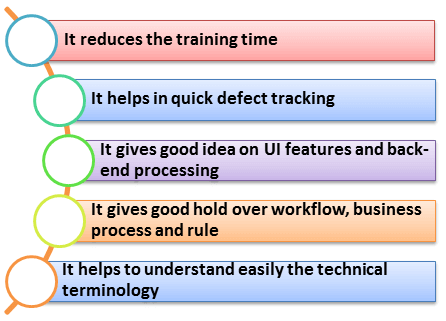
Domain knowledge is essential for testing any software product because it directly improves test coverage, defect detection, and stakeholder confidence. A tester who understands banking workflows can spot edge cases that a non-domain tester misses entirely.
Banking Domain Knowledge – Introduction
Banking domain concepts are vast and are broadly sub-characterized into two sectors:
- Traditional banking sector
- Service-based banking sector
The table below lists the services these two sub-sectors encompass.
| Sector | Services Included |
|---|---|
| Traditional banking sector | Core banking, Corporate banking, Retail banking |
| Service-based banking sector | Core, Corporate, Retail, Loan, Trade finance, Private banking, Consumer finance, Islamic banking, Customer delivery channels / Front-end delivery |
Based on the scope of your project, you may need to test one or all of the above service offerings. Before you begin testing, ensure you have enough background on the service being tested.
Characteristics of a Banking Application
Before you begin testing, it is important to note the standard features expected of any banking application, so you can gear your test efforts to achieve these characteristics. A standard banking application should meet the following expectations:
- Support thousands of concurrent user sessions.
- Integrate with many other applications such as trading accounts, bill-pay utilities, and credit cards.
- Process fast and secure transactions.
- Include a massive storage system.
- Provide high auditing capability to troubleshoot customer issues.
- Handle complex business workflows.
- Support users on multiple platforms (Mac, Linux, Unix, Windows).
- Support users from multiple locations.
- Support multi-lingual users.
- Support users on various payment systems (VISA, AMEX, MasterCard).
- Support multiple service sectors (Loans, Retail banking, etc.).
- Provide a foolproof disaster-management mechanism.
Types of Banking Applications to Test
Before mapping the test phases, it helps to know which banking applications are typically in scope:
- Core Banking System (CBS): central engine for deposits, loans, and accounts.
- Net Banking: customer-facing web portal for transfers and bill payments.
- Mobile Banking: iOS and Android apps with biometrics and notifications.
- ATM and Kiosk Software: embedded software on cash machines.
- Payment Gateways: card, UPI, and wallet transaction handlers.
- Loan and Treasury Modules: back-office credit and foreign-exchange apps.
Test Phases in Testing Banking Applications
Once the in-scope applications are known, testing typically proceeds through the following phases.
- Requirement Analysis: Performed by the business analyst, who gathers and documents the requirements for a specific banking application.
- Requirement Review: Quality analysts, business analysts, and development leads review the requirements document and cross-check it to ensure it does not break any existing workflow.
- Business Requirements Documentation: Quality analysts prepare business requirements documents that cover every reviewed requirement.
- Database Testing: The most important part of banking application testing. It verifies data integrity, data loading, data migration, stored procedures, function validation, and business rules.
- Integration Testing: Under Integration Testing, all developed components are integrated and validated together.
- Functional Testing: Standard testing activities such as Test Case preparation, test case review, and execution are performed during this phase.
- Security Testing: Ensures the software is free of security flaws. The QA team should include both negative and positive scenarios to attempt breaking into the system and to report vulnerabilities before any unauthorized party finds them. Banks should also enforce multi-layer access validation such as one-time passwords. Automation tools commonly used for Security Testing include IBM AppScan and HP WebInspect, while Manual Testing often relies on Proxy Sniffer, Paros Proxy, and HTTP Watch.
- Usability Testing: Ensures that users with disabilities can use the system as easily as any other user — for example, ATMs equipped with audio guidance and Braille keypads for accessibility.
- User Acceptance Testing: The final stage, performed by end users, to confirm that the application behaves correctly in real-world scenarios.
Sample Test Case for Net Banking Login Application
Security is paramount for any banking application. During test preparation, the QA team should include both negative and positive scenarios to probe the system and report vulnerabilities before any unauthorized individual finds them. This means writing not only negative test cases but also destructive tests.
The table below outlines generic test cases for a banking application.
| Area | Sample Test Cases |
|---|---|
| Admin | Verify admin login with valid and invalid data; admin login without data; all admin home links; admin change password with valid, invalid, and existing data; admin logout. |
| New Branch | Create a new branch with valid, invalid, and existing data; create without data; reset and cancel; update branch with valid, invalid, and existing data; cancel; delete branch with and without dependencies; branch search. |
| New Role | Create a new role with valid, invalid, existing data; create without data; verify role description and types; cancel and reset; delete role with and without dependencies; verify links on role details page. |
| Customer & Visitors | Verify all visitor and customer links; customer login with valid, invalid, or no data; banker login with valid, invalid, or no data. |
| New Users | Create new user with valid, invalid, and existing branch data; create without data; cancel and reset; update user with valid, invalid, and existing data; cancel; delete user. |
Challenges in Testing the Banking Domain & Their Mitigation
Even with strong test phases and templates, testers face several recurring challenges in banking projects. The mitigations below have proven effective in real engagements.
| Challenge | Mitigation |
|---|---|
| Getting access to production data and replicating it as test data is difficult. | Ensure test data meets regulatory compliance requirements and maintain confidentiality through data masking, synthetic test data, and system-integration testing. |
| Migrating from an old banking system to a new one — including routines, procedures, and data uploads — is the biggest challenge. | Complete Data Migration Testing and run Regression test cases on both old and new systems, comparing results until they match. |
| Requirements may be poorly documented, leaving functional gaps. Non-functional requirements are often undocumented, so testers do not know whether to test them. | Testers should participate from the Requirement Analysis phase and actively review business requirements. |
| Verifying that the system follows desired policies and procedures. | Perform Compliance and Regulatory Policy testing. |
| Scope and timelines expand as banking applications integrate with internet and Mobile banking. | Allocate sufficient time in the plan for Integration Testing when the banking application has many external interfaces. |
