
15 BEST Artificial Intelligence Books (2026 Update)
 Editorial Team
We are reader supported and may earn a commission when you buy through links on our site
Artificial intelligence (AI) is a branch of computer science that creates systems capable of performing tasks that usually require human judgment. These tasks include understanding language, recognizing images, finding patterns, making predictions, and solving problems.
Learning AI can feel confusing because books cover different subjects. Some teach Python and machine learning, while others focus on mathematics, business uses, ethics, or AI’s effect on society. The right book depends on your experience and learning goals.
This guide compares AI books for beginners, students, developers, and business readers. Each review explains the main topics, required knowledge, practical value, and intended audience, helping you choose a suitable starting point. Read more…
Best AI Books for Beginners to Expert
| Book Title | Author Name | Latest Edition | Publisher | Ratings | Link |
|---|---|---|---|---|---|
| Make Your Own Neural Network | Tariq Rashid | 1st edition | Independently Published |  |
Learn More |
| Artificial Intelligence | Stuart Russell | 3rd edition | Pearson |  |
Learn More |
| Artificial Intelligence For Dummies | John Paul Mueller | 1st edition | For Dummies | |
Learn More |
| Machine Learning For Absolute Beginners | O Theobald | 2nd edition | Scatterplot Press | |
Learn More |
| Superintelligence | Nick Bostrom | Unabridged edition | Audible Studios on Brilliance audio | |
Learn More |
Ratings: Values are carried over from the supplied original book table and were checked against that source in October 2026. They are not Guru99 ratings and may change on retailer pages.
1) Make Your Own Neural Network
Author Name: Tariq Rashid
Publisher: Pearson Independently Published
Latest Edition: 1st edition
No of Pages: 222 pages

Make Your Own Neural Network teaches the basic mathematics behind a small neural network and turns those ideas into Python code. Tariq Rashid explains inputs, weights, errors, and learning in a sequence that lets readers follow each calculation instead of treating the model as a black box.
The pace is gentle, but readers still need patience with algebra and code. The examples focus on a compact network rather than modern production frameworks. This makes the book useful for understanding how learning works before moving to larger libraries, advanced architectures, or ready-made tools.
What You’ll Learn:
- Understand how inputs, weights, and outputs connect mathematically
- Calculate errors and adjust weights through backpropagation steps
- Write a small neural network using plain Python
- Train models with handwritten digit data and examples
- Read matrix operations without treating models as magic
- Prepare for deeper study with modern learning libraries
Best For: Beginners with basic Python skills who want to learn neural network mathematics through calculations and simple code.
2) Artificial Intelligence: A Modern Approach
Author Name: Stuart Russell
Publisher: Pearson
Latest Edition: 3rd edition
No of Pages: 1152 pages
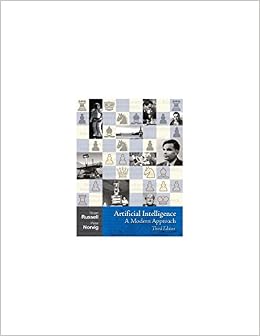
Artificial Intelligence: A Modern Approach covers the main academic areas of AI, including agents, search, planning, logic, uncertainty, machine learning, language, vision, robotics, and ethics. Stuart Russell and Peter Norvig begin with clear ideas before moving into algorithms and mathematical detail.
Its breadth makes it useful as a course text and long-term reference, but it is too large for a quick introduction. Readers need some comfort with algorithms, probability, and formal reasoning. Pearson lists a fourth edition, while the preserved Lasso card may show older details, so verify the linked copy.
What You’ll Learn:
- Explain how intelligent agents choose actions under uncertainty
- Compare search methods for solving structured decision problems
- Represent knowledge through logic and structured probability models
- Study machine learning, language, vision, and robotics together
- Connect planning methods with real decision-making problems effectively
- Examine fairness, safety, privacy, and responsible AI choices
Best For: University students, instructors, researchers, and developers needing a detailed academic reference on core AI methods.
3) Artificial Intelligence For Dummies
Author Name: John Paul Mueller
Publisher: For Dummies
Latest Edition: 1st edition
No of Pages: 336 pages

Artificial Intelligence For Dummies explains AI in everyday language for readers who do not want to begin with equations or programming. John Paul Mueller and Luca Massaron discuss common terms, typical applications, data, algorithms, robots, and the limits of current systems.
The book gives a wide overview rather than instructions for building models. That makes it easier for managers and general readers, but less useful for someone seeking coding practice. AI examples change quickly, and newer editions exist, so confirm that the linked edition matches the topics you expect.
What You’ll Learn:
- Explain common artificial intelligence terms in everyday language
- Separate current AI abilities from popular public misconceptions
- Recognize how organizations use prediction and automated decisions
- Understand relationships between data, algorithms, and model outputs
- Consider privacy, bias, safety, and responsible system use
- Ask better questions before trusting an automated result
Best For: Managers, students, and general readers seeking a plain-language AI introduction without programming or advanced mathematics.
4) Machine Learning For Absolute Beginners
Author Name: O Theobald
Publisher: Scatterplot Press
Latest Edition: 2nd edition
No of Pages: 164 pages

Machine Learning For Absolute Beginners introduces supervised and unsupervised learning without assuming a strong mathematics background. Oliver Theobald covers data preparation, regression, clustering, support vector machines, neural networks, and the basic steps used to create a model in Python.
Short explanations and visual examples make the early chapters approachable. The trade-off is limited depth, so experienced programmers may outgrow it quickly. Use it to learn the vocabulary and workflow, then move to a project-led book when you are ready to tune models, compare results, and write more code.
What You’ll Learn:
- Distinguish major supervised, unsupervised, and reinforcement learning approaches
- Prepare messy data before training a prediction model
- Compare regression, clustering, and classification methods for practical projects
- Build a basic machine learning model with Python
- Understand validation, feature selection, and model improvement steps
- Recognize when simple algorithms fit practical data problems
Best For: Beginners who want clear machine-learning explanations before tackling advanced code or mathematics.
5) Superintelligence
Author Name: Nick Bostrom
Publisher: Audible Studios on Brilliance audio
Latest Edition: Unabridged edition
No of Pages: 431 pages

Superintelligence examines what could happen if machine intelligence exceeds human ability across many fields. Nick Bostrom explores possible paths to such systems, the control problem, competing goals, and the strategic choices people may face before highly capable AI exists.
This is a philosophical and policy-focused book, not a guide to coding or current machine-learning tools. Its arguments are dense and often speculative, so readers should compare them with other views on AI risk. Choose it for careful thinking about long-term governance, safety, and human control.
What You’ll Learn:
- Compare possible paths toward intelligence beyond human ability
- Understand why advanced systems may resist human control
- Examine system goals, incentives, and unintended machine behavior
- Consider governance choices before highly capable systems arrive
- Separate long-term risk arguments from current AI products
- Evaluate competing strategies for keeping advanced AI beneficial
Best For: Researchers, policy readers, and technical professionals studying long-term AI safety, control, and possible risks.
6) Life 3.0: Being Human in the Age of Artificial Intelligence
Author Name: Max Tegmark
Publisher: Knopf
Latest Edition: 1st edition
No of Pages: 384 pages

Life 3.0 looks at how increasingly capable AI could affect work, law, war, wealth, identity, consciousness, and the future of society. Max Tegmark presents several possible outcomes and asks readers to think about the goals people want technology to serve.
The writing is meant for general readers and does not require coding. It covers near-term choices as well as distant possibilities, which can make some chapters feel speculative. The book works best as a discussion starter about values and policy, not as evidence that one future will definitely happen.
What You’ll Learn:
- Explore how AI may reshape work and income
- Compare possible futures involving increasingly capable machine intelligence
- Examine autonomous weapons, law, safety, and global power
- Discuss consciousness, identity, meaning, and changing human goals
- Separate near-term policy choices from more distant possibilities
- Form informed personal views about beneficial technology development
Best For: General readers, students, and policy professionals exploring how AI may affect society, work, and humanity.
7) Applied Artificial Intelligence: A Handbook For Business Leaders
Author Name: Mariya Yao
Publisher: TOPBOTS
Latest Edition: 1st edition
No of Pages: 246 pages

Applied Artificial Intelligence helps business leaders move from broad AI interest to a defined organizational project. Mariya Yao, Adelyn Zhou, and Marlene Jia discuss selecting useful problems, preparing data, building teams, choosing between internal and external tools, and testing ideas in manageable stages.
The focus stays on decisions, people, and implementation rather than model code. Examples reflect the business landscape when the book was written, so readers should pair its planning method with current security, privacy, and platform guidance. It is most useful when a team needs structure before spending money on technology.
What You’ll Learn:
- Identify business problems that may benefit from AI
- Separate useful business opportunities from vague technology-driven projects
- Build teams combining business, data, and technical skills
- Decide when to build, buy, or partner externally
- Plan small controlled experiments before making larger investments
- Address data quality, adoption, ethics, and organizational change
Best For: Executives, product leaders, consultants, and managers planning AI projects without needing detailed programming instruction.
8) Artificial Intelligence Engines: A Tutorial Introduction to the Mathematics of Deep Learning
Author Name: James V Stone
Publisher: Sebtel Press
Latest Edition: 1st edition
No of Pages: 218 pages

Artificial Intelligence Engines explains the mathematics that allows neural networks to learn. James V. Stone uses diagrams, equations, and worked examples to cover perceptrons, gradient descent, backpropagation, convolutional networks, autoencoders, and related deep-learning ideas.
The book tries to make the equations approachable, but it still demands careful reading and basic algebra. It focuses more on mathematical understanding than production code or model deployment. Edition details may differ across listings, so verify that the linked copy matches the version described before buying.
What You’ll Learn:
- Connect neural network behavior with its underlying mathematics
- Follow gradient descent and backpropagation calculations through worked examples
- Understand perceptrons, multilayer networks, and common activation functions
- Study convolutional networks, autoencoders, and generative models together
- Read equations alongside diagrams and worked numerical examples
- Prepare for technical papers and deeper learning courses
Best For: Students, developers, and researchers with basic algebra who want a clear mathematical introduction to deep learning.
9) Python Machine Learning, 1st Edition
Author Name: Sebastian Raschka
Publisher: Ingram short title
Latest Edition: 1st edition
No of Pages: 454 pages

Python Machine Learning, 1st Edition teaches a practical workflow for turning data into predictive models with Python. Sebastian Raschka covers classification, regression, clustering, feature selection, model evaluation, text analysis, neural networks, and the tools used in the original edition.
The explanations connect theory with code, but this is intentionally the first edition from 2015. Library interfaces and recommended practices have changed since publication. Choose it when you specifically need that edition or want historical examples; otherwise compare the linked copy with a newer edition before buying.
What You’ll Learn:
- Build classification and regression models with Python tools
- Prepare features and evaluate models with clear metrics
- Compare clustering, dimensionality reduction, and ensemble methods in practice
- Apply machine learning to text and image data
- Understand the workflow from raw data through prediction
- Recognize older library interfaces that may require updates
Best For: Python developers and students studying Sebastian Raschka's first-edition examples and original machine-learning workflow.
10) Deep Learning Illustrated
Author Name: Jon Krohn
Publisher: Addison-Wesley Professional
Latest Edition: 1st edition
No of Pages: 416 pages

Deep Learning Illustrated uses full-color diagrams to explain neural networks and common deep-learning architectures. Jon Krohn, Grant Beyleveld, and Aglaé Bassens move from basic neurons and training into computer vision, language models, generative networks, and reinforcement learning.
Visual explanations reduce the entry barrier, while code examples help connect ideas with practice. The book is broader than a quick beginner tutorial but less detailed than a mathematical reference. Framework code can age, so readers should use current library documentation when running examples from the linked edition.
What You’ll Learn:
- Visualize how neural networks transform inputs into predictions
- Understand training, loss functions, and common optimization methods
- Compare convolutional, recurrent, and generative network designs visually
- Connect deep learning concepts with practical code examples
- Explore computer vision, language, and reinforcement learning applications
- Recognize common model limits and difficult training challenges early
Best For: Visual learners, students, and developers seeking an accessible introduction to deep-learning concepts and diagrams.
11) Predictive Analytics For Dummies
Author Name: Anasse Bari
Publisher: For Dummies
Latest Edition: 2nd edition
No of Pages: 435 pages

Predictive Analytics For Dummies explains how organizations use historical data to estimate future outcomes. Anasse Bari, Mohamed Chaouchi, and Tommy Jung cover defining a problem, preparing data, selecting models, evaluating predictions, and presenting results to people who make decisions.
The book favors accessible explanations over advanced mathematics or extensive code. Its process remains useful, although software examples and business cases may show their age. It fits readers who need to understand a predictive project before choosing tools, while experienced data scientists may want a deeper statistical reference.
What You’ll Learn:
- Define a prediction problem before choosing any model
- Prepare historical data carefully for reliable analytical work
- Compare classification, regression, clustering, and decision methods clearly
- Evaluate predictions using suitable business and technical measures
- Explain model results to nontechnical decision makers clearly
- Recognize privacy, quality, and implementation risks during early planning
Best For: Analysts, managers, students, and business readers learning predictive analytics concepts, project stages, and terminology.
12) Human + Machine: Reimagining Work in the Age of AI
Author Name: Paul R. Daugherty
Publisher: Harvard Business Review Press
Latest Edition: 1st edition
No of Pages: 246 pages

Human + Machine studies how organizations can redesign work so people and AI systems contribute different strengths. Paul Daugherty and H. James Wilson describe new roles, changing business processes, workforce skills, and management practices drawn from company research.
The book is for organizational planning rather than model building. Harvard Business Review Press now lists an updated edition with added generative-AI coverage, while the preserved Lasso card may point to an earlier version. Confirm the linked edition, especially if current workplace examples matter to your decision.
What You’ll Learn:
- Identify tasks suited to people, machines, or collaboration
- Redesign workflows around complementary human and AI strengths
- Understand new roles created by intelligent workplace systems
- Plan training for changing responsibilities and required skills
- Connect AI adoption with leadership and organizational design
- Review trust, ethics, and responsible workplace implementation choices
Best For: Executives, managers, HR leaders, and consultants exploring how AI may change work, roles, and skills.
13) Hands-On Machine Learning
Author Name: Aurelien Geron
Publisher: Shroff/O’Reilly
Latest Edition: 2nd edition
No of Pages: 848 pages

Hands-On Machine Learning guides programmers through complete machine-learning projects with Python tools. Aurélien Géron covers data preparation, model selection, evaluation, classical algorithms, neural networks, computer vision, language tasks, and methods for improving trained systems.
The project-led approach is useful once readers can write Python and understand basic programming. It moves quickly and contains many examples, so complete beginners may need a shorter introduction first. Framework versions change often, and O’Reilly lists newer editions, so confirm which edition the preserved Lasso card opens.
What You’ll Learn:
- Complete a machine learning project from start to finish
- Prepare data and compare suitable model performance measures
- Train regression, classification, clustering, and ensemble models practically
- Build neural networks with Keras and TensorFlow tools
- Tune models and investigate errors before final testing
- Plan deployment, monitoring, maintenance, and future model improvement
Best For: Python programmers, data analysts, and students ready to build machine-learning projects with established libraries.
14) Data Science from Scratch: First Principles with Python
Author Name: Joel Grus
Publisher: O′Reilly
Latest Edition: 2nd edition
No of Pages: 500 pages

Data Science from Scratch builds common data-science ideas using plain Python before relying on large libraries. Joel Grus covers Python basics, statistics, probability, linear algebra, data collection, machine learning, networks, databases, natural language processing, and ethics.
Writing small implementations helps readers understand what libraries do behind the scenes, but it takes more effort than calling ready-made functions. The book is not a production handbook. O’Reilly lists a second edition, so confirm the linked version if current Python syntax and updated examples matter.
What You’ll Learn:
- Write basic data tools using plain Python code
- Apply statistics, probability, and linear algebra concepts together
- Build simple regression, classification, and clustering methods manually
- Collect, clean, explore, and visualize useful datasets carefully
- Understand networks, databases, language processing, and recommendation methods
- Discuss fairness, privacy, interpretation, and data ethics together
Best For: Python learners, analysts, and aspiring data scientists who want to understand how common methods work.
15) Artificial Intelligence for Humans: Fundamental Algorithms
Author Name: Jeff Heaton
Publisher: Independently Published
Latest Edition: 1st edition
No of Pages: 224 pages

Artificial Intelligence for Humans: Fundamental Algorithms explains core methods without assuming an extensive mathematics background. Jeff Heaton uses numeric examples to cover normalization, distance measures, clustering, error calculation, optimization, hill climbing, and linear regression.
Each chapter connects calculations with a programming example, and the author provides supporting code. The examples use several established languages, but some tooling may be older than current practice. This book fits readers who want algorithm foundations rather than a survey of modern generative AI systems.
What You’ll Learn:
- Normalize data before comparing values and training models
- Calculate distance measures used by different learning algorithms
- Group data through practical clustering methods and examples
- Measure prediction errors with clear numeric calculations carefully
- Apply hill climbing and other optimization approaches practically
- Connect foundational algorithms with useful working programming examples
Best For: Students, programmers, and independent learners with basic algebra who want foundational AI algorithms explained through examples.
How Do You Choose the Right AI Book?
Start with the result you want. Choose a beginner coding book if you want to build a small model. Choose a mathematics book if you want to understand why training methods work. Academic references suit formal study, while business and society books help readers discuss adoption, jobs, policy, and risk.
- Check prerequisites: confirm the required Python and mathematics skills.
- Match the format: choose projects, calculations, reference chapters, or discussion.
- Verify the edition: library code and platform advice age quickly.
- Inspect the scope: AI, machine learning, and deep learning are not identical.
- Plan practice: use one dataset, notebook, or real business question.
Should You Choose a Technical or Nontechnical AI Book?
A technical book should help you calculate, code, train, compare, or evaluate something. Make Your Own Neural Network provides a narrow first project, while Hands-On Machine Learning covers a wider development workflow. Artificial Intelligence: A Modern Approach is broader and more formal than either.
Nontechnical titles answer different questions. Artificial Intelligence For Dummies explains terms and uses. Applied Artificial Intelligence and Human + Machine focus on organizations. Life 3.0 and Superintelligence explore social choices and long-term risk. These books add context, but they do not replace programming practice.
What Should You Learn Before Using an AI Book?
For coding titles, learn basic Python, functions, lists, files, packages, and debugging. For machine learning, add simple statistics and algebra. Deep-learning mathematics becomes easier after vectors, matrices, derivatives, probability, training data, validation, and overfitting make sense.
Do not wait until every prerequisite feels perfect. Work through a small example, write down the point where you get stuck, and review only the missing topic. Pair older code with current official documentation instead of forcing outdated installation steps to work unchanged.
Verdict
The best choice depends on whether you want to build, study, or plan with AI. These three books cover distinct starting points.
- Make Your Own Neural Network: Our top recommendation for beginners who know basic Python and want to understand a small neural network step by step.
- Artificial Intelligence: A Modern Approach: Choose it for formal study and broad academic coverage across major AI fields.
- Applied Artificial Intelligence: Choose it when a business team needs help selecting problems, people, data, and manageable experiments.
