
Settlement of Internal Orders Tutorial: KO02 & KO88 in SAP
 Editorial Team
⚡ Smart Summary
Internal order settlement in SAP transfers the costs collected on an internal order to a receiver such as a cost center. A settlement rule defines the receiver and share, and transaction KO88 runs the periodic settlement.
What is Internal Order Settlement?
An internal order collects costs for a specific task or event, such as a marketing campaign or a small project. Because those costs must ultimately land on the responsible cost object, SAP settles the order: it transfers the accumulated costs to one or more receivers, most often a cost center. A settlement rule tells the system who receives the cost and in what share, while transaction KO88 performs the actual settlement for a period.
Internal Order Settlement Process in SAP
In this tutorial, we will learn Settlement of Internal Orders
Step 1) Enter Transaction Code KO02 in the SAP Command Field
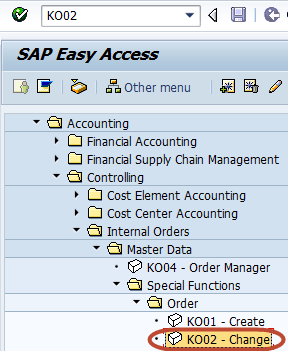
Step 2) In the next screen, Enter the Internal Order for which settlement is to be done

Step 3) In the next screen, Select the Settlement Rule Button from the Application Toolbar

Step 4) In the next screen, Enter the Following
- In the Category Column enter ‘CTR’ for cost center
- In the Settlement receiver Column enter the Cost Center in which the Order is to be settled
- In the percent column , Enter the percentage amount which is to be settled
- In the settlement type , Enter ‘PER’ for periodic settlement.

Step 5) Press ‘Save’ button from the SAP Standard Toolbar to save the Settlement Rule and come back to the SAP Main menu .

Step 6) Enter Transaction code KO88 in SAP Command Field

Step 7) In the next screen, Enter the Following entries and run the settlement
- Enter the Order for which the settlement rule is maintained
- Enter the Period for settlement
- Enter the Fiscal Year
- Uncheck the Test Run
- Press ‘Execute’ Button to run the settlement

Best Practices for Internal Order Settlement
A disciplined settlement routine keeps period-end accurate and auditable. Apply these best practices:
- Maintain the settlement rule first: Define the receiver, percentage, and type in KO02 before running KO88.
- Use periodic settlement: Choose settlement type PER so costs settle each period.
- Always test first: Run KO88 with the test run flag before posting.
- Settle before closing: Complete order settlement before you close the period.
- Automate recurring runs: Schedule collective settlement (KO8G) for many orders.
