
10 BEST JavaScript Books for Beginners (2026)
 Editorial Team
We are reader supported and may earn a commission when you buy through links on our site
JavaScript is a programming language used in web browsers, servers, mobile applications, and development tools. It controls page behavior, handles user actions, exchanges data, and can run complete applications outside the browser.
The right book depends on your experience and whether you want exercises, visual lessons, projects, or a reference. A Smarter Way to Learn JavaScript is our top recommendation for beginners because each short lesson is followed by hands-on practice.
This guide compares 10 JavaScript books for new programmers, front-end developers, and experienced coders. Read more…
Best JavaScript Books for Beginners and Experts
| Book Title | Author Name | Latest Edition | Publisher | Ratings | Link |
|---|---|---|---|---|---|
| A Smarter Way to Learn JavaScript | Mark Myers | 1st edition | Lightning Source Inc |  |
Learn More |
| JavaScript: The Definitive Guide | David Flanagan | 1st edition | O’Reilly Media |  |
Learn More |
| Head First JavaScript Programming | Eric T Morrison | 1st edition | O′Reilly | |
Learn More |
| Eloquent JavaScript, 3rd Edition | Marijn Haverbeke | 3rd edition | No Starch Press | |
Learn More |
| The Principles of Object-Oriented JavaScript | Nicholas C. Zakas | 1st edition | No Starch Press | |
Learn More |
Ratings: These ratings come from Amazon book listings, not Guru99. They may vary by book edition or seller. Ratings, publisher names, and edition details were checked in October 2026.
1) A Smarter Way to Learn JavaScript
Author Name: Mark Myers
Publisher: Lightning Source Inc
Latest Edition: 1st edition
No of Pages: 293 pages

A Smarter Way to Learn JavaScript by Mark Myers is our top recommendation for new programmers who learn through repetition. Short chapters introduce the fundamentals of JavaScript, then online exercises ask readers to write code while the idea is still fresh.
The steady practice helps beginners remember syntax instead of only reading about it. The book covers objects, constructors, and prototypes, but it predates many modern features such as modules, classes, and async functions. Pair it with current documentation when moving beyond the core lessons.
What You’ll Learn:
- Practice each topic through short online coding exercises
- Work with variables, strings, numbers, arrays, and objects
- Control program flow with conditions, loops, and functions
- Build reusable code using objects and constructor functions
- Understand prototypes and common JavaScript programming patterns clearly
- Reinforce lessons by writing code instead of rereading explanations
Best For: Complete beginners who learn through repetition and want short lessons, frequent exercises, and a gradual introduction to core JavaScript concepts.
2) JavaScript: The Definitive Guide
Author Name: David Flanagan
Publisher: O’Reilly Media
Latest Edition: 6th edition
No of Pages: 1018 pages

JavaScript: The Definitive Guide by David Flanagan is a detailed language and platform reference. The current seventh edition covers core syntax, objects, functions, classes, modules, iterators, generators, promises, async functions, browser APIs, and Node.js.
Its depth suits programmers who already understand basic coding and want one place to study difficult topics. It is longer and denser than the beginner books. The preserved Lasso card still shows the sixth edition, so confirm that the affiliate link opens the intended edition before publication.
What You’ll Learn:
- Learn JavaScript syntax, values, variables, objects, and arrays
- Use functions, classes, modules, iterators, and generators correctly
- Handle asynchronous work with promises and async functions
- Build browser applications with documents, events, storage, and networking
- Write server-side programs with Node.js files and streams
- Reference standard library tools and modern language features
Best For: Programmers with prior coding experience who want a practical JavaScript reference covering the language, browsers, Node.js, modules, and asynchronous programming.
3) Head First JavaScript Programming: A Brain-Friendly Guide
Author Name: Eric T Morrison
Publisher: O′Reilly
Latest Edition: 1st edition
No of Pages: 704 pages

Head First JavaScript Programming by Eric T. Freeman and Elisabeth Robson uses puzzles, illustrations, games, and guided projects. It moves from variables and functions to objects, prototypes, closures, testing, and the browser document object model.
The visual format gives beginners frequent reasons to run and change code. Readers who dislike playful layouts may prefer a traditional guide. The retained card points to the first edition, while O’Reilly now publishes a second edition with newer language features, so check the linked edition.
What You’ll Learn:
- Learn syntax through visual lessons, puzzles, and games
- Use variables, conditions, loops, functions, and arrays confidently
- Build objects and understand prototypes and inheritance clearly
- Connect JavaScript code to browser pages using DOM
- Respond to clicks and other events in applications
- Write and test complete programs while fixing errors
Best For: Visual learners and beginners who prefer puzzles, illustrations, games, and guided projects while building a foundation in browser JavaScript programming.
4) Eloquent JavaScript, 3rd Edition
Author Name: Marijn Haverbeke
Publisher: No Starch Press
Latest Edition: 3rd edition
No of Pages: 472 pages

Eloquent JavaScript, 3rd Edition by Marijn Haverbeke teaches programming ideas alongside the language. It covers functions, data structures, objects, modules, errors, regular expressions, asynchronous code, browser programming, and Node.js through exercises and larger projects.
Readers can run examples and exercises on the book’s companion website. The projects demand more effort than a gentle beginner guide, which can frustrate readers without practice. A fourth edition now exists, but this review stays aligned with the requested third-edition link.
What You’ll Learn:
- Learn JavaScript values, control flow, functions, and data
- Use higher-order functions to write clearer reusable programs
- Manage objects, modules, errors, and asynchronous operations safely
- Build browser interfaces with events, forms, HTTP, and canvas
- Create projects including games, editors, robots, and websites
- Run JavaScript outside browsers with practical Node.js examples
Best For: Motivated beginners and intermediate programmers wanting challenging exercises, practical projects, and coverage of JavaScript language features, browsers, and Node.js development.
5) The Principles of Object-Oriented JavaScript
Author Name: Nicholas C. Zakas
Publisher: No Starch Press
Latest Edition: 1st edition
No of Pages: 120 pages
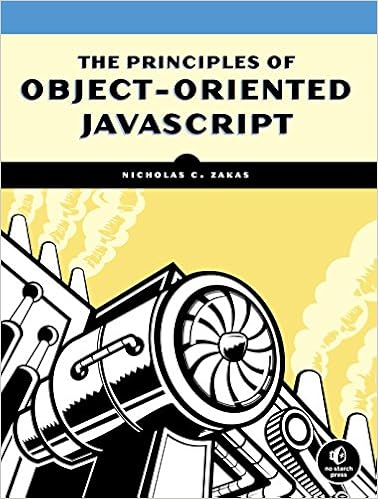
The Principles of Object-Oriented JavaScript by Nicholas C. Zakas is a short study of how objects work in the language. It explains primitive and reference values, functions, properties, constructors, prototypes, inheritance, and common Object-Oriented JavaScript patterns.
The focused scope makes the book easier to finish than a large reference. It assumes readers already know basic syntax, and its examples predate JavaScript class syntax. Read it for the prototype model and object behavior, then use current documentation for newer class features.
What You’ll Learn:
- Clearly distinguish primitive values from reference values in JavaScript
- Understand functions as first-class objects with special behavior
- Create objects with literals, constructors, and prototypes properly
- Define properties using descriptors, getters, and setters safely
- Apply inheritance patterns for objects and constructor functions
- Protect object data with sealing and freezing methods
Best For: JavaScript developers who understand basic syntax and want a focused explanation of objects, functions, prototypes, constructors, properties, and inheritance patterns.
6) JavaScript: The Good Parts
Author Name: D Crockford
Publisher: O′Reilly
Latest Edition: 1st edition
No of Pages: 170 pages

JavaScript: The Good Parts by Douglas Crockford separates useful language features from parts that often create confusing or error-prone code. The book discusses syntax, objects, functions, inheritance, arrays, regular expressions, methods, and a small set of coding rules.
Its concise arguments influenced JavaScript style for many years. The book was published in 2008, so some advice reflects an older version of the language and predates modules, classes, promises, and async functions. Experienced readers can use it for historical design lessons, not as a complete modern course.
What You’ll Learn:
- Understand JavaScript’s useful features and risky design choices
- Work with functions, objects, arrays, methods, and inheritance
- Use strict equality and avoid confusing type coercion
- Apply functional programming ideas to everyday JavaScript code
- Write regular expressions and handle common language patterns
- Recognize outdated recommendations when using modern JavaScript today
Best For: Experienced programmers interested in the original JavaScript design, concise coding rules, and advice that needs comparison with modern language practices.
7) JavaScript and JQuery: Interactive Front-End Web Development
Author Name: Jon Duckett
Publisher: Wiley
Latest Edition: 1st edition
No of Pages: 640 pages

JavaScript and jQuery: Interactive Front-End Web Development by Jon Duckett uses full-color diagrams and photographs to explain programming concepts. It shows how scripts work with HTML and CSS, then builds sliders, filters, form validation, Ajax updates, and other webpage interactions.
The visual design helps readers who find plain textbooks hard to follow. Its large jQuery section reflects common practice from 2014, while many new projects now use browser APIs or frameworks instead. Choose it for clear front-end fundamentals, but check modern alternatives before adding jQuery to a new site.
What You’ll Learn:
- Understand programming concepts through diagrams and full-color examples
- Work with variables, arrays, objects, functions, and decisions
- Select page elements and change content using DOM
- Handle browser events and validate user form input
- Add sliders, filters, Ajax updates, and interactive effects
- Read and adapt existing jQuery plugins for websites
Best For: Designers and beginner developers who know basic HTML and CSS and want visual lessons for adding JavaScript and jQuery interactions.
8) Learn JavaScript VISUALLY with Interactive Exercises
Author Name: Ivelin Demirov
Publisher: Ivelin Demirov
Latest Edition: 3rd edition
No of Pages: 164 pages

Learn JavaScript VISUALLY with Interactive Exercises by Ivelin Demirov explains core syntax through diagrams, colors, metaphors, and short exercises. It introduces variables, operators, conditions, loops, functions, arrays, and objects without long blocks of theory.
The compact format gives visual learners a less intimidating start. It does not cover the language, browser APIs, or Node.js with the depth of the larger books. Use it to understand the first concepts, then move to Head First JavaScript Programming or a current reference.
What You’ll Learn:
- Learn JavaScript syntax through diagrams, colors, and metaphors
- Follow small exercises after each illustrated programming concept
- Work with variables, operators, conditions, loops, and functions
- Understand arrays and objects using visual explanations clearly
- Practice browser-based code without a dense textbook format
- Review key ideas quickly with compact illustrated pages
Best For: Visual learners and beginners who want colorful explanations, compact lessons, and simple exercises before moving to a fuller JavaScript reference.
9) Professional JavaScript for Web Developers
Author Name: Nicholas C. Zakas
Publisher: Wrox
Latest Edition: 3rd edition
No of Pages: 960 pages

Professional JavaScript for Web Developers gives working developers detailed coverage of the language and browser platform. The preserved Lasso card identifies Nicholas C. Zakas’s third edition, which covers syntax, scope, objects, functions, DOM, events, forms, networking, storage, errors, and performance.
That edition remains useful for maintaining older browser code, but it predates modern JavaScript releases and current build practices. Wiley now publishes newer editions by Matt Frisbie. Confirm which edition the affiliate link opens before changing the author, cover, or book details in Lasso.
What You’ll Learn:
- Review JavaScript syntax, variables, scope, memory, and types
- Work with objects, functions, inheritance, and expression patterns
- Manipulate webpages using DOM, events, forms, and canvas
- Send network requests and process JSON data safely
- Handle browser errors, storage, workers, and performance concerns
- Compare older browser techniques with current development practices
Best For: Intermediate web developers maintaining older JavaScript code who need detailed browser coverage, language internals, debugging, storage, networking, and performance guidance.
10) Speaking JavaScript: An In-Depth Guide for Programmers
Author Name: Axel Rauschmayer
Publisher: O′Reilly
Latest Edition: 1st edition
No of Pages: 460 pages

Speaking JavaScript by Axel Rauschmayer helps programmers from other languages understand JavaScript’s syntax, history, types, functions, objects, prototypes, inheritance, arrays, regular expressions, JSON, modules, debugging, and development tools. Readers can start with the quick guide or jump to a reference topic.
The four-part structure works well for readers who already know programming concepts. Its ECMAScript 5 focus makes some language and tool advice old for new projects. Use it to understand foundations and quirks, then check current documentation for modules, classes, promises, and later syntax.
What You’ll Learn:
- Start quickly with syntax, values, statements, and functions
- Understand JavaScript history and its major design influences
- Study types, coercion, objects, prototypes, and inheritance deeply
- Work with arrays, regular expressions, dates, and JSON
- Apply debugging, documentation, module, and package management practices
- Use the book as a topic-based language reference
Best For: Programmers from other languages who want a JavaScript introduction, historical context, detailed reference chapters, and practical language advice for work.
How to Choose a JavaScript Book
Start with the way you learn. Short exercises help complete beginners remember syntax, while visual books use diagrams and projects to explain how code behaves. A large reference suits programmers who already understand basic coding and need deeper language, browser, or Node.js coverage.
- For repeated practice: Start with A Smarter Way to Learn JavaScript.
- For a detailed reference: Choose JavaScript: The Definitive Guide.
- For visual projects: Read Head First JavaScript Programming.
- For challenging exercises: Try Eloquent JavaScript.
- For objects and prototypes: Use The Principles of Object-Oriented JavaScript.
- For older browser code: Keep Professional JavaScript for Web Developers nearby.
How to Practice JavaScript While Reading
Type every example instead of copying it. Change a value, add a condition, and test what happens when input is missing or incorrect. Keep one small browser project throughout the book so new topics have a clear use.
Older books can still explain functions, objects, prototypes, events, and other stable ideas. Check MDN or current publisher material before copying advice about modules, packages, browser support, jQuery, build tools, or Node.js.
What is the difference between Java and JavaScript?
Java and JavaScript are separate programming languages despite their similar names. Java is commonly used for Android apps, business software, and backend systems. Its code usually runs on the Java Virtual Machine.
JavaScript is mainly used to make websites interactive. It runs in web browsers and can also run on servers through Node.js. The languages use different syntax, tools, and development paths, so learning one does not mean you already know the other.
Should I learn Java or JavaScript?
Choose JavaScript if you want to build websites, front-end interfaces, browser tools, or full-stack web apps. You can see results quickly in a browser, which makes it a practical starting point for web development.
Choose Java if you plan to build enterprise systems, Android apps that use Java, or backend services in the Java ecosystem. If you are undecided, pick the language that matches your first project. You can learn the other later.
