
How to Create Invoice Correction Request in SAP SD
 Editorial Team
⚡ Smart Summary
Invoice correction in SAP is a process that fixes the quantity or price on an invoice’s line items. This resource explains what an invoice correction request is, how it produces a credit or debit memo, and how to create one.
What is Invoice Correction?
Invoice correction is the process of correcting the quantity or prices on one or more line items of an invoice. Instead of cancelling the original invoice, SAP creates an invoice correction request, a sales document (order type RK) that captures the corrected values and settles only the difference with the customer.
The system calculates the difference between the original amount and the corrected amount. To keep control, the invoice correction request is automatically blocked by the system with a billing block until it has been checked; once it is approved, the block can be removed. Depending on the total value of the request, the system then creates either a credit memo or a debit memo. In this way, invoice correction gives a clean, auditable way to fix billing mistakes, because the request always refers back to the original billing document and records exactly what changed and why. This is why finance teams prefer it to editing or cancelling the original invoice, which would break the audit trail.
How an Invoice Correction Creates a Credit or Debit Memo
When you create an invoice correction request, SAP copies each item from the original invoice twice. The first item is always a credit item, which credits the customer with the original value, and the second is a debit item, which charges the corrected value. Because the two items offset each other, only the net difference remains.
If the net value is negative, meaning the customer was overcharged, the request results in a credit memo. If the net value is positive, meaning the customer was undercharged, it results in a debit memo. This paired-item design is what makes invoice correction so useful: a single request can raise both credits and debits across many lines, yet the customer is charged or refunded only the exact difference. You adjust the debit items to the corrected quantity or price, leave the credit items untouched, and the system works out the balance automatically. This keeps the correction transparent for both the business and the customer.
Steps to Create an Invoice Correction Request
Follow these steps to create an invoice correction request in transaction VA01, with reference to the billing document to be corrected.
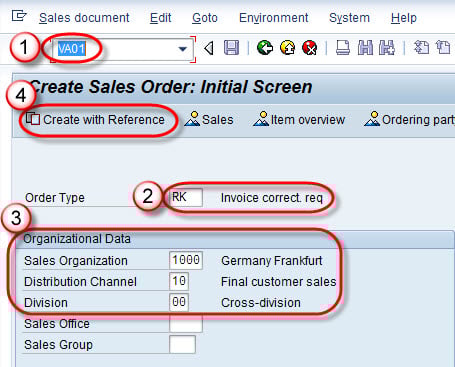
Step 1) Start the request.
- Enter T-code VA01 in the command field.
- Enter “Invoice Correction Request” in the Order Type field.
- Enter the Sales Organization, Distribution Channel, and Division in the organization data.
- Click on the “Create with Reference” button to create the invoice correction with reference to the billing document.
Step 2) Copy from the invoice.
- Enter the number of the billing document (invoice) that requires correction.
- Click on the Copy button.

Step 3) Apply and save the correction.
- The Ship-To party and PO Number can be changed.
- Enter the requested delivery date.
- The order quantity can be changed to the corrected value.
- Click on the Save button.
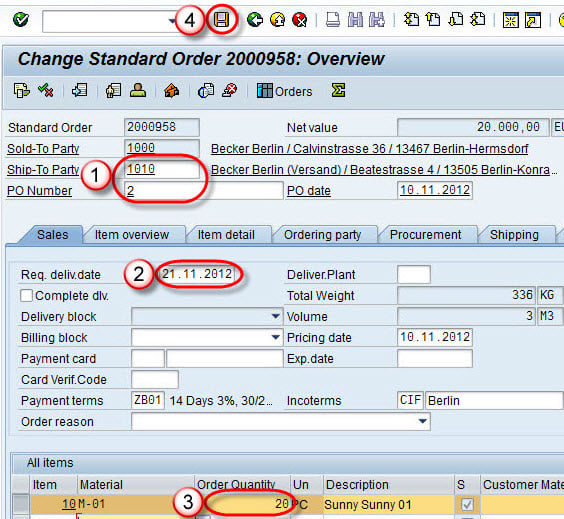
A message “Data was saved” is displayed.
Key Points About Invoice Correction Requests
A few characteristics make the invoice correction request different from a plain credit or debit memo. Keep these key points in mind:
- Order type RK: The invoice correction request uses sales document type RK and is created in transaction VA01.
- Reference to a billing document: An RK request must be created with reference to an existing invoice, which keeps a clear audit trail.
- Automatic billing block: The request is blocked until it is checked, so no credit or debit reaches the customer without approval.
- Credit or debit outcome: The net value of the request decides whether a credit memo or a debit memo is created.
- Paired items: Each invoice item is copied as a credit item and a debit item, so only the corrected difference is settled.
Together, these points make invoice correction a controlled, single-document way to fix billing errors without cancelling and reissuing the original invoice, which protects the audit trail and makes dispute resolution faster and cleaner.
