
How to Define Schema Group & Determination in SAP
 Editorial Team
⚡ Smart Summary
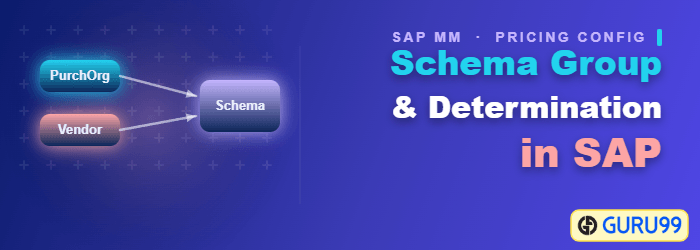
Schema Group in SAP links a vendor and a purchasing organisation to the correct calculation schema. Two independent groups combine in schema determination, so the same material can price differently by supplier or buying unit.
Why Schema Groups Exist
In this tutorial, we will learn
- How to Define Schema Group
- How to Define Schema Determination
Before the steps, it is worth understanding the problem schema groups solve. A calculation schema fixes which condition types apply and in what order. Real organisations rarely want one schema for everything:
- An import vendor needs customs duty and freight conditions that a domestic supplier never uses.
- A central purchasing organisation may apply rebate conditions that a plant level unit does not.
- A subcontractor is priced on service rates rather than material price scales.
Attaching a schema directly to each vendor would mean thousands of assignments. Schema groups solve that by classifying instead: vendors fall into a handful of pricing groups, purchasing organisations fall into a handful more, and a small determination table maps each combination to a schema. Adding a vendor then means picking a group, not designing a procedure.
How to Define Schema Group
We can create schema groups for purchase organization or vendor.
Schema groups are then assigned to purchase organizations in customizing and to vendors in vendor master record. They are used to map the pricing determination process based on the vendor or purchase organization.

Step 1)
- Choose Define Schema Group from SPRO IMG path like in the previous topics.
- From the menu below, choose Schema Groups: Vendor.
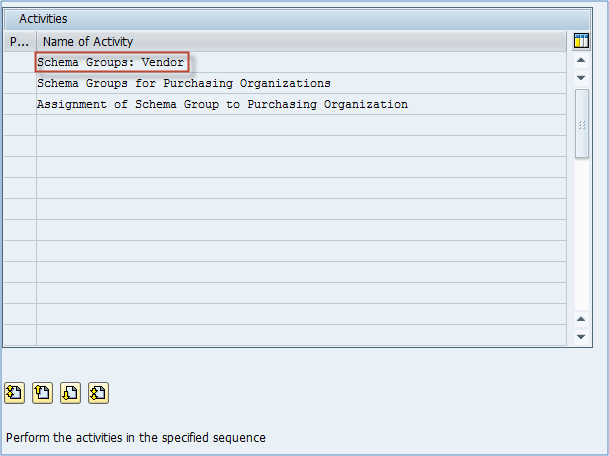
Step 2) On the next screen, you can define schema group for use in vendor master & maintain a description of your vendor schema groups.
You define only schema group number and description. There are no settings as this is used to be assigned to the vendor master record.
For example, we might need to create a new group 02 – Schema vendor 02.

Step 3) Next, choose schema groups for purchasing organizations from main schema group menu.
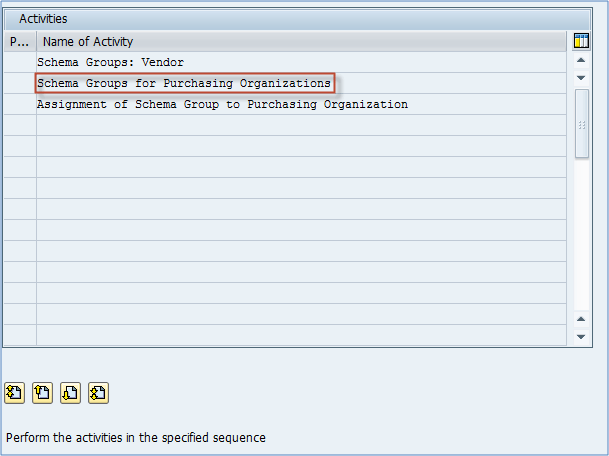
Define your schema groups per your requirement. You define only schema group number and description. No settings either, just an indicator assigned to a purchasing organization.
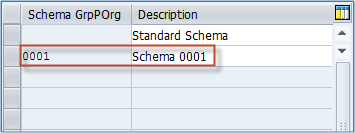
Step 4) Choose Assignment of Schema Group to Purchasing Organization from schema group menu.

Assign desired schema group to purchasing organization. As you can see on the below screen, the field on the right is left blank, that is because if you leave it blank, it means that the default purchase organization schema should be used.

If you want to use a standard schema for group organization, leave the field in the previous screen blank, and if you want to choose the Schema 0001 enter 0001 in the field marked in the upper screen. Screen with the available schemas for assignment to purchasing organization is available in the previous step (same as on below screen).

Step 5) Assigning a schema group in the vendor master.
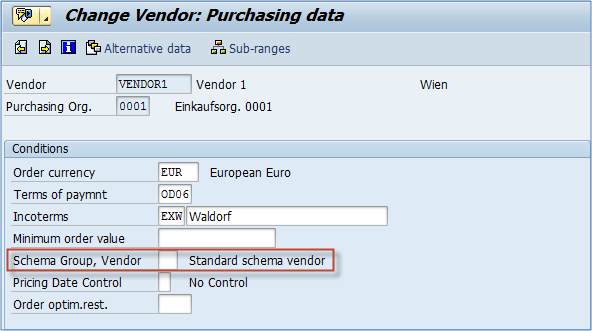
Go to the purchasing data view. You will see Schema group, Vendor field. You can choose whichever schema group is suitable for this vendor, default is left blank for standard schema vendor.
You can see that this field is maintained at purchasing organization organizational level (0001), so in combination with schema group for that purchasing organization, if we check tables, the selected calculation schema will be RM0000 – Purchasing Document (Big), as you can see in the next topic.
How to Define Schema Determination
Determination of calculation schema is a customizing activity.
You have to assign a pricing procedure to a schema group purchasing organization / schema group vendor combination.
Settings are located in Define schema determination option.

Step 1) Choose Determination Calculation schema for Standard Purchase Orders.

Step 2)
- Choose schema group for purchasing organization.
- Choose schema group for vendor.
- Choose calculation schema to be assigned to the purchasing organisation and vendor schema group combination.
Let’s analyze two records on this screen.
- In case 1, we have chosen default schema group for purchasing organization (first field is empty), also, default schema group for vendor (second field is empty), for this combination of both default schema groups, we assigned a RM0000 (Purchasing document – Big) calculation schema.
- In case 2, we have chosen schema group for purchasing organization as 0001, and schema group for vendor as 01, and assigned an RM1000 calculation schema to the combination.

How does it work?
Let’s say that we have a purchase organization 0001 with blank (default) schema group assigned to it, and a purchase organization 0002 with schema group 0001 assigned to it (not default).
We also have a vendor 1 with assigned schema group as blank (default), and vendor 2 with schema group defined as 01 (not default).
- In case we are creating a purchase order through purchasing organization 0001 for vendor 1, our calculation schema is going to be determined as RM0000.
- If we are creating a PO for vendor 2 through purchasing organization 0001, calculation schema RM1000 will be determined.
- If we are creating a PO for any of the two vendors in purchasing organization 0002, in both cases there will be determined calculation schema RM1000.
The below table clarifies the calculation schema determination.
| Vendor | Vendor schema group | Purchasing Organization 0001 (schema group blank) |
Purchasing Organization 0002 (schema group 0001) |
|---|---|---|---|
| Vendor 1 | Default (blank) | RM0000 | RM1000 |
| Vendor 2 | 01 | RM1000 | RM1000 |
You are done. Your pricing procedure is now fully functional.
You can use some advanced features like condition exclusions, copy control, define limits for condition types etc.
Schema Determination Troubleshooting
Almost every complaint that a purchase order priced incorrectly ends up here rather than in the condition records. Work through these checks in order.
- Confirm which schema was actually used. In ME23N open the item conditions and choose Analysis. The header of the analysis names the calculation schema applied, which immediately shows whether determination or the conditions are at fault.
- Check the vendor schema group at the right level. The field sits on the purchasing data view per purchasing organisation. A vendor extended to two purchasing organisations can carry a different group in each, so checking the wrong one is misleading.
- Check the purchasing organisation assignment. A blank entry is not an error, it means the default group. The problem is usually a group assigned when default was intended.
- Look for a missing determination entry. If a combination has no row in schema determination, no schema is found and the order carries no conditions at all. Every combination in use needs a row, including the default plus default pairing.
- Remember that changes are not retrospective. Documents already created keep the schema stored at creation. Only new documents pick up the corrected determination.
- Check the document type. Standard purchase orders, stock transport orders, and outline agreements can use separate determination tables, so fixing one does not fix the others.
The layers beneath determination are covered in defining condition types and access sequences and condition tables, with the schema itself explained in defining a calculation schema.
