
How To Create Sales Document Type in SAP
 Editorial Team
⚡ Smart Summary
Sales document types in SAP are two-character keys that control how the system processes inquiries, quotations, orders, contracts, and complaints. Creating a custom type in transaction VOV8, backed by a number range from VN01, tailors sales processing to business needs.
Sales document types are the foundation of order processing in SAP Sales and Distribution. This step-by-step tutorial explains what they are, how to create an internal number range with VN01, and how to build a custom sales document type with transaction VOV8.
What is a Sales Document Type in SAP?
Sales Documents Types is a 2 character indicator, by which system process different documents in different way. SAP provides many standard sales document type. Sales documents types are used in-
- Pre – sales activities (inquiry /quotation ).
- Sales Order.
- Sales Contract.
- Customer Complaint.
In Sales order there are three levels –
- Header level data
- Item level data
- Schedule level data
In SAP several standard sales documents types are available. We can create custom sales document type by T-code-VOV8.
Create Internal Number Range using VN01
Create Internal No. Range for sales document type.
VN01 is T- code for creation for Internal No. range. We will use this internal no. in step-3.
- Enter T-code VN01 in command field in a new sap session.
- Click on Create button for interval .

- Click on +Interval Button to create new interval range.
- Enter From number / To number / current number / leave blank Ext which stands for External Number Range.
- Click on save button.

A Message “The changes were saved” is displayed.

Steps to Create a Sales Document Type in SAP
Step 1)
- T-code for sales documents type is VOV8.
- Sales document types list.

Step 2) To Create new Sales document type click on 
- Enter sales document type .
- Enter sales document category from possible entries list.
This screen have multiple section as above-
- Number System
- General Control
- Transaction Flow
- Scheduling Agreement
- Shipping
- Billing
- Requested Delivery Date
- Contract
- Availability Check

We will enter data in Number System / General control / Transaction flow / Shipping Section.
Step 3) Number System
There are two method for define no. range for Sales Document.
- Internal Assignment – This assignment works internally and number for sales document generate automatically.
- External Assignment – This assignment works externally. e.g. in below picture number start from 02.

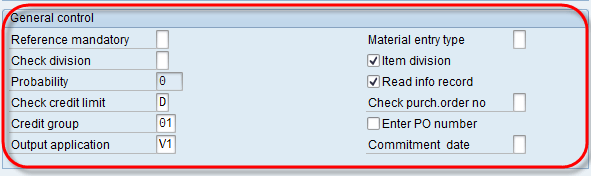
Step 4) General Control
- Enter value in Check credit limit / Credit group / Output application field from possible value list/ check Item Division / Read info record.
Step 5) Transaction Flow
- Enter value in screen sequence grp. / transaction group / document pricing procedure.
- Enter value in field Display range / Fcode / quotation msg. / Outline agreement msg.

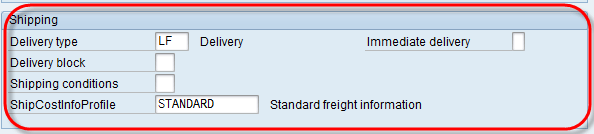
Step 6)
- Enter value in delivery type filed from possible list entry.
- Enter ship cost info profile from possible list entry.
Step 7) Click on Save  Button.
A Message “Data was saved”.

Best Practices for Sales Document Types
Well-designed document types keep sales processing consistent and easy to maintain. Apply these best practices when configuring them in VOV8:
- Copy, do not build from scratch: Copy a close standard type such as OR, then adjust only what differs.
- Follow a naming convention: Use the customer name-space (starting with Z or Y) for custom two-character keys.
- Assign a number range: Link each type to an internal number range created in VN01.
- Set controls deliberately: Review General Control, Transaction Flow, and Shipping before saving.
- Test end to end: Create a test document to confirm pricing, delivery, and billing behave as expected.
