
11 Best PowerPoint Alternative Software for Presentation (2026)
 Charles Moore
Are you stuck using PowerPoint because it’s familiar, yet constantly fighting its limitations? I get it. Although it’s widely used, PowerPoint often struggles with rigid templates, heavy files, and laggy performance. Collaboration feels dated, design flexibility is limited, and version conflicts can ruin last-minute edits. These issues waste time, weaken visual impact, and create avoidable presentation stress. The right alternative tools fix these gaps with smoother workflows, modern design control, and faster collaboration.
To help you find the right alternative, I spent over 150 hours researching and testing more than 40 presentation tools. From that deep dive, I carefully shortlisted the 10 strongest options featured here using firsthand, hands-on experience and backed-by real usage insights. This article breaks down key features, clear pros and cons, and pricing details for each tool. If you value transparency and time saved, I strongly recommend reading the full guide. Read more…

Adobe Express takes a design-first approach to presentations, built for speed, consistency, and brand control. As a PowerPoint alternative, it leans heavily on templates and themes, AI-assisted design, and seamless cloud-based editing across devices.
Best PowerPoint Alternative Software for Presentation: Top Picks!
| Tool | Key Features | Free Trial | Link |
|---|---|---|---|
👍 Adobe Express |
Thousands of Fonts, Animated Slide, Support Stylish Layout Templates | Lifetime Free Basic Plan | Learn More |
 Gamma |
AI-Powered Design, One-Click Formatting, Interactive Embeds | Lifetime Free Basic Plan | Learn More |
 Visme |
Drag-and-Drop Editor, Interactive Charts & Maps, Publish Online | Lifetime Free Basic Plan | Learn More |
 DesignCap |
Professional Templates, Massive Asset Library, Easy Embeds (Charts, Maps) | Lifetime Free Basic Plan | Learn More |
 Vyond |
Video Presentation Maker, Character & Motion Assets, Exportable Videos | 14-Day Free Trial | Learn More |
1) Adobe Express
Adobe Express takes a design-first approach to presentations, built for speed, consistency, and brand control. As a PowerPoint alternative, it leans heavily on templates and themes, AI-assisted design, and seamless cloud-based editing across devices. The moment everything snapped into brand alignment without manual tweaking, the value became obvious. It feels less like slide software and more like a content studio that happens to do presentations well.
For use cases where fast turnaround matters—marketing decks, internal updates, or visual explainers—it delivers. Drag-and-drop editing, multimedia embedding, and light animations keep things engaging, while offline access and cross-platform compatibility make it practical beyond the browser. It’s ideal when polish is non-negotiable and time isn’t generous.
AI-Powered Templates: Yes
Drag-and-Drop Editor: Yes
Animated Transitions: Yes
Free Trial: Lifetime Free Basic Plan
Features:
- Cloud-Based Presentation Editing: This feature allows you to create and update presentations directly in the browser without worrying about file versions. I’ve switched devices mid-edit, and everything stayed perfectly synced. It keeps workflows fast, flexible, and frustration-free.
- AI-Assisted Design Suggestions: This capability helps transform basic slides into polished layouts automatically. While testing this feature, I noticed the AI adjusts spacing and typography intelligently. I recommend starting with rough content and letting the system refine the visual balance.
- Drag-and-Drop Slide Builder: This editor makes slide creation feel natural rather than technical. I’ve personally rearranged full decks in minutes without breaking layouts. It works especially well when iterating quickly during brainstorming or last-minute revisions.
- Professional Templates and Themes: This feature offers modern templates that work for business, education, and creative presentations. I’ve used them for client demos without heavy customization. The layouts maintain consistency while still leaving room for creative flexibility.
- Real-Time Collaboration and Comments: This feature lets teams review slides together without endless email threads. During a tight deadline, I shared a link and collected feedback instantly. You will notice how comments stay tied to specific slide elements for clarity.
- Brand Kits and Visual Consistency: This feature ensures fonts, colors, and logos stay consistent across every slide. The tool lets you apply branding once and reuse it effortlessly. I suggest setting brand kits early to avoid rushed design fixes later.
Pros
Cons
Pricing:
Here are the lowest plans offered by Adobe Express:
| Individual | Teams |
|---|---|
| $9.99/Month | $7.99/person/month |
Free Trial: Basic free version and 30-day free trial available.
Lifetime Free Basic Plan
2) Gamma
Gamma redefines presentation creation through AI-powered automation that eliminates the traditional design bottleneck. Instead of wrestling with layouts and formatting, you input ideas and watch the platform transform them into polished, professional presentations. What makes it distinct is how it handles the entire creative workflow—from content generation to visual styling—without requiring design expertise.
In real-world use, it excels when speed and visual impact matter equally. Whether building investor pitches or training materials, the platform adapts intelligently to content type and context. Responsive design ensures presentations look sharp across devices, while collaborative features keep distributed teams aligned. It’s built for professionals who need presentation quality without the production overhead.
AI-Powered Templates: Yes
Drag-and-Drop Editor: Yes
Animated Transitions: Yes
Free Trial: Lifetime Free Basic Plan
Features:
- AI Content Generation: This capability produces complete slide narratives, including headlines, supporting points, and cohesive storytelling across multiple slides. I noticed it maintains logical flow and context awareness throughout longer presentations. It significantly reduces the time spent drafting initial content from scratch.
- Smart Template Library & Auto-Formatting: The platform analyzes your content and automatically selects appropriate visual frameworks, color schemes, and layout structures. During testing, I found it consistently matched design choices to content purpose without manual intervention. This removes formatting decisions while keeping presentations visually professional.
- Embedded Interactive Components: You can integrate high-definition videos, live data visualizations, clickable navigation, polls, and animated transitions directly into slides. These elements transform passive viewing into active engagement. I recommend using interactive features strategically to maintain audience attention during critical presentation moments.
- Real-Time Team Collaboration: Multiple contributors can edit simultaneously with instant synchronization, comment threads, and version tracking. This eliminated the file-sharing chaos I experienced in previous collaborative projects. Changes appear immediately across all connected devices without manual refreshes.
- Cross-Device Responsive Design: Presentations automatically adjust formatting and layout for desktop, tablet, and mobile viewing without creating separate versions. I tested this across different screen sizes and found visual integrity remained consistent. It ensures your message delivers effectively regardless of how audiences access it.
- Brand Consistency Controls: Upload logos, color palettes, and typography once, then have them automatically applied across all future presentations. This feature maintains visual coherence when multiple team members create content. It enforces brand guidelines without requiring manual checks on every slide.
Pros
Cons
Pricing:
Here are the plans offered by Gamma:
| Plus | Pro | Ultra |
|---|---|---|
| $8/seat/month | $18/seat/month | $90/seat/month |
Free Trial: Lifetime free basic plan available
Lifetime Free Basic Plan
3) Visme
Visme positions itself as a cloud-based presentation platform built for professionals who want more than static slides. It blends AI-assisted design, a drag-and-drop editor, interactive elements, and multimedia embedding into one polished workflow. What stood out immediately was how fast raw ideas turned into audience-ready visuals without fighting the interface. Templates, brand kits, animations, and presenter view are clearly designed for clarity, not clutter.
In practice, it fits scenarios where visual storytelling and audience engagement tools actually matter—think interactive reports or data-heavy presentations. Real-time collaboration and cross-platform compatibility make iteration painless, while animations and transitions help keep attention without feeling gimmicky. It’s a modern presentation engine, not a slide deck clone.
AI-Powered Templates: Yes
Drag-and-Drop Editor: Yes
Animated Transitions: Yes
Free Trial: Lifetime Free Basic Plan
Features:
- AI-Assisted Design: This feature removes design guesswork by intelligently suggesting layouts, color combinations, and visual hierarchy. I found it especially helpful when starting from rough content ideas. It speeds up slide creation without making designs feel generic or automated.
- Drag-and-Drop Editor: This editor keeps everything intuitive, even for non-designers working under tight deadlines. You can move elements freely, resize visuals, and experiment without breaking layouts. While using it, I noticed it stays responsive even with media-heavy slides.
- Cloud-Based Editing & Auto-Save: This capability ensures your work is always backed up and accessible from anywhere. I have edited presentations mid-commute and resumed seamlessly on the desktop later. You don’t worry about crashes because changes are saved continuously in the background.
- Real-Time Collaboration: Teams can co-edit slides, leave comments, and track updates without emailing files back and forth. During a collaborative project, this reduced revision confusion significantly. I suggest assigning slide ownership early to avoid overlapping edits during live sessions.
- Templates, Themes & Brand Kits: Visme offers polished templates that adapt well to different presentation goals, from pitches to training decks. There is also an option that lets you lock brand colors and fonts. This keeps presentations consistent when multiple contributors are involved.
- Interactive Elements & Audience Engagement: This feature adds polls, clickable objects, and hover effects to keep viewers involved. You can use it when presenting to remote audiences who tend to lose focus. It directly addresses engagement gaps common in static slide decks.
Pros
Cons
Pricing:
Here are the plans offered by Visme:
| Starter | Pro | Enterprise |
|---|---|---|
| $12/month/person | $24/month/person | Custom price |
Free Trial: Basic free version available
Lifetime Free Basic Plan
4) DesignCap
DesignCap focuses on simplicity without sacrificing presentation fundamentals. It’s a web-based tool designed for users who want clean slides, quick edits, and a zero learning curve. The experience clicks when you realize how little effort it takes to assemble a professional-looking deck using templates, icons, and animations. It doesn’t pretend to be complex—and that restraint works in its favor.
In real-world use, it suits straightforward presentations like proposals, training slides, or visual summaries. The drag-and-drop editor, cloud-based access, and multimedia embedding keep workflows smooth, while transitions add just enough motion to stay engaging. It’s a practical PowerPoint alternative when clarity, speed, and ease beat over-engineering.

Features:
- Template Variety: This feature gives you a strong starting point with ready-made presentation templates tailored to different use cases. It removes the friction of starting from scratch. I’ve used these layouts to quickly structure business and marketing decks without overthinking design.
- Visual Assets: You can access a large collection of stock photos and icons that instantly elevate slide quality. It helps replace text-heavy slides with clean visuals. I usually test a few options per slide to find visuals that align with the message.
- Design Assets: This feature provides fonts, backgrounds, and ready-made design elements to maintain visual consistency. It simplifies typography and spacing decisions. While using this, I noticed preset styles make the final slide cleanup much faster.
- Data Charts: It allows you to convert raw numbers into clear charts, such as bar, line, and pie visuals. This is useful for reports and strategy presentations. I suggest using one chart style throughout to keep the narrative cohesive.
- Data Import: You can upload CSV or XLS files directly to generate charts without manual entry. This saves time and reduces errors in recurring reports. I’ve relied on this during last-minute updates when accuracy mattered most.
- Drag Editing: This feature lets you move, resize, and recolor elements with simple drag-and-drop actions. Grouping elements keeps layouts intact while editing. There is also an option that lets you ungroup items to fine-tune details quickly.
Pros
Cons
Pricing:
You can use it for free.
Lifetime Free Basic Plan
5) Vyond
Vyond is a cloud-based presentation and video creation platform designed for users who want to replace static slides with animated storytelling. Instead of relying on traditional slide layouts, it focuses on animations, transitions, and multimedia embedding to create visually engaging presentations. With its drag-and-drop editor, customizable templates, and AI-assisted design tools, Vyond works especially well for explainer-style presentations that need strong audience engagement across devices.
After working through a complex presentation timeline, I found its animation workflow surprisingly efficient for turning ideas into structured visual narratives without heavy design effort. It fits well when presentations need clarity, motion, and interactive elements rather than bullet-heavy slides.

Features:
- Offline Playback: This feature allows you to export completed videos as MP4 files so your presentation works without internet access. It’s ideal for boardrooms, conferences, or client locations with unstable connectivity. I’ve relied on this during live demos where streaming simply wasn’t an option.
- Rich Media: You can easily embed visuals, sound effects, and animated assets to replace static slide content with engaging motion. This turns standard presentations into immersive storytelling experiences. I’ve seen even dry internal updates hold attention once multimedia layers were added thoughtfully.
- Story Characters: This capability lets you explain complex ideas using animated characters instead of bullet points. It works especially well for training, onboarding, and internal communications. I once converted a compliance presentation into a short character-driven scenario that finally made the message stick.
- Scene Templates: These pre-built scenes give you a structured starting point with layouts, characters, and environments already in place. It speeds up production while still leaving room for customization. You can quickly align visuals with brand tone without starting from a blank timeline.
- Prompt Videos: This feature uses AI to generate video drafts from text, documents, or URLs, which is powerful when time is tight. It helps transform rough ideas into structured visual narratives. While experimenting with this, I noticed that concise prompts lead to cleaner animations and fewer manual tweaks.
- Voice Syncing: You can add narration using recorded audio or text-to-speech and sync it naturally with character lip movements. This makes explanations feel human and easier to follow. I suggest finalizing the script first so animation timing flows smoothly without constant readjustments.
Pros
Cons
Pricing:
Here are the plans for Vyond’s year plans:
| Starter | Professional | Enterprise |
|---|---|---|
| $58/month | $100/month | $137/month |
Free Trial: 14-day free trial available
Link: https://www.vyond.com/
6) Canva
Canva is a cloud-based presentation tool that blends design flexibility with ease of use, making it a strong PowerPoint alternative for modern teams. It offers AI-assisted design, drag-and-drop editing, brand kits, and an extensive library of templates and themes tailored for presentations. With real-time collaboration, multimedia embedding, and cross-platform compatibility, Canva simplifies the process of creating polished decks without advanced design skills.
While refining a presentation under tight time constraints, I noticed how quickly layouts came together using its smart templates and built-in animations. It’s particularly effective for collaborative presentation creation where speed, visual consistency, and audience engagement matter most.

Features:
- Smart Layouts: This feature adapts slide spacing and alignment automatically as content changes. It feels like having a silent design assistant fixing inconsistencies in real time. While using this, I noticed fewer visual errors even when adding last-minute content blocks.
- Magic Resize: It instantly reformats slides for different formats like webinars, reports, or social previews. This removes repetitive redesign work entirely. I suggest duplicating your main deck first so each output stays purpose-driven and visually optimized.
- Live Comments: This enables stakeholders to leave feedback directly on slides instead of emails. It keeps revisions focused and contextual. I’ve used this during team reviews, and it reduced misinterpretation that usually happens with external feedback threads.
- Content Planner: This feature connects presentations to broader content timelines. It’s useful when slides are part of campaigns or recurring updates. You can plan, reuse, and refine decks without starting from scratch each time.
- Brand Control: This locks visual identity across all slides using predefined assets. It prevents accidental off-brand edits. While testing this feature, one thing I noticed is how effective it is when multiple contributors work on the same presentation.
- Motion Presets: This applies cohesive animations across slides with one click. It keeps transitions consistent and professional. I’ve used this in product demos where subtle motion improved flow without distracting the audience.
Pros
Cons
Pricing:
Here are the most affordable plans that are offered by Canva:
| Canva Pro | Canva Business | Canva for Teams |
|---|---|---|
| $12.99/month | $20/person/month | $14.99/month for 5 users |
Free Trial: Free version available.
Link: https://www.canva.com/
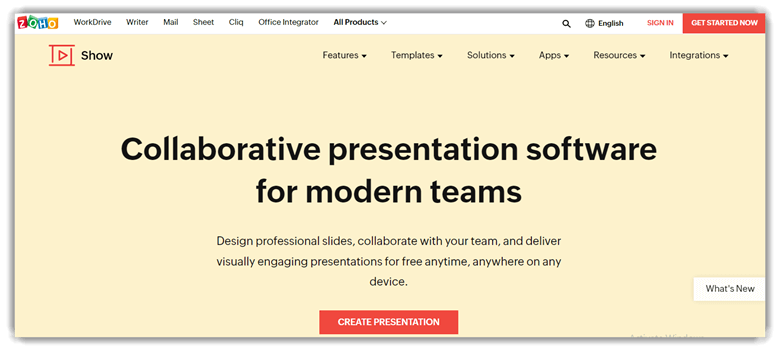
7) Zoho Show
Zoho Show is a web-based presentation software built for collaborative, business-focused presentations. It supports real-time collaboration, offline access, presenter view, and seamless cloud-based editing across devices. The platform emphasizes clean slide design, smooth animations and transitions, and interactive elements that help presenters maintain control and flow during live sessions or remote presentations.
During a multi-device presentation setup, I appreciated how smoothly edits synced without disrupting the presentation structure. Zoho Show works best for users who want a structured, distraction-free alternative to PowerPoint with strong collaboration features and dependable performance in professional presentation environments.
Features:
- Clutter-free Editor: What stands out is the clean, distraction-light workspace that keeps you focused on the story, not the toolbar. It feels closer to a modern web app than a bulky desktop suite. I found outlining a client pitch faster because formatting stayed out of my way.
- Themes + Font Variety: You can quickly set a consistent look using built-in themes and plenty of font choices, which helps your deck feel “designed” without extra effort. It’s handy when you’re matching a brand vibe. I’ve used this to refresh an old slide deck in minutes.
- Visual Data Tools: On the data side, it gives you shapes, formatted text boxes, charts, and tables to turn raw numbers into readable slides. It’s practical for product updates, quarterly reviews, and training decks. I like that layouts stay tidy even after quick edits.
- Text Styling Effects: It lets you add strokes, color fills, and subtle reflections so key points don’t look flat. This is useful when you want emphasis without shouting with giant fonts. While using this feature, I noticed outlines work best for headings on busy backgrounds.
- Chart Layout Templates: You can pick a predefined chart layout before inserting data, which prevents the usual “why does this look weird?” moment. It speeds up consistent reporting slides across a team. I suggest choosing one chart style for the whole deck to keep comparisons honest.
- Real-time Collaboration: It supports creating and editing together in the same file, so you avoid messy “final_v7” slide chaos. Feedback loops are smoother because edits and discussions happen right on the deck. I’ve used this during a same-day proposal scramble and it held up nicely.
Pros
Cons
Pricing:
Zoho Show costs $2.50 per user/month for an individual; it is free.
Link: https://www.zoho.com/show/
8) Ludus
Ludus is a cloud-based presentation platform built for creators who want more control than traditional slide tools allow. It blends a flexible drag-and-drop editor with multimedia embedding, animations, and interactive elements, making it easy to design presentations that don’t feel boxed in by templates. I immediately noticed how smoothly it handled complex layouts without breaking the design flow, which is rare in presentation software.
When building a visual-heavy presentation that required custom layouts, real-time collaboration, and external media, I relied on Ludus to keep everything cohesive. The ability to mix brand kits, live embeds, and transitions in one canvas made audience engagement feel natural rather than forced, especially when presenting across different devices.

Features:
- Color Picker: This feature makes brand matching painless because you can sample colors directly inside the editor. It keeps fills, strokes, and overlays consistent across slides. While using this feature, one thing I noticed is how fast it keeps momentum going without breaking the design flow.
- Guides & Precision Alignment: This feature helps you position elements with confidence using smart guides that keep layouts visually balanced. It’s ideal when you’re working with responsive layouts and layered visuals. I’ve used this while polishing a client pitch where spacing accuracy made the slides feel instantly more premium.
- Live Collaboration: This feature allows multiple collaborators to edit the same presentation in real time without stepping on each other’s work. It feels closer to a modern design workflow than a traditional slide editor. I suggest assigning one person to oversee layout consistency while others focus on content updates.
- Custom Fonts Library: It gives you full control over typography by allowing custom font uploads instead of relying on system defaults. This helps maintain strong brand consistency across decks. I’ve tested this with multiple font weights, and the rendering stayed consistent across every slide.
- Flexible Image Format Support: This feature supports SVG, PNG, JPG, and GIF formats, making asset handling refreshingly flexible. Vector graphics stay sharp even when resized, which is critical for design-heavy slides. You can build polished presentations without repeatedly re-exporting assets from design tools.
- Paste-to-Embed Web Content: This feature lets you embed live web content by simply pasting a URL into your slide. It works well for interactive demos, maps, or dashboards that screenshots can’t fully represent. The editor handles embeds smoothly, keeping presentations interactive and up to date.
Pros
Cons
Pricing:
Here are the monthly plans offered by Ludus:
| 1 to 15 People | 16 People Onwards |
|---|---|
| $14.90 | Custom |
Free Trial: 30-day free trial
Link: https://ludus.one/
9) Beautiful.ai
Beautiful.ai is an AI-assisted design tool that focuses on making presentations look polished with minimal effort. It automatically adjusts layouts, spacing, and visual hierarchy while you focus on the message. After spending time with it, I was genuinely impressed by how quickly rough ideas turned into clean, professional slides without constant manual tweaking.
While preparing a time-sensitive presentation, I used Beautiful.ai to move fast without sacrificing quality. Smart templates, real-time collaboration, and presenter view helped streamline the workflow, while built-in animations and themes ensured consistency. It’s especially effective when clarity, speed, and visual balance matter more than deep customization.

Features:
- Pitch Builder: This feature helps you assemble polished pitch decks quickly without obsessing over slide structure. It guides narrative flow naturally. I used it before a tight client deadline, and the presentation looked thoughtfully designed without heavy manual adjustments.
- Smart Slides: This feature automatically adjusts spacing and layout as content changes, keeping slides visually balanced. You don’t fight alignment issues anymore. While testing this feature, I noticed that starting with Smart Slides early prevents layout breaks when content evolves later.
- AI Generation: This feature creates an initial presentation draft from a simple prompt, saving serious prep time. You can refine sections easily afterward. I’ve relied on it for internal strategy decks when speed mattered more than pixel-perfect customization.
- Template Library: This feature offers structured templates that maintain design consistency across slides. It’s ideal for users who want clean visuals without design skills. The tool lets you switch layouts mid-deck while preserving hierarchy, which is helpful during last-minute edits.
- Visual Assets: This feature provides access to icons and images directly inside the editor, reducing context switching. It supports multimedia embedding smoothly. I used it during a product launch deck build and avoided external stock libraries entirely.
- Team Collaboration: This feature enables shared editing and feedback in real time, which suits distributed teams. Comments stay tied to slides. In one sales review cycle, it eliminated long email threads and made revision ownership very clear.
Pros
Cons
Pricing:
Here are the plans offered by Ludus per month:
| Pro | Teams | Enterprise |
|---|---|---|
| $12 | $40 | Custom |
Free Trial: 14-day free trial available
Link: https://www.beautiful.ai/
10) Slidebean
Slidebean is a presentation platform designed around structured storytelling, with a strong emphasis on AI-assisted design. It separates content from design, letting the system handle layouts, templates, and visual consistency. I found this approach refreshing because it removed the usual design guesswork and kept the narrative front and center.
When working on a presentation that needed to explain complex ideas clearly, Slidebean helped organize content into a logical flow. Features like brand kits, cloud-based editing, and cross-platform compatibility made iteration easy, while offline access and smooth transitions ensured the final delivery stayed professional and distraction-free.

Features:
- Readability-First Templates: This feature keeps layouts intentionally clean, so text hierarchy and whitespace feel professionally designed rather than cluttered. It works especially well for pitch-style storytelling where scanning matters. I’ve noticed it cuts down last-minute formatting because the structure stays visually consistent.
- Smart Image Focal-Point Alignment: It automatically detects the most important area of an image and positions it so visuals never look awkwardly cropped. You can add product shots or team photos with confidence. While using this feature, I suggest uploading high-resolution images to maintain clarity after automatic adjustments.
- AI-Selected Slide Layouts: Instead of manually choosing slide designs, it intelligently matches layouts to your content type. This helps when iterating quickly on a presentation outline. I’ve experienced smoother revisions because layout changes don’t disrupt the overall visual flow.
- Website-to-Pitch-Deck Generation: You can turn a website URL into a structured pitch deck, which is a huge win when deadlines are tight. It analyzes site content and converts it into slides you can refine. I would recommend tightening homepage messaging first to get sharper, more relevant slide copy.
- Automated Design Engine: It allows you to focus entirely on messaging while spacing, alignment, and visual balance are handled automatically. This prevents messy drag-and-drop edits. I’ve used this to test multiple narrative angles without redesigning slides from scratch each time.
- Team Collaboration Workspace: You can invite teammates to review and edit slides in one shared space, which streamlines feedback loops. This is useful when multiple stakeholders need quick input. From my experience, it reduces back-and-forth and keeps decisions tied directly to the slide context.
Pros
Cons
Pricing:
You can signup for free
Link: https://slidebean.com/
11) Google Slides
Google Slides is a cloud-based presentation tool built for speed, accessibility, and seamless collaboration. It offers real-time editing, drag-and-drop slide creation, multimedia embedding, and cross-platform compatibility, making it a practical PowerPoint alternative for teams that live online. What stood out to me almost instantly was how frictionless collaboration felt—no version chaos, no manual saves, just clean, continuous progress.
While working on a presentation that required fast iterations and shared input, Google Slides handled everything smoothly. Real-time collaboration, presenter view, templates and themes, and offline access made it easy to refine slides on the go, while animations and interactive elements kept audience engagement intact without overcomplicating the workflow.

Features:
- Cloud Continuity: This feature keeps your presentation accessible across devices with automatic saving. You can jump from desktop to mobile without layout issues. I’ve updated slides minutes before a meeting, and everything synced smoothly without manual uploads.
- Collaborative Sync: It enables real-time collaboration where teammates edit, comment, and suggest changes together. Everyone sees updates instantly, which avoids version chaos. While using this feature, one thing I noticed is that assigning slide owners keeps collaboration fast and frustration-free.
- Brand Blueprint: This feature helps maintain visual consistency using ready-made templates and themes. You can apply brand colors and layouts across decks effortlessly. I’ve used this to roll out standardized sales presentations without repeatedly fixing fonts and spacing.
- Visual Builder: It brings together animations, transitions, multimedia embedding, and custom fonts in one place. You can build engaging slides without advanced design skills. This works well when you want interactive elements that still feel clean and professional.
- Deck Migration: This feature supports importing PowerPoint files while preserving most layouts. You can migrate decks quickly and continue collaborating in a cloud-based environment. This is useful when clients still prefer PowerPoint, but your team uses Google tools.
- Presenter Focus: It enhances live presenting with speaker-focused views and Meet integration. You can present and record sessions for later sharing. I’ve reused recorded presentations for onboarding, saving hours of repeated explanations.
Pros
Cons
Pricing:
It is a free tool.
Link: https://www.google.co.uk/slides/about/
Feature Comparison: Best PowerPoint Alternative Software
Here’s a quick comparison table of the features of PowerPoint alternative tools:
| Feature | Adobe Express | Gamma | Visme | DesignCap |
| Templates & Themes | ✔️ | ✔️ | ✔️ | ✔️ |
| Drag-and-Drop Editor | ✔️ | ✔️ | ✔️ | ✔️ |
| Real-Time Collaboration | ✔️ | ✔️ | ✔️ | Limited |
| Animations / Transitions | Limited | ✔️ | ✔️ | Limited |
| Multimedia Support (Image/Video/Audio) | ✔️ | ✔️ | ✔️ | Limited |
| AI Assistance / Auto Design | ✔️ | ✔️ | ✔️ | ❌ |
| Brand Kit / Styling | ✔️ | ✔️ | ✔️ | ❌ |
| Export Options (PPT/PDF/Video) | ✔️ | ✔️ | ✔️ | ✔️ |
What are the Benefits of Presentation Software?
Here are the main benefits of presentation software:
- It makes the visualization of information very easy
- Allows adding images, graphs, tables, charts, videos, etc.
- Offers a wide range of designs and templates
- Enables you to share the presentations with ease
- Provides drag and drop feature
- Offers a variety of customizations
- It does not require any technical skills
How can I make my presentation better?
Following are points which helps you to make your presentation better:
- Your presentation should not contain more than 10 slides.
- The presentation should be of maximum 20 minutes
- Do not use a font size of less than 30.
- Show your passion and focus on audience need.
What is Presentation Software and how does it work?
Presentation software is a digital tool used to create, organize, and display information visually. It combines text, images, charts, audio, and video into slides that tell a clear, structured story. Popular examples include Microsoft PowerPoint, Google Slides, and Apple Keynote. These tools are widely used in business, education, and marketing to explain ideas, pitch products, or teach lessons. Think of it as your digital stage—minus the awkward spotlight.
It works by letting users design slides using templates or blank layouts, then add and format content with simple tools. Slides are arranged in sequence and shown on a screen or shared online. Animations and transitions guide attention, while presenter modes support notes and timing. Hit “present,” and your message takes center stage.
How to Troubleshoot Presentation Software?
Here’s a list of ways to troubleshoot the common issues of the presentation software:
- Issue: Presentation crashes or freezes when adding multimedia to slides.
Solution: Reduce the file size of videos/images and use supported formats to ensure smoother playback and prevent tool overload. - Issue: Uploading or importing existing presentations fails unexpectedly.
Solution: Convert your original file into a universal format (e.g., PDF or compatible slide format) before importing to avoid compatibility hiccups. - Issue: Templates don’t align with your content layout needs.
Solution: Choose a blank or minimal template and manually structure content so it flows logically without layout constraints. - Issue: Real-time collaboration isn’t syncing edits properly.
Solution: Refresh your connection and ensure all collaborators are on the latest version of the tool to avoid version conflicts. - Issue: The tool loads slowly or lags during editing sessions.
Solution: Close unnecessary browser tabs/applications and switch to offline or desktop mode if available for better performance. - Issue: Fonts look different when viewed on another device.
Solution: Embed or export with fonts included, or stick to widely supported web fonts to maintain a consistent appearance everywhere. - Issue: Animations or transitions don’t play correctly.
Solution: Simplify animation effects and test them on the target device ahead of time to avoid playback issues. - Issue: Exported slides appear distorted or cut off.
Solution: Set your page dimensions and aspect ratio to match your presentation display before exporting to ensure correct rendering.
How Did We Select the Best PowerPoint Alternative Software?
At Guru99, we don’t guess—we test. Our team invested over 150 hours researching and hands-on testing 40+ presentation tools. Using real-world usage insights and expert evaluation, we shortlisted only the 10 PowerPoint alternative software. That depth of research, transparency, and practical experience makes our recommendations reliable and user-focused.
- Hands-on Testing: Our team personally installed, configured, and used every shortlisted tool to validate real-world usability, stability, and performance across different presentation scenarios.
- Feature Depth: The reviewers compared slide design tools, animation controls, templates, collaboration options, and export formats to ensure each option delivered genuine presentation-building power.
- Ease of Use: We evaluated learning curves, interface clarity, onboarding guides, and workflow efficiency, prioritizing tools our reviewers found intuitive for beginners and professionals alike.
- Performance & Reliability: Our research group stress-tested rendering speed, crash resistance, and responsiveness to confirm each tool performed smoothly during heavy editing and live presentations.
- Collaboration Capabilities: We examined real-time co-editing, version history, commenting, and cloud syncing, ensuring the shortlisted tools supported team-based workflows and remote collaboration.
- Compatibility & Integrations: The experts verified file format support, PowerPoint imports, cross-platform availability, and third-party integrations to guarantee seamless adoption into existing work environments.
- Design Quality: Our team reviewed built-in templates, visual assets, typography control, and customization depth, ensuring every tool enabled polished, professional-grade presentation design.
- Pricing & Value: The reviewers analyzed subscription plans, free tiers, licensing models, and hidden costs, selecting tools that delivered strong features without unreasonable pricing structures.
- User Feedback & Reputation: We cross-checked our findings with verified user reviews, community discussions, and long-term update histories to confirm real-world satisfaction and developer reliability.
Verdict
I evaluated every PowerPoint alternative listed on the page thoroughly and tested its key features myself. I found all the tools reliable, but some clearly delivered more value when creating dynamic and professional presentations. My hands-on review focused on ease of use, design power, and flexibility of output.
- Adobe Express: It allowed me to explore a huge library of templates and creative assets, and I liked how simple it was to build sleek slides quickly. In my analysis, its cross-device support and intuitive layout tools made it strong for fast design work.
- Gamma: It redefines presentation creation through AI-powered automation that eliminates the traditional design bottleneck.
- Visme: I was impressed by how easy its drag-and-drop editor makes complex visual storytelling and infographics, and it stood out to me for its robust templates and interactivity options. My evaluation found it powerful for both beginners and pros.
FAQ
Adobe Express takes a design-first approach to presentations, built for speed, consistency, and brand control. As a PowerPoint alternative, it leans heavily on templates and themes, AI-assisted design, and seamless cloud-based editing across devices.
