
10 BEST Computer Networking Books (2026 Update)
 Editorial Team
We are reader supported and may earn a commission when you buy through links on our site
A computer network connects computers and devices so they can share data, printers, storage, and internet access. Connections use Ethernet cables, fiber, Wi-Fi, or wireless systems. Every network combines equipment, such as routers and switches, with software that controls how information travels between devices.
Learning networking can help you understand IP addresses, protocols, security, routing, switching, and troubleshooting. A clear beginner-friendly book can explain these ideas step by step and show how they work in real situations.
This article covers the best computer networking books for beginners, students, certification candidates, and IT professionals. The selected books cover basic concepts, Cisco networks, automation, routing, switching, and exam preparation, helping you choose a title that matches your experience and goals. Read more…
Best Computer Networking Books for Beginners and Experts
| Book Title | Author Name | Latest Edition | Publisher | Ratings | Link |
|---|---|---|---|---|---|
| CompTIA Network+ Certification All-in-One Exam Guide | Mike Meyers | 7th edition | McGraw Hill |  |
Learn More |
| Network Programmability and Automation | Jason Edelman | 1st edition | O′Reilly |  |
Learn More |
| Computer Networking: A Top-Down Approach | James Kurose | 7th edition | Pearson |  |
Learn More |
| Computer Networks | Tanenbaum | 5th edition | Pearson Education India | |
Learn More |
| Network Warrior | Gary A. Donahue | 2nd edition | O′Reilly | |
Learn More |
Ratings: These ratings come from Amazon book listings, not Guru99. They may vary by book edition or seller. Ratings, publisher names, and edition details were checked in October 2026.
1) CompTIA Network+ Certification All-in-One Exam Guide
Author Name: Mike Meyers
Publisher: McGraw Hill
Latest Edition: 7th edition
No of Pages: 960 pages

CompTIA Network+ Certification All-in-One Exam Guide by Mike Meyers is our top recommendation for broad networking fundamentals. The seventh edition explains cabling, Ethernet, TCP/IP, wireless networks, security, operations, troubleshooting, and the skills expected from an entry-level network technician.
Practice questions and exam-style activities make it useful for structured study. This edition follows the retired N10-007 exam, so it should not be your only source for a current Network+ attempt. Check the latest CompTIA objectives before planning certification study.
What You’ll Learn:
- Understand network models, protocols, devices, and common services
- Work with Ethernet cabling and wireless network standards
- Configure IPv4, IPv6, DNS, and DHCP service concepts
- Review routing, switching, security, and network operations concepts
- Diagnose common connectivity and network performance problems methodically
- Practice older Network+ objectives through realistic exam-style questions
Best For: Network+ learners and junior technicians who want broad networking fundamentals, practice questions, and a structured guide for older exam objectives.
2) Network Programmability and Automation
Author Name: Jason Edelman
Publisher: O′Reilly
Latest Edition: 1st edition
No of Pages: 580 pages

Network Programmability and Automation by Jason Edelman, Scott S. Lowe, and Matt Oswalt explains how code can manage network devices. It introduces Linux, Python programming, APIs, JSON, XML, YAML, YANG, templates, and version control.
Later chapters cover tools such as Ansible, Salt, and StackStorm. The book suits engineers moving away from repeated manual configuration, but it assumes basic networking knowledge and patience with code. Some named tools have changed, so readers should compare examples with current documentation.
What You’ll Learn:
- Use Python basics for common network automation tasks
- Read JSON, XML, YAML, and YANG network data
- Connect network devices through standard application programming interfaces
- Manage automation scripts and configuration changes with Git
- Build reusable network configurations with Jinja template files
- Apply Ansible and related tools across network devices
Best For: Network engineers with basic coding knowledge who want Python, APIs, data formats, version control, and network automation workflows and skills.
3) Computer Networking: A Top-Down Approach
Author Name: James Kurose
Publisher: Pearson
Latest Edition: 7th edition
No of Pages: 864 pages

Computer Networking: A Top-Down Approach by James Kurose and Keith Ross starts with applications people use, then moves down through transport, network, link, and physical layers. This order helps students connect protocols with familiar internet services before studying lower-level details.
The book works well for university courses because it explains concepts, protocol behavior, and design choices in depth. The linked seventh edition is older than current releases, so examples and statistics may be dated. It is also more academic than a quick certification guide.
What You’ll Learn:
- Start with network applications and internet services first
- Understand transport protocols and reliable application data delivery
- Study routing, addressing, forwarding, and network control methods
- Learn link-layer behavior across wired and wireless networks
- Connect protocol theory with practical modern internet examples
- Follow network layers through a top-down learning order
Best For: Students who want a university-style networking textbook that starts with applications before moving through lower protocol layers step by step.
4) Computer Networks
Author Name: Tanenbaum
Publisher: Pearson Education India
Latest Edition: 5th edition
No of Pages: 816 pages

Computer Networks by Andrew S. Tanenbaum and David J. Wetherall takes a broad look at networking from physical transmission through applications. The fifth edition covers wireless systems, data links, routing, transport, content delivery, and the ways network layers work together.
Its detailed explanations suit computer science courses and readers who want theory alongside examples. Several technologies and statistics reflect the period when this edition was published, including older cellular coverage. Use current documentation for changed standards, security advice, and newer network designs.
What You’ll Learn:
- Understand physical transmission and common communication media clearly
- Study data links, framing, and medium access control
- Follow routing and forwarding across the network layer
- Compare reliable and real-time transport methods in practice
- Explore application protocols and content distribution system designs
- Connect wireless networking with layered network design concepts
Best For: Computer science students who need broad coverage of network layers, protocols, wireless systems, routing, transport, and application design concepts together.
5) Network Warrior
Author Name: Gary A. Donahue
Publisher: O′Reilly
Latest Edition: 2nd edition
No of Pages: 786 pages

Network Warrior by Gary A. Donahue focuses on the day-to-day work of running Cisco networks. It covers routers, switches, routing, IPv6, firewalls, address allocation, telecom topics, and Network Time Protocol through configuration examples and operational advice.
The practical tone makes it useful after a basic networking course. It is too detailed for readers who have never configured a device, and the second edition uses older Cisco commands and platforms. Check current Cisco documentation before applying a configuration to production equipment.
What You’ll Learn:
- Configure Cisco routers and switches through practical examples
- Understand routing decisions and common protocol behavior clearly
- Work confidently with IPv6 addresses and transition methods
- Review firewall theory and basic network security configuration
- Plan address allocation and reliable network time services
- Troubleshoot everyday connectivity problems in working Cisco networks
Best For: Working network administrators who understand basic Cisco concepts and need practical configuration, troubleshooting, routing, switching, firewall, and IPv6 guidance examples.
6) Networking All-in-One For Dummies
Author Name: Doug Lowe
Publisher: For Dummies
Latest Edition: 7th edition
No of Pages: 992 pages

Networking All-in-One For Dummies by Doug Lowe brings several beginner topics into one reference. It explains network setup, administration, security, mobile devices, cloud services, Windows systems, and Linux without assuming deep technical experience.
The wide coverage helps home users, students, and small-office administrators find one starting point. Its breadth is also the main limit because advanced routing, automation, and enterprise design receive less depth. Some operating system screens may differ from current releases.
What You’ll Learn:
- Plan and set up a basic computer network
- Connect users, devices, files, and shared network services
- Administer Windows and Linux network environments with confidence
- Apply basic security practices across connected computer systems
- Understand mobile devices and cloud networking service basics
- Handle routine maintenance and common network support problems
Best For: Beginners and small-office administrators who want one broad guide to setup, operating systems, security, cloud networking, and routine maintenance tasks.
7) Routing TCP/IP, Volume
Author Name: Jeff Doyle
Publisher: Cisco Press
Latest Edition: 2nd edition
No of Pages: 944 pages

Routing TCP/IP, Volume 1 by Jeff Doyle and Jennifer Carroll explains how IP routing protocols work and how to configure them on Cisco routers. Topics include routing updates, route selection, IPv6, interior routing protocols, route control, and IPv4 interoperability.
The detailed treatment makes this a reference for experienced learners rather than a first networking book. Readers should already understand subnetting, addresses, and basic router configuration. The second edition uses older Cisco software examples, so confirm commands and platform behavior before using them at work.
What You’ll Learn:
- Understand how routers select and share network paths
- Configure common interior routing protocols on Cisco devices
- Work with IPv6 routing and address behavior confidently
- Control routing updates and protect route integrity effectively
- Compare IPv4 and IPv6 routing integration methods carefully
- Read detailed Cisco configuration examples for advanced study
Best For: Experienced Cisco learners who understand subnetting and need detailed coverage of routing protocols, IPv6, route control, and implementation examples throughout.
8) The All-New Switch Book
Author Name: Rich Seifert
Publisher: Wiley
Latest Edition: 2nd edition
No of Pages: 816 pages

The All-New Switch Book by Rich Seifert and Jim Edwards explains how Ethernet switches move frames across local networks. It covers switching behavior, LAN design, hardware capabilities, protocol decisions, and the technical reasons behind common network layouts.
The clear explanations still help readers understand switching theory, but the book is old and does not cover many current speeds, platforms, or data-center designs. Read it for Ethernet foundations and historical context, then use current vendor documents for modern hardware and configuration.
What You’ll Learn:
- Understand how Ethernet switches forward local network frames
- Compare switching methods and network hardware design choices
- Study LAN architecture and common network topology decisions
- Learn how bridges and switches manage network traffic
- Connect Ethernet standards with practical LAN switching behavior
- Separate lasting concepts from outdated switching technology examples
Best For: Networking students and engineers who want detailed switching theory, Ethernet behavior, LAN design, and historical context for modern networks today.
9) DATA COMMUNICATIONS AND NETWORKING (SIE)
Author Name: Behrouz A. Forouza
Publisher: McGraw Hill Education
Latest Edition: 4th edition
No of Pages: 1134 pages
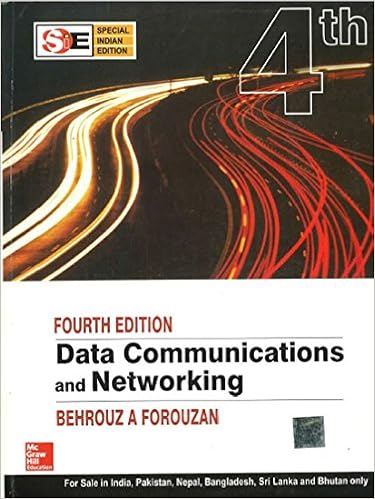
Data Communications and Networking by Behrouz A. Forouzan follows a bottom-up learning order. It begins with signals and physical media, then covers data links, network protocols, transport, applications, wireless communication, security, and network management.
Many diagrams help explain technical ideas without relying on advanced mathematics. The large textbook fits formal courses, though casual readers may find the detail heavy. The linked fourth edition is old, so check current standards and security guidance when a chapter discusses changing technologies.
What You’ll Learn:
- Understand signals, transmission media, and physical network connections
- Study framing, error control, and reliable data links
- Follow addressing, routing, and network-layer protocol behavior carefully
- Compare transport services and common network application protocols
- Review wireless communication and basic network security methods
- Learn through diagrams and a bottom-up chapter order
Best For: Students who prefer diagrams and a bottom-up path through physical media, data links, networks, transport, applications, and security concepts together.
10) Cisco Networking All-in-One For Dummies
Author Name: Edward Tetz
Publisher: Wiley
Latest Edition: 1st edition
No of Pages: 720 pages

Cisco Networking All-in-One For Dummies by Edward Tetz explains Cisco routers, switches, network design, virtualization, databases, and administration in plain language. It is written for readers who want Cisco-focused guidance without starting with a dense professional reference.
The book covers many subjects, which helps beginners see how Cisco technologies fit together. That same breadth limits its depth for advanced routing or certification study. The first edition is old, so current Cisco interfaces, commands, licensing, and recommended designs may differ.
What You’ll Learn:
- Understand basic Cisco router and switch functions clearly
- Plan simple networks around common business connectivity requirements
- Learn Cisco addressing, routing, and switching concepts clearly
- Review virtualization and related network infrastructure concepts carefully
- Handle basic Cisco device administration and routine maintenance
- Recognize where current Cisco product documentation is needed
Best For: Beginners working with Cisco equipment who want plain explanations of routers, switches, network design, virtualization, and administration tasks and skills.
How to choose a computer networking book
Start with the job you want the book to do. A beginner needs network layers, addressing, devices, and troubleshooting. A certification candidate needs material that matches the current exam code. Working engineers may need a focused reference for Cisco configuration, routing, switching, or automation.
- For certification foundations: Start with the CompTIA Network+ guide.
- For a university course: Choose Computer Networking: A Top-Down Approach.
- For practical Cisco work: Read Network Warrior.
- For automation: Choose Network Programmability and Automation.
- For routing depth: Use Routing TCP/IP after learning subnetting.
- For switching theory: Read The All-New Switch Book.
Check the edition before buying. Certification objectives, software screens, commands, wireless standards, and security advice change. Older books can still explain stable concepts, but they need current documentation beside them.
Networking books for beginners and advanced readers
Beginners should start with a broad guide that explains devices, protocols, network layers, and basic troubleshooting. Networking All-in-One For Dummies uses a lighter style, while the CompTIA guide adds exam practice. University students may prefer the structure and theory in the two general networking textbooks.
Advanced readers usually need a narrower subject. Network Warrior focuses on operational Cisco work, Routing TCP/IP goes deeper into route behavior, and Network Programmability and Automation connects networking with code. These books assume readers already understand basic addressing and network models.
How to practice networking while reading
Draw each network before configuring it. Label devices, interfaces, addresses, subnets, gateways, and services. Then build a small lab with virtual machines, a simulator, or spare hardware. Test one change at a time and keep notes on what happened.
Practice address planning, packet capture, routing, switching, DNS, DHCP, and fault finding. Break a safe lab configuration on purpose, predict the result, and repair it. Check current vendor documentation whenever an older book shows a command or screen that no longer matches.
