
SAP Modules List – Technical & Functional
 Jessica Blake
⚡ Smart Summary
SAP Modules are the building blocks of the SAP ERP system, split into functional modules that run business processes and technical modules that support development and administration. This tutorial lists the key SAP modules, explains what each does, and shows how they integrate.
What are SAP Modules?
SAP modules are the functional and technical components of the SAP ERP system that together manage an organization’s business processes. They fall into two groups: Functional modules handle business operations such as finance, sales, and production, while Technical modules support development, administration, integration, and analytics. The two are tightly coupled and share common master data. The table below classifies the most widely used modules, each explained in detail afterward.
| Functional Modules | Technical Modules |
|---|---|
| MM, PP, SD, FI, CO, HCM, QM, CRM | ABAP, Basis, HANA, BW |
SAP MM Module
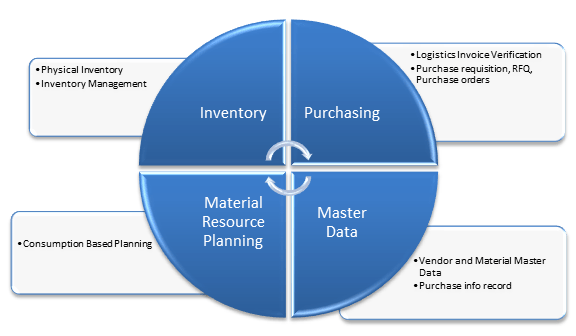
MM stands for Materials Management. The Materials Management module in SAP consists of several components and sub-components including Master Data, Purchasing, and Inventory. Learn more about SAP MM.
SAP PP Module
PP stands for Production Planning. SAP PP is a module specially designed to integrate the different departments involved in production and manufacturing. It has components such as Data Center, BOM, Work Center, and CRP. Learn more about SAP PP.

SAP SD Module
SD stands for Sales and Distribution. SAP SD is an important module of SAP ERP that covers the business processes required in selling, shipping, and billing a product. It is tightly integrated with SAP MM and SAP PP. Key sub-modules include Customer and Vendor Master Data, Sales, Delivery, Billing, Pricing, and Credit Management. Learn more about SAP SD.

SAP ABAP
ABAP (Advanced Business Application Programming) is the default programming language for SAP applications. You can also use Java to code in SAP. Learn more about SAP ABAP.

SAP CRM
CRM stands for Customer Relationship Management. SAP CRM is a market leader in customer relationship management software and plays a pivotal role in strengthening customer relationships. Learn more about SAP CRM.

SAP HANA
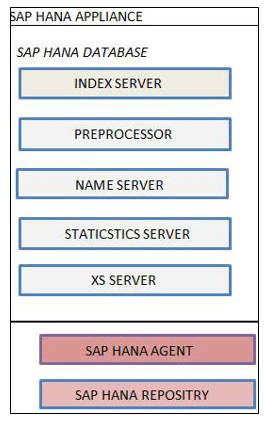
HANA stands for High-performance Analytic Appliance. SAP HANA is an in-memory computing platform that allows real-time data analysis. It is currently the market leader in business intelligence.
SAP HCM Module
HCM stands for Human Capital Management and is also called SAP-HR. SAP HCM consists of sub-modules such as Personnel Administration (PA), Organizational Management (OM), Time, and Payroll that help with employee management. Learn more about SAP HCM.

SAP Basis
SAP Basis is a set of programs and tools that act as an interface with the database, operating system, communication protocols, and other SAP modules such as FI, HCM, and SD. Learn more about SAP Basis.

SAP FI Module
FI stands for Financial Accounting. The SAP FI module is very robust and covers almost all financial business processes encountered across industries. It is one of the most widely implemented SAP ERP modules. Learn more about SAP FI.
SAP CO Module
CO stands for Controlling. The Cost Accounting (CO) module of SAP provides information to managers and decision makers to understand where the company’s money is being spent, helping them optimize business costs.
SAP QM Module
QM stands for Quality Management. SAP QM is an integral part of several key SAP business processes such as production, sales, procurement, and material management. Learn more about SAP QM.
SAP BW Module
BW stands for Business (Data) Warehouse. SAP BI (Business Intelligence), or SAP BW, is a leading data warehousing and reporting tool. It helps convert raw data into information and insights that improve business margins. Learn more about SAP BW.
Other SAP Modules
Apart from the modules above, the SAP ecosystem includes many more specialized modules.
- SAP EC — Enterprise Controlling
- SAP TR — Treasury
- SAP IM — Investment Management
- SAP IS — Industry-Specific Solution
- SAP PS — Project Systems
- SAP CAC — Cross Application Components
- SAP SCM — Supply Chain Management
- SAP PLM — Product Lifecycle Management
- SAP SRM — Supplier Relationship Management
- SAP CS — Customer Service
- SAP SEM — Strategic Enterprise Management
- SAP RE — Real Estate
- SAP PM — Plant Maintenance
- SAP Security — learn more about SAP Security
- SAP FSCM — Financial Supply Chain Management
- SAP NetWeaver — technology platform
- SAP XI — Exchange Infrastructure
- SAP Solution Manager — learn more about Solution Manager
- SAP LE — Logistics Execution
- SAP APO — Advanced Planning and Optimization
- SAP AFS — Apparel and Footwear Solution
- SAP CC — Convergent Charging
- SAP ITS — Internet Transaction Server
- SAP ICM — Incentive and Commission Management
- SAP KW — Knowledge Warehouse
- SAP MDM — Master Data Management
