
SAP CRM ServicePRO & Process Flow
 Editorial Team
⚡ Smart Summary
SAP CRM Service provides a dedicated Business Role called ServicePRO that enables service professionals to manage service agreements, contracts, plans, and orders through multiple channels including WebClient UI, mobile, and internet self-service.
SAP CRM offers a predefined Business Role for the service professionals of your company – Service Professional (SERVICEPRO).

With this role, SAP standard functionalities related to the service agreement, service contracts, service plans, and service order management can be performed by service professionals.

SAP CRM Service is accessible from different channels of SAP CRM. Following are the service features which can be performed from the WebClient UI:

- With service order management and service ticket management, it is possible to maintain and track ongoing service processes and to analyze completed service processes performed by your company.
- Complaint management enables you to keep track of and analyze complaints against products or services provided by your company.
- Product registration allows the responsible service employee to search, create, and maintain Installed Bases or Objects.
- With knowledge search, it is possible to quickly find the solution for a known problem.
SAP CRM Mobile Service application is offered to fulfill the requirements of field service representatives. These applications run in offline mode and can be synchronized with CRM servers.
Internet Customer Self-Service (ICSS) is a web-based application that can be used by internet users for CRM Service. Similar to the WebClient, it provides the following service functions:

Installed Base Management and Objects
- Your company sells products to customers. The installation of these products at the customer’s site is represented by Installed Base Management in SAP CRM service.
- It also supports management of objects within your own organization.
- Organizations sell products and provide services; an object is a globally unique tangible or intangible instance of these products or services.
- You can configure customizing settings in the CRM system to create customer-specific object families.
- The structure of an installed base is maintained with the help of its components.
- IBase Management is supported by different channels including WebClient UI, IC WebClient, mobile service, and ICSS.
- With IBase Management it is possible to manage the complete life cycle of a product installed at your customer’s site from installation through to decommissioning.
As part of IBase Management you also maintain general data for the installed base and its components:


IBase Management has integration with service transactions such as service contracts and service requests. In a service contract, it represents the objects for which your company has agreed to provide service.
IBase is maintained in a tree structure with a header node representing the IBase and components as sub-nodes. IBase Management provides the following IBase component types:
- Product components – Existing products in the CRM product master data can be assigned to an IBase as a component.
- Text components – Free-text descriptions that document additional information about the installed base.
- IBase components – An IBase can be used as a component within another IBase.
- Objects – Objects created as part of IBase Management can be assigned to the IBase. One object can only be assigned to one IBase and cannot be copied.
- Customer-specific component types – It is also possible to create customer-specific components and use them in the IBase.
It is possible to maintain dependent information for an IBase, including related business partners and service documents. Following are the details maintained for an IBase header:

- General Data:
- IBase ID
- External ID
- IBase category
- Status
- Description
- Authorization Group
- Name and Address
- Parties Involved
- Service Contracts – Service contracts in which this IBase has been referenced.
- Attachments
- Qualification Requirements – Maintains the qualifications required of field service employees to be assigned.
- Service Transactions – Service transactions in which this IBase has been referenced.
- Service Level – Service profile or response profile used as part of service management.
- Components – Lists the components which are part of this IBase.
Following are the details maintained for IBase components:

- General Data:
- Component ID
- Description
- Identification
- Component Type
- Installed Base
- Name and Address
- Parties Involved
- Service Contracts – Service contracts in which this component has been referenced.
- Attachments
- Service Transactions – Service transactions in which this component has been referenced.
- Qualification Requirements – Maintains the qualifications required of field service employees to be assigned.
- Counters – Counters can be assigned to IBase components or objects. A counter measures usage or wear and tear on an object. When a predefined counter reading is reached, the system can trigger a maintenance order. Counters also help in recording service history and product consumption.
- Components – Lists the components which are part of this IBase.
Service Agreements, Service Contracts and Service Plans
A service agreement is a CRM service transaction of type “Group Contract.” It is a long-term arrangement with a particular business partner or a group of business partners. It can include details about pricing, billing, SLAs, and services agreed with the customer. A service agreement does not include a target value or target quantity. It can be directly linked to a service order, or it can reference a service contract from which service orders are created. During service order processing, if the system finds a service contract, the service agreement determination process will not be triggered.

Service contracts define the scope of services, predefined conditions, and a specified timeframe agreed with customers. They specify the customer’s entitlement to service levels and include a product list covering services and service parts. Price agreements for services and parts are also maintained within the contract. The service contract represents service data, object list, product list, release list, pricing agreement, and billing plan.

Service profile and response profile define the service level in CRM Service. The service profile indicates the conditions under which services defined in the service contract can be executed. The response profile defines the timeframe in which service should start and complete. These profiles are maintained in CRM customizing.
Service Contract Determination can be configured in customizing. It is possible to enter a contract manually or have the system determine it automatically. These settings are applied while creating the transaction type in customizing for a service process.

CRM Service Plans enable you to model and execute a recurring service plan for an object throughout its complete life cycle. They support the creation of follow-up service transactions such as quotations, service orders, and activities at specified intervals. In the service interval, you define rules specifying when and which service needs to be planned, offered, or performed for a particular object.

Service Order Management
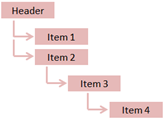
Service orders in SAP CRM can be created through different channels including IC WebClient UI, Web Channel (ICSS), and mobile devices. It is possible to create a service order as a follow-up document to a service agreement or service contract. A service order consists of a header and item section; items can form a tree structure representing item hierarchy.
Resource Planning Application is used by resource planners to dispatch service orders to service technicians. It also supports managing and analyzing data related to service representative employees.
In the form of a Reference Object, IBase components, objects, or products can be entered in the service order at header or item level. Depending on the main reference object entered, the system displays a list of relevant products for the order items — this is called product proposal. For pricing, the CRM pricing procedure can be used to calculate prices based on conditions maintained for discounts and surcharges for a particular item.


Following item types can be used as line items in a service order:
- Service Items: A service order item contains an Accounting indicator representing the account that will be the settlement cost receiver. The service to be performed is described by the service product item, which is of product type Service. This item includes conditions and planned duration information and can be assigned to an existing service contract. Service processing in CRM can be triggered by an item containing a service product. The object list of a service order can contain IBase components, objects, and products.

- Service Part Items: A service part item in a service order is a product of type material. It supports planning, controlling, and documentation of required service part components and can be assigned to a service contract.
- Sales Items: A sales product item in a service order is a product of type material. It enables required parts to be sold during the service process and supports ATP checks for product delivery, as in the sales process.
- Expense Items: An expense item in a service order is a product of type material representing additional expenses incurred by the service representative during a service process.
- Tools Items: A tool item is used during service execution but is not consumed. A product of type Material or an object can be used as a tool item.
The customers and reference objects included in a service order can be used in the contract determination process, which presents available contracts at a given time for the relevant customer and reference object. This also triggers the determination of service level agreement (SLA) dates.
For the reference object entered in the service order, the system can automatically perform a warranty check to determine whether a warranty exists. If a warranty exists, the warranty data is displayed in the service order header or item details.
After performing service, the service technician can confirm it through the Service Confirmation process. A Service Confirmation document is created as a follow-up to the service order and has a structure similar to the service order, with header data and item data. It records the actual work performed, materials consumed, and timeframe details including travel time, overtime, and working time. Multiple confirmations can be created for a single service order. The confirmation also updates the IBase if one is involved.
