
Roles and Responsibilities of a Test Manager
 Thomas Hamilton
⚡ Smart Summary
Roles and Responsibilities of a Test Manager center on organizing, controlling, and tracking testing so quality, traceability, and visibility stay consistent across releases. A skilled Test Manager balances scope, resources, schedule, and risk while leading the Testing Team toward reliable software.

Imagine your company, a financial corporation, has just built a banking website. It is the largest software project ever undertaken at the company, and your boss expects the highest quality product.

The development team has worked hard to build the website, and it is now hosted on a staging server: https://demo.guru99.com/. However, no one is sure how effectively it will behave once it is launched in a real business environment.
Your boss has assigned you as the Test Manager of the project. Your task is to verify and evaluate the quality of the Guru99 Bank website before it is delivered to the customer.
If this is the first time you have taken charge as a Test Manager, you may be asking yourself a few questions.

This series will help you answer those questions. You will get a chance to step into the shoes of a Test Manager on the real project Guru99 Bank.
Before kicking off the project, you should understand the basic concepts of Test Management. The following sections answer the most common questions a new Test Manager asks, starting with the fundamentals.
What is Test Management?

An important part of software quality is the process of testing and validating the software. Test Management is the discipline that keeps this process organized and measurable.
In practice, Test Management is the practice of:
- Organizing and controlling the testing process.
- Ensuring visibility, traceability, and control of the testing process to deliver high-quality software.
- Coordinating test assets, environments, and data across teams using platforms such as Jira/Xray, Zephyr, TestRail, and qTest.
The role of Testing in the Software Development Life Cycle
Before looking at why a Test Manager matters, it helps to see where testing sits in the wider development process. The following figure shows the position of Testing in the development process.

In the waterfall model above, software testing is one of the phases of the software development life cycle (SDLC). The Testing phase plays a critical role and is a key factor in the SDLC, helping to improve the quality, reliability, and performance of the software system.
Here are the main advantages of software testing in the Software Development Life Cycle:
- Improves the quality, reliability, and performance of the system.
- Produces a good quality product in a competitive market.
- Reduces rework, support costs, and customer escalations after release.
Test Management is a key discipline because the outcome of the testing process directly affects the success of the project. To build an effective testing process, you need a strong Test Manager.
Why do we need a Test Manager?
A Test Manager turns raw testing effort into measurable outcomes. Without a single owner, test cases drift, defects fall through the cracks, and risk areas remain uncovered until late in the release.
The Test Manager keeps scope, coverage, and reporting aligned with business goals, so that stakeholders trust what the Testing Team ships. This single point of accountability is what separates organized testing from ad-hoc effort.
What is the Role and Responsibility of a Test Manager?
The role of the software Test Manager is to lead the Testing Team. The Test Manager plays a central role in the team.

The Test Manager takes full responsibility for the project’s testing success. The role covers quality and test advocacy, resource planning and management, and resolution of issues that impede the testing effort.
The Test Lead or Test Manager is responsible for:
- Building and leading the Testing Team toward project success.
- Defining the scope of testing within the context of each release or delivery.
- Deploying and managing resources for testing.
- Applying the appropriate test measurements and metrics across the product and the Testing Team.
- Planning, deploying, and managing the testing effort for any given engagement.
- Selecting and configuring tooling such as Jira/Xray, Zephyr, TestRail, or qTest to support traceability and reporting.
The Test Manager must understand how testing fits into the organizational structure and clearly define the role of testing within the organization.
What are the challenges in Test Management?
Now let us answer the following questions.
Did you ever lead a Testing Project?
Yes
No
It is fine. These tutorials will help you to effectively manage your project.
Do you think Test Management is a very challenging task?
Yes
No
Good answer. Even for experienced Test Managers, Test Management is always a demanding task.
As a Test Manager, you must guarantee all of the following requirements.
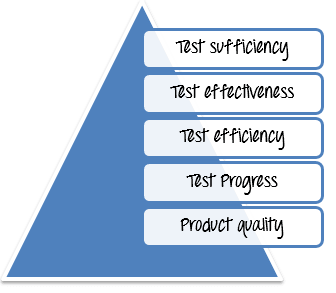
There are many difficulties and challenges you will face when leading a project. Here are some typical issues:
- Not enough time to test.
- Not enough resources to test.
- The project budget is low and the schedule is too tight.
- Testing teams are not always located in one place.
- The requirements are too complex to verify and validate.
- Test data, environments, and dependencies change between releases.
Practical Example: Leading the Guru99 Bank Project
You have now seen some typical difficulties in Test Management. Let us continue with a practical example.
Imagine that you are the Test Manager for the project: verify and evaluate the quality of the website https://demo.guru99.com/ before launching it to the customer.
Your boss wants to discuss the project planning, the test sufficiency, the budget, and the progress with you. Are you ready? Let us join the discussion.

The above example is just one of many situations you may face in your role. The next tutorials in this series will help you navigate these challenges and lead the Testing Team to a successful release.
