
MM17 Tcode in SAPMasovno održavanje glavnog zapisa materijala
 Uredništvo
⚡ Pametni sažetak
Masovno stvaranje matičnih zapisa materijala zamjenjuje ponavljajuće pojedinačne unose alatima kao što su MM17, LSMW, eCATT, BDC i BAPI. Transakcija MM17 mijenja ili proširuje više materijala odjednom kada su ciljni podaci identični.
Što je masovno održavanje u SAP MM?
Masovno održavanje znači primjenu iste operacije matičnih podataka na više zapisa odjednom umjesto otvaranja svakog materijala pojedinačno. Projekt koji učitava dvije tisuće materijala tijekom puštanja u rad ili poslovna odluka koja premješta cijelu grupu proizvoda na novu jedinicu mjere nije praktična samo zbog MM01 i MM02.
Iza tog pojma stoje dvije različite potrebe koje se često brkaju:
- Masovno stvaranje izrađuje glavne zapise materijala koji još ne postoje. Zahtijeva alat za učitavanje podataka koji može pokrenuti potpunu transakciju stvaranja s različitim vrijednostima po zapisu.
- Masovna promjena ažurira polje na već postojećim zapisima ili proširuje postojeće materijale na daljnje organizacijske razine. To je ono što izvršava transakcija MM17.
Razlika je važna jer MM17 ne može izmisliti broj materijala ili popuniti svako obavezno polje novog zapisa. Zapisuje jednu unesenu vrijednost u odabrani skup. Pravo stvaranje na veliko stoga koristi LSMW, eCATT, BDC zapis ili BAPI poziv, a svi oni čitaju izvornu datoteku koja sadrži različiti redak po materijalu.
Usporedba u nastavku pokazuje gdje svaki alat odgovara prije demonstracije postupka MM17.
SAP Vodič za masovno održavanje
Kako biste stvorili više materijala odjednom, trebali biste imati pristup funkciji kao što je
- eCatt alat
- LSMW (Legacy System Migration Workbench)
- BDC (Batch Data Communication) snimke
- BAPI (Programsko sučelje poslovnih aplikacija)
Također možete koristiti transakciju masovnog održavanja MM17 za stvaranje pogleda u nekim slučajevima. Ali morate imati na umu da ne bi sve organizacijske razine trebale sadržavati iste podatke (MM17 zahtijeva da svi podaci za materijale i organizacijske razine koje odaberete trebaju biti isti).
Masovna izrada se nikada ne smatra odgovornošću krajnjeg korisnika. Ali kao stručnjak za module možda ćete morati poraditi na MM17. U slučaju LSMW, BDC ili BAPI, smatra se poslom programera ili konzultanta. Dakle, ne morate detaljno razumjeti, samo morate znati koncept i da postoji ovakva mogućnost za masovno održavanje podataka.
Možete koristiti MM17 za masovnu promjenu matičnih podataka o materijalu (ako se nešto ne može postići ovom transakcijom, to se može učiniti pomoću LSMW, BDC ili BAPI).
Usporedba alata za masovno stvaranje: MM17, LSMW, eCATT, BDC i BAPI
Svaki alat nastoji postaviti umjesto fleksibilnosti. Tablica sažima koji alat odabrati u određenoj situaciji.
| Oruđe | Stvara nove zapise? | Različita vrijednost po zapisu? | Tko ga inače koristi | Najprikladniji za |
|---|---|---|---|---|
| MM17 | Ne, samo promjene i produženja | Da, vrijednosti se mogu upisivati po retku u mreži | Specijalist za module | Jedinstvena ažuriranja polja na popisu materijala |
| LSMW | Da | Da, čitaj iz izvorne datoteke | Konzultant | Jednokratna migracija i ponovljiva učitavanja |
| eCATT | Da | Da, pokreće ga spremnik testnih podataka | Konzultant ili tester | Opterećenja u kombinaciji s testiranjem sustava |
| BDC snimanje | Da | Da, iz interne tablice | ABAP programer | Zasloni bez standardne opcije učitavanja |
| BAPI | Da | Da, po pozivu | ABAP programer | Sučelja i ponavljajuća automatizirana učitavanja |
BAPI je najrobustniji izbor jer validira podatke putem iste poslovne logike kao i transakcija, bez ovisnosti o redoslijedu prikaza na zaslonu. BDC Snimanje se, nasuprot tome, prekida kad god se promijeni temeljni zaslon.
Kako koristiti MM17 za masovno održavanje
Korak 1)
- Unesite transakciju MM17
- Odaberite vrstu podataka koju trebate promijeniti, na primjer, moramo promijeniti polje u općim podacima.
- Izvršiti.
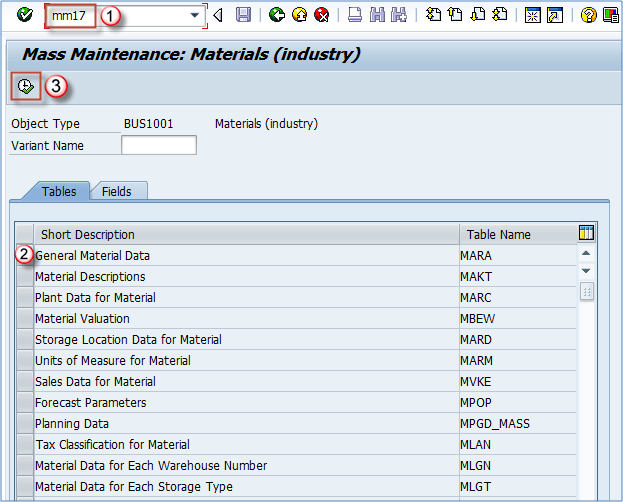
Tablice navedene na ovom prvom zaslonu odgovaraju glavnim prikazima materijala. MARA sadrži opće podatke, MARC sadrži podatke o postrojenju, a MVKE sadrži podatke o prodaji, pa stoga odabrana tablica određuje koja će polja kasnije postati dostupna.
Korak 2)
- Unesite raspon materijala ili popis za koji želimo promijeniti podatke
- Izvršiti

Korak 3)
- Kada kliknete na gumb prikazan ispod – dobit ćete Odaberite polja zaslon.
- Označite odgovarajuće polje (mijenjamo osnovnu mjernu jedinicu za naša dva materijala).
- Pritisnite strelicu koja pokazuje lijevo kako biste odabrano polje dodali na popis polja koja treba promijeniti.
- Pritisnite gumb U redu.

Korak 4) Sada nam se prikazuje sljedeći zaslon na kojem možemo unijeti našu vrijednost za prijenos. Recimo da smo zadržali PAL – paletu kao osnovnu mjernu jedinicu za naše televizore od 24 inča i 32 inča i to moramo promijeniti u PCS – komade.
- Unesite vrijednost koju želite kopirati u okvir.
- Kliknite na naslov stupca.
- Odaberite gumb za brisanje starih vrijednosti s “PCS”.
- Izvršiti.

Sada su vaše postavke spremljene, a vaši matični podaci o materijalu promijenjeni.
MM17 Ograničenja i najbolje prakse
MM17 zapisuje izravno u glavne podatke bez koraka odobrenja, pa se pogreška širi na svaki odabrani materijal odjednom. Sljedeće prakse drže taj rizik pod kontrolom.
- Prvo testirajte u pješčaniku. Pokrenite identičan odabir i promjenu polja u neproduktivnom klijentu i pregledajte uzorak zapisa prije nego što to ponovite u produkciji.
- Započnite s uskim izborom. Izvršite za dva ili tri materijala, provjerite rezultat u MM03, a zatim proširite raspon materijala.
- Razumjeti gumb za prepisivanje. Odabirom prepisivanja zamjenjuju se postojeći unosi, dok alternativna opcija ispunjava samo polja koja su trenutno prazna. Pogrešan izbor tiho uništava održavane vrijednosti.
- Pazite na zavisne podatke. Promjena osnovne mjerne jedinice, kao u gornjem primjeru, odbija se kada postoje zalihe ili otvoreni dokumenti upućuju na staru jedinicu.
- Zabilježite odabir. Spremite popis korištenih materijala kako bi se promjena mogla izvršiti tracili poništeno ako izvješće nakon toga izgleda pogrešno.
- Provjerite zapisnik rezultata. MM17 izvještava koji su zapisi ažurirani, a koji nisu. Izvođenje koje završava bez zelene poruke nije u potpunosti primijenilo promjenu.
Kada zahtjev zaista zahtijeva različite vrijednosti po materijalu ili polja koja MM17 ne otkriva, eskalirajte na LSMW ili BAPI učitavanje umjesto prisilnog izvršavanja transakcije. Za rad s jednim zapisom, glavni materijal za kopiranje i promjena glavnog materijala tutorijali ostaju ispravan put.
