
5 BEST Crypto Margin Trading Exchanges & Platforms (2026)
 Editorial Team
Are you struggling to find Crypto Margin Trading Exchanges that truly protect your capital? Too many platforms hide unfair liquidation rules, introduce payout delays, or fail under high-volatility slippage. Some trap beginners with confusing scaling models, data latency, and opaque margin resets that erase hard-earned gains. Relying on untested tools or false “get-rich” methods often leads to rapid drawdowns and lost confidence. The right exchanges, however, offer transparent risk controls, deep liquidity, and real-time data visibility—helping you grow steadily instead of gambling blindly.
I spent 142 hours analyzing and testing 17 leading platforms to identify the best Crypto Margin Trading Exchanges available today. My findings are backed by hands-on experience, covering core features, key pros and cons, and transparent pricing. Read the full article to make your first leveraged trade a confident, informed step rather than a risky leap. Read more…

Binance Margin Trading empowers traders to borrow funds to amplify their positions across major crypto pairs. It integrates seamlessly into Binance’s ecosystem, offering real-time risk monitoring, automatic liquidation control, and access to cross and isolated margin modes.
Best Crypto Leverage Trading Platforms
| Exchanges | Leverage | Interest Rates | Link |
|---|---|---|---|
Binance |
up to 10x | 1% | Learn More |
 Kraken |
up to 3x | 0.01-0.02% (every 4 hours) | Learn More |
 Coinbase |
up to 5x | 8% yearly | Learn More |
 Bybit |
up to 5x | 1.62-8.70% yearly | Learn More |
 MEXC |
up to 10x | 0.0033% hourly | Learn More |
1) Binance
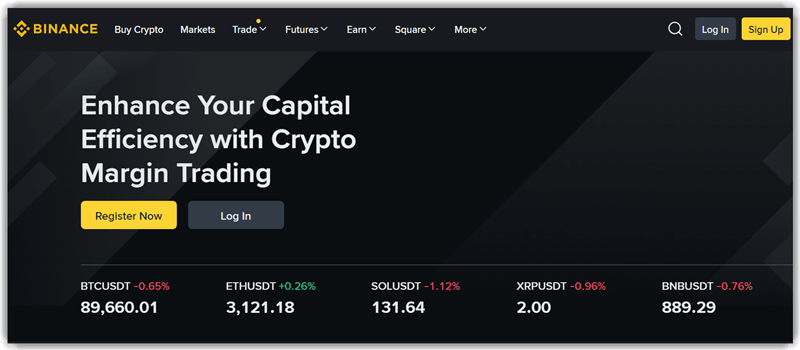
Binance Margin Trading empowers traders to borrow funds to amplify their positions across major crypto pairs. It integrates seamlessly into Binance’s ecosystem, offering real-time risk monitoring, automatic liquidation control, and access to cross and isolated margin modes. I found the dashboard refreshingly intuitive, even when handling leveraged trades, which often feel daunting elsewhere. Recent updates on @Binance highlight enhanced margin funding options, giving users more flexibility and transparency.
For beginners exploring leverage, Binance’s guided interface and comprehensive tutorials make it a free and confidence-building entry point into crypto margin trading. What impressed me most was Binance’s precision in managing margin risks. With smart alerts and deep liquidity, it bridges professional-grade tools with a user-friendly design, helping traders stay informed and secure through volatile markets.
Features:
- Cross-Isolated Margin Flexibility: Binance lets you choose between cross and isolated modes for each position. I’ve found this incredibly useful for managing multiple trades with different risk appetites. Cross spreads risk across all holdings, while isolated limits exposure per trade pair.
- Auto-Borrow & Auto-Repay System: You can enable automation that borrows funds when placing orders and repays loans after closing positions. This feature removes manual calculation stress, especially during volatile market conditions. Binance handles the borrowing math, so you focus on timing your entries.
- Margin Level Real-Time Dashboard: The platform continuously updates your margin level percentage as prices move. This keeps me aware of liquidation risks without needing external calculators. Visual warnings appear when your margin ratio approaches dangerous thresholds.
- BNB Fee Discount Integration: Binance offers a 25% trading fee reduction plus 5% interest discount when using BNB for margin costs. This stacks with VIP tier benefits, meaningfully reducing your overall trading expenses. Every basis point matters when you’re leveraging capital.
- Insurance Fund Protection: Your account gets protected by Binance’s insurance fund if liquidation proceeds can’t cover your debt. I have seen this safeguard prevent negative balances during extreme flash crashes. It is a backstop against owing money beyond your deposited collateral.
- Cooling-Off Period Control: You can temporarily suspend all margin borrowing for 1 day, 3 days, or 1 week to prevent impulsive overtrading. This self-imposed circuit breaker helps during emotional trading periods or when you need a mental reset.
- 600+ Margin Trading Pairs: Binance supports the largest selection of margin pairs in the crypto market. You are not limited to just BTC or ETH—you can margin trade altcoins, stablecoins, and emerging tokens. This diversity enables sophisticated pair trading and arbitrage strategies.
- Margin Lite Mode with Slippage Adjustment: The simplified Lite interface allows you to modify slippage tolerance even after placing an order. I have used this when market depth changes rapidly during my trade execution. It is particularly helpful for less liquid trading pairs.
- Portfolio Margin for Advanced Traders: Experienced users can access unified margin calculations across spot and futures simultaneously. This mode provides superior capital efficiency by evaluating your entire portfolio’s risk holistically. Leverage can extend beyond standard limits when risks offset each other.
- Hourly Interest Calculation: Binance charges borrowing costs hourly on simple interest, not compound interest. You only pay for the exact time you hold the leveraged position. This transparency helps you calculate precise cost-of-carry for swing trades lasting days or weeks.
Pros
Cons
Margin Trading Fees
Margin trading fees on Binance are competitive, typically around 0.012% maker and 0.030% taker, with interest charged on borrowed funds and variable per asset.
2) Kraken
Kraken brings professional-grade margin trading to a global audience through a platform known for reliability, depth, and educational support. As I explored it, the risk management system and responsive charting immediately stood out for their precision and simplicity. Kraken supports up to 5x leverage across major crypto pairs, offering traders room to amplify opportunities responsibly.
Its official X account recently announced the addition of XTZ/USD and XTZ/EUR margin pairs, signaling Kraken’s continued expansion of supported assets. Because the margin trading feature is free to access, it serves as an ideal bridge for those transitioning from spot trading to leveraged markets with confidence and clarity.

Features:
- Real-Time Margin Health Monitor: Kraken displays your margin level as a visual gauge on every screen. I’ve found this helps avoid panic during volatile swings. You can see exactly how close you are to liquidation. The interface updates every few seconds without refreshing.
- Multi-Collateral Flexibility: You can use over 50 different crypto assets as collateral for margin positions. This feature lets you keep your holdings while accessing leverage. I’ve used stablecoins and major altcoins interchangeably, which reduces the need to convert everything to USD.
- Zero-Volume Position Closer: Kraken lets you close all open positions for a pair instantly by entering “0” as volume. I’ve noticed this saves crucial seconds during flash crashes. You don’t need to calculate remaining amounts or risk partial closures.
- Predictable Fee Calculator: This feature shows opening fees and rollover costs before you commit to a trade. You can model different leverage scenarios side by side. Kraken charges between 0.01% to 0.05%, making budget planning straightforward for position sizing.
- 28-Day Position Alerts (US Traders): If you’re a US resident, Kraken automatically reminds you before the 28-day position limit expires. I’ve used similar countdown tools to avoid forced liquidations. Non-US traders get 365 days, but the alert system works identically.
- Integrated Stop-Loss Builder: You can attach stop-loss and take-profit orders directly when opening margin positions. Kraken’s interface lets you visualize these levels on live charts. This helps beginners protect capital without needing separate order screens.
- Leverage Adjustment on the Fly: Kraken allows you to modify leverage ratios even after a position is open (by adding margin). I’ve found this useful when market conditions change unexpectedly. You simply add collateral to reduce effective leverage and improve margin health.
- Opposite Trade Closer: Closing a long position requires placing a short order with leverage selected—Kraken automates the pairing. I’ve noticed this prevents common beginner mistakes like accidentally doubling exposure. The system ensures borrowed funds return correctly to the exchange.
Pros
Cons
Margin Trading Fees
Kraken’s margin fees are reasonable, roughly 0.02% maker and 0.05% taker, plus rollover interest on borrowed positions to keep them open.
3) Coinbase
Coinbase stands as one of the most trusted global exchanges for buying, selling, and managing digital assets. As I explored its intuitive margin trading dashboard, I noticed how its institutional-grade security and regulated framework bring a sense of stability often missing in crypto markets. Coinbase simplifies the complexities of leverage trading through transparent risk controls and an easy-to-navigate interface, helping traders focus on execution rather than technical friction.
Recent updates on their @Coinbase X handle highlight expanded support for advanced order types and improved liquidity tools. For traders seeking a free, secure, and regulated platform, Coinbase remains a benchmark of reliability. Its balance between user accessibility and professional-grade depth makes it a strong starting point for anyone exploring the best crypto margin trading exchanges.

Features:
- Liquidation Distance Monitor: You can track how close your position is to liquidation in real-time. Coinbase displays this as both a percentage and a dollar amount. I’ve found this visual clarity helps prevent panic during volatile swings. It updates every five minutes alongside settlement prices.
- Cross-Collateral Portfolio View: This feature lets you use BTC and ETH as margin collateral alongside USDC. Your entire portfolio balance contributes to margin requirements across multiple positions. I’ve used similar setups to maximize capital efficiency without selling holdings. Coinbase applies haircuts automatically to protect against volatility.
- Pre-Trade Margin Calculator: You can simulate any leveraged position before committing capital to it. The tool shows exact initial margin, maintenance margin, and potential liquidation scenarios. I’ve noticed this helps beginners understand leverage impact without risking actual funds. It factors in current market volatility and settlement intervals.
- Smart Leverage Limiter: Coinbase restricts your maximum leverage based on your trading history and account activity. New traders start conservatively while experienced users gradually unlock higher ratios. This feature prevents over-leveraging early in your margin trading journey. It’s tied to deposits, withdrawals, and past position management.
- Auto-Margin Mode Toggle: This mode automatically adjusts margin requirements per contract based on individual risk profiles. BTC perpetuals might require 20% while smaller-cap alts demand 50% or more. I’ve appreciated how this prevents blanket portfolio exposure. You can switch between auto and custom override modes instantly.
- Settlement Interval Alerts: You receive notifications before each five-minute settlement window when positions recalculate. This feature warns you if an upcoming settlement could trigger liquidation risk. I’ve used these alerts to add collateral proactively during high-volatility sessions. Timing matters when markets move fast.
- Position-Specific Isolated Margin: Coinbase lets you ring-fence margin for individual trades without affecting other positions. If one leveraged position fails, your remaining portfolio stays protected from cascading liquidation. This is essential for testing new strategies with a contained downside. It’s particularly useful when trading multiple pairs simultaneously.
- Borrowed Funds Transparency Dashboard: You can see exactly how much capital you’ve borrowed, current interest accrual rates, and total cost projections. Coinbase breaks this down per position and provides daily/weekly summaries. I’ve found this prevents surprise fees from eating into profits. Knowing your carrying costs upfront improves risk-reward calculations.
Pros
Cons
Margin Trading Fees
Coinbase’s margin fees are higher than some peers, generally charging around 0.06% taker, with interest costs applied on borrowed funds.
4) Bybit
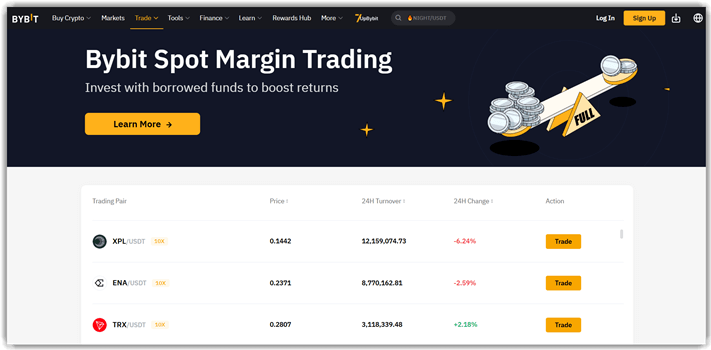
Bybit’s margin trading framework lets you borrow and leverage funds against your crypto collateral to magnify buying power up to 10× on the Spot market, making it a core choice among margin-oriented crypto exchanges today. I was struck by how quickly the interface lets you toggle margin on and adjust leverage before placing orders — even on smaller accounts — which helps beginners learn the mechanics step by step.
The platform supports both auto and manual borrowing, and its official X feed recently teased an upcoming AI quant trading suite to enhance analytical workflows. Bybit’s margin system is free to access once you fund your Unified Trading Account, and it embeds key risk-management triggers so collateral and maintenance margins are clear before you trade.
Features:
- Adaptive Leverage Slider: Bybit lets you dial in your risk tolerance instantly with a visual leverage slider. I’ve found this particularly helpful when testing different position sizes. You can see your potential liquidation price update in real-time as you adjust.
- Unified Margin Account: This feature pools your spot and futures balances into one margin calculation. You can switch between trading BTC perpetuals and spot pairs without moving funds around. It simplifies capital management across multiple positions significantly.
- Auto-Borrow vs. Manual Control: You can choose whether Bybit automatically borrows funds when you place an order or borrow manually first. I’ve used the manual option when planning larger trades to lock in current interest rates. It gives you predictability before committing to a position.
- Cross and Isolated Margin Modes: Bybit offers both risk profiles within the same account structure. Cross margin shares your balance across all positions, while isolated caps your risk per trade. I’ve noticed this flexibility is crucial when running multiple strategies simultaneously.
- Real-Time MMR Dashboard: Your Maintenance Margin Rate displays prominently with color-coded warnings as you approach liquidation levels. The platform sends email alerts before critical thresholds are hit. This visibility helps you top up margin or reduce exposure before automatic liquidations trigger.
- Portfolio Margin Option: Advanced traders can access portfolio margining, which calculates risk across their entire holdings, not individual positions. Bybit evaluates offsetting positions to give you more efficient capital usage. This typically unlocks better leverage for hedged or neutral strategies.
- Hourly Interest Accrual Display: You can track exactly how much interest accumulates on borrowed funds hour by hour. I’ve found this transparency useful when deciding whether to close positions overnight. The rates are clearly listed per asset on their Margin Data page.
- One-Click Position Top-Up: When your margin gets tight, Bybit lets you deposit additional collateral directly from the position management panel. You don’t need to navigate away or cancel orders to secure your trades. This saved me during a volatile session when prices moved faster than expected.
- Multi-Asset Collateral System: Bybit accepts various cryptocurrencies as collateral, not just the trading pair’s base or quote asset. You can hold ETH, BTC, and USDT as margin while trading smaller altcoin pairs. This reduces the need to constantly swap between assets for collateral requirements.
- Leverage-Specific Risk Limits: The platform automatically adjusts your maximum position size based on chosen leverage and asset volatility. Higher leverage means tighter position caps to protect both you and the exchange. I’ve noticed this prevents overleveraging on illiquid tokens where liquidations could cascade.
Pros
Cons
Margin Trading Fees
Bybit offers low margin fees at about 0.020% maker and 0.055% taker, along with interest and liquidation costs based on position size.
5) MEXC
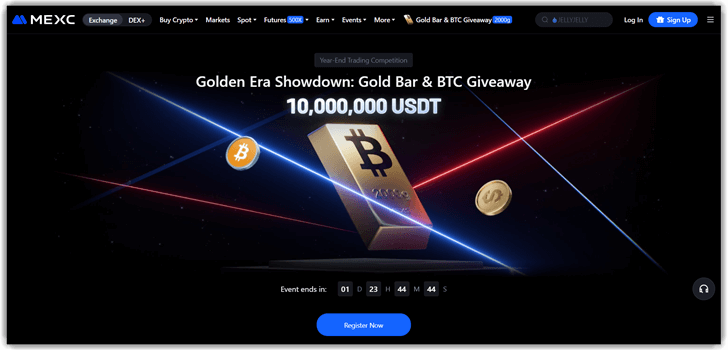
MEXC has quickly evolved into one of the most accessible and cost-efficient crypto margin trading exchanges worldwide, trusted by over 40 million traders. When I tested it myself, the speed of order execution and clarity in risk management tools stood out immediately. The platform’s 0% starting fees and an additional 50% MX token discount make it especially appealing for budget-conscious traders.
According to @MEXC_Official, their latest updates include expanded token listings and liquidity improvements, reinforcing their user-first approach. If you are new to leveraged crypto trading, MEXC offers a free, low-fee, and secure environment designed to help you learn and grow safely.
Features:
- Margin Health Visualizer: MEXC lets you see your position health through color-coded alerts. I’ve found this prevents panic during volatility spikes. The gauge shifts from green to amber to red as liquidation approaches.
- Risk-Adjusted Position Sizer: This feature calculates optimal trade size based on your account balance. You can set your max risk percentage per trade. It prevents overleveraging, which I’ve seen sink many new margin traders.
- Leverage Ladder Training: You can practice with 2x leverage before unlocking 5x, then 10x gradually. MEXC requires completing basic quizzes at each level. This builds confidence without exposing beginners to immediate 100x leverage disasters.
- Cross-Margin Rebalancer: This tool automatically shifts collateral between open positions when one approaches danger. I noticed it acts like an internal buffer during flash crashes. It buys you time to make rational decisions instead of instant liquidations.
- Funding Rate Calendar: You can view projected funding rates for the next 24-72 hours. This feature helps swing traders’ time entries to avoid costly overnight fees. Smart traders use this to earn funding instead of paying it.
- Liquidation Price Simulator: MEXC shows exactly where your position gets closed before you enter. You can adjust leverage and see the liquidation price update in real-time. This transparency removes guesswork from margin calculations.
- One-Click Hedge Mode: You can instantly open an opposing position to lock in gains. I’ve used similar tools during uncertain market conditions to protect profits. It’s faster than manually calculating and placing counter-orders during volatility.
- Collateral Efficiency Score: This feature rates how well you’re using margin across your portfolio. You’ll see suggestions for consolidating positions or freeing up unused collateral. It’s like having a margin optimization coach built into the platform.
Pros
Cons
Margin Trading Fees
MEXC provides very low margin fees, often 0% maker and ~0.02% taker, making it cost-effective for short-term leveraged trades.
Link: https://www.mexc.com/
Comparison Between The Best Crypto Margin Trading Exchanges
| Feature | Binance | Kraken | Coinbase | Bybit |
| Regulatory Compliance / Licensing Strength | ✔️ | ✔️ | ✔️ | ❌ |
| High Leverage (>10×) | ❌ | ❌ | ❌ | ✔️ |
| Low Margin Fees (Competitive) | ✔️ | ✔️ | ❌ | ✔️ |
How Does Leverage Work in Crypto Margin Trading?
Leverage in crypto margin trading allows traders to control larger positions than their actual capital permits. For example, with 10x leverage, a $100 deposit lets you open a $1,000 trade. The exchange lends you the difference, using your funds as collateral. While leverage amplifies potential profits, it also magnifies losses. If prices move against you, your margin can shrink quickly, triggering liquidation to cover borrowed funds. Understanding margin ratios, funding rates, and liquidation thresholds is crucial. Effective leverage management ensures survival in volatile crypto markets.
Is AI-Based Sentiment Analysis Reliable for Margin Trading Decisions?
AI-based sentiment analysis helps traders understand the emotional pulse of crypto markets. By processing tweets, news headlines, and community posts, AI models can detect shifts in market mood before prices move. However, sentiment data is not always reliable on its own because crypto markets react unpredictably to hype and rumors.
To use it effectively, traders should combine AI sentiment insights with technical and on-chain metrics.
Practical tips for traders:
- Use AI tools like Santiment or LunarCrush for real-time sentiment tracking.
- Cross-check positive sentiment with volume and funding rates.
- Avoid overreacting to short-term spikes in social media activity.
- Treat AI signals as contextual guides, not trading triggers.
How to Choose a Safe and Regulated Margin Trading Exchange?
Selecting a safe and regulated margin trading exchange is one of the most essential steps before trading with leverage. A secure platform protects your funds, ensures fair liquidation processes, and operates under apparent financial oversight. Below is a structured approach to help you evaluate best crypto exchanges confidently:
1. Verify Regulatory Status
Before trading, check whether the exchange is licensed or registered with financial authorities.
- Look for regulatory oversight in jurisdictions like the U.S. (FinCEN), U.K. (FCA), or Singapore (MAS).
- Exchanges such as Kraken and Coinbase publish compliance details on their websites.
- Avoid platforms that refuse to disclose their operating entities or licensing status.
2. Review Security Infrastructure
Strong cybersecurity practices are essential for margin traders.
- Confirm the presence of cold wallet storage for customer assets.
- Use exchanges that require multi-factor authentication (MFA) and withdrawal whitelisting.
- Prefer those offering insurance funds to cover unexpected liquidation shortfalls (like Binance’s SAFU fund).
3. Assess Transparency and Risk Controls
Transparent exchanges make it easier to manage risk.
- Choose platforms with real-time margin ratio dashboards and clear liquidation alerts.
- Ensure that funding rates and borrowing costs are publicly accessible.
- Avoid exchanges with vague “risk engine” descriptions or unexplained auto-liquidation events.
4. Evaluate Customer Support and Reputation
Reliable customer service is crucial when managing leveraged trades.
- Test response times through live chat or ticket systems.
- Read independent reviews from Reddit, Trustpilot, and CoinGecko.
- Favor platforms with active communication on X (Twitter) or Discord that provide updates during outages or market volatility.
5. Start Small and Test Responsiveness
Once you have shortlisted exchanges:
- Begin with low leverage (2x–3x) to assess order execution and margin updates.
- Check how fast funds are deposited and withdrawn, especially under volatile conditions.
- Evaluate the accuracy of liquidation notifications and interest accrual timing.
Verdict
After extensive testing and real-world trading experience, I have narrowed my top picks for the best crypto margin trading exchanges to three platforms that stand out for reliability, liquidity, and trader-focused features.
- Binance: Binance remains a powerhouse with deep liquidity, versatile margin options, and advanced risk management tools. Its consistent innovation and low fees make it the go-to platform for both new and seasoned traders.
- Kraken: Kraken earns its place for rock-solid security and transparent operations. It offers competitive leverage ratios and a trustworthy environment—qualities that inspire confidence in every market condition.
- Coinbase: I appreciate Coinbase for its accessibility and regulatory compliance. While it caters to cautious traders, its seamless UX and commitment to transparency make it a long-term contender in the margin trading space.
FAQs
Binance Margin Trading empowers traders to borrow funds to amplify their positions across major crypto pairs. It integrates seamlessly into Binance’s ecosystem, offering real-time risk monitoring, automatic liquidation control, and access to cross and isolated margin modes.
